Small gaps around a studio door can let sound escape, introduce outside noise, and undermine an otherwise well-treated room. The right door seal helps close those weak points without making the door difficult to operate.
This roundup compares 10 practical options, including acoustic kits, foam and rubber weatherstripping, silicone seals, and brush-style sweeps. Use the buying guide below to match the seal to your door, gap size, and installation needs.
Best 10 Studio Door Seals for Music Rooms Picks for 2026
Complete Door Coverage

- Includes two door seals and one sweep
- Treats up to four standard doors
- Easy-install polyurethane construction
Best For: Studios needing perimeter and bottom-door sealing
Flexible Fit

- 33 feet of cut-to-fit sealing tape
- Upgraded mesh adhesive backing
- Works on doors, windows, and more
Best For: DIY sealing projects with varied gap sizes
Wide Gap Sealing

- Handles gaps up to 0.8 inch
- 16-foot cut-to-fit roll
- Transparent waterproof silicone
Best For: Wide door-frame gaps needing a subtle finish
Compact Frame Seal
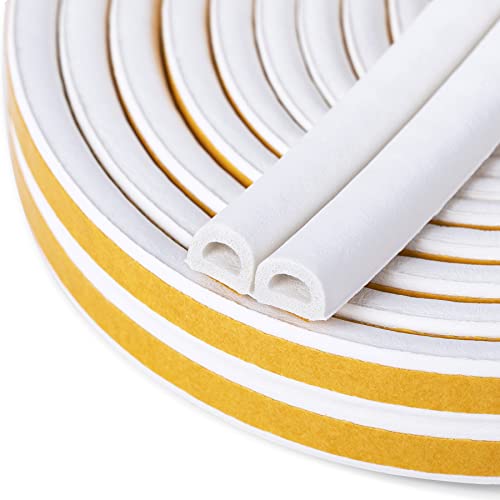
- Fits approximately 4–5 mm gaps
- Splits into two 8.25-foot seals
- Waterproof, self-adhesive rubber
Best For: Narrow indoor door and window frame gaps
Large-Gap EPDM Pick

- Fits 5/16-15/32-inch gaps
- Flexible EPDM hollow profile
- 20-foot self-adhesive roll
Best For: Uneven, larger door gaps
Compact Foam Option
High-Density Adhesive Sound Seal
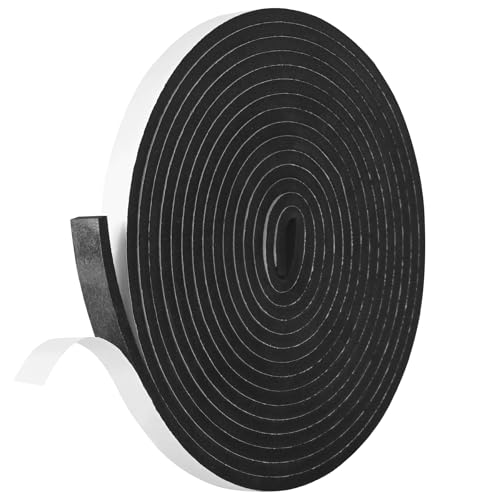
- 1/2-inch-wide, 1/4-inch-thick foam
- Flexible and easy to cut
- 16.5-foot adhesive roll
Best For: Small gaps and flexible edge sealing
Best Brush Seal
High-Density Self-Adhesive Pile

- Dense nylon pile helps reduce drafts, dust, and noise
- Oil-based adhesive rated from -10°C to 50°C
- 33-foot roll fits multiple doors or windows
Best For: Narrow door and sliding-track gaps from 0.1 to 0.18 inches
Best Silicone D-Seal

- Compressible silicone fits 1/8- to 1/4-inch gaps
- Helps block drafts, moisture, light, dust, and noise
- Includes adhesive promoter for smooth surfaces
Best For: Flexible sealing around studio doors and windows
Best Long Roll
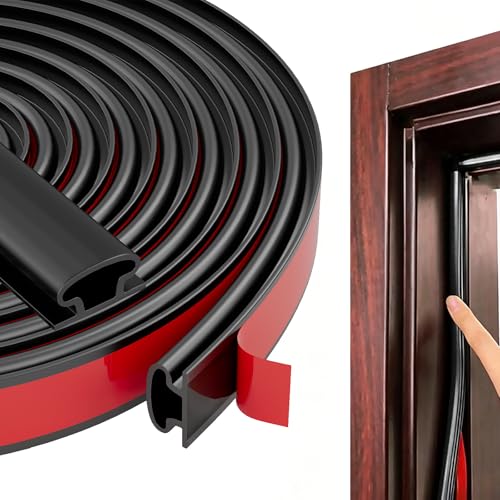
- 50-foot roll covers multiple sealing projects
- Fits stated gaps from 0.1 to 0.22 inches
- Helps reduce noise, drafts, light, and rattles
Best For: Multiple studio doors, windows, and equipment gaps
Complete Door Coverage – Large Acoustic Seal Kit
Audimute Soundproofing Acoustic Door Seal Kit - Door Sweep and Seal - (Large Size)
Check Price On AmazonFor studio door seals for music rooms, this kit is a practical choice when you need to address both perimeter gaps and the space beneath the door. It includes two door-seal rolls and one door sweep, with enough material to treat up to four standard-size doors.
Best For: Studios, apartments, and rooms where sound enters or exits through multiple standard doors.
Pros:
- Includes seals and a door sweep for more complete gap coverage.
- Designed to treat up to four standard-size doors.
- Easy to install and made from polyurethane.
Cons:
- The supplied dimensions may require trimming or planning for different door sizes.
- It is intended for door gaps, not broader room-acoustic treatment.
Among these studio door seals for music rooms, this is the most comprehensive option for covering several doors or combining frame seals with a bottom sweep.
Flexible Fit – 33-Foot EVA Foam Seal
This 33-foot self-adhesive strip offers flexible sizing for studio door seals for music rooms, especially where gaps vary along a frame. The EVA material can be cut as needed, while the upgraded mesh adhesive is designed for firm application.
Best For: DIY users sealing door frames, windows, and other irregular or oversized gaps with one versatile roll.
Pros:
- Provides 33 feet of material for multiple applications.
- Can be cut to fit changing gap sizes.
- Waterproof and suitable for doors, windows, and other surfaces.
- Self-adhesive backing is designed for strong attachment.
Cons:
- It is a general-purpose strip rather than a dedicated door-sweep kit.
- Its broad application range may require careful placement for a clean studio installation.
This is a useful pick when flexibility and extra length matter more than having a purpose-built sweep included in the package.
Wide Gap Sealing – Transparent Silicone Strip
For studio door seals for music rooms with gaps up to 0.8 inch, this transparent silicone strip provides a wide 1.4-inch sealing surface. It comes in a 16-foot roll, can be cut to length, and is designed for quick adhesive installation on clean, dry surfaces.
Best For: Door frames and glass-door areas where a transparent, flexible seal is preferred.
Pros:
- Suitable for gaps from zero to 0.8 inch.
- Flexible waterproof silicone with a transparent finish.
- Can be cut to the required length.
- Adhesive installation is straightforward after surface preparation.
Cons:
- The roll provides 16 feet, less than some longer-strip options.
- It is not a dedicated bottom sweep for covering the full door threshold.
This option fits installations where gap width and a less visible finish are priorities, particularly around glass or light-colored doors.
Compact Frame Seal – White D-Profile Strip
This D-profile rubber strip is a compact choice for studio door seals for music rooms when the frame gap is approximately 4–5 mm. The 16.5-foot roll separates into two 8.25-foot seals and is designed to reduce drafts, dust, sound, and wear around doors and windows.
Best For: Indoor doors and windows with narrow, consistent gaps and a preference for white sealing material.
Pros:
- Designed for 4–5 mm gaps.
- Separates into two 8.25-foot D-shaped seals.
- Waterproof and resistant to wind and aging.
- Self-adhesive installation requires no separate fasteners.
Cons:
- It is not intended for gaps wider than the specified range.
- Adhesive performance can suffer outside the recommended 55–104°F application range.
- White may be more visible on dark studio doors.
Choose this strip for a neat, narrow-gap installation, but verify the gap measurement and prepare the surface and temperature before applying it.
Large-Gap EPDM Pick – D-Shaped White Door Seal
For studio door seals for music rooms, this large-gap D-shaped strip is a practical option when the closed gap is uneven or relatively wide. Its hollow EPDM profile compresses around the door and can also help limit drafts, dust, light leaks, and some outside noise.
Best For: Doors with 5/16-15/32-inch gaps where a flexible, white seal is preferred.
Pros:
- Designed for larger, uneven gaps.
- Flexible EPDM rubber remains usable in hot and cold weather.
- Mesh-reinforced adhesive backing and a 20-foot length support a straightforward installation.
Cons:
- Requires careful gap measurement before application.
- The adhesive should bond for 24 hours, and cold-weather installation may require warming the backing.
- White may be less discreet on darker studio doors or frames.
This is a strong fit when gap coverage matters more than a low-profile appearance. Confirm the closed gap first, then clean, cut, peel, and press the strip into place.
Compact Foam Option – High-Density Adhesive Sound Seal
For studio door seals for music rooms, this narrow foam tape offers a flexible way to seal smaller gaps and irregular edges. The 1/4-inch-thick EVA strip is easy to cut and is described for sealing, insulation, vibration buffering, and soundproofing-related uses.
Best For: Smaller door or frame gaps where a thin, cut-to-length foam strip is suitable.
Pros:
- Flexible tape bends and conforms to different shapes.
- Strong adhesive backing is intended to stay in place on a clean, dry surface.
- Useful for door seals, window insulation, speakers, and vibration or buffering applications.
- Handles a stated operating range of -4°F to 140°F.
Cons:
- At 1/4 inch thick, it may not fill larger door gaps.
- The roll provides 16.5 feet, less coverage than the larger rolls in this roundup.
- Surface preparation is important for reliable adhesion.
This tape is a sensible choice for a compact seal that can be trimmed around corners or uneven sections. Measure the gap and verify that the foam thickness will compress without making the door difficult to close.
Long-Roll Value Pick – 50-Foot Black D-Seal
For studio door seals for music rooms, this black D-shaped rubber strip provides substantial coverage for repeated sealing projects or a long door frame. It is sized for 1/10- to 11/50-inch gaps and includes tailor scissors for cutting the strip to fit.
Best For: Multiple doors, long frames, or projects needing up to 50 feet of black rubber seal.
Pros:
- 50-foot roll offers generous coverage.
- Flexible rubber is designed to resist freezing and cracking in extreme temperatures.
- Self-adhesive backing supports peel-and-stick installation after surface preparation.
- Included scissors simplify cutting to size.
Cons:
- Only suited to gaps from 1/10 to 11/50 inch, so it may not fit larger openings.
- The adhesive should be left for 24 hours to become firmly set.
- Black may be visually prominent on light-colored doors or frames.
This is the practical bulk-coverage choice when the gap falls within its narrower stated range. Measure carefully before ordering, then clean and dry the surface for the adhesive to hold properly.
Best Brush Seal – High-Density Self-Adhesive Pile
For studio door seals for music rooms, this brush-style strip is a practical choice when you need to address narrow gaps around a door or sliding track. Its dense nylon pile is designed to help reduce drafts, dust, and everyday outside noise without flattening quickly.
Best For: Narrow gaps from 0.1 to 0.18 inches, especially on door frames, sliding glass doors, and tracks.
Pros:
- Oil-based adhesive is designed to hold through temperatures from -10°C to 50°C.
- Dense woven nylon pile resists shedding and flattening.
- Generous 33-foot roll can cover approximately two to three doors.
- Peel-and-stick installation requires no tools.
Cons:
- Only suited to relatively narrow gaps up to 0.18 inches.
- Brush seals may not provide the same compression as a solid silicone seal.
This is a versatile option for studios that need a long roll for multiple doors or windows. Measure carefully first, since its narrow fit range is central to its performance.
Best Silicone D-Seal – Flexible 20-Foot Gap Filler
This silicone strip is a straightforward option for studio door seals for music rooms when the gap varies slightly or needs a compressible barrier. The D-shaped profile is intended to help limit drafts, light, dust, moisture, and everyday noise around door and window frames.
Best For: Door and window gaps measuring approximately 1/8 to 1/4 inch.
Pros:
- Flexible silicone compresses smoothly around small frame gaps.
- Helps address drafts, moisture, dust, light gaps, and outside noise.
- 20-foot roll can be cut to fit different projects.
- Included adhesive promoter can strengthen bonding on smooth surfaces.
Cons:
- Shorter than the 33- and 50-foot alternatives in this roundup.
- Requires a clean, dry surface and may benefit from the promoter for long-term adhesion.
Choose this seal when a soft, flexible profile and a wider stated gap range matter more than maximum roll length. It is well suited to targeted sealing around a studio entry door or nearby windows.
Best Long Roll – Thickened Black Rubber D-Seal
For larger sealing projects, this thickened rubber D-shaped strip offers a long 50-foot roll for studio door seals for music rooms. It is designed to fill gaps while helping limit air movement, light, dust, odors, rattles, vibrations, and squeaks.
Best For: Gaps from 0.1 to 0.22 inches when you need enough material for several doors, windows, or other equipment.
Pros:
- 50-foot roll provides substantial coverage for multiple projects.
- Thickened TPE/rubber construction is designed to resist deformation.
- Helps reduce noise, drafts, light, dust, and rattles.
- Can be cut with scissors and bent to follow different shapes.
Cons:
- Adhesive performance can be weaker in low temperatures during installation.
- The surface should be cleaned and dried, and the backing may need warming with a hair dryer.
- Its minimal-compression design may not suit every door gap.
This is the coverage-oriented pick for sealing several locations or keeping spare material on hand. Follow the preparation instructions closely, especially in cold conditions, to improve the adhesive bond.
How We Picked the Best Studio Door Seals for Music Rooms
We focused on products that can address the most common sound-leak paths around a studio door: the hinge side, latch side, head jamb, and bottom threshold. The selection includes complete acoustic door kits as well as individual adhesive strips, so you can choose between an all-in-one installation and a targeted gap-filling solution.
We also considered listed dimensions, seal shape, material, adhesive backing, installation simplicity, and likely durability. Weatherstripping is not a substitute for a solid-core door or professional room construction, but a continuous, well-fitted seal can improve isolation and reduce rattles, drafts, and light leakage.
Quick Comparison
| Seal type | Best for | Main advantage | Watch for |
|---|---|---|---|
| Complete acoustic kit | Doors needing a full perimeter solution | Combines multiple sealing components | Measure carefully before installation |
| EVA or foam tape | Small, consistent gaps | Easy to cut and apply | May compress or wear sooner |
| D-shaped rubber or silicone | Medium to larger frame gaps | Durable, resilient compression | Requires a clean, dry surface |
| Brush seal | Uneven floors or moving door bottoms | Handles irregular clearance | Usually less airtight than solid seals |
Key Buying Factors for Studio Door Seals
Measure the Gap and Door Clearance
Measure the space between the closed door and frame at several points. For the bottom, check the distance to the threshold or floor and make sure the door can still swing freely. A seal that is too thick can prevent the latch from engaging, while one that is too thin may leave an audible leak.
Choose the Right Material
Foam is inexpensive and convenient for light-duty gaps. Rubber and silicone generally provide better resilience for frequently used studio doors. D-shaped profiles are useful when the gap is fairly consistent; brush seals are more forgiving when the floor or threshold is uneven.
Evaluate the Adhesive and Installation Surface
Self-adhesive products are easiest to install, but the frame must be clean, dry, smooth, and free of dust or old residue. Apply the strip without stretching it, press it firmly along the frame, and allow the adhesive to set before repeated use. For heavy doors or demanding isolation goals, mechanical fastening may be more dependable than adhesive alone.
Seal the Entire Perimeter
Closing only one visible gap rarely delivers the best result. Check the top, both sides, and bottom, then address any remaining leaks around the latch, hinges, or threshold. A perimeter seal should compress gently rather than require excessive force.
Who Should Buy Which Studio Door Seals for Music Rooms?
Choose a complete acoustic door seal kit if you are treating a recording-room door from scratch and want coordinated coverage. Choose foam tape for narrow, low-cost repairs or unusually small gaps. D-shaped rubber and silicone strips are better suited to medium or larger gaps and doors that see regular use. A brush weatherstrip is the practical choice for the bottom of a door over an uneven floor or threshold.
Before ordering, confirm the product’s width, thickness, roll length, color, and installation location. For serious isolation, prioritize a heavy door, tight frame, solid threshold, and full perimeter contact; the seal works best as one part of that larger system.