A small gap beneath or around a studio door can let in traffic noise, HVAC rumble, drafts, and distracting room reflections. The right seal can improve isolation without requiring a costly door replacement.
This roundup compares 10 studio door seals for podcast rooms, including silicone, rubber, EVA foam, and acoustic seal kits. Use the buying guide below to match the seal’s profile, adhesive, coverage, and installation style to your recording space.
Best 10 Studio Door Seals for Podcast Rooms Picks for 2026
Full-Door Coverage Kit

- Includes two seals plus one door sweep
- Treats up to four standard-size doors
- Polyurethane construction with easy installation
Best For: Multi-door studio projects needing perimeter and bottom sealing
Long-Run Flexible Seal
49-Foot Transparent Draft Seal
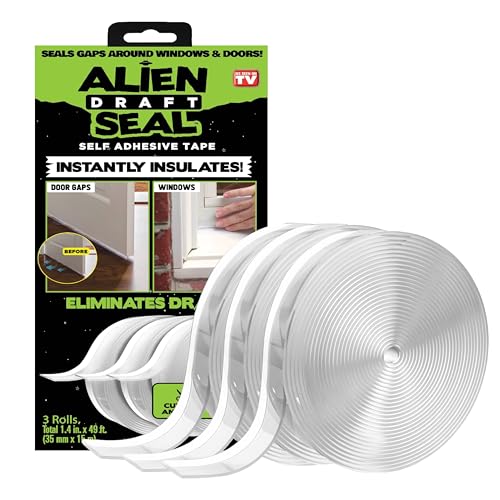
- Includes three rolls totaling 49 feet
- Flexible, moisture-resistant silicone
- Clear design blends with many surfaces
Best For: Multiple doors or windows needing a low-visibility seal
Secure Edge Seal
Clear T-Shaped Silicone Door Strip

- Two adhesive faces help secure the strip
- Clear, flexible silicone construction
- 20 feet of cut-to-fit material
Best For: A discreet single-door edge seal with a stable hold
Compact Gap Filler
Adhesive Foam Sound Isolation Tape
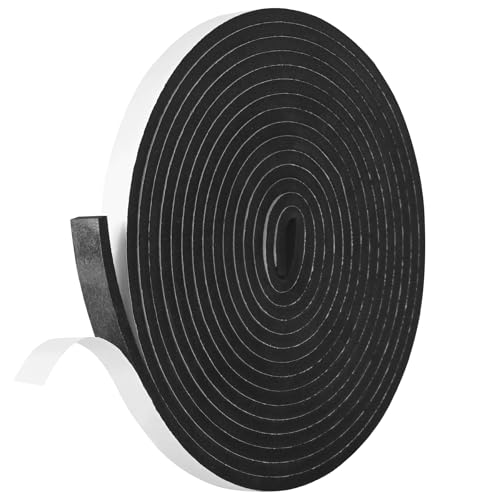
- 1/2-inch-wide, 1/4-inch-thick foam strip
- 16.5-foot roll cuts and bends easily
- Strong adhesive supports targeted sealing
Best For: Narrow door gaps and small custom sound-isolation projects
Clear Silicone Fit

- Clear, flexible silicone construction
- 20-foot cut-to-fit roll
- Designed for gaps up to 1 inch
Best For: Discreet sealing around glass, sliding, and studio doors
High-Coverage Foam

- Long 33-foot self-adhesive roll
- Flexible EVA construction
- Useful for sealing and sound insulation
Best For: Multi-opening studio projects needing generous coverage
Compression Barrier

- Fits 3.5–6 mm gaps
- Hollow profile helps dampen noise
- 32.8-foot adhesive-backed roll
Best For: Narrow, standard door-frame gaps needing compression
Best Budget Fit
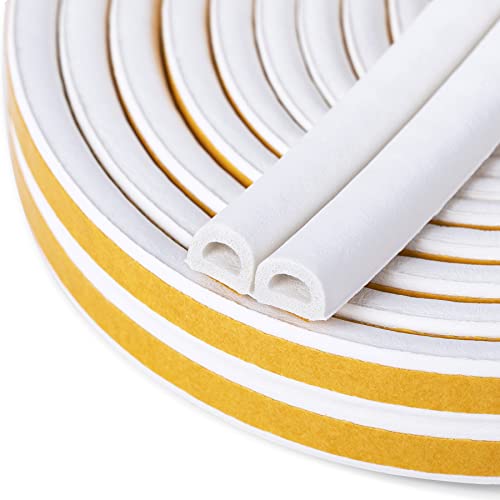
- 16.5-foot self-adhesive roll
- Fits 4–5 mm gaps
- Temperature-sensitive installation
Best For: Interior studio doors with properly measured 4–5 mm gaps
Full-Door Coverage Kit – Large Acoustic Door Seal Kit
Audimute Soundproofing Acoustic Door Seal Kit - Door Sweep and Seal - (Large Size)
Check Price On AmazonFor studio door seals for podcast rooms, this kit is a practical choice when you need to address both perimeter gaps and the space beneath the door. It includes two adhesive door seals and a door sweep, with enough material to treat up to four standard-size doors.
Best For: Podcast studios, apartments, and multi-door projects requiring both side/top seals and a bottom sweep.
Pros:
- Includes two door seals and one door sweep.
- Designed to treat up to four standard-size doors.
- Easy to install and made from polyurethane.
Cons:
- The large kit may provide more material than needed for a single door.
- Dimensions may not suit unusually wide gaps or nonstandard doors.
This is the most comprehensive option in the group for sealing a studio door as a system rather than handling only one gap. Measure your doors and gaps before installation to confirm the included sizes are appropriate.
Long-Run Flexible Seal – 49-Foot Transparent Draft Seal
This transparent silicone strip is a flexible option for studio door seals for podcast rooms, particularly when you need substantial length for several doors or windows. The three rolls provide a combined 49 feet and can be cut to fit different gap sizes.
Best For: Longer sealing runs and installations where a clear, low-visibility strip is preferred.
Pros:
- Provides 49 feet of total material.
- Flexible silicone resists creasing and hardening.
- Adhesive is designed for painted wood, metal, glass, plastic, and other surfaces.
Cons:
- It is primarily described as a draft and gap seal rather than a dedicated acoustic door kit.
- Its 1.4-inch width and 0.19-inch thickness may not fit every door gap.
- Transparent material may be harder to visually align during installation.
The generous length makes this a useful maintenance or multi-opening supply, while the flexible silicone can conform to gaps. Confirm the mounting surface and gap dimensions before applying it to a podcast-room door.
Secure Edge Seal – Clear T-Shaped Silicone Door Strip
For studio door seals for podcast rooms, this T-shaped silicone strip focuses on a secure edge installation. Its two adhesive surfaces attach along the door side and front, helping the flexible 1.38-inch-wide strip stay positioned while also reducing drafts, dust, and outside noise.
Best For: Single-door installations where a clear, flexible seal with two adhesive faces is suitable.
Pros:
- T-shaped design uses two adhesive surfaces for added hold.
- Clear silicone blends with different door colors.
- 20 feet of material can be cut to length.
- Installation requires measuring, cutting, peeling, and pressing into place.
Cons:
- Only one 20-foot roll is included.
- Requires a clean, dry surface for adhesion.
- It may need brief adhesive warming in cold weather.
This strip offers a discreet approach for sealing a podcast-room door edge and is easier to customize than a pre-sized component. Check the door gap and mounting geometry carefully because the T-shaped profile is intended for specific attachment surfaces.
Compact Gap Filler – Adhesive Foam Sound Isolation Tape
This compact foam tape is a straightforward option for studio door seals for podcast rooms when the gap is narrow and you want a cut-to-length adhesive strip. The roll measures 1/2 inch wide, 1/4 inch thick, and 16.5 feet long, making it useful for targeted door or window sealing.
Best For: Narrow gaps, small studio projects, and applications needing flexible foam that can be cut and bent.
Pros:
- Easy to cut and conform to different shapes.
- Strong adhesive backing is intended to stay in place after application.
- EVA foam provides sealing, shock-absorbing, and soundproofing functions.
- Works for doors, windows, speakers, furniture, and other uses.
Cons:
- The single roll provides 16.5 feet, less than the longer seal options.
- Its 1/4-inch thickness may not fill larger gaps.
- The surface must be cleaned and dried before application.
This tape is best viewed as a versatile gap-filling strip rather than a complete door-sealing system. Its modest dimensions suit precise, smaller gaps, while the flexible foam is convenient for custom cuts around a podcast-room door.
Clear Silicone Fit – T-Shaped Door Seal
For studio door seals for podcast rooms, this clear T-shaped silicone strip is a flexible option for covering larger door or window gaps. Its 20-foot length can be cut to fit, while the adhesive-backed design is intended to help reduce airflow, dust, and noise.
Best For: Frameless sliding doors, glass doors, and rooms needing a discreet seal for gaps up to 1 inch.
Pros:
- Clear silicone is flexible, resilient, and durable.
- 20-foot roll can be cut to the required length.
- Designed to help limit drafts, dust, and unwanted noise.
- Suitable for door bottoms, jambs, windows, closets, and thresholds.
Cons:
- Requires a smooth, clean, and dry surface for installation.
- Cold-weather installation may require warming the adhesive with a hair dryer.
- The T-shaped profile may require more careful fitting than a simple foam tape.
Choose this seal when appearance matters and the door has a relatively large or irregular gap. Proper surface preparation is important for reliable adhesion.
High-Coverage Foam – 33FT EVA Weatherstrip
This 33-foot EVA weatherstripping tape gives podcast-room builders plenty of material for sealing door frames, windows, and other openings. Its flexible, self-adhesive construction is designed to help with drafts, thermal insulation, sound insulation, and light blocking.
Best For: Large sealing projects where a long, flexible black strip is useful for filling variable-size gaps.
Pros:
- 33-foot length supports multiple doors, windows, or openings.
- Flexible EVA material can be cut as needed.
- Upgraded mesh adhesive is intended to improve attachment.
- Can also be used for anti-collision, anti-friction, insulation, and light blocking.
Cons:
- Black tape may be more visible than a clear seal.
- The supplied notes do not specify a precise supported gap range.
- Its broad multi-use design may require trimming and positioning for a clean door seal.
This is a practical bulk option when you need to seal several areas or want extra material for future repairs. It is especially useful where appearance is less important than coverage and flexibility.
Compression Barrier – D-Shaped EPDM Door Seal
For studio door seals for podcast rooms, this D-shaped EPDM strip is designed to compress against door frames and window edges. The hollow profile helps dampen door-slamming noise, while the adhesive backing supports tool-free installation.
Best For: Standard door frames and windows with narrow 3.5–6 mm gaps requiring a compressible black seal.
Pros:
- D-shaped profile creates a compression barrier against drafts.
- EPDM rubber is designed to retain elasticity across a wide temperature range.
- Hollow structure helps absorb external sound and door-slamming noise.
- 32.8-foot roll provides ample material for multiple applications.
Cons:
- Designed for narrower gaps than the T-shaped silicone option.
- Black finish may be noticeable on light-colored doors or frames.
- Adhesive performance depends on proper surface preparation.
This seal is a strong fit when consistent compression and a defined gap range matter. Its EPDM construction and hollow profile make it a sensible choice for reducing air movement and incidental door noise around a studio entrance.
Best Budget Fit – CloudBuyer D-Shape Seal
For shoppers comparing studio door seals for podcast rooms, the CloudBuyer D-shaped foam strip offers a compact option for 4–5 mm gaps. Its self-adhesive backing can help reduce drafts, dust, and everyday sound leakage around suitable interior doors, provided installation temperatures are within the recommended range.
Best For: Interior studio or podcast-room doors with 4–5 mm gaps and clean, dry mounting surfaces.
Pros:
- Includes 16.5 feet of white D-shaped sealing strip.
- Can be separated into two 8.25-foot lengths.
- Waterproof, windproof, and designed to resist aging.
- Suitable for doors, windows, sliding doors, and closet doors.
Cons:
- Adhesive performance may suffer in extreme temperatures.
- Installation requires a surface and air temperature of 55–104°F, or warming with a hair dryer in cooler conditions.
- Its specified gap range may not fit larger or smaller door gaps.
This is a practical choice when your studio door has a measured 4–5 mm gap and you prefer a white, low-profile seal. Measure first and follow the temperature guidance for the best bond.
Best Everyday Black Seal – Thickened TPE Door Strip
This black D-shaped strip is a straightforward option for studio door seals for podcast rooms, especially when you need a 20-foot roll for common frame gaps. The thickened TPE construction and adhesive backing are intended to help reduce drafts, dust, noise, and light around everyday door areas.
Best For: Common door-frame gaps where a black 3/8-inch-wide by 1/4-inch-thick seal is appropriate.
Pros:
- Provides 20 feet of self-adhesive D-shaped strip.
- Thickened TPE is designed to rebound and resist easy deformation.
- Adheres to wood, metal, glass, and some plastic surfaces.
- Simple peel-and-press installation.
Cons:
- The notes do not specify an exact gap range.
- Adhesion depends on using a clean, dry, compatible surface.
- Designed for common gaps, so oversized gaps may require another solution.
Choose this model for a conventional door frame when its dimensions match your gap and you want a black finish. Its 20-foot length is useful for one or more typical sealing runs.
Best for Large Projects – Fingwerk 50-Foot Seal
For larger rooms or multiple sealing runs, the Fingwerk roll gives you 50 feet of D-shaped rubber strip, making it a useful high-quantity choice among studio door seals for podcast rooms. It fits gaps from 2.5 to 5.5 mm and includes tailor scissors for cutting sections to length.
Best For: Multiple doors, long frames, or projects needing a 50-foot supply for 2.5–5.5 mm gaps.
Pros:
- Includes 50 feet of black self-adhesive rubber stripping.
- Comes with tailor scissors for cutting to size.
- Specified to fit gaps from 2.5 to 5.5 mm.
- Can help reduce wind, dust, sound, and cold while protecting door edges.
Cons:
- The larger roll may be unnecessary for a single short door run.
- Requires measuring the gap before purchase.
- The adhesive should be left for 24 hours after application to become firm.
This is the strongest quantity-oriented pick in the group. Its broad stated gap range, included scissors, and 50-foot length make it convenient for outfitting several door or window edges, as long as your measurements fall within that range.
How We Picked These Studio Door Seals for Podcast Rooms
We selected products across the main sealing approaches used in home studios: door sweeps for bottom gaps, D-shaped rubber seals for jambs, T-shaped silicone profiles for larger or uneven gaps, and foam tape for quick, low-cost coverage. We also considered roll length, profile dimensions, adhesive backing, flexibility, and whether a product is better suited to sound control, weather protection, or general draft blocking.
No adhesive weatherstrip makes a hollow interior door fully soundproof. However, sealing air gaps is one of the simplest ways to reduce leakage and improve the consistency of a podcast room. Acoustic kits may be preferable where the threshold and door bottom are the main weak points.
Quick Comparison
- Best for bottom-door gaps: Acoustic door seal kits with a dedicated sweep.
- Best for flexible general sealing: D-shaped rubber or T-shaped silicone strips.
- Best for inexpensive narrow gaps: Self-adhesive foam tape.
- Best for broad perimeter coverage: Long rolls of EVA foam or rubber weatherstripping.
- Best for a discreet appearance: Clear silicone profiles.
Key Buying Factors for Studio Door Seals for Podcast Rooms
Measure the Gap First
Measure the actual space between the closed door and frame, as well as the gap under the door. A seal that is too thin may leave openings; one that is too thick can prevent the door from latching or cause the adhesive to fail. Check the product’s width and thickness rather than relying only on the product name.
Choose the Right Material
Silicone is flexible, durable, and often a good choice for doors that open frequently. Rubber and TPE provide firm compression and can resist wear. EVA and other foam strips are easy to trim and install, but they may compress over time. For the door bottom, choose a sweep or threshold-compatible design rather than ordinary frame tape.
Evaluate Adhesive and Surface Condition
Clean, dry, smooth surfaces give self-adhesive strips the best chance of holding. Remove dust and grease, allow painted surfaces to cure, and apply the strip gradually without stretching it. On textured, damp, or porous surfaces, mechanical fastening or a purpose-built acoustic seal may be more reliable.
Consider Recording-Room Priorities
For spoken-word recording, reducing high-frequency leakage, drafts, and rattling can make the room more controlled. If low-frequency noise from HVAC equipment, traffic, or footsteps is the main problem, door sealing should be combined with a heavier door, improved threshold, and broader room treatment.
Who Should Buy Which Studio Door Seals for Podcast Rooms?
Choose an acoustic door seal kit if the main issue is a visible gap at the door bottom or you want a more studio-focused solution. Choose D-shaped rubber weatherstripping for durable perimeter sealing around a conventional door frame. Choose T-shaped silicone when you need a flexible, low-visibility profile that can accommodate a larger or irregular gap.
Choose foam tape or EVA weatherstripping for temporary setups, rental spaces, narrow gaps, or inexpensive coverage across several doors and windows. Long 33- to 50-foot rolls can be useful when the room has multiple sealing points, but confirm the profile size before ordering. Finally, prioritize a clear or white strip when appearance matters, and a darker rubber profile when the seal will be installed on a matching door or frame.