The best shielded audio snake cables make it easier to route multiple channels while reducing clutter and protecting balanced audio signals from interference. The right choice depends on connector type, channel count, cable length, and whether you need a send snake, breakout cable, or point-to-point connection.
We’ve gathered 10 options spanning XLR and 1/4-inch TRS formats, compact short cables, long stage runs, and installation-focused bulk cable. Use the guide below to narrow the selection for your mixer, rack, studio, or live sound system.
Best 10 Shielded Audio Snake Cables Picks for 2026
Stage-Ready Value

- 50-foot, eight-channel XLR design
- Individually shielded conductor pairs
- Labeled stage box with circuit-board technology
Best For: Long stage-to-mixer runs and budget-conscious professional setups
Installation Specialist

- Six individually shielded pairs
- 12 conductors in 22 AWG construction
- CMP plenum-rated PVDF jacket
Best For: Indoor, permanent audio installations requiring bulk cable
Color-Coded Flexibility

- 25-foot male-to-female XLR snake
- Eight color-coded channel leads
- Multilayer shielding for interference resistance
Best For: Portable live sound, studio, DJ, and karaoke setups
Compact TRS Routing

- Four-channel, 10-foot TRS cable
- Shielding helps reduce EMI and RFI
- Numbered and color-marked connectors
Best For: Short indoor stage, studio, and live TRS connections
Budget Balanced Patch Snake

- Eight balanced mono or unbalanced stereo lines
- 26AWG conductors with aluminum foil shielding
- Color-coded 1/4-inch TRS male plugs
Best For: Short connections to recorders, patch bays, and compatible TRS audio equipment
Color-Coded XLR Stage Snake

- Eight shielded XLR audio channels
- Copper core supports signal transmission
- Numbered and color-marked connectors
Best For: Stage, studio, and live setups using XLR equipment
Best Short TRS Snake
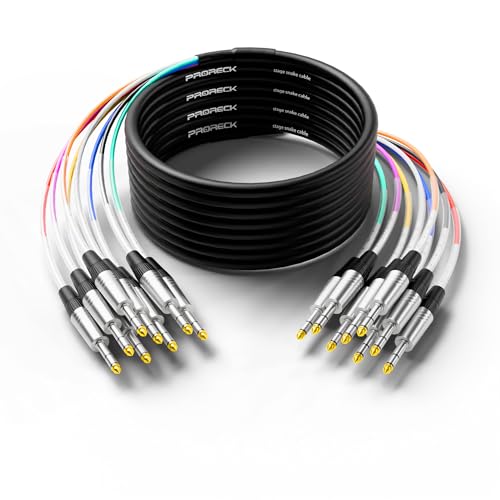
- Eight shielded TRS channels
- Numbered, color-marked connectors
- Copper core for signal transmission
Best For: TRS-based studio and live setups
Best Long-Run XLR Snake

- Eight shielded XLR channels
- 100-foot reach for larger layouts
- Color- and number-marked connectors
Best For: Extended stage and studio cable runs
Best TRS-to-XLR Snake

- Eight shielded audio channels
- TRS-to-XLR male connector configuration
- Numbered and color-marked channels
Best For: Compact mixed-connector audio setups
Stage-Ready Value – 8-Channel XLR Sub Snake
Seismic Audio Speakers 8 Channel Low Profile XLR Send Sub Snake Cable, XLR Splitter Cable, 50 Feet
Check Price On AmazonFor shielded audio snake cables in a live or installed setup, this 50-foot Seismic Audio sub snake provides eight individually shielded channels for routing stage signals to a mixer or power amp. Its labeled stage box, circuit-board construction, and XLR connections make it a practical choice for organized professional audio transmission.
Best For: Stage and mixer setups needing eight channels over a 50-foot run.
Pros:
- Individually shielded conductor pairs help reject extraneous noise.
- Eight XLR channels consolidate multiple connections into one cable.
- Numerically labeled box and circuit-board technology support organized, stable connections.
- XLR female stage-box connectors and XLR male fantails suit professional audio equipment.
Cons:
- At 11 pounds, it is heavier than shorter or simpler snake cables.
- The 50-foot length may be excessive for compact setups.
This is a strong value-oriented option when you need a long, multi-channel XLR run with shielding and rugged construction for mobile or permanent use.
Installation Specialist – Belden 1816P Plenum Snake
Belden 1816P Plenum Audio Snake Cable, Induvidually Shielded 6-Pair 22AWG, PVDF CMP Jacket, Per-Foot
Check Price On AmazonFor permanent installations requiring shielded audio snake cables, the Belden 1816P uses six individually shielded pairs, totaling 12 conductors of 22 AWG wire. Its CMP plenum-rated PVDF jacket is designed for indoor installation environments, and the cable is sold by the foot for flexible project sizing.
Best For: Indoor plenum-rated audio wiring between interfaces, mixers, and professional audio devices.
Pros:
- Six individually shielded pairs help separate audio channels and reduce interference.
- 12-conductor, 22 AWG construction supports multi-channel audio wiring.
- CMP plenum-rated black PVDF jacket suits specified indoor installation applications.
- Sold per foot, allowing cable length to match the project.
Cons:
- This is bulk cable rather than a ready-terminated snake with connectors.
- It is specified for indoor use, not general outdoor deployment.
- Installation requires compatible termination and project-specific labor.
The 1816P is best viewed as an installation cable for planned audio infrastructure, not a plug-and-play stage snake. Its individually shielded pairs and plenum rating are the main advantages.
Color-Coded Flexibility – 8-Channel XLR Snake Cable
This 25-foot eight-channel XLR snake is a convenient option when you want shielded audio snake cables without managing eight separate leads. Its color-coded connectors, multilayer shielding, and male-to-female XLR layout support quick identification and balanced mono signal routing for live, studio, DJ, and karaoke applications.
Best For: Portable live sound and studio setups where fast channel identification matters.
Pros:
- Eight channels can replace a bundle of individual XLR cables.
- Colored connectors and matching channels simplify setup and troubleshooting.
- Oxygen-free copper, foil layers, and braided shields help resist RF and EMI interference.
- Self-locking, nickel-plated connectors with zinc-alloy shells support durable connections.
Cons:
- The 25-foot length is less suitable for larger stages or long cable paths.
- The 24-gauge conductors are lighter than some heavy-duty snake-cable designs.
- It uses three-pin XLR connections, so it is not a universal substitute for other connector types.
With its compact length and clear color coding, this snake favors convenience and fast setup. It is especially practical for performers, small venues, recording spaces, and karaoke systems using standard three-pin XLR equipment.
Compact TRS Routing – 4-Channel Shielded TRS Snake
For shorter runs using quarter-inch connections, this 10-foot Proreck cable is one of the more focused shielded audio snake cables in the group. It carries four channels through TRS-to-TRS connectors, with copper conductors, interference-blocking shielding, and numbered, color-marked leads for easier setup.
Best For: Short professional stage, studio, live, and multi-track audio connections using TRS equipment.
Pros:
- Four channels transmit multiple audio signals through one cable.
- Shielding helps block electromagnetic and radio-frequency interference.
- Numbered and color-marked cables make connections easier to identify.
- Standard male-to-male TRS connectors offer compatibility with mixers, speakers, headphones, and instruments.
Cons:
- The 10-foot length limits it to relatively short cable runs.
- TRS connectors are not suitable for equipment requiring XLR connections.
- It is specified for indoor use.
This Proreck model is a sensible choice when your system uses TRS inputs and outputs and you want cleaner, more organized short-distance routing. Its channel labeling is particularly useful in compact studio or live setups.
Budget Balanced Patch Snake – 3-Foot TRS 8-Channel Snake
For short runs between compatible audio equipment, this Monoprice model is a practical option among shielded audio snake cables. It combines eight 1/4-inch TRS male-to-male lines with 26AWG conductors, aluminum foil shielding, and color-coded wires.
Best For: Connecting recorders, patch bays, and other audio equipment with 1/4-inch TRS jacks in compact indoor or outdoor setups.
Pros:
- Provides eight balanced mono or unbalanced stereo lines.
- Aluminum foil shielding helps support cleaner signal routing.
- Color-coded wires make the eight channels easier to identify.
- Includes a lifetime warranty and Monoprice’s stated quality-control standards.
Cons:
- The 3-foot length is intended for short connections rather than stage runs.
- Uses 1/4-inch TRS male plugs at both ends, limiting compatibility with XLR equipment.
This is a sensible low-cost choice when you need several short TRS connections in one cable bundle. Confirm that your equipment uses compatible 1/4-inch TRS jacks before buying.
Color-Coded XLR Stage Snake – 10-Foot 8-Channel XLR Cable
This 10-foot PRORECK cable is built for routing eight audio signals between XLR-equipped devices. Its shielded construction is designed to help block EMI and RFI, while the copper core supports signal transmission for studio, stage, and live applications.
Best For: Professional stage, studio, and live setups that need an 8-channel XLR male-to-female connection with clearly marked channels.
Pros:
- Eight shielded channels transmit multiple audio signals simultaneously.
- XLR male-to-female connectors suit a range of mixers, speakers, amplifiers, and instruments.
- Matching numbers and colors help speed up setup and troubleshooting.
- At 10 feet, it offers more reach than a short patch snake.
Cons:
- It is an indoor-use cable according to the supplied specifications.
- At 1.15 kg, it is less convenient to carry than a compact short snake.
- Its XLR connectors are not suitable for systems built around 1/4-inch TRS jacks without appropriate adapters.
Choose this model when channel identification and dependable wired routing matter more than minimal size. The 10-foot length provides useful flexibility without the extended reach of a stage box snake.
Long-Run Stage Box Snake – 50-Foot 8-Channel XLR Send
For longer stage and recording runs, this PRORECK model pairs eight XLR channels with a 50-foot cable and a low-profile send design. The circuit board is intended to provide a solid connector connection and help reduce external noise, while numbered connectors simplify routing.
Best For: Live performances, stage events, recording sessions, and studio projects that require an extended 8-channel XLR connection to an analog or digital console.
Pros:
- 50-foot length supports stage-to-console and other long-distance runs.
- Eight channels provide multi-signal routing through a single cable assembly.
- Numbered fantail and stage-box connections make channel matching easier.
- Rugged materials and a circuit board are designed for durable, lower-noise operation.
Cons:
- The long cable is bulkier to transport and store than a short snake.
- It is designed around XLR connections rather than 1/4-inch TRS lines.
- The supplied configuration uses female XLR connectors on the box and male connectors on the fantail, so connector direction should be checked before purchase.
This is the strongest fit of the three for extended professional audio routing. Its 50-foot reach and stage-box format are useful when equipment must be separated across a venue or recording space.
Best Short TRS Snake – 8-Channel 25ft TRS-to-TRS
For compact studio or live setups, this 25-foot option is a practical choice among shielded audio snake cables. Its eight TRS channels, copper core, and added shielding are designed to carry multiple signals while helping reduce EMI and RFI noise.
Best For: Studio recording, live sound, surround sound, and multi-track setups using TRS connections.
Pros:
- Eight channels transmit multiple audio signals at once.
- Shielding helps limit electromagnetic and radio-frequency interference.
- Numbered and color-marked connectors make routing easier.
- 25-foot length offers useful reach without the bulk of a longer snake.
Cons:
- TRS-to-TRS connectors may not suit equipment requiring XLR connections.
- The supplied details specify indoor use.
This PRORECK model is a straightforward pick when your equipment already uses TRS inputs and outputs. Choose it for organized, reliable short-to-medium cable runs rather than mixed TRS/XLR connectivity.
Best Long-Run XLR Snake – 8-Channel 100ft XLR Snake
When your stage or studio requires substantial reach, this 100-foot model stands out among shielded audio snake cables. It combines eight XLR channels with shielding intended to help minimize EMI and RFI, plus numbered and color-marked connectors for faster setup.
Best For: Long stage, studio, and live sound runs using standard XLR male-to-female connections.
Pros:
- 100-foot length supports extended stage and room layouts.
- Eight XLR channels carry multiple signals simultaneously.
- Shielding helps reduce interference-related noise.
- Color and number markings simplify channel identification.
Cons:
- At 18.2 pounds, it is heavier than the shorter options.
- The long cable can be more than needed for compact setups.
- The supplied details specify indoor use.
This is the most suitable choice here for distance and standard XLR connectivity. Its length is valuable for larger installations, though smaller systems may be better served by a shorter snake.
Best TRS-to-XLR Snake – 8-Channel 10ft TRS-to-XLR
This 10-foot model is a useful bridge between TRS and XLR equipment, making it a flexible choice among shielded audio snake cables. Eight channels, a copper core, and interference-reducing shielding support organized signal routing in compact professional setups.
Best For: Short stage, studio, and live sound connections between TRS equipment and XLR inputs.
Pros:
- TRS-to-XLR male configuration supports mixed connector environments.
- Eight channels carry multiple audio signals at the same time.
- Shielding helps block EMI and RFI interference.
- Numbered and color-marked connectors speed up identification.
Cons:
- 10-foot length may not cover larger stage layouts.
- It is less suitable when both connected devices require TRS-to-TRS or XLR-to-XLR wiring.
- The supplied details specify indoor use.
Choose this PRORECK snake when connector conversion is more important than extended reach. Its compact length keeps it practical for nearby equipment while the eight channels reduce cable clutter.
How We Picked the Best Shielded Audio Snake Cables
We compared these Shielded Audio Snake Cables by connection format, channel count, length, shielding design, connector layout, and intended use. The selection includes XLR male-to-female snakes for microphone and line-level connections, TRS-based models for balanced patching, send snakes with breakout ends, and cable suited to permanent installation.
We also considered practical details that affect everyday setup: color-coded connectors, low-profile designs, flexible routing, and whether a cable’s length fits a compact rack, studio patch bay, stage box, or larger venue. Because specifications and construction can vary by model and seller, confirm the current connector configuration and channel layout before ordering.
Quick Comparison
| Best For | Recommended Format | Useful Lengths |
|---|---|---|
| Microphone and stage-box connections | XLR male to female | 10–100 feet |
| Balanced mixer and patch-bay routing | 1/4-inch TRS | 3–25 feet |
| Sending multiple outputs to separate inputs | Low-profile XLR send snake | 50 feet |
| Permanent or in-wall installation | Individually shielded bulk cable | By the foot |
Key Buying Factors for Shielded Audio Snake Cables
Connector Type and Signal Direction
Choose XLR when connecting microphones, stage boxes, preamps, or professional audio inputs and outputs. TRS snakes are useful for balanced line-level connections between mixers, interfaces, patch bays, and outboard equipment. Check whether the snake uses male-to-female, male-to-male, or breakout connectors; a visually similar cable may not work for your signal path.
Channel Count and Cable Length
Match the number of channels to your system, leaving a little capacity for future expansion when the price and cable bulk are reasonable. A 3- or 10-foot snake is easier to manage in a rack or studio, while 25-, 50-, and 100-foot options provide more flexibility on stage. Avoid excessive length when possible, since extra cable can add weight and complicate storage.
Shielding, Construction, and Handling
Shielding helps limit hum and radio-frequency interference, especially around power cables, lighting equipment, and other electronics. Individually shielded channels can be valuable when crosstalk control matters. For live use, look for durable jackets, strain relief, secure connectors, and a design that can tolerate repeated coiling without sharp bends.
Identification and Installation Needs
Color-marked connectors or clearly numbered channels speed up setup and troubleshooting. For fixed installations, verify jacket ratings and local code requirements; plenum-rated cable may be necessary in air-handling spaces. Bulk cable also requires compatible connectors, tools, and termination skills.
Who Should Buy Which Shielded Audio Snake Cables?
- Live bands and small venues: Choose an XLR snake with enough channels and length to reach between the stage and mixer.
- Home and project studios: A short TRS snake is practical for patch bays, interfaces, mixers, and rack equipment.
- Mobile engineers: Prioritize flexible cable, color-coded ends, secure connectors, and a length that fits your regular venues.
- Installers and system integrators: Consider individually shielded, plenum-rated bulk cable when the project requires permanent routing and code-compliant materials.
- Send-and-return setups: Select a send snake or breakout configuration that matches the direction and connector arrangement of your equipment.