Managing several microphones, instruments, and outboard connections can quickly turn a home studio into a maze of individual cables. An audio snake consolidates those runs into one organized connection, making setup cleaner and troubleshooting easier.
This roundup compares 10 practical options across XLR, TRS, and RCA formats, with different channel counts, lengths, connector layouts, and use cases. Use the guide below to match the snake to your equipment and room.
Best 10 Audio Snake Cables for Home Studios Picks for 2026
Best Long-Run TRS Routing

- Eight 1/4-inch TRS channels
- Color-coded and numbered ends
- Serviceable connectors and 22-gauge copper
Best For: Long TRS connections between studio equipment
Best Short XLR Organizer

- Four male-to-female XLR channels
- Matched color coding for easy tracing
- Shielded cable with locking metal connectors
Best For: Short, organized XLR microphone and interface runs
Best XLR Stage Box Setup

- Eight XLR channels with stage box
- Numbered connectors for matching lines
- Circuit board and rugged cable construction
Best For: Multi-channel XLR recording and stage-style setups
Best RCA Home Studio Snake

- Eight RCA channels in one cable
- 20-foot male-to-male configuration
- Designed for DJ, recording, and home entertainment use
Best For: Multi-channel RCA connections in home studios
Compact XLR Routing
PRORECK 10ft 8-Channel XLR Snake

- Eight shielded XLR channels
- Numbered, color-marked connectors
- 10-foot male-to-female layout
Best For: Compact home studios using multiple XLR connections
Long-Run Studio Expansion
Seismic Audio 100ft 12-Channel Snake
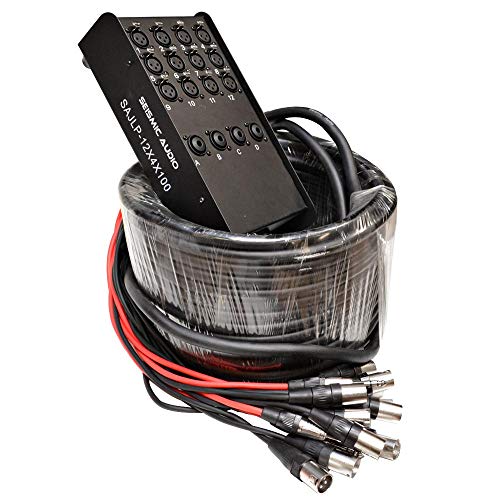
- 12 XLR sends plus 4 TRS returns
- 100-foot reach for distant routing
- Individually shielded channel pairs
Best For: Large home studios and hybrid studio/live setups
Short TRS Connections
PRORECK 6ft 8-Channel TRS Snake

- Eight shielded TRS channels
- Color- and number-marked connectors
- Six-foot length for compact setups
Best For: Desktop home studios using nearby TRS equipment
Versatile Studio Routing
8-Channel XLR Send/Return Snake

- Eight channels for simultaneous XLR routing
- 50-foot reach for distant setups
- Numbered connectors and circuit-board construction
Best For: Home studios needing extended XLR send-and-return connections
Compact Multichannel Connections

- Eight shielded audio channels
- TRS-to-XLR male connectors
- Color and number markings for quick setup
Best For: Short TRS-to-XLR runs in compact studios
Extended Balanced Routing

- Eight shielded XLR channels
- 25-foot male-to-female run
- Color- and number-marked connectors
Best For: Longer XLR routing in home studios and live setups
Best Long-Run TRS Routing – 8-Channel 25-Foot TRS Snake
For home studios that need to route several balanced connections at once, this 25-foot Seismic Audio snake offers eight 1/4-inch TRS channels in one bundled cable. Its color coding, numerical labels, and serviceable ends make it practical for connecting mixers, effects processors, pedal boards, amplifiers, and audio interfaces.
Best For: Home studios needing multiple long TRS runs for patching mixers, effects, or interfaces.
Pros:
- Provides eight 1/4-inch TRS channels in a 25-foot length.
- Color-coded and numerically labeled connections simplify tracing.
- Serviceable ends and 22-gauge high-purity copper support maintainability and signal routing.
Cons:
- Uses 1/4-inch TRS connectors, so it is not a direct fit for XLR-only equipment.
- The 25-foot length may be more cable than compact setups require.
This is a strong choice among audio snake cables for home studios when channel count and reach matter more than a compact footprint. Confirm that your equipment uses compatible 1/4-inch TRS connections before buying.
Best Short XLR Organizer – 4-Channel 6-Foot XLR Snake
This four-channel XLR snake combines male and female connectors into a single six-foot cable, helping keep short studio and stage runs organized. Color-matched channel markers, shielding, and locking metal connectors make it a practical option for microphones, mixers, interfaces, and PA equipment.
Best For: Compact home studios and short XLR connections where tidy cable management is important.
Pros:
- Combines four XLR male-to-female channels in one cable.
- Color-coded ends make channels easier to identify and troubleshoot.
- Oxygen-free copper, foil, and braided shielding help reduce RF and EMI interference.
- Heavy-duty zinc alloy housings and locking connectors suit repeated use.
Cons:
- At six feet, it may not reach across larger rooms or stage layouts.
- It is designed for XLR connections rather than 1/4-inch TRS or RCA equipment.
Among audio snake cables for home studios, this model is geared toward straightforward, short XLR routing. Its bundled design can reduce clutter without committing you to the longer cable runs required by larger snakes.
Best XLR Stage Box Setup – 8-Channel 25-Foot XLR Snake
The PRORECK eight-channel snake is built for routing multiple XLR lines between a stage box and console or other audio equipment. Its 25-foot cable, numbered connections, circuit-board construction, and male-to-female layout make it suited to home recording spaces that also handle live or stage-style setups.
Best For: Home studios needing an eight-channel XLR stage-box connection for recording or live applications.
Pros:
- Offers eight XLR channels over a 25-foot run.
- Numbered box and fantail connectors help match channels during setup.
- Circuit-board construction is designed to support solid connections and reduced external noise.
- Rugged cable construction is intended for transport and repeated use.
Cons:
- The 25-foot cable can be excessive for a small desktop studio.
- Its XLR stage-box configuration is less flexible for setups based on TRS or RCA connections.
This is one of the more suitable audio snake cables for home studios that need a higher channel count and stage-box workflow. It can also help reduce the footprint of a multi-line XLR setup without requiring converters.
Best RCA Home Studio Snake – 8-Channel 20-Foot RCA Cable
Seismic Audio SARCA-8x20 8 Channel 20-Feet RCA Audio Snake Cable Pro Home Audio
Check Price On AmazonFor equipment built around RCA connections, this Seismic Audio snake bundles eight male-to-male channels into a 20-foot cable. It is intended for DJ rigs, home recording studios, and home entertainment systems, offering a single organized run between compatible RCA-equipped components.
Best For: Home studios and entertainment setups that use multiple RCA connections between players, amplifiers, and related equipment.
Pros:
- Provides eight RCA channels in a 20-foot cable.
- Male-to-male connectors suit compatible RCA inputs and outputs.
- Recommended for DJ rigs, home recording studios, and home entertainment systems.
- Includes a one-year manufacturer defect and labor warranty.
Cons:
- RCA connectors limit compatibility with XLR- and TRS-based studio equipment.
- Male-to-male ends may require adapters or different cables for some connections.
This model stands out among audio snake cables for home studios when your signal chain is RCA-based. Check the connector requirements on every device first, since the cable does not replace balanced XLR or TRS routing.
Compact XLR Routing – PRORECK 10ft 8-Channel XLR Snake
For home studios that need to route several microphone or line-level connections neatly, this PRORECK model is a practical pick among audio snake cables for home studios. Its 10-foot length, shielded construction, and numbered, color-marked connectors are designed to simplify multi-channel setups.
Best For: Home studios, multi-track recording, and compact professional audio setups using XLR connections.
Pros:
- Eight channels carry multiple audio signals simultaneously.
- Shielding helps reduce EMI and RFI-related noise.
- Numbered and color-marked connectors make connections easier to identify.
- Standard male-to-female XLR connectors suit many mixers, speakers, amplifiers, and instruments.
Cons:
- The 10-foot length may be limiting for larger rooms or stage layouts.
- It uses XLR connectors, so it is not a direct fit for TRS-only equipment.
This is a straightforward choice when your studio relies on multiple XLR runs and you value quick identification at the patch points. The shorter length can also help keep a smaller workspace organized.
Long-Run Studio Expansion – Seismic Audio 100ft 12-Channel Snake
When a home studio doubles as a rehearsal, tracking, or live-performance space, this Seismic Audio cable offers extensive routing capacity. It stands out among audio snake cables for home studios with 12 XLR sends, four TRS returns, and a 100-foot reach for more flexible equipment placement.
Best For: Larger home studios, recording rooms, live setups, and systems that need both XLR sends and TRS returns.
Pros:
- Provides 12 XLR male sends and four 1/4-inch TRS returns.
- 100-foot length supports distant stage boxes and control positions.
- Individually shielded pairs and 25-gauge conductors are built for signal routing.
- Numerically labeled stage box and color-coded, numbered fanout simplify setup.
Cons:
- At 20.3 pounds, it is substantially heavier than shorter snakes.
- The 100-foot cable may be excessive for a small desk-centered studio.
- Its broad channel count and mixed connector layout may be more than a basic setup requires.
This model makes the most sense when distance and channel count matter more than portability. The steel stage box, handle, strain relief, and compact box dimensions support repeated studio or live-use setup, while the TRS returns add useful routing flexibility.
Short TRS Connections – PRORECK 6ft 8-Channel TRS Snake
For a desktop or rack-centered setup, this six-foot PRORECK cable provides eight TRS channels without the extra length of a stage snake. It is a useful option among audio snake cables for home studios when your mixer, interface, speakers, or other equipment are positioned close together.
Best For: Short-distance studio patching between equipment with compatible 1/4-inch TRS connections.
Pros:
- Eight channels transmit multiple audio signals at once.
- Shielding is designed to help limit EMI and RFI interference.
- Color- and number-marked connectors make channel matching quicker.
- Six-foot length helps avoid unnecessary cable slack in compact workspaces.
Cons:
- The six-foot reach is not suited to widely separated equipment.
- TRS-to-TRS connectors are not a direct match for XLR-only devices.
- It is intended for indoor use according to the supplied product details.
This snake is best viewed as a tidy short-run solution rather than a room-spanning cable. If your equipment uses 1/4-inch TRS connections and sits within a few feet, its channel labeling and shielded design can make patching simpler.
Versatile Studio Routing – 8-Channel XLR Send/Return Snake
For home studios that need to route several XLR connections at once, this 50-foot PRORECK snake provides eight numbered channels in a long, low-profile design. Its circuit board construction is intended to support solid connections and help reduce external noise.
Best For: Home studios, recording sessions, and stage setups that need extended XLR send-and-return runs.
Pros:
- Provides eight channels for simultaneous audio routing.
- Includes numbered connectors for easier setup and identification.
- Features a circuit board designed for solid connections and reduced external noise.
- Offers a 50-foot cable with four XLR female connectors and eight XLR male connectors.
Cons:
- The send-and-return connector arrangement may be more specialized than a standard point-to-point snake.
- Its 50-foot length can be more cable than a compact home-studio setup requires.
This is a practical choice when your studio layout or stage position calls for substantial cable reach and multiple XLR connections in one bundle. The numbered fantail and box can also simplify more complex routing.
Compact Multichannel Connections – 8-Channel TRS-to-XLR Snake
This 10-foot PRORECK cable is a compact option for audio snake cables for home studios, combining eight shielded TRS-to-XLR male channels in one bundle. Color and number markings help make multichannel connections faster to identify, while the copper core supports signal transmission.
Best For: Home studios and small live or stage setups connecting equipment with TRS and XLR ports over short distances.
Pros:
- Combines eight audio channels in a single cable.
- Shielding is designed to help block EMI and RFI interference.
- Color- and number-marked connectors can speed up setup.
- Ten-foot length suits shorter runs and compact workspaces.
Cons:
- The 10-foot length may not reach across larger rooms or stages.
- TRS-to-XLR male connectors are less suitable for setups requiring XLR-to-XLR connections.
Choose this model when you need a short, organized connection between TRS-equipped outputs and XLR inputs. Its shielding and channel identification are useful for multitrack recording and other tidy, fixed setups.
Extended Balanced Routing – 25-Foot 8-Channel XLR Snake
For home studios that need a longer XLR connection between equipment, this 25-foot PRORECK snake bundles eight shielded XLR male-to-female channels. The copper core, interference shielding, and color-coded numbering are aimed at dependable, organized multichannel routing.
Best For: Home studios, recording rooms, and live setups requiring an extended eight-channel XLR run.
Pros:
- Provides eight XLR male-to-female channels in one cable.
- Shielding is designed to reduce EMI and RFI interference.
- Color- and number-marked connectors make channels easier to match.
- Twenty-five-foot length offers more reach than a short patch snake.
Cons:
- At 4.9 pounds, it may be less convenient to move than a shorter cable.
- The bundled length can be excessive for very compact desktop setups.
This model is a sensible middle ground for studios that need more reach without moving to a 50-foot snake. Its standard XLR male-to-female layout makes it a straightforward option for compatible audio equipment.
How We Picked the Best Audio Snake Cables for Home Studios
We focused on the details that matter in a home recording environment: connector compatibility, channel count, cable length, shielding, labeling, construction, and practical routing. The selection includes XLR send-and-return snakes, TRS options for interfaces and patch bays, RCA models for home-audio equipment, and several lengths suited to desks, racks, tracking rooms, and rehearsal spaces.
Because a snake is only useful when its connectors match the equipment on both ends, we treated format and direction as key criteria. We also considered serviceable or circuit-board-style construction where listed, since easier maintenance can extend the cable’s working life.
Quick Comparison
| Need | Best format to consider | Important specification |
|---|---|---|
| Connecting microphones to an interface or mixer | XLR male-to-female | Channel count and correct gender |
| Routing balanced line-level gear | TRS or TRS-to-XLR | Balanced wiring and connector layout |
| Connecting consumer or home-audio equipment | RCA | RCA plug arrangement and channel labeling |
| Desktop or rack wiring | 6- to 10-foot cable | Enough reach without excess slack |
| Long room or stage runs | 25- to 100-foot cable | Routing path, shielding, and strain relief |
Key Buying Factors for Audio Snake Cables for Home Studios
Connector Type and Signal Direction
XLR snakes are generally the natural choice for microphones and many mixer connections. Check whether the snake uses male, female, or mixed XLR ends. TRS snakes are useful for balanced line-level connections, interfaces, patch bays, and effects gear. RCA snakes are intended for unbalanced consumer-style connections and should not be substituted for balanced XLR or TRS wiring.
Channel Count
Choose enough channels for your current setup, then allow some room for expansion. An eight-channel snake is a flexible choice for many home studios, while four channels may be easier to manage for a small recording desk. Twelve-channel designs make more sense when you are wiring a larger interface, mixer, or wall-panel setup.
Length and Routing
Measure the actual path, including turns around racks or furniture. Short cables help prevent clutter near a desk, while 25-foot or longer models suit separate tracking areas and equipment racks. Avoid buying excessive length if it will sit coiled near power supplies, where poor organization can complicate troubleshooting.
Shielding, Labeling, and Construction
Shielding helps reduce unwanted noise, especially around computers, power adapters, and lighting. Color-marked connectors and numbered channels make patching faster. Serviceable ends or sturdier internal construction can also be valuable if the cable will be frequently moved or installed permanently.
Who Should Buy Which Audio Snake Cables for Home Studios?
Choose a short XLR snake if your microphones and interface are close together. A short TRS model is better for connecting balanced effects, patch bays, or studio hardware. Select a 20- to 25-foot cable when equipment is separated across a room, and consider a 50- or 100-foot option only when your routing distance genuinely requires it. For consumer receivers, mixers, or other unbalanced components, an RCA snake is the appropriate match. When uncertain, prioritize the connector type and signal path first, then select the shortest length that comfortably reaches.