A well-sealed studio door can help reduce outside noise, limit air leaks, and improve recording consistency. The right option depends on your door gap, frame dimensions, and whether you need perimeter sealing or an under-door barrier.
This roundup compares adhesive foam and rubber seals, acoustic kits, door sweeps, and draft stoppers for practical studio upgrades at different budgets.
Best 10 Studio Door Seals Picks for 2026
Flexible Foam Pick

- 33 feet of flexible EVA foam
- Mesh-reinforced self-adhesive backing
- Useful for varied sealing and insulation tasks
Best For: DIY users needing versatile studio gap coverage
Complete Acoustic Kit

- Includes perimeter seal and door sweep
- Designed for one standard-size door
- Made to help block sound through gaps
Best For: Standard studio doors needing an all-in-one kit
Long-Roll Neoprene Choice
33FT Neoprene Door Weather Strip

- 33 feet of cuttable sealing material
- Neoprene and CR foam construction
- Supports weatherproofing and sound reduction
Best For: Multiple doors and narrow studio door gaps
Large-Gap Profile

- Fits 5/16- to 15/32-inch gaps
- Flexible hollow EPDM profile
- Helps reduce drafts, dust, light, and noise
Best For: Uneven or larger studio door gaps
Thickened D-Shape Seal
50-Foot Black Rubber Door Strip
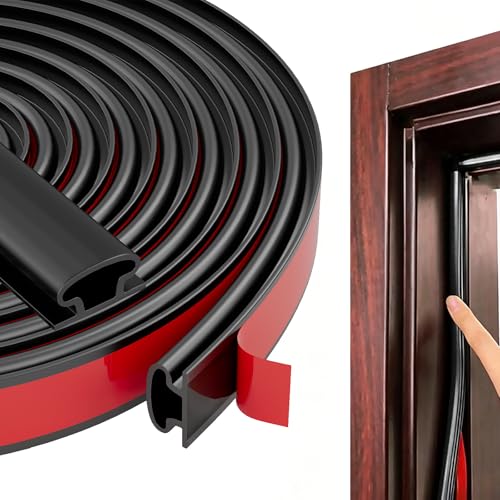
- 50-foot cut-to-fit roll
- Fits 0.1–0.22-inch gaps
- Helps block drafts and noise
Best For: Large studio sealing projects with narrow gaps
Wide Transparent Barrier
16-Foot Silicone Draft Stopper

- Transparent 1.4-inch-wide strip
- Fits gaps up to 0.8 inch
- Useful for glass and sliding doors
Best For: Visible glass surfaces and wider studio door gaps
Flexible Studio Seal
20-Foot Black Silicone D-Strip

- Fits 1/8–1/4-inch gaps
- Flexible silicone D-shape
- Includes adhesive promoter
Best For: Routine studio door and window frame sealing
Best Budget Draft Blocker
2-Pack Silicone Under-Door Seal

- Two 39-inch self-adhesive silicone strips
- Helps block drafts, dust, insects, and noise
- Flexible, cuttable design for bottom-door gaps
Best For: Studios needing affordable bottom-of-door coverage
Best Quick Install

- Installs in under one minute after cleaning
- Trimmable 39-inch silicone bottom sweep
- Helps reduce drafts, dust, heat transfer, and noise
Best For: Studios wanting fast bottom-door sealing
Flexible Foam Pick – 33FT EVA Foam Door Seal
For studio door seals that need flexible coverage, this 33-foot EVA foam weatherstrip offers a self-adhesive option for filling door-frame gaps. Its soft, cuttable construction can also help with insulation, light blocking, friction, and some sound reduction.
Best For: DIY studio owners sealing doors, windows, and irregular gaps with a versatile foam strip.
Pros:
- 33 feet of black EVA foam for multiple projects
- Mesh-reinforced adhesive backing is designed for a secure hold
- Flexible material can be cut for varied gap sizes
- Suitable for doors, windows, vents, garages, vehicles, and more
Cons:
- Foam-strip installation requires careful surface preparation
- The notes do not specify a precise supported gap range
This is a practical multipurpose choice when you want one long roll for studio sealing and other household applications. Measure the gap first and clean the surface before installation.
Complete Acoustic Kit – Soundproofing Door Seal Kit
Audimute Soundproofing Acoustic Door Seal Kit - Door Sweep and Seal - (Standard Size)
Check Price On AmazonThis kit is a straightforward option for studio door seals because it combines a perimeter door seal with a door sweep. It is sized to treat one standard door and is intended to help block sound passing through gaps around the door.
Best For: Apartment studios, recording rooms, and other standard-size doors needing a coordinated seal and sweep.
Pros:
- Includes both a 25-foot door seal and a 4-foot door sweep
- Designed for one standard-size door
- Specifically intended to reduce sound traveling through door gaps
- Easy to install
Cons:
- Standard sizing may not suit unusually large or irregular doors
- The kit is limited to one door
Unlike a roll of general weatherstripping, this package addresses both the door edges and bottom in one purchase. Confirm your door dimensions before choosing it.
Long-Roll Neoprene Choice – 33FT Neoprene Door Weather Strip
For studio door seals with broad general-purpose use, this 33-foot CR foam and neoprene rubber strip provides a cut-to-length solution. It is designed to help seal gaps while adding weatherproofing, shock absorption, heat insulation, and soundproofing support.
Best For: Users who want a long, narrow adhesive strip for doors, windows, vents, and other gap-sealing projects.
Pros:
- 33-foot roll can cover multiple applications
- Cut-to-length installation needs no tools
- Neoprene and CR foam construction supports weatherproofing and sound reduction
- Upgraded adhesive is intended to resist peeling when properly applied
Cons:
- It is a narrow 1/2-inch by 1/4-inch strip, so larger gaps may need another profile
- Surface must be cleaned before application for reliable adhesion
This strip is a good fit when you need flexible coverage across several doors or projects. Its relatively narrow profile makes measuring the gap especially important before installation.
Large-Gap Profile – 20 FT D-Shaped Door Seal
When studio door seals need to handle a wider or uneven gap, this hollow D-shaped EPDM strip is designed for openings from 5/16 to 15/32 inch. Its compressible profile can help reduce drafts, dust, light leaks, energy loss, and some outside noise.
Best For: Doors or windows with measured large gaps that need a compressible, weather-resistant seal.
Pros:
- Designed for uneven 5/16- to 15/32-inch gaps
- Flexible EPDM rubber remains usable in hot and cold weather
- Hollow D profile compresses and rebounds during repeated use
- Mesh-reinforced adhesive backing supports easy installation
Cons:
- At 20 feet, it provides less material than the 33-foot options
- White color may be less discreet on dark studio doors
- Requires accurate gap measurement before ordering
This is the most targeted choice for a larger, uneven opening rather than a small standard gap. Clean and dry the surface, press firmly, and allow the adhesive 24 hours to bond.
Thickened D-Shape Seal – 50-Foot Black Rubber Door Strip
For studio door seals that need to cover multiple narrow gaps, this 50-foot black D-shaped strip offers a practical cut-to-fit solution. Its thickened TPE construction is designed to help block drafts, noise, dust, light, moisture, odors, and other everyday irritants around doors and windows.
Best For: Larger studio sealing projects involving narrow gaps from 0.1 to 0.22 inch.
Pros:
- Long 50-foot roll can cover several door or window frames.
- Flexible, cuttable material accommodates different lengths and shapes.
- Self-adhesive backing is designed for a secure bond after installation.
- Helps reduce drafts, outside noise, rattles, vibrations, and squeaks.
Cons:
- Designed for relatively narrow gaps, so it may not suit openings over 0.22 inch.
- Surface must be clean and dry; cold temperatures can reduce adhesive performance.
- Requires up to 24 hours for the adhesive bond to secure fully.
This is a strong choice when you need substantial length and a dark, unobtrusive seal for studio doors. Measure the gap first, and use a hair dryer to warm the adhesive backing if installing in low temperatures.
Wide Transparent Barrier – 16-Foot Silicone Draft Stopper
For studio door seals where a wider, less noticeable strip is useful, this transparent silicone weather seal covers gaps up to 0.8 inch. The flexible material and adhesive backing can help reduce drafts, dust, moisture, light, collisions, and everyday noise around doors, windows, and glass surfaces.
Best For: Transparent sealing on glass doors, sliding doors, shower doors, and wider frame gaps.
Pros:
- Transparent finish is less visually prominent on glass and light-colored surfaces.
- Wide 1.4-inch profile is suitable for gaps up to 0.8 inch.
- Flexible waterproof silicone helps with weatherproofing and collision cushioning.
- Can be cut to the required length and installed with peel-and-stick adhesive.
Cons:
- At 16 feet, it provides less material than the longer rolls in this roundup.
- Requires a clean, dry, dust-free surface for effective adhesion.
- Its wide profile may be more noticeable on narrow door frames.
This option stands out for studios with glass doors or wider gaps where a transparent finish matters. Its broad silicone strip is also useful when the seal needs to provide some cushioning against contact.
Flexible Studio Seal – 20-Foot Black Silicone D-Strip
This 20-foot silicone D-shaped strip is a versatile choice for studio door seals, especially when you need to handle small to medium frame gaps. It compresses smoothly across 1/8- to 1/4-inch openings and is intended to help limit drafts, dust, moisture, light gaps, and outside noise.
Best For: Everyday studio door and window sealing where flexible compression and easy installation are priorities.
Pros:
- Flexible silicone is designed to remain soft through changing temperatures.
- 20-foot roll can be trimmed for different doors, windows, cabinets, and frames.
- Helps with weatherproofing, dustproofing, light blocking, and noise reduction.
- Includes an adhesive promoter for stronger bonding on smooth surfaces.
Cons:
- Recommended for gaps from 1/8 to 1/4 inch, limiting use on larger openings.
- Black color may be more visible on light-colored frames.
- Installation still depends on careful surface cleaning and firm pressing.
This is a balanced pick for routine studio treatment because it combines a manageable roll length, flexible silicone, and a straightforward peel-and-stick installation. It is best suited to accurately measured, relatively small frame gaps.
Best Budget Draft Blocker – 2-Pack Silicone Under-Door Seal
For studio door seals that address drafts at the bottom of the door, this two-pack uses flexible, self-adhesive silicone strips. Each 39-inch seal is designed to help reduce air leakage, dust, insects, water, and outside noise.
Best For: Studios needing an affordable under-door seal for draft control, sound reduction, and basic gap protection.
Pros:
- Two 39-inch strips provide useful coverage for multiple doors or replacement needs.
- Silicone construction is flexible, bendable, and easy to cut.
- Helps reduce drafts, dust, insects, water, and external noise.
- Hair-dryer warming can help the adhesive bond more firmly.
Cons:
- It is a bottom-of-door seal, so it will not seal gaps around the frame.
- Installation requires a clean surface and careful adhesive preparation.
This is a practical choice when you want two simple studio door seals with broad everyday benefits. Its self-adhesive silicone design is especially useful for reducing airflow and unwanted entry beneath the door.
Best for Long Runs – 50-Foot D-Shape Rubber Weather Seal
When comparing studio door seals for multiple doors or frame gaps, this 50-foot D-shaped rubber strip offers substantial material in one roll. Its self-adhesive backing is designed for door and window frames, with a stated fit for gaps from 2.5 to 5.5 mm.
Best For: Studios sealing several frame gaps or keeping extra weatherstripping on hand for future projects.
Pros:
- 50 feet of rubber weatherstripping supports larger or multiple installations.
- Includes tailor scissors for cutting the strip to size.
- Helps reduce drafts, dust, sound, and temperature changes around frames.
- Flexible rubber is designed to resist freezing and cracking in extreme temperatures.
Cons:
- It is intended for gaps of approximately 2.5 to 5.5 mm, so measuring first is important.
- The narrow 0.35-inch width may not suit larger bottom-door gaps.
- The adhesive should be allowed to set for 24 hours before heavy use.
This option stands out for quantity and versatility rather than a single oversized door gap. Measure the studio door frame first, then use the included scissors to create clean, custom-length sections.
Best Quick Install – Vellure Silicone Door Sweep
For a fast studio door seal installation, this Vellure silicone sweep is sized at about 39 inches long and is designed to attach to the bottom of the door. Its thick chambered construction helps address drafts, dust, heat transfer, and ambient noise.
Best For: Studios that want a quick, low-effort bottom-door installation with added draft and noise reduction.
Pros:
- Designed to install in under one minute after cleaning the door surface.
- Strong adhesive is intended for indoor and outdoor surfaces.
- Silicone sweep can be trimmed to fit the door width.
- Thick 3D chambers help reduce drafts and external noise.
Cons:
- At roughly 39 inches long, it may require trimming or may not cover wider doors.
- As a bottom sweep, it does not seal the sides or top of the door frame.
- The supplied notes specify a maximum gap fill of 1.5 inches, so unusually large gaps may need another solution.
This is a strong pick when installation speed matters. The silicone profile and removable adhesive make it a convenient choice for reducing under-door airflow and ambient sound without a complicated fitting process.
How We Picked These Studio Door Seals
We selected options that address the most common studio-door problems: perimeter gaps, oversized clearances, under-door drafts, and sound leakage. The list includes foam, silicone, rubber, and combination kits so you can match the seal to the door’s construction and the size of the gap.
We also considered installation effort, adhesive-backed convenience, available length, profile shape, and whether each product is better suited to temporary treatment or a more durable installation. A door seal can reduce air movement and high-frequency leakage, but it will not replace wall insulation, a solid-core door, or professional acoustic construction.
Quick Comparison
| Type | Best for | Main advantage | Watch for |
|---|---|---|---|
| Foam tape | Small, uneven gaps | Easy to cut and install | May compress or wear faster |
| D-shaped rubber or silicone | Consistent medium gaps | More durable compression seal | Requires accurate sizing |
| Door sweep | Gap beneath the door | Blocks drafts and light at the bottom | May drag on flooring |
| Acoustic seal kit | Comprehensive door sealing | Combines perimeter and bottom coverage | Can require more careful fitting |
Key Buying Factors for Studio Door Seals
Measure the Gap First
Close the door and measure the space between the door edge and frame, including the gap beneath the door. Choose a seal that compresses slightly when closed; an oversized strip can prevent the door from latching, while an undersized one may not close the leak.
Choose the Right Material
Foam is affordable and forgiving for small irregular gaps. Silicone and rubber generally offer better durability and resilience, especially on frequently used doors. For the bottom edge, use a sweep or draft stopper designed to contact the floor without creating excessive resistance.
Check Adhesive and Surface Compatibility
Adhesive-backed seals work best on clean, dry, smooth surfaces. Remove dust and grease before installation, and allow the adhesive to set according to the manufacturer’s instructions. Painted, textured, or dusty frames may need additional preparation or mechanical fastening.
Buy Enough Length
Measure all four sides of the frame, then add a little extra for corners and mistakes. Longer rolls are useful for multiple doors, while shorter kits can reduce waste for one standard-size door.
Who Should Buy Which Studio Door Seals?
Choose foam weatherstripping if you need an inexpensive fix for narrow or uneven perimeter gaps. Pick a D-shaped rubber or silicone strip for a more durable seal around a regularly used studio door. If the main problem is sound, light, or air entering beneath the door, prioritize a door sweep or under-door draft stopper. For the most complete improvement, choose an acoustic door seal kit that combines perimeter and bottom sealing.
Before installing, confirm the product dimensions, door swing, floor clearance, and surface condition. A properly fitted seal should close the gap while allowing the door to latch and open normally.