Capturing birdsong, wind, water, and insects takes more than a decent microphone. You need a field recorder for nature sounds that can handle changing conditions, quiet detail, and long recording sessions without getting in the way.
In this roundup, we focused on practical options for outdoor audio capture, from compact handheld recorders to models better suited for longer sessions and more flexible input setups.
Best 10 Field Recorder for Nature Sounds Picks for 2026
Professional Multitrack Float Recorder
Zoom H6 Essential for Nature Audio

- 6-track 32-bit float recording
- Built-in X/Y mics plus 4 XLR/TRS inputs
- USB audio interface and SD backup recording
Best For: Serious field sessions and expandable wildlife recording
Budget Bird Listening Recorder
Podoy Long-Range Nature Listener

- Simple one-button recording
- Includes headphone for outdoor listening
- Up to 300 ft visible/hear range claim
Best For: Beginners and kids doing casual nature observation
Studio-Grade Audio Recorder
Philips DVT7500 for Outdoor Sound

- 24-bit/96kHz high-fidelity recording
- Built-in mics plus XLR/line-in connectors
- Rechargeable battery for longer sessions
Best For: Users wanting clean audio and external input flexibility
Ultra-Light Nature Field Recorder
Zoom H1 Essential for Ambience

- 32-bit float stereo recording
- Only 92 grams for easy portability
- USB-C mic mode plus SD card recording
Best For: Portable ambience and wildlife recording on the go
Long-Life Ambient Recorder
5000mAh 128GB Magnetic Recorder

- Triple noise reduction for cleaner audio
- 5000mAh battery claims up to 40 days
- 128GB storage and voice activation for long sessions
Best For: Long sessions, hands-free capture, and simple operation
Flexible Pro-Input Recorder

- 32-bit float recording for easier gain management
- Two XLR/TRS inputs plus 3.5mm stereo I/O
- Supports SDXC cards up to 1TB
Best For: Portable setups that need flexible mic inputs
High-Capacity Portable Recorder

- PCM recording with automatic noise reduction
- 136GB storage and up to 9000 hours capacity
- 68-hour battery life with simple one-click recording
Best For: Extended portable recording with easy playback
Portable Stereo Pick
Tascam DR-07X for Natural Sound Capture

- Adjustable A-B and X-Y mic positions
- Up to 17.5 hours on AA batteries
- Quick controls for recording and markers
Best For: Lightweight stereo recording of nature ambience and field scenes
Budget Quick-Capture Choice
Tonfarb 64GB Simple Recorder for Fast Sessions

- One-click record/save operation
- 64GB storage and voice activation
- PCM WAV up to 1536kbps with noise reduction
Best For: Simple, high-storage recording when fast operation matters
Long-Run Field Option
Flyglory 160GB Stereo Recorder for Extended Captures
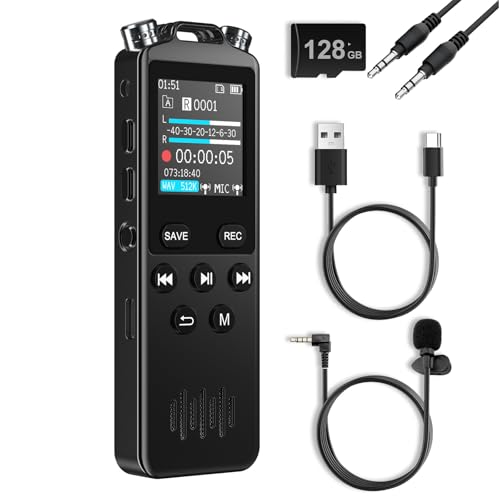
- Dual mics with 1536kbps stereo recording
- 160GB storage and 68+ hour battery life
- Outdoor and long-distance recording modes
Best For: Extended outdoor ambience recording with lots of storage
Professional Multitrack Float Recorder – Zoom H6 Essential for Nature Audio
If you want a field recorder for nature sounds that can handle changing environments without clipping, the Zoom H6 Essential is built for that kind of work. Its 32-bit float recording across 6 tracks helps preserve detail when birds, insects, wind, and sudden animal calls jump in level, while the built-in X/Y mics and four XLR/TRS inputs give you room to expand your setup.
Best For: Recordists who want a flexible handheld recorder for wildlife ambience, layered field sessions, and backup-friendly recording.
Pros:
- 6-track 32-bit float recording helps reduce the risk of distortion in unpredictable outdoor sound.
- Built-in X/Y mics can capture up to 135 dB SPL for louder natural scenes.
- Four XLR/TRS combo inputs support external mics or other sources when needed.
- USB audio interface mode adds extra workflow flexibility for editing and monitoring.
Cons:
- More features than a basic handheld recorder, so it may be more than casual users need.
- Runs on 4 AA batteries rather than a built-in rechargeable pack.
For serious nature recording, this model stands out for its combination of onboard stereo capture, expandable inputs, and clip-resistant multitrack recording. It is a strong choice if you want one recorder that can cover simple ambience sessions and more advanced field setups.
Budget Bird Listening Recorder – Podoy Long-Range Nature Listener
This field recorder for nature sounds is aimed more at listening and short capture than full-length audio work. The Podoy device includes a headphone, claims a visible and hear range up to 300 ft, and offers simple one-button recording with 12-second record time, which makes it easy to use for quick outdoor observation.
Best For: Kids, beginners, or casual nature observers who want a simple listening and short recording device.
Pros:
- Very simple operation with a dedicated record button.
- Includes headphones for listening while observing outdoors.
- Long-range listening claim up to 300 ft.
- Compact, lightweight-style nature observation setup for casual use.
Cons:
- Recording time is limited to 12 seconds per record.
- Battery is not included.
- More of a listening device than a serious field audio recorder.
If your priority is quick nature observation rather than detailed capture, this is the most approachable option here. It is best treated as a novelty-style outdoor listener with short recording ability, not a full-featured recorder for extended wildlife sessions.
Studio-Grade Audio Recorder – Philips DVT7500 for Outdoor Sound
The PHILIPS DVT7500 is a practical field recorder for nature sounds if you want higher-fidelity capture and the option to connect external sources. Its high-quality microphones, 24-bit/96kHz recording, and XLR/line-in connections make it better suited to more controlled field work where clean detail matters.
Best For: Nature recordists who want a higher-quality handheld recorder with external input options.
Pros:
- 24-bit/96kHz recording supports high-fidelity audio capture.
- High-quality microphones are built in for direct field recording.
- XLR and line-in connectors allow external instruments or sound sources.
- Rechargeable Li-polymer battery is designed for extra-long recording sessions.
Cons:
- Notes do not list 32-bit float recording, so it may be less forgiving of sudden peaks.
- Less specialized for wildlife use than recorders with explicitly stated nature-focused features.
This is a solid choice if you want dependable, high-resolution recording with more conventional pro-audio connections. For nature sound work, it is especially useful when you value fidelity and input flexibility over ultra-light simplicity.
Ultra-Light Nature Field Recorder – Zoom H1 Essential for Ambience
For a compact field recorder for nature sounds, the Zoom H1 Essential is built around quick capture and easy portability. Its stereo microphones, 32-bit float recording, and dedicated ambience-friendly use case make it a strong fit for recording room tone, wind, birds, and other environmental textures without carrying a larger rig.
Best For: Hikers, travelers, and creators who want a small recorder for ambience and wildlife sound capture.
Pros:
- 32-bit float recording helps with unpredictable outdoor levels.
- Built-in stereo microphones are ready for fast nature recording.
- Very lightweight at 92 grams for easy carry on hikes or trips.
- USB-C mic mode adds versatility for calls, voiceovers, and livestreams.
Cons:
- Two AAA batteries are required.
- Digital recording time is listed at 10 hours, which may be modest for long outings.
- Fewer physical inputs than larger multitrack recorders.
If you want a simple, compact recorder for capturing the sound of the outdoors, this model keeps the workflow straightforward. It is especially appealing when portability matters more than advanced expansion options.
Long-Life Ambient Recorder – 5000mAh 128GB Magnetic Recorder
If you’re looking for a field recorder for nature sounds, this model is more of a general-purpose voice recorder than a dedicated outdoor rig. Its triple noise reduction, voice-activated recording, and large battery make it practical for capturing long ambient sessions where you want simple, hands-free operation.
Best For: Long recording sessions, hands-free capture, and users who want strong battery life with easy one-touch control.
Pros:
- AI triple noise reduction helps improve clarity by reducing unwanted noise.
- 5000mAh battery supports up to 40 days of continuous recording claims.
- 128GB storage is built for very long sessions and large file capacity.
- Voice-activated mode can help skip silent stretches in ambient recording.
Cons:
- Designed mainly as a voice recorder, not a purpose-built field recorder.
- Built-in mic limits flexibility compared with external-mic recorders.
- Magnetic attachment is useful for metal surfaces, but not a recording feature.
This is a strong pick if convenience and endurance matter more than advanced field-recording inputs. For nature sounds, it makes sense as a simple long-run recorder, but it is best suited to casual capture rather than specialized outdoor audio setups.
Flexible Pro-Input Recorder – Zoom H1 XLR 32-Bit Float
For anyone shopping for a field recorder for nature sounds, the Zoom H1 XLR stands out because it offers more recording flexibility than a basic voice recorder. Its 32-bit float recording, dual XLR/TRS inputs, and 3.5mm stereo mic/line input make it a solid choice when you want to connect different microphones and capture detailed outdoor audio.
Best For: Recordists who want flexible mic inputs, 32-bit float recording, and a compact setup for portable audio capture.
Pros:
- 32-bit float recording helps simplify level handling during unpredictable sound capture.
- Two XLR/TRS locking inputs support more external mic options.
- 3.5mm stereo input and output add extra monitoring flexibility.
- SDXC support up to 1TB is useful for extended sessions.
Cons:
- Battery life is listed at about 10 hours, which is shorter than some long-run recorders.
- The notes focus on general recording, not outdoor-specific features.
- Requires 2 AA batteries, so power planning matters for field use.
If you want a compact recorder with more serious input options, this is the most versatile pick in the group. It is especially appealing when your nature recordings may benefit from external microphones or a more controlled setup.
High-Capacity Portable Recorder – 136GB Playback Recorder
As a field recorder for nature sounds, this Tonfarb model is best thought of as a high-capacity portable recorder with strong convenience features. It offers PCM recording, automatic noise reduction, and voice-activated recording, which can help when you need long capture sessions and easy playback in the field.
Best For: Users who want lots of storage, long battery life, and simple one-button recording for extended sessions.
Pros:
- 136GB total storage and up to 9000 hours of MP3 recording capacity.
- 68-hour battery life supports extended use between charges.
- PCM recording with dual noise reduction aims for clearer sound capture.
- A-B repeat, playback, and password protection add practical usability.
Cons:
- The microphone is built in, so there’s less flexibility than with external-input recorders.
- Its feature set is centered on voice recording rather than dedicated field recording.
- Best results depend on how well the built-in mic handles outdoor conditions.
This recorder offers a good mix of storage, battery life, and easy operation for long audio sessions. For nature sounds, it works best when you want straightforward portable recording without needing a more advanced multi-input setup.
Portable Stereo Pick – Tascam DR-07X for Natural Sound Capture
If you want a field recorder for nature sounds that’s simple to carry and ready for detailed ambient capture, the Tascam DR-07X is built around adjustable stereo microphones and quick-access controls. Its A-B and X-Y mic positions let you adapt the pickup pattern to different outdoor scenes, while the handheld design and USB power option make it practical for longer sessions in the field.
Best For: Recordists who want a lightweight stereo recorder for ambient nature capture, interviews, and general field use.
Pros:
- Adjustable unidirectional mics support both A-B and X-Y recording positions.
- Dual internal condenser microphones are designed to capture subtle to loud sound.
- Up to 17.5 hours on two AA batteries, with USB mobile battery power as an option.
- Quick controls make recording, level changes, marker insertion, and deletion easy.
Cons:
- Storage depends on a microSD card, which is not included in the notes.
- No built-in weatherproofing or rugged outdoor housing is mentioned.
- Primarily a stereo handheld recorder rather than a multi-mic field production deck.
The DR-07X stands out for straightforward stereo recording and flexible mic positioning, making it a sensible choice for capturing birds, wind, streams, and other outdoor soundscapes. It balances portability, battery life, and easy operation better than many more complex recorders.
Budget Quick-Capture Choice – Tonfarb 64GB Simple Recorder for Fast Sessions
The Tonfarb 64GB recorder is a practical pick if you need a field recorder for nature sounds on a budget, especially when ease of use matters more than advanced controls. It offers one-click recording, voice activation, and PCM recording up to 1536kbps, so you can start capturing sound quickly and keep files organized for later review.
Best For: Users who want a simple, high-storage recorder for quick capture, voice-activated sessions, and basic outdoor sound documentation.
Pros:
- One-click record/save design makes it fast to start and stop sessions.
- 64GB built-in memory is rated for up to 4,600 hours of recordings.
- PCM WAV recording up to 1536kbps with automatic noise reduction.
- Voice activation, A-B repeat, bookmarking, and password protection add convenience.
Cons:
- Built-in microphone design is better suited to general recording than dedicated field ambience work.
- The notes emphasize lecture and interview use more than outdoor sound capture.
- Single AAA battery power is less robust than rechargeable systems for extended outings.
For casual nature recording or quick sound notes, this Tonfarb model offers a lot of storage and straightforward operation. It is less specialized than a pro field recorder, but its voice activation and long recording capacity can be useful for simple ambient sessions.
Long-Run Field Option – Flyglory 160GB Stereo Recorder for Extended Captures
If your priority is a field recorder for nature sounds with long runtime and strong stereo detail, the Flyglory 160GB recorder is built for extended sessions. Its dual microphones, 1536kbps recording, and selectable recording modes make it a solid fit for capturing outdoor ambience, while the rechargeable battery and large storage capacity help it handle long days away from home.
Best For: Recordists who need a compact, rechargeable stereo recorder for long outdoor captures and detailed ambient sound.
Pros:
- Dual microphones and 1536kbps stereo recording support detailed sound capture.
- 160GB storage and up to 68+ hours of battery life suit long sessions.
- Multiple modes include outdoor, long-distance, voice control, and scheduled recording.
- Compact zinc-alloy body with password protection adds portability and file security.
Cons:
- The notes list built-in microphones rather than external mic inputs.
- Controls are feature-rich, which may be more than needed for simple recordings.
- The product focuses broadly on meetings and content creation, not only field ambience.
The Flyglory model is the strongest option here for long, uninterrupted nature recording thanks to its battery life and large storage. Its outdoor mode and stereo setup make it a practical choice when you want to capture extended soundscapes with minimal interruption.
How We Picked the Best Field Recorder for Nature Sounds
We prioritized recorders that are relevant for outdoor ambience work: low-noise recording, usable stereo capture, battery life, simple controls, and formats that make editing easier later. We also considered whether each model is realistic for field use, not just general voice memos.
Quick Comparison
For a Field Recorder for Nature Sounds, the best choice depends on your workflow. Compact handheld units are easiest for hiking and spontaneous captures. Models with XLR/TRS inputs give you more flexibility if you want to add external microphones. Voice recorders with large storage and voice-activated features can work for long unattended sessions, but they are usually less ideal for critical ambient audio.
Key Buying Factors for a Field Recorder for Nature Sounds
Microphone Quality and Noise Floor
Look for clean stereo microphones and low self-noise. Nature recordings often include very quiet detail, so recorder noise can become obvious fast.
Power, Storage, and File Handling
Long outdoor sessions require dependable battery life and enough storage for high-quality files. Check whether the recorder supports common file types and easy transfer over USB.
Format Support and Headroom
32-bit float recording can be a major advantage in the field because it helps prevent clipped takes when sounds suddenly get loud. If your recordings vary from soft ambience to sharp calls, that extra headroom is valuable.
Portability and Mounting
A lightweight body, easy button layout, and tripod or accessory mounting options make outdoor work smoother. If you plan to stay mobile, avoid bulky units unless you specifically need extra inputs.
Who Should Buy Which Field Recorder for Nature Sounds?
Choose a compact handheld recorder if you want the easiest all-around setup for trails, gardens, and spontaneous wildlife capture. Choose an XLR-capable model if you plan to use external mics or need a more expandable rig. Choose a simple voice recorder if your priority is long unattended recording, but understand it may be less refined for serious ambient work.
If your main goal is clean, flexible nature audio, focus on input quality, low noise, and handling over big feature lists. The right Field Recorder for Nature Sounds is the one that lets you get the take quickly and reliably, then move on before the moment passes.