Choosing among the best accordions for beginners means balancing playability, size, sound, and the right button or keyboard layout. The options below cover children, adult learners, and students who want a more capable instrument without starting at professional-level prices.
Use the comparison and buying advice after the product listings to narrow your choice by age, musical goals, portability, and budget.
Best 10 Accordions for Beginners Picks for 2026
Compact Starter Pick

- 22-key, 8-bass beginner layout
- Responsive non-slip buttons
- Includes backpack, straps, gloves, and cloth
Best For: Adult beginners seeking a compact button accordion
Folk Performance Pick
Hohner Panther G/C/F Diatonic Accordion

- Three-row, 31-button G/C/F layout
- 12 bass buttons with double strap brackets
- Includes a Hohner diatonic method book
Best For: Beginners learning G/C/F folk and diatonic styles
Student Piano-Style Pick

- Familiar black-and-white piano-style keys
- 16 flexible bass keys
- Includes padded case, strap, gloves, and cloth
Best For: Beginners and students wanting piano-like keys
Folk Sound Upgrade
31-Key 12-Bass Diatonic Accordion

- F/B/E diatonic folk tuning
- Airtight bellows and hand-tuned reeds
- Includes case, straps, gloves, and cloth
Best For: Adult beginners focused on folk music and a larger button layout
Best Starter Toy
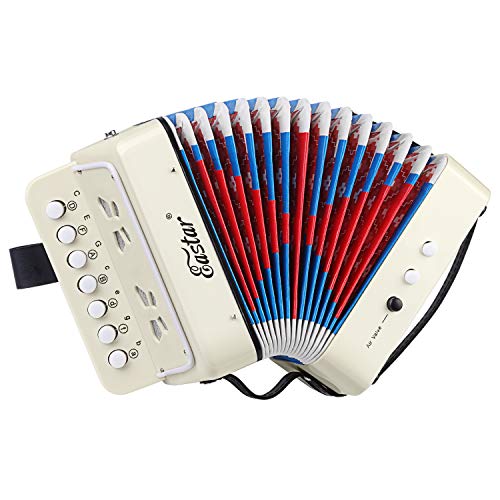
- Compact 1.9-pound design for young players
- Includes learning guide and song set
- Food-grade ABS body with durable bellows
Best For: Children ages three and up starting musical exploration
Best Full-Size Beginner Pick

- 31 keys and 12 bass buttons for expanded practice
- G/C/F diatonic tuning for folk and ensemble use
- Includes case, strap, gloves, and polishing cloth
Best For: Adult beginners and amateur players
Best Portable Kids Option

- Lightweight 1.4-pound portable design
- Seven buttons produce 14 notes
- Includes learning guide and belt buckles
Best For: Children and first-time players on the go
Best First Instrument

- 10-key design with bass and chord buttons
- Lightweight and compact for children
- CPC-certified, non-toxic materials listed
Best For: Young children starting music lessons or musical play
Best Portable Toy Accordion

- Compact 7-key design for basic play
- Belt buckles help secure the instrument
- Includes learning guide and song set
Best For: Toddlers and children needing a portable starter instrument
Best Piano-Style Starter

- 17 piano keys and 8 bass buttons
- Celluloid body with metal bellows cover
- Suitable for children and adult beginners
Best For: Beginners wanting a fuller piano-style practice layout
Compact Starter Pick – 22-Key 8-Bass Accordion
For shoppers comparing accordions for beginners, this 22-key, 8-bass model offers a compact starting point with responsive round buttons, adjustable voice changers, and included carrying accessories. Its wood, ABS, and metal construction is hand-polished and designed for stable intonation.
Best For: Adult beginners who want a compact button accordion with a bag and basic playing accessories.
Pros:
- 22 keys and 8 bass buttons provide a manageable beginner layout.
- Responsive, non-slip black-and-white buttons are designed for comfortable playing.
- Includes a backpack, two straps, gloves, and a cleaning cloth.
- One-year warranty is included.
Cons:
- The smaller 8-bass configuration offers less accompaniment range than larger models.
- The listing describes multiple voice changers but does not specify their number.
This is a practical choice if portability and a straightforward button layout matter most. Consider a larger accordion if you already know you need more bass options.
Folk Performance Pick – Hohner Panther G/C/F Diatonic Accordion
Among accordions for beginners, the Hohner Panther stands out for learners focused on diatonic folk styles. It has a three-row G/C/F layout with 31 buttons and 12 bass buttons, plus straps and a Hohner diatonic method book to support practice.
Best For: Beginners and adult players learning G/C/F diatonic accordion for folk, polka, or related styles.
Pros:
- Three-row, 31-button design provides more playing options than compact beginner models.
- Includes 12 bass buttons and double strap brackets.
- Straps, cleaning cloth, and instructional method book are included.
- Features a matte black basswood body.
Cons:
- It is available only in the G/C/F configuration, limiting key flexibility.
- No gig bag is included.
- The listed warranty is limited to 90 days.
The Panther is better suited to learners who specifically want a traditional three-row diatonic setup than to those seeking a general-purpose piano accordion. Plan separately for storage and transport protection.
Student Piano-Style Pick – 25-Key 16-Bass Accordion
This 25-key, 16-bass model is a practical option for accordions for beginners who prefer piano-style black-and-white keys. Its responsive keyboard, spaced bass keys, leather windbox, adjustable strap, and padded suitcase-style packaging make it suitable for lessons and home practice.
Best For: Beginners, adults, and young students who want piano-like keys with a moderately expanded bass section.
Pros:
- Black-and-white keyboard offers a familiar piano-style layout.
- 16 flexible bass keys provide more accompaniment choices than an 8-bass model.
- Leather windbox is designed to provide an airtight seal.
- Includes a carrying bag, padded suitcase box, strap, gloves, and cleaning cloth.
Cons:
- The listing does not specify the accordion’s weight or dimensions.
- The blue finish may not suit shoppers seeking a traditional appearance.
This model balances beginner-friendly keys with useful carrying and maintenance accessories. It is a sensible middle ground for students who want more bass capability without moving to a much larger listed configuration.
Folk Sound Upgrade – 31-Key 12-Bass Diatonic Accordion
For learners comparing accordions for beginners with a focus on folk music, this F/B/E diatonic model offers 31 treble keys, 12 bass buttons, airtight bellows, and hand-tuned reeds. The included case and accessories also make it practical for lessons, practice, and travel.
Best For: Beginner and adult folk musicians seeking a larger diatonic layout for Irish, polka, bluegrass, or country playing.
Pros:
- 31 treble keys and 12 bass buttons provide a fuller diatonic layout.
- Airtight bellows are designed to support stable airflow and intonation.
- Hand-tuned reeds are intended to produce a balanced, mellow folk tone.
- Includes a carry case, adjustable shoulder straps, gloves, and polishing cloth.
Cons:
- The F/B/E tuning is specialized and may not suit players needing other keys.
- At 7.99 kg, it is heavier than the compact 22-key model in this roundup.
- The listing identifies it as diatonic, so it may not meet piano-accordion expectations.
This is the strongest fit here for shoppers prioritizing folk-oriented sound and a more capable button layout. Its greater weight and specialized tuning are the main trade-offs for beginners.
Best Starter Toy – Eastar 10-Key Kids Accordion
For families looking for accordions for beginners, the Eastar Kids Accordion is a compact introduction designed for children. Its 10 keys, included learning guide, lightweight body, and child-oriented construction make it practical for early musical exploration.
Best For: Children ages three and up who want a portable first accordion for home, classroom, or school use.
Pros:
- Compact 7.5-by-7.2-by-4-inch design weighs 1.9 pounds.
- Includes a learning guide and interesting song set for getting started.
- Food-grade ABS resin and durable leather, kraft paper, and cloth bellows.
- Belt buckles help children hold the instrument securely.
Cons:
- Its small 10-key layout is intended for children rather than advanced playing.
- The product is designed as a beginner children’s instrument, so its capabilities are limited compared with full-size accordions.
This is a sensible pick when portability, approachable design, and child-friendly materials matter more than a full range of keys or bass buttons. The one-year warranty and included guide add useful support for a first instrument.
Best Full-Size Beginner Pick – 31-Key G/C/F Accordion
Among accordions for beginners, this 31-key, 12-bass model is the more substantial choice for adults and players who want room to practice folk music, ensemble parts, or stage performance. Its G/C/F diatonic push-pull tuning is paired with a protective accessory kit.
Best For: Beginners, teachers, and amateur players seeking a larger instrument for practice, folk music, ensembles, or performances.
Pros:
- 31 keys and 12 bass buttons provide a fuller playing setup than a children’s accordion.
- G/C/F diatonic push-pull tuning suits folk and ensemble playing.
- Thick leather bellows are described as airtight for stable, clear tones.
- Includes a case, adjustable shoulder strap, gloves, and polishing cloth.
Cons:
- At 13.9 pounds, it is considerably heavier than the mini beginner models.
- The larger design may be less convenient for young children or highly portable practice.
- Diatonic push-pull tuning may require learning its specific playing system.
This model makes more sense for an adult beginner or progressing player than for a small child. The handcrafted basswood build, accessory package, and two-year manufacturer warranty support regular practice and travel, though its weight should be considered.
Best Portable Kids Option – LIEKE 10-Key Button Accordion
The LIEKE is one of the more approachable accordions for beginners who want a small, portable instrument for a child. Its button layout can produce 14 notes, while the included learning guide and belt buckles make early practice easier to manage.
Best For: Children and first-time players who need a compact accordion for home, school, or travel.
Pros:
- Small 7-by-7.2-by-4-inch body weighs 1.4 pounds.
- Seven-button design produces 14 notes through bellows movement.
- Includes a learning guide for beginner instruction.
- Food-grade ABS materials and leather, kraft paper, and cloth bellows.
Cons:
- Its mini seven-button layout is limited compared with full-size accordions.
- The plastic body and child-focused design are not intended for advanced performance.
- Warranty information requires contacting the seller or checking the manufacturer’s website.
Choose the LIEKE when low weight and easy transport are priorities. It offers a simple way to explore bellows, buttons, and basic coordination, but players who need bass buttons or a broader range should move to a full-size model.
Best First Instrument – Kids Accordion
For families looking for accordions for beginners, this compact 10-key model is designed around young players ages 3 and up. Its lightweight build, easy-play buttons, bass and chord keys, and included case make it a practical introduction to experimenting with music.
Best For: Young children beginning music lessons or exploring a first instrument at home, school, or family gatherings.
Pros:
- Compact, lightweight design suited to little hands.
- Includes air valve, bass button, chord button, and easy-play controls.
- Made with non-toxic materials and certified by CPC, according to the listing.
- Includes a case and advertised after-sales support.
Cons:
- The 10-key layout is intended for introductory play rather than advanced performance.
- The product is specifically sized for children, so it may feel limited for older learners.
This is a straightforward starter choice when portability and simple controls matter most. Its child-focused design makes it suitable for early musical exploration, though beginners seeking a fuller keyboard layout may prefer a larger model.
Best Portable Toy Accordion – Horse Kids Accordion
This blue mini accordion is a practical option among accordions for beginners who need a lightweight instrument for basic play. Its belt buckles help hold it in place, while the guide and song set support early learning and the compact size makes it easy to carry.
Best For: Toddlers and children who want a portable introductory instrument for home, classrooms, travel, or gifting.
Pros:
- Compact dimensions and 700-gram weight make it easy to transport.
- Belt buckles are designed to help keep the accordion secure during play.
- Includes a learning guide and song set for getting started.
- Uses food-grade ABS resin and durable bellows materials, according to the listing.
Cons:
- The seven-button layout is limited for players seeking broader musical range.
- No warranty is listed in the supplied product details.
The Horse Kids Accordion emphasizes portability, simple controls, and beginner-friendly support. It is a sensible pick for casual musical play, but its small button layout is best viewed as an introduction rather than a long-term instrument.
Best Piano-Style Starter – Lotkey 17-Key Accordion
For beginners who want a more familiar keyboard layout, the Lotkey 17-key piano accordion offers piano-style keys and eight bass buttons. Its celluloid body, upgraded stainless-steel bellows cover, and lightweight design make it a more substantial practice option than a basic toy accordion.
Best For: Children and adult beginners who want to practice on a piano-style layout and build foundational keyboard familiarity.
Pros:
- Piano keys provide a spacious layout that can support future piano studies.
- 17 keys and eight bass buttons offer more playing options than smaller beginner models.
- Celluloid body and stainless-steel bellows cover are designed for durability.
- Glossy surface is described as scratch-resistant and easy to clean.
Cons:
- At 2.9 pounds, it is heavier than the smaller children’s models in this roundup.
- The larger layout may be more than very young children need for first-time exploration.
This model is the strongest fit for learners who want a bridge between a toy accordion and a more conventional keyboard instrument. Its expanded key count supports practice, while the larger body may be less convenient for very small players.
How We Picked These Accordions for Beginners
We selected instruments across the main beginner categories: small children’s button accordions, compact student models, piano accordions, and three-row diatonic accordions. Our evaluation focuses on beginner-relevant details such as key and bass-button count, portability, included accessories, construction, stated age suitability, and whether the instrument is better suited to simple exploration or structured learning.
Because entry-level accordions can differ substantially in layout and tuning, buyers should treat the product type as carefully as the price. A toy accordion may introduce bellows and buttons, while a student or diatonic model is more appropriate for learning an identifiable musical system.
Quick Comparison
- For very young children: Choose a lightweight 10-key toy-style accordion with simple controls and manageable bellows.
- For older kids: A 17-key piano accordion or a sturdier 10-key model can provide a more substantial introduction.
- For adult beginners: Consider a 22-key, 25-key, or 31-key instrument, depending on preferred layout and physical comfort.
- For folk and traditional music: Three-row diatonic models in common tunings such as G/C/F or F/B/E offer a more specialized path.
- For portability: Smaller instruments are easier to carry, but they generally provide fewer notes and less expressive range.
Key Buying Factors for Beginners
Layout and Learning Goals
Piano accordions use a keyboard familiar to many beginners, while button accordions may be more compact but require learning a different note arrangement. Diatonic accordions are especially suited to traditional styles and have a layout that may vary by tuning. Confirm the layout before buying lessons, books, or accessories.
Size, Weight, and Fit
The instrument should sit securely against the body without making the learner struggle to operate the bellows. For children, prioritize age-appropriate weight and dimensions. Adults can usually handle larger models, but a lighter student accordion may encourage more frequent practice.
Key and Bass Capacity
More keys and bass buttons generally provide greater musical range and accompaniment options, but they can also add weight and complexity. Beginners who want basic melodies may not need a large instrument, whereas students planning formal lessons may benefit from a fuller layout.
Build Quality and Accessories
Look for secure straps, responsive buttons or keys, consistent bellows movement, and a case when portability matters. Included gloves, cloths, or carry bags can be convenient, but sound quality and comfortable handling should take priority over extras.
Who Should Buy Which Accordions for Beginners?
Parents buying a first instrument for a toddler or young child should start with a compact toy-style accordion, especially when the goal is musical play rather than formal study. Older children and casual learners may prefer a 17-key piano accordion with a more recognizable keyboard layout.
Adults beginning structured lessons should generally look at the 22-key or 25-key student options, while learners pursuing folk music should choose a 31-key, three-row diatonic accordion in the tuning their teacher or musical tradition uses. If you are uncertain, ask an instructor before purchasing: the correct layout can matter more than an extra few keys.