Choosing the right harmonica for recording means balancing tone, tuning, comfort, and consistency—not simply picking the least expensive instrument. A good microphone will reveal both the character and the flaws of a harmonica.
This roundup compares 10 options, including diatonic blues harmonicas, multipack choices, bundled starter instruments, and a 12-hole chromatic model. Use the guide below to match the instrument to your playing style, recording goals, and budget.
Best 10 Harmonicas for Recording Picks for 2026
Editor’s Pick

- Warm, mellow, versatile tone
- Airtight recessed-plate design
- Includes case, manual, and cloth
Best For: Versatile studio and beginner use
Beginner-Friendly Choice
- Bright, responsive tone
- Moisture-resistant ABS comb
- One-year limited warranty
Best For: Beginners and blues recording
Portable Value

- Compact pocket-sized design
- Rich, responsive phosphor bronze reed
- Includes blue case and warranty
Best For: Traveling players and mobile recording
Multi-Key Starter Set

- Includes C, G, and A keys
- Bright tone with ABS combs
- Vented case supports drying
Best For: Budget-conscious multi-key recording setups
Versatile Chromatic Pick

- 12-hole chromatic design with 48 tones
- Valve-free construction simplifies cleaning
- Includes zip pouch and color box
Best For: Players seeking chromatic range for practice or recording
Complete Recording Bundle

- 10-hole diatonic harmonica in C
- Bright profile with moisture-resistant ABS comb
- Includes case, manual, and polishing cloth
Best For: Beginners recording blues and classic diatonic parts
Beginner Blues Value

- 10-hole diatonic design in C
- 20 brass reeds with 0.9 mm brass reed plates
- Includes a protective case
Best For: Beginners making simple blues recordings
Best Beginner Pick
East top C-Key Junior Blues Harmonica

- Easy-blowing C-key design for beginners
- Compact build with rich, responsive tone
- Includes case, manual, and cleaning cloth
Best For: Beginners, children, students, and portable practice or basic recording
Best for Comfortable Practice
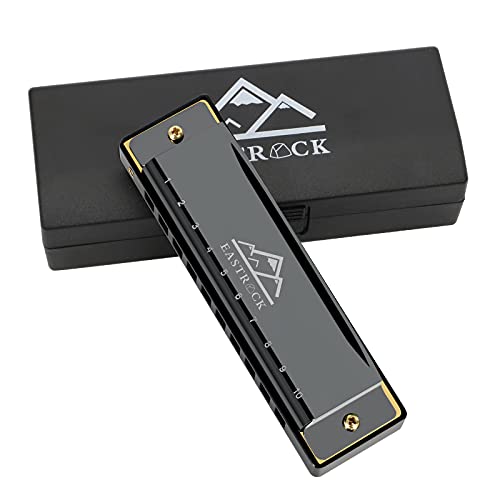
EastRock C-Key Black Blues Harmonica
- Stable airflow support for easier playing
- Phosphor bronze reeds with stainless steel cover
- Comfortable ABS resin comb and included case
Best For: Beginners and intermediate players recording varied musical styles
Best for Bending
East top Deluxe C-Key Blues Harmonica

- Easy bending and overblowing support
- Rich tone from phosphor bronze reeds
- Stainless cover and protective plastic case
Best For: Players recording expressive blues and other styles in C
Editor’s Pick – Hohner Special 20
For players seeking harmonicas for recording, the Hohner Special 20 is a versatile Key of C diatonic model with a warm, mellow sound profile. Its recessed reed plates, airtight design, and smooth playability make it suitable for both beginner practice and more demanding studio work.
Best For: Recording musicians who want a reliable, versatile harmonica with a warm tone.
Pros:
- Warm, mellow, and versatile sound profile
- Recessed brass reed plates and plastic comb support comfortable, airtight playing
- Bundle includes a zip case, online manual, and polishing cloth
- Available in multiple keys, octaves, and minor tunings
Cons:
- This bundle is supplied in Key of C only
- The instructional manual is online rather than printed
The Special 20 is a strong all-purpose choice when consistent response and a comfortable mouthpiece matter for recorded performances. The included accessories add practical value for storage and care.
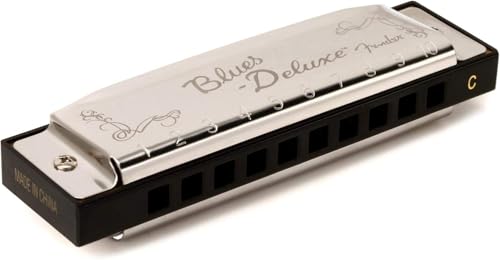
Beginner-Friendly Choice – Fender Blues Deluxe
The Fender Blues Deluxe is a straightforward Key of C option for players building a harmonica setup for recording. Its 10-hole diatonic design, responsive brass reeds, bright tone, and moisture-resistant ABS comb suit beginners and blues-oriented players.
Best For: Beginners and blues players who prefer a bright-sounding Key of C harmonica.
Pros:
- Bright sound with responsive brass reeds
- Moisture-resistant ABS comb supports tuning stability
- Traditional shape and chromed metal covers are designed for comfortable playing
- Includes a one-year limited manufacturer warranty
Cons:
- Only the Key of C is included
- Its bright sound may be less suitable for players seeking a mellow recording tone
This model offers an accessible entry point for home recording, especially for blues parts and straightforward melodies. Choose it when a bright response and beginner-friendly design are priorities.
Portable Value – East top 008K
The East top 008K is a compact Key of C diatonic harmonica for players who need a portable instrument for recording sessions, practice, or travel. Its phosphor bronze reed, electroplated reed plate, ABS comb, and rich sound profile are designed for responsive playing across blues, folk, rock, country, and jazz.
Best For: Mobile musicians and beginners looking for a compact, rich-sounding harmonica.
Pros:
- Compact pocket-sized design with a blue case
- Rich sound and responsive phosphor bronze reed
- Precision-made ABS comb and electroplated reed plate
- Suitable for multiple musical styles and includes a one-year manufacturer warranty
Cons:
- Only the Key of C is included
- The compact format may not suit players seeking a broader multi-key set
With its portable size and rich, responsive character, the 008K is convenient for capturing ideas away from a full studio. It is a practical single-key option for students and traveling performers.
Multi-Key Starter Set – Fender Blues Deluxe 3-Pack
The Fender Blues Deluxe three-pack is a practical starting point for recording musicians who need more than one key. It includes harmonicas in C, G, and A, each with chromed metal covers and moisture-resistant ABS combs for bright sound and tuning stability.
Best For: Players building a basic multi-key recording collection for blues and other bright-toned parts.
Pros:
- Includes three useful keys: C, G, and A
- Moisture-resistant ABS combs support tuning stability
- Chromed metal covers are designed for comfortable performance
- Protective vented case allows the harmonicas to dry after playing
Cons:
- All three harmonicas share a bright sound profile
- The set does not include minor or alternate tunings
For recording sessions that call for key changes, this three-pack is more flexible than a single harmonica. Its vented case is also useful for storing the instruments between takes and allowing them to dry.
Versatile Chromatic Pick – East Top Forerunner 2.0
For players comparing harmonicas for recording, the East Top Forerunner 2.0 offers a 12-hole chromatic design in C with 48 tones. Its stainless steel covers, transparent ABS comb, and valve-free construction make it a practical option for players who want chromatic range with simpler cleaning.
Best For: Beginners, students, and recording setups that need a broader chromatic range.
Pros:
- 12-hole chromatic layout provides 48 tones in the key of C.
- Valve-free design can be washed directly and does not require winter warm-up.
- Stable cylinder-shaped cover supports make assembly easier.
- Includes a zip pouch and color box for storage and transport.
Cons:
- Its 240 g weight is higher than the listed Hohner option.
- The chromatic layout may be more involved for players seeking a simple blues harp.
The Forerunner 2.0 stands out when tonal range and maintenance convenience matter more than a traditional 10-hole diatonic format. Its compact size and included pouch also suit portable recording or practice sessions.
Complete Recording Bundle – Fender Blues Deluxe
Among harmonicas for recording, the Fender Blues Deluxe is a straightforward 10-hole diatonic choice in C. Its bright sound profile, moisture-resistant ABS comb, and included case make it convenient for new players building a basic recording or practice setup.
Best For: Beginners and blues-oriented players who want an instrument with storage and learning accessories.
Pros:
- Classic 10-hole diatonic format in the key of C.
- Moisture-resistant ABS comb supports tuning stability.
- Chromed metal covers are protective and easy to clean.
- Bundle includes a carrying case, online manual, and polishing cloth.
Cons:
- It offers a single diatonic key rather than chromatic coverage.
- The bright sound profile may not suit players seeking a darker tone.
This bundle is a practical entry point for recording blues and other diatonic parts. The protective vented case is designed to help the harmonica dry after playing, while the included manual supports learning.
Beginner Blues Value – Hohner Blues Band
For simple harmonicas for recording setups, the Hohner Blues Band is a compact 10-hole diatonic instrument in C with a blues sound profile. Its brass reeds, stainless steel coverplate, and included case keep the essential package focused for beginners.
Best For: New players and basic blues recording parts in the key of C.
Pros:
- Beginner-oriented 10-hole diatonic design.
- Includes 20 brass reeds and 0.9 mm brass reed plates.
- Stainless steel coverplate offers a durable exterior.
- Comes with a case for storage and transport.
Cons:
- Only the key of C is supplied.
- It does not include the extra manual or polishing cloth listed with the Fender bundle.
The Blues Band keeps the setup uncomplicated and emphasizes an authentic blues-oriented format. It is a sensible choice when you need an accessible C harmonica for learning, overdubs, or occasional recording.
Best Beginner Pick – East top C-Key Junior Blues Harmonica
For shoppers seeking harmonicas for recording on a beginner-friendly budget, this compact C-key diatonic model emphasizes easy blowing, responsive playability, and a rich tone. Its blue plastic comb, stainless steel cover, and included cleaning cloth make it a practical starter instrument.
Best For: Beginners, children, students, and casual recording or practice in blues, folk, rock, country, and jazz.
Pros:
- Designed for easy blowing and responsive play.
- Brass reeds and a 0.8 mm reed plate provide a rich sound and higher-pitch response.
- Compact pocket-size design is easy to carry.
- Includes a case, instruction manual, and cleaning cloth.
Cons:
- Its C key limits tonal flexibility unless you add other harmonicas.
- The junior-oriented design may be less suitable for advanced players seeking broader professional features.
This is a sensible entry point for recording simple melodies and blues parts, particularly when portability and straightforward playability matter more than a multi-key setup.
Best for Comfortable Practice – EastRock C-Key Black Blues Harmonica
This EastRock model is a practical option for harmonicas for recording when you want beginner-friendly airflow control and durable construction. Its phosphor bronze reeds, stainless steel cover, and lip-friendly ABS resin comb are suited to regular practice across several musical styles.
Best For: Beginners and intermediate players recording blues, folk, pop, classical, jazz, country, or rock.
Pros:
- Phosphor bronze reeds and a stainless steel cover support a clear, durable setup.
- Food-grade ABS resin comb is designed to be comfortable against the lips.
- Built-in airflow splitter helps maintain stable airflow for easier playing.
- Includes a case and has an ergonomic, easy-to-hold design.
Cons:
- Only the C key is supplied, so different song keys require additional instruments.
- The notes do not specify included cleaning accessories or instructional materials.
With its airflow-focused design and comfortable materials, the EastRock is a strong everyday choice for developing control before tracking more demanding harmonica parts.
Best for Bending – East top Deluxe C-Key Blues Harmonica
For harmonicas for recording that need expressive bends and a fuller response, this deluxe C-key model is built around precision-made phosphor bronze reeds and a 1.0 mm reed plate. Its stainless steel cover and electroplated reed plate are intended to support smooth playing and flexible techniques.
Best For: Players from beginner through professional level who want a C-key harmonica for blues, folk, rock, country, or jazz recording.
Pros:
- Designed to bend easily and support techniques such as overblowing.
- Phosphor bronze reeds and a 1.0 mm reed plate provide rich tone and pitch response.
- Stainless steel cover is smooth and designed not to hurt the lips.
- Includes a protective plastic case and remains pocket-sized.
Cons:
- It is available in only the C key, which may not suit every recording arrangement.
- The compact single-harmonica package does not provide a broader key collection.
The Deluxe model is the most technique-oriented choice here, making it a good fit when expressive bends, overblowing, and a richer recorded part are priorities.
How We Picked the Best Harmonicas for Recording
We focused on instruments that are practical for home studios, demos, live-session recording, and beginner practice. The selection includes established Hohner and Fender models alongside affordable East Top and EastRock options. We considered the instrument type, key, construction, included accessories, ease of maintenance, and suitability for common recording applications such as blues, folk, pop, and layered acoustic arrangements.
Because most listed models are in the key of C, they are especially useful for learning, basic recording exercises, and playing with compatible backing tracks. The chromatic option adds flexibility for players who need a wider melodic range and chromatic notes.
Quick Comparison
| Best For | Recommended Type | What to Look For |
|---|---|---|
| Blues and folk leads | 10-hole diatonic | Responsive reeds, comfortable cover plates, reliable tuning |
| Beginners | Affordable C-key diatonic | Simple layout, case, cleaning cloth, and instructional material |
| Multiple songs and keys | Three-harmonica pack | C, G, and A coverage plus secure storage |
| Melodic and classical-style parts | 12-hole chromatic | Slide mechanism, accurate tuning, and smooth response |
Key Buying Factors for Harmonicas for Recording
Choose the Right Type
A 10-hole diatonic is the standard choice for blues, rock, country, and folk. It is compact, expressive, and relatively easy to mic. A chromatic harmonica uses a slide to access additional notes, making it better suited to fully melodic lines, jazz, and arrangements that require sharps or flats.
Prioritize Tuning and Response
Recording exposes uneven reeds, air leaks, and notes that respond slowly. Look for a harmonica with consistent tuning and a clean response across its useful range. Experienced players may prefer a specific reed setup, while beginners generally benefit from an instrument that plays easily with moderate breath pressure.
Consider the Key and Your Microphone Setup
Key of C is a sensible starting point because it is common in lessons and practice materials. If you record with guitarists or play in several song keys, a C, G, and A set can be more useful than three similar single-key instruments. For close-mic recording, check that the covers feel comfortable and do not introduce unwanted handling noise.
Account for Maintenance and Accessories
A case helps protect reeds from dust and moisture, while a cleaning cloth can make regular care easier. After recording, allow the harmonica to dry before storing it. Bundles with manuals and cases can offer better practical value for new players, though accessories should not outweigh poor tuning or uncomfortable playability.
Who Should Buy Which Harmonicas for Recording?
Beginners: Start with an affordable C-key diatonic that includes a case or basic learning materials. It offers the simplest path into recording and common blues or folk techniques.
Players building a small studio collection: Choose a reliable single instrument first, then add other keys as your repertoire expands. A three-pack is convenient when you already know you will use C, G, and A.
Blues and roots musicians: A responsive 10-hole diatonic is the most natural fit for bends, rhythmic chugging, and expressive lead parts.
Players needing broader melodic range: Consider the 12-hole chromatic model, particularly if your arrangements require notes unavailable on a standard diatonic. Before buying, confirm that its slide action and playing style match your recording needs.