Choosing the right mixer can make a small studio feel far more capable. The best options balance clean sound, enough inputs for your gear, and features that actually help during recording or streaming.
Below, we focus on practical audio mixers for studio use, from compact home setups to flexible boards with USB, Bluetooth, effects, and phantom power.
Best 10 Audio Mixers for Studio Picks for 2026
Studio Mixer Pick
Yamaha MG10XU 10-Input Stereo Mixer with Effects

- 10 inputs with USB for recording
- D-PRE preamps and 1-knob compressors
- Built-in SPX digital effects
Best For: Small studios and home recording with onboard effects
Budget Live-Stream Mixer
Pyle 8 Channel DJ Audio Mixer with Bluetooth

- Bluetooth streaming and USB interface support
- 8 channels with XLR, 1/4-inch, and phantom power
- DSP FX and 3-band EQ on all channels
Best For: Budget studio and streaming setups with wireless playback
Compact Recording Choice
Yamaha MG06 6-Input Compact Stereo Mixer

- 6-channel analog mixer in a small footprint
- D-PRE preamps with EQ, filters, and compression
- Rugged metal chassis for regular use
Best For: Small studios and simple recording setups
Multi-Use Desktop Mixer
Aveek 5 Channel Audio Mixer with PC Recording

- Built-in USB-B recording chip for PC capture
- XLR, RCA, 1/4-inch, Bluetooth, and USB playback
- 48V phantom power with EQ, echo, and delay
Best For: Podcasts, streaming, and small recording setups
Compact Analog Studio Mixer
Mackie Mix12FX 12-Channel Compact Mixer with Effects

- 12 channels with 4 mic/line inputs
- Phantom power for condenser mics
- Built-in reverbs, choruses, and delays
Best For: Small studios and podcast setups needing simple analog control
Versatile Budget Studio Mixer
Pyle PMXU63BT 6-Channel Mixer with Bluetooth and USB
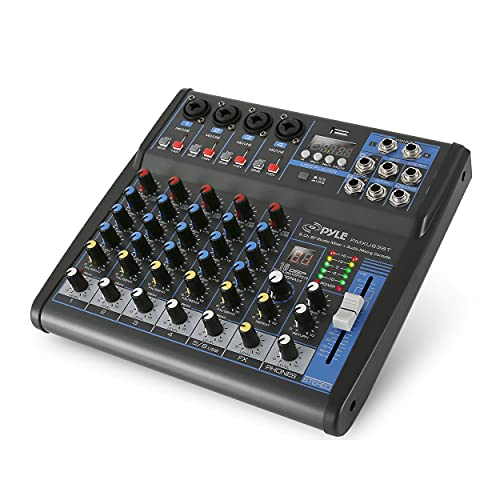
- Bluetooth and USB for easy playback and recording
- 48V phantom power for condenser mics
- 16-bit DSP FX plus 3-band EQ
Best For: Creators who want an affordable mixer with wireless and USB features
Creator Starter Bundle
TENLAMP G10 Creator Audio Mixer Bundle with Microphone

- All-in-one bundle with mixer and microphone
- Noise reduction plus voice effects
- Works with PC, phone, and tablet
Best For: Streamers and beginners wanting a simple complete audio setup
Compact 4-Channel Starter Mixer

- USB audio interface for simple PC recording
- Bluetooth input for wireless music playback
- 48V phantom power in a compact body
Best For: Home recording, podcasting, and portable small-session setups
Ultra-Thin 8-Channel Workhorse

- USB, flash reader, MP3, and Bluetooth input support
- XLR and 1/4-inch inputs with 48V phantom power
- Ultra-thin chassis with 3-band EQ on all channels
Best For: Slim, practical mixing for studio, karaoke, and live use
Studio Mixer Pick – Yamaha MG10XU 10-Input Stereo Mixer with Effects
If you want audio mixers for studio work that add a little polish without getting complicated, the Yamaha MG10XU is a strong all-around choice. It combines 10 inputs, USB connectivity, and built-in SPX digital effects, while the D-PRE preamps and 1-knob compressors help keep recordings clean and controlled.
Best For: Small studios, home recording setups, and creators who want simple recording plus onboard effects.
Pros:
- 10-input layout with USB for easy studio recording.
- Studio-grade D-PRE preamps are designed for natural bass and smooth highs.
- 3-band EQ, high-pass filters, and 1-knob compressors give practical tone control.
- Built-in SPX digital effects add useful finishing options.
Cons:
- Not as compact as a 6-channel mixer if you only need a few sources.
- Some users may not need the built-in effects for basic tracking.
The MG10XU is a sensible pick when you want a dependable mixer that covers recording, shaping, and light effects in one rugged unit.
Budget Live-Stream Mixer – Pyle 8 Channel DJ Audio Mixer with Bluetooth
For buyers comparing audio mixers for studio use on a tighter budget, the Pyle 8 Channel mixer offers a lot of features in a compact format. It adds Bluetooth streaming, USB audio interface support, DSP effects, and phantom power, making it a flexible option for simple recording, streaming, or small-session mixing.
Best For: Budget-conscious users who want Bluetooth, USB, and basic studio-style controls.
Pros:
- 8 channels with XLR and 1/4-inch inputs for mixed sources.
- Bluetooth wireless streaming adds convenient playback.
- USB audio interface support and DSP effects increase flexibility.
- Includes +48V phantom power and a 3-band EQ on all channels.
Cons:
- Designed more as a compact DJ-style mixer than a pure studio console.
- Feature set may be more than needed for very simple recording rigs.
This is a practical value pick if you want multiple input options and streaming-friendly features without moving up to a larger mixer.
Compact Recording Choice – Yamaha MG06 6-Input Compact Stereo Mixer
If you need audio mixers for studio sessions where space is limited, the Yamaha MG06 keeps things lean with a 6-channel analog design. It skips USB, but it still gives you the D-PRE preamps, 3-band EQ, high-pass filters, and 1-knob compressors that matter most for clean, controlled mixes.
Best For: Small recording spaces, lectures, and simple performance setups that prioritize sound quality over extras.
Pros:
- Compact 6-channel layout is easy to place in tight setups.
- D-PRE preamps are built for natural, detailed sound.
- 3-band EQ, high-pass filters, and compressors support cleaner mixing.
- Rugged metal chassis is suited to regular use.
Cons:
- No USB connectivity for direct computer recording.
- Fewer channels than larger studio mixers.
The MG06 is a good fit when you want a straightforward analog mixer that focuses on quality preamps and basic control in a small footprint.
Multi-Use Desktop Mixer – Aveek 5 Channel Audio Mixer with PC Recording
Among audio mixers for studio-style content creation, the Aveek 5 Channel mixer stands out for built-in PC recording and flexible connectivity. It supports XLR, 1/4-inch, RCA, USB drive playback, and Bluetooth, so it can handle podcasts, streaming, and small recording jobs with fewer separate devices.
Best For: Podcasters, streamers, and small creators who want USB recording plus multiple input options.
Pros:
- Built-in recording chip supports plug-and-play PC recording over USB-B.
- Multiple input types include XLR, 1/4-inch, and RCA connections.
- Bluetooth and USB drive playback add convenient source options.
- Includes 48V phantom power, EQ, gain controls, echo, and delay.
Cons:
- Bluetooth, USB, and 4/5 channel functions cannot be used simultaneously.
- Only 5 channels, so it is better for smaller setups.
The Aveek is a versatile desktop option when you want recording convenience and broad compatibility more than a traditional full-size studio mixer.
Compact Analog Studio Mixer – Mackie Mix12FX 12-Channel Compact Mixer with Effects
If you’re comparing audio mixers for studio use, the Mackie Mix12FX is a straightforward option for small recording spaces that need reliable analog control without a lot of setup. It gives you 12 channels, four mic/line inputs with phantom power for condenser mics, and onboard effects for quick vocal or instrument polishing.
Best For: Home studios, podcast setups, and small bands that want a compact analog mixer with built-in effects.
Pros:
- 12-channel layout with 4 mic/line inputs and 4 stereo line inputs
- 48V phantom power supports studio condenser microphones
- Integrated effects include reverbs, choruses, and delays
- 3-band EQ, low-cut filter, and overload indication for basic tone control
Cons:
- Analog design may be less flexible than digital mixers for complex routing
- Best suited to compact setups rather than larger studios
Overall, this is a practical mixer if you want a compact, wired studio board with essential controls and built-in effects. It keeps the workflow simple while covering the basics many small studios need.
Versatile Budget Studio Mixer – Pyle PMXU63BT 6-Channel Mixer with Bluetooth and USB
For buyers looking at audio mixers for studio work with modern convenience, the Pyle PMXU63BT combines mic inputs, USB support, Bluetooth streaming, and onboard DSP effects in one compact board. It is a versatile choice when you need to mix and record from a computer, USB device, or wireless source.
Best For: Budget-conscious creators who want a compact mixer with Bluetooth, USB playback, and basic studio features.
Pros:
- Bluetooth and USB connectivity support streaming and recording
- 6-channel layout with XLR and 1/4-inch input support
- 48V phantom power works with condenser microphones
- 3-band EQ and 16-bit DSP effects add control and polish
Cons:
- More of a compact all-purpose mixer than a larger studio console
- Wireless and playback features may be more than some pure recording setups need
This mixer stands out for its mix of studio basics and convenience features, especially if you want simple computer integration and wireless playback. It is a practical pick for smaller workflows where versatility matters.
Creator Starter Bundle – TENLAMP G10 Creator Audio Mixer Bundle with Microphone
If you want audio mixers for studio-style content creation without buying separate pieces, the TENLAMP G10 Creator Audio Mixer Bundle is built as an all-in-one solution. It combines a mixer, condenser microphone, and accessories, with built-in noise reduction, voice effects, and real-time controls for streaming, podcasting, gaming, and singing.
Best For: New creators and streamers who want a complete starter bundle for voice content and live performance.
Pros:
- Includes mixer, condenser microphone, and essential accessories in one bundle
- Real-time control for bass, treble, reverb, and pitch
- Built-in voice effects and sound effects for interactive streams
- Plug-and-play compatibility with PC, phone, and tablet
Cons:
- Only 2 channels, so it is not aimed at multi-input studio mixing
- Battery-powered design may not suit every fixed studio workflow
This bundle makes sense if you value convenience and want a simple way to start recording or streaming right away. It is less of a traditional studio mixer and more of a creator-focused audio system with useful built-in tools.
Compact 4-Channel Starter Mixer – 4-Channel Bluetooth USB Mixer
If you need audio mixers for studio-style recording, podcasting, or small live setups, this compact 4-channel board keeps the basics simple without skipping useful connections. It includes USB audio interface support, Bluetooth input for background playback, XLR and 6.35mm inputs, and stable +48V phantom power for compatible microphones and instruments.
Best For: Home recording, podcast streaming, mobile live streams, small karaoke setups, and simple studio work.
Pros:
- USB interface supports plug-and-play PC recording and live streaming
- Bluetooth input lets you stream music from smartphones, tablets, and laptops
- 48V phantom power works with condenser mics, and it also supports dynamic mics and instruments
- Compact size makes it easy to pack for mobile use
Cons:
- Bluetooth is input only, not output
- Only 4 channels, so it is better for smaller setups
- Basic feature set may not suit users who want advanced studio routing
This mixer makes sense if you want a small, straightforward board for recording and casual production. It focuses on convenient connectivity and portability rather than deep mixing control, which is often enough for beginner and portable studio needs.
Feature-Rich 8-Channel Controller – 8-Channel DSP Mixing Console
Among audio mixers for studio and live use, this 8-channel console stands out if you want more control over tone shaping and routing. It combines 3-band EQ, a dedicated compressor knob, dual AUX sends, 99 DSP presets, a 7-band graphic EQ, Bluetooth, USB playback, and per-channel PAD plus phantom power.
Best For: Studio sessions, recording setups, live performances, and users who want more onboard processing control.
Pros:
- 99 DSP presets and a 7-band EQ offer flexible sound shaping
- 3-band EQ, compressor, and dual AUX sends improve channel control
- Bluetooth and USB support playback and recording convenience
- Per-channel PAD and 48V phantom power help with different mic and instrument sources
Cons:
- More features can mean a steeper learning curve for beginners
- 8-channel layout may be more mixer than some small home users need
- Designed as a corded unit, so it is less portable than mini mixers
This is a practical pick if you want a studio-friendly mixer with more shaping tools built in. The added DSP, EQ, and monitoring features make it better suited to users who regularly balance multiple sources and want more precise control.
Ultra-Thin 8-Channel Workhorse – 8-Channel USB Bluetooth Mixer
If you want audio mixers for studio tasks, karaoke, or live music with a slim footprint, this 8-channel model offers a straightforward set of practical features. It supports USB, flash reader, MP3, and Bluetooth input, plus XLR and 1/4-inch mic/line connections with +48V phantom power and a 3-band EQ on all channels.
Best For: Studio playback and recording, karaoke setups, DJ events, and live performance rigs that need a thin, rugged mixer.
Pros:
- USB/flash reader/MP3 and Bluetooth make device connection easy
- XLR and 1/4-inch inputs with 48V phantom power support mixed sources
- 3-band EQ and level metering help with basic sound shaping and monitoring
- Ultra-thin sealed chassis is designed to resist dust and stay compact
Cons:
- The feature set is more functional than advanced
- Large footprint dimensions may not suit every small desktop setup
- Best suited to users who want simple control over deep editing features
This mixer is a good fit when reliability, easy connectivity, and a slim design matter more than complex processing. It gives you the essentials for studio playback and recording while staying broad enough for karaoke and stage use.
How We Picked the Best Audio Mixers for Studio
For Audio Mixers for Studio use, we prioritized sound quality, input count, connectivity, onboard effects, phantom power, and workflow. We also looked for mixers that suit real-world use cases like vocals, instruments, podcasting, streaming, and small live sessions.
Value matters too. A strong mixer should offer the controls you need without adding confusing extras that slow you down.
Quick Comparison
Compact 5- to 6-channel mixers are a smart fit for solo creators, duos, and smaller desks. 8- to 12-channel models work better when you need more microphones, instruments, or playback sources. USB audio interface support is especially useful if you want to record straight into a computer, while Bluetooth and MP3 playback can be convenient for demos or background music.
Key Buying Factors for Audio Mixers for Studio
Inputs and Headroom
Choose enough channels for your current setup plus a little room to grow. If you expect multiple microphones or stereo sources, don’t cut it too close.
Phantom Power and Mic Support
Many studio microphones need 48V phantom power. If you use condenser mics, make sure the mixer supports them properly.
USB Recording and Interface Features
For home recording, a built-in USB interface can simplify your setup. It may not replace a dedicated interface for every user, but it can be a practical all-in-one solution.
Effects, EQ, and Monitoring
Built-in effects and EQ can help shape vocals and reduce the need for extra gear. Clear monitor and main outputs are equally important for confident mixing.
Size and Workflow
Smaller mixers are easier to place on a desk and faster to learn. Larger boards offer more flexibility, but only if you’ll actually use the extra channels and controls.
Who Should Buy Which Audio Mixers for Studio?
If you are building a compact home studio, a smaller mixer with USB and phantom power is often the best starting point. Streamers and creators may prefer models with simple computer connectivity and easy level control. For bands, multi-mic podcasts, or broader studio routing, a 10- to 12-channel mixer gives more breathing room. If you mainly need quick playback, basic EQ, and portable control, a simpler mixer may be the most sensible choice.