Long cable runs can make a live-sound or recording setup harder to manage, especially when you need multiple balanced signals between a stage box and mixer. The right snake cable keeps connections organized while reducing setup time and cable clutter.
We selected 10 options across compact sub snakes, color-coded models, and high-channel-count stage boxes. Use the guide below to match channel capacity, cable length, return paths, and construction to your setup.
Best 10 Audio Snake Cables for Long Runs Picks for 2026
Maximum Channel Reach
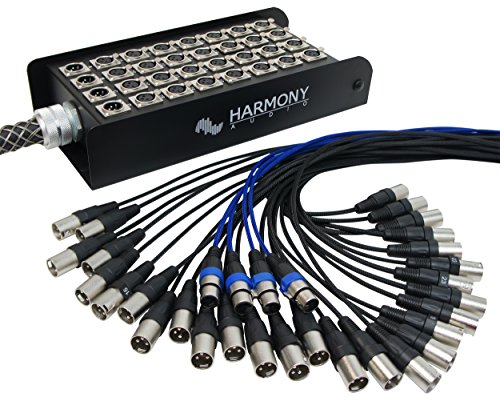
- 32 channels with 28 sends and 4 returns
- 150-foot run for large stage layouts
- 22-gauge, 100% shielded cable
Best For: Large live-sound and touring setups needing maximum channel capacity
Fast Venue Setup
16-Channel 100-Foot Colored Snake

- 16 balanced XLR channels
- Color-coded and numbered connectors
- Foil-shielded 22-gauge copper wiring
Best For: Churches, venues, and FOH setups requiring quick channel identification
Compact Stage Routing

- 12 sends and 4 returns
- Compact 50-foot cable length
- 22-gauge cable for live or studio use
Best For: Small to midsize stages with moderate stage-to-mixer distances
Sub-Snake Flexibility
8-Channel 100-Foot Low-Profile Cable
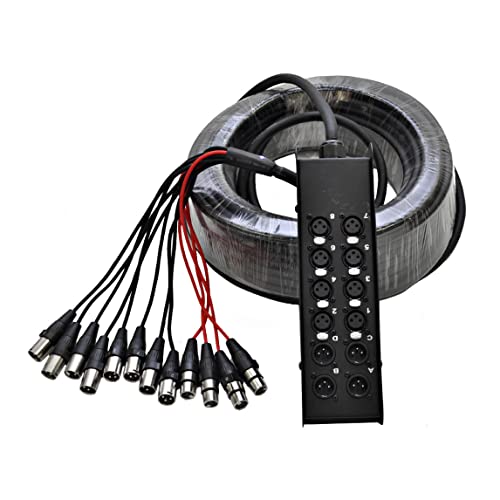
- Eight channels across a 100-foot run
- Individually shielded conductor pairs
- Numerically labeled stage box
Best For: Permanent or mobile sub-snake applications needing focused channel coverage
Long-Run Studio Link
GEARit 8-Channel 100ft XLR Snake

- 100-foot length for extended runs
- Eight XLR channels
- Outdoor-use rating
Best For: Studios, venues, and stage-monitor connections
High-Capacity Stage Routing

- 16 sends and 8 returns
- Individually shielded pairs
- Labeled steel stage box
Best For: Complex professional live-sound setups
Extended Stage Box Reach
Harmony Audio 16-Channel 100ft Snake
- 100-foot XLR snake
- 12 sends and 4 returns
- 100% shielded cable
Best For: Long live-sound and studio runs
Best Budget 8-Channel Pick

- Eight numbered channels for organized routing
- Circuit-board design supports solid, lower-noise connections
- Directly connects to analog or digital consoles
Best For: 50-foot live, recording, stage, and studio setups
Best 100-Foot Midrange Option
Harmony Audio 12-Channel Snake

- 100-foot length supports flexible placement
- 12 channels with eight sends and four returns
- 22-gauge XLR cable with braided nylon exterior
Best For: Mid-sized live-sound and studio signal routing
Best for Large Productions
Harmony Audio 150-Foot 40-Channel Snake

- 40 channels with 36 sends and four returns
- 150-foot reach for large stage layouts
- Rugged construction and shielding for professional use
Best For: Large concerts, touring, events, and complex studio routing
Maximum Channel Reach – 32-Channel 150-Foot XLR Snake
For demanding audio snake cables for long runs, this Harmony Audio stage box combines 32 channels with a 150-foot reach. It provides 28 sends and 4 returns, making it suited to larger live-sound or studio setups where the mixer needs to sit well away from the stage.
Best For: Large stages, touring setups, and live-sound systems that need extensive channel capacity and a 150-foot run.
Pros:
- 32 three-pin XLR channels with 28 sends and 4 returns.
- 150-foot length supports substantial stage-to-mixer distances.
- 22-gauge, 100% shielded cable with labeled inputs and returns.
- Suitable for indoor and outdoor use in live sound or studio applications.
Cons:
- At 80 pounds, it is considerably heavier than the shorter options here.
- The high channel count may be more than smaller venues require.
This is the strongest capacity-focused choice in the group. Choose it when long-distance coverage and many simultaneous XLR connections matter more than portability.
Fast Venue Setup – 16-Channel 100-Foot Colored Snake
Seismic Audio - SARLX-16x100-16 Channel XLR Colored Mutil-Patch Snake Cable 100 Feet
Check Price On AmazonThis Seismic Audio snake is a practical option for audio snake cables for long runs when quick identification matters. Its 16 balanced XLR channels extend 100 feet from the stage to the mixer or front-of-house position, while the color-coded, numbered design helps simplify setup in dark venues.
Best For: Churches, large venues, touring systems, and FOH positions that benefit from clear channel identification.
Pros:
- 16 balanced XLR channels provide multiple stage-to-mixer connections.
- 100-foot length suits longer venue and front-of-house runs.
- Color-coded and numbered channels support faster, less error-prone setup.
- Foil-shielded 22-gauge copper wiring helps reduce hum and interference.
Cons:
- Its 16-channel capacity is lower than the 32-channel Harmony Audio model.
- The notes do not specify separate send and return channel counts.
With balanced connections, shielding, and visual channel organization, this model offers a well-rounded long-run solution for installed or mobile professional audio systems.
Compact Stage Routing – 16-Channel 50-Foot XLR Snake
For shorter audio snake cables for long runs within a venue, the Harmony Audio HA-SB1650 offers 16 XLR channels in a more manageable 50-foot format. Its stage box provides 12 sends and 4 returns, making it useful when the mixer is close enough that a 100- or 150-foot cable would add unnecessary bulk.
Best For: Small to midsize stages, local live-sound systems, and studio applications with moderate cable distances.
Pros:
- 16-channel layout includes 12 sends and 4 returns.
- 50-foot length is practical for more compact stage layouts.
- 22-gauge XLR cable is suitable for live sound and studio applications.
- Male-to-female connectors and a braided outer design support standard stage connections.
Cons:
- Its 50-foot reach may not cover distant FOH positions or large venues.
- It offers fewer total channels than the 32-channel model.
This is the most manageable Harmony Audio option for setups that need organized sends and returns without the extra length and weight of a full-size long-run snake.
Sub-Snake Flexibility – 8-Channel 100-Foot Low-Profile Cable
Seismic Audio Speakers 8 Channel Low Profile XLR Send Sub Snake Cable, XLR Splitter Cable, 100 Feet
Check Price On AmazonThis Seismic Audio low-profile sub snake is a useful pick for audio snake cables for long runs when eight channels are enough. The 100-foot cable uses individually shielded conductor pairs, a numerically labeled stage box, and XLR splitter-style returns for connections to professional power amps and mixing consoles.
Best For: Permanent installations, mobile rigs, and stage sub-snake duties requiring a 100-foot reach and eight channels.
Pros:
- 100-foot length supports extended stage-to-mixer connections.
- Eight-channel design works well as a focused sub snake.
- Individually shielded pairs help reject extraneous noise.
- Numerically labeled box and circuit-board connector technology support organized connections.
Cons:
- Eight channels provide less capacity than the 16- and 32-channel alternatives.
- The 25-gauge conductors are lighter than the 22-gauge wiring listed for several other models.
- The product information describes splitter-style connections that may not suit every routing setup.
Its low-profile format and individually shielded pairs make this a targeted solution for installations or stage sub-snake applications where a full multi-channel fanout is unnecessary.
Long-Run Studio Link – GEARit 8-Channel 100ft XLR Snake
For audio snake cables for long runs, the GEARit 8-channel model provides 100 feet of XLR connectivity for moving multiple signals between a mixing console, studio gear, speakers, or stage monitors. Its 24-gauge construction and outdoor-use rating suit fixed or mobile pro-audio setups.
Best For: Recording studios, live venues, and stage setups needing an 8-channel, 100-foot connection.
Pros:
- 100-foot length supports extended studio and stage runs.
- Eight channels carry multiple audio signals through one cable assembly.
- XLR connectivity is designed for compatible professional audio equipment.
- Rated for outdoor use and specified as RoHS compliant.
Cons:
- Provides eight channels, which may be limiting for larger stage systems.
- Its 24-gauge conductors may not match buyers seeking heavier-gauge construction.
- The supplied specifications do not list a stage box or channel labeling features.
This is a straightforward choice when you need a long, eight-channel XLR snake without moving up to a larger channel count. Confirm that its male-to-male connector configuration matches your equipment before ordering.
High-Capacity Stage Routing – Seismic Audio 16×8 50ft Snake
The Seismic Audio 16×8 is built for complex stage routing where a high channel count matters more than maximum cable length. It combines 16 XLR sends, eight XLR returns, individually shielded pairs, and a steel stage box in a 50-foot assembly.
Best For: Professional live-sound systems requiring many sends and returns over a moderate 50-foot run.
Pros:
- Offers 16 sends and eight returns for substantial signal capacity.
- Individually shielded pairs help separate the cable’s channels.
- Steel stage box includes a handle for practical stage handling.
- Color-coded, numerically labeled fanout and stage box simplify channel identification.
Cons:
- At 50 feet, it is shorter than many options intended for very long runs.
- Its 27-pound listed weight makes it a heavier setup to transport.
- The large 16×8 configuration may be more than smaller rigs require.
Choose this model when your priority is routing flexibility and stage organization rather than a 100-foot reach. The labeling, shielding, and heavy-duty strain relief are particularly useful for repeat live-production work.
Extended Stage Box Reach – Harmony Audio 16-Channel 100ft Snake
For audio snake cables for long runs, the Harmony Audio 16-channel model combines a 100-foot reach with 12 sends and four returns. Its 22-gauge, 100%-shielded XLR cable assembly is aimed at live sound and studio connections where distance and channel organization are both important.
Best For: Live-sound and studio systems needing a 100-foot, 16-channel snake with clearly identified inputs and returns.
Pros:
- 100-foot length supports extended stage or studio runs.
- 16-channel design provides 12 sends and four returns.
- 100% shielded cable is specified for the assembly.
- Returns are labeled A, B, C, and D, while inputs are numbered.
Cons:
- The four-return layout may not suit systems requiring more return channels.
- Its 32.4-pound listed weight can make transport and deployment less convenient.
- The supplied notes do not specify a warranty or outdoor rating.
This Harmony Audio snake is a strong fit when a 100-foot run is essential and your workflow benefits from a 12-send/four-return layout. Check your stage-box requirements carefully, especially if you need a different send-to-return balance.
Best Budget 8-Channel Pick – PRORECK 50-Foot XLR Snake
For shoppers comparing audio snake cables for long runs, the PRORECK 50-foot model offers eight numbered channels in a relatively compact, low-profile design. Its stage box uses female XLR connectors, while the fantail provides male connections for routing professional audio equipment.
Best For: Live performances, recording sessions, stage setups, and studio applications needing an 8-channel, 50-foot XLR snake.
Pros:
- Eight channels with four XLR female connectors and eight XLR male connectors.
- Numbered box and fantail connections simplify setup and identification.
- Circuit-board construction is designed to support solid connections and reduce external noise.
- Can connect directly to analog or digital consoles without converters.
Cons:
- The 50-foot length is shorter than the long-run options in this roundup.
- Its eight-channel configuration may be limiting for larger productions.
This is a practical choice when you need organized channel routing without the bulk of a higher-capacity snake. The numbered connectors and direct console compatibility are particularly useful for repeatable stage or studio setups.
Best 100-Foot Midrange Option – Harmony Audio 12-Channel Snake
The Harmony Audio HA-SB12100 is a strong fit for audio snake cables for long runs when you need more reach and channel capacity than a compact stage snake. Its 100-foot XLR cable uses a 12-channel stage box with eight sends and four returns.
Best For: Professional live-sound or studio signal transmission where a 100-foot run and 12-channel layout are useful.
Pros:
- Provides a 100-foot cable length for flexible stage or studio placement.
- Offers 12 channels configured as eight sends and four returns.
- Uses 22-gauge XLR cabling with a braided nylon outer material.
- Listed for indoor and outdoor use.
Cons:
- Its 12-channel capacity may not cover larger productions.
- The supplied specifications do not identify additional connector-management features such as numbered labels.
With a useful balance of reach and channel count, this Harmony Audio model suits venues and studios that need a longer cable without moving to a very large touring snake. The eight-send/four-return arrangement is worth matching to your specific signal flow before buying.
Best for Large Productions – Harmony Audio 150-Foot 40-Channel Snake
For demanding audio snake cables for long runs, the Harmony Audio HA-SB40150 combines a 150-foot reach with 40 channels, making it the highest-capacity option here. Its heavy-duty XLR connectors, rugged cable jacket, and shielding are intended for complex live-sound, touring, and production setups.
Best For: Large concerts, touring setups, events, and studio applications requiring many audio sources over a 150-foot run.
Pros:
- Provides 40 channels with a 36-send, four-return configuration.
- Offers a generous 150-foot length for flexible stage-box placement.
- Heavy-duty connectors and rugged cable construction are designed for professional use.
- Shielding and impedance-matched cables are intended to support clean signal transmission.
Cons:
- At 95 pounds, it is substantially heavier than smaller snakes.
- The large channel count and 150-foot length may be excessive for compact setups.
- Its size can make transport and deployment more demanding despite the integrated carry handles.
This is the specialist choice for productions that need extensive routing capacity and maximum reach. It makes the most sense when a 36-send/four-return configuration matches the system and the team can accommodate its considerable weight.
How We Picked These Audio Snake Cables for Long Runs
We focused on practical fit for live sound, rehearsal spaces, houses of worship, mobile rigs, and small recording environments. The selected models cover 8-, 12-, 16-, 32-, and 40-channel configurations, with lengths from 50 to 150 feet. We also considered send-and-return layouts, stage-box design, channel labeling, color coding, low-profile construction, and whether the cable is suited to permanent or repeatedly transported setups.
Because snake cables are passive connection hardware, installation details matter as much as headline channel count. A cable that has more channels than you need may be less convenient to coil, route, and store, while an undersized model can force adapters or additional cable runs.
Quick Comparison
- Shorter runs: Choose a 50-foot model for compact stages, rehearsal rooms, and nearby mixers.
- Longer stages: A 100-foot cable suits many venues and mobile setups without the extra bulk of a 150-foot snake.
- Large productions: 32- and 40-channel snakes provide room for larger input counts and future expansion.
- Sub snakes: Eight-channel low-profile cables are useful for grouping drums, keyboards, or nearby stage inputs before sending them to a main snake.
- Return channels: Models with dedicated returns can simplify monitor feeds, effects returns, or communication lines.
Key Buying Factors for Audio Snake Cables for Long Runs
Channel Count and Send/return Layout
Count the microphones, instruments, playback sources, and monitor or effects returns you actually use. Pay attention to the product’s wording: “channels” may describe total paths, while a listing may separately identify sends and returns. Leave a few spare channels if your system is likely to grow.
Length and Routing
Measure the real path from the stage box to the mixer, then add enough slack for safe bends and placement. Avoid stretching a snake across walkways or sharp edges. A 100-foot cable is often a versatile middle ground; 150 feet is better when the console must sit well away from the stage.
Connector Access and Labeling
Color-coded, numerically labeled tails make troubleshooting and changeovers faster. Confirm whether the stage box uses the connector arrangement your microphones and mixer require, and check that the individual XLR tails are long enough to reach your equipment without strain.
Durability and Storage
For touring or frequent setup, look for a robust outer jacket, secure strain relief, and a stage box that can tolerate repeated handling. Coil the cable loosely, avoid tight kinks, and store it dry. A lighter low-profile snake may be preferable where portability matters more than maximum channel capacity.
Who Should Buy Which Audio Snake Cables for Long Runs?
Small bands and rehearsal spaces should consider an 8- or 12-channel snake, especially at 50 or 100 feet. Typical live venues and mobile engineers will often benefit from a 16-channel model with clearly labeled sends and returns. Larger stages, worship systems, and production crews should look at 32- or 40-channel options when they need extensive inputs or room to expand. Users organizing nearby instrument groups can pair a low-profile 8-channel sub snake with a larger main snake. Choose the shortest cable and lowest channel count that comfortably support your system, unless future expansion justifies the extra capacity.