If you want a cleaner, more powerful upgrade than a basic receiver, an audiophile integrated stereo amplifier is one of the smartest places to start. It can improve control, dynamics, and overall refinement without complicating your system.
Below, we focus on options that balance sound quality, inputs, power, and practical features so you can choose the right amp for your speakers, source components, and listening habits.
Best 10 Audiophile Integrated Stereo Amplifier Picks for 2026
Reference-Grade Power
Denon PMA-1700NE Integrated Amplifier

- 140W per channel output
- Built-in MM/MC phono equalizer
- USB-DAC and 3 digital inputs
Best For: high-power 2-channel systems with vinyl and digital sources
Classic Two-Channel Value
Yamaha A-S701SL Natural Sound Amp

- 100W per channel output
- Phono input plus coax/optical inputs
- Speakers A, B, and A+B support
Best For: traditional stereo setups that need clean wired connectivity
Budget All-Rounder
Donner 4-Channel Stereo Receiver

- Bluetooth 5.3 and USB inputs
- 4-channel speaker support
- Dual mic inputs with talk-over
Best For: multi-purpose setups, karaoke, and flexible speaker connections
High-Resolution Performer
Yamaha A-S801BL Integrated Amplifier

- USB DAC supports DSD and PCM
- 100W per channel output
- Phono, coaxial, and optical inputs
Best For: high-resolution digital and vinyl listening in a wired stereo system
Compact Hi-Res All-in-One
AIYIMA A80 Bluetooth Stereo Amplifier DAC

- ESS9038Q2M DAC with DSD256 and PCM hi-res support
- TPA3255 Class D amp rated up to 300W x 2
- Balanced TRS, Bluetooth, USB, optical, coaxial, and sub/pre-out
Best For: Compact systems needing one-box digital and analog flexibility
Classic Yamaha Value Pick
Yamaha Natural Sound Integrated Stereo Amplifier

- Digital coax and optical inputs plus analog connectivity
- Phono input and speaker A/B or A+B switching
- Subwoofer output for simple 2.1 system expansion
Best For: Traditional stereo setups with practical input flexibility
High-End Hybrid Powerhouse
Audiophile Integrated Amplifier Class A/AB Hybrid

- Hybrid Class A at low levels, Class AB for higher output
- 8x ON Semiconductor MJ15024G components and dual toroidal transformers
- XLR and RCA inputs with bi-wiring support and VU meters
Best For: Serious two-channel systems needing warmth and power headroom
Hybrid Tube Power Pick
Dayton Audio HTA200 Hybrid Tube Integrated Amp
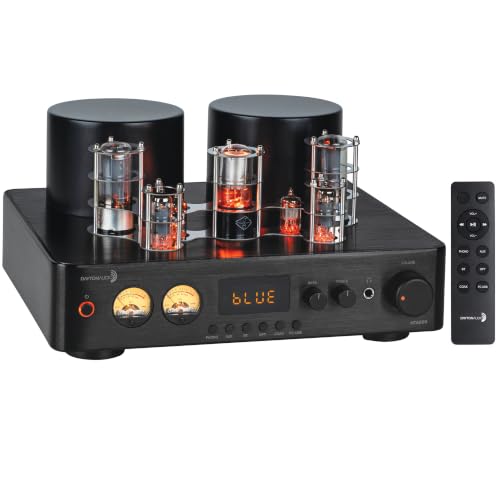
- 100W RMS per channel for bigger rooms
- Tube preamp adds warmth and classic character
- Bluetooth, USB DAC, optical, and phono inputs
Best For: Buyers who want power, vintage style, and flexible connectivity
Balanced Analog-First Choice
Denon PMA-600NE Bluetooth Stereo Amplifier
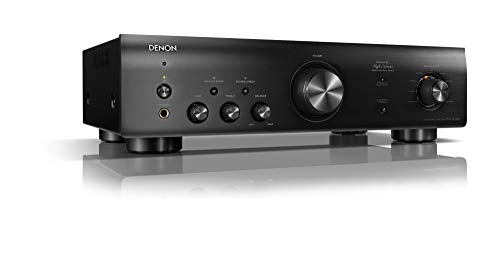
- Analog mode disables digital circuits for cleaner listening
- Built-in DAC, Bluetooth, optical, coaxial, and phono inputs
- 70W at 4 ohms with a vibration-resistant design
Best For: People who want a reliable, refined integrated amp with analog focus
Compact Retro All-in-One
Fosi Audio MC331 Tube Integrated Amplifier
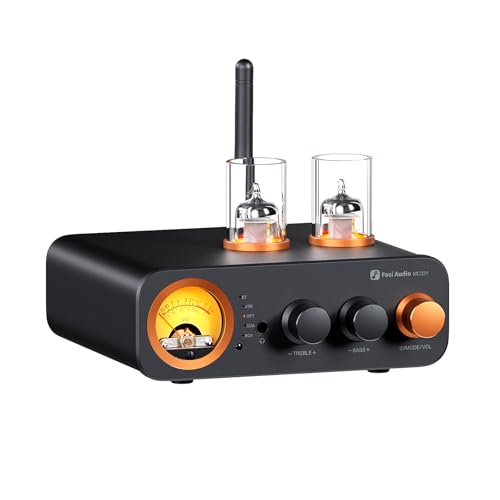
- All-in-one DAC, amp, preamp, and headphone output
- Compact size with up to 105W x2 at 4 ohms
- Bluetooth, USB, optical, coaxial, and RCA inputs
Best For: Desktop and small-room setups needing a versatile compact amp
Reference-Grade Power – Denon PMA-1700NE Integrated Amplifier
If you want an audiophile integrated stereo amplifier that combines serious drive with refined detail, the Denon PMA-1700NE is built for exactly that kind of listening. Its 140W per channel output, Advanced AL32 Processing Plus, and ultra-high current circuit make it a strong fit for speakers that need control, while the built-in USB-DAC and phono stage broaden its appeal for both digital and vinyl setups.
Best For: Listeners who want high power, a built-in phono stage, and flexible digital/analog playback in one amp.
Pros:
- 140W per channel for driving a wide range of speakers
- Built-in phono equalizer supports MM and MC cartridges
- USB-DAC plus 3 digital inputs for expanded source support
- Analog mode can shut off digital circuitry for analog playback
Cons:
- Large, premium amplifier may be more than casual systems need
- Focused on 2-channel listening rather than home-theater extras
Overall, this Denon stands out as a feature-rich choice for buyers who want a capable integrated amp with both precision and flexibility. It is especially compelling if your system mixes vinyl, USB audio, and conventional digital sources.
Classic Two-Channel Value – Yamaha A-S701SL Natural Sound Amp
The Yamaha A-S701SL is a straightforward audiophile integrated stereo amplifier for listeners who want clean power and simple source flexibility. With 100W per channel, phono support, and gold-plated digital coax and optical inputs, it covers the essentials well for a traditional stereo setup.
Best For: Buyers who want a reliable, no-frills integrated amp with phono and digital inputs.
Pros:
- 100W per channel output for solid stereo performance
- Includes phono input for turntable listening
- Gold-plated coaxial and optical digital inputs
- Supports Speakers A, B, and A+B configurations
Cons:
- No built-in USB DAC or wireless features listed
- Less feature-rich than newer all-in-one amps
For shoppers who prioritize core amplifier performance over extras, the A-S701SL keeps things focused. It is a practical match for a classic hi-fi system built around turntables, CD players, and other wired sources.
Budget All-Rounder – Donner 4-Channel Stereo Receiver
The Donner stereo receiver is more of a versatile home audio amplifier than a pure audiophile integrated stereo amplifier, but it offers a lot of inputs and control for the money. With Bluetooth 5.3, USB, FM, optical, coaxial, and dual mic inputs, it is designed for multi-use setups where flexibility matters more than minimalist hi-fi design.
Best For: Multi-purpose home audio, karaoke, and speaker setups that need lots of connectivity.
Pros:
- Bluetooth 5.3 plus USB, FM, RCA, optical, and coaxial inputs
- 4-channel design with support for multiple speaker groups
- Independent treble, midrange, and bass control
- Dual mic inputs and talk-over function for hosting or karaoke
Cons:
- 25W x 4 RMS is modest compared with true hi-fi integrated amps
- No HDMI input and not positioned as a dedicated audiophile amp
This model makes sense if your priority is connectivity and room-filling utility rather than strict two-channel listening. It is best viewed as a flexible budget receiver that can cover music, TV audio, and voice-friendly use cases.
High-Resolution Performer – Yamaha A-S801BL Integrated Amplifier
For buyers seeking an audiophile integrated stereo amplifier with stronger digital playback support, the Yamaha A-S801BL is a standout option. It delivers 100W per channel and adds a built-in USB DAC that handles high-resolution formats like DSD and PCM, making it a smart fit for modern music libraries as well as classic wired sources.
Best For: Listeners who want high-res USB audio support alongside standard analog and phono connections.
Pros:
- 100W per channel for solid stereo power
- USB DAC supports DSD and PCM up to high resolutions
- Includes phono input for turntables
- Gold-plated coaxial and optical digital inputs
Cons:
- Does not include the higher output power of some larger amps
- Feature set is focused on wired playback rather than network or wireless streaming
The A-S801BL is an appealing middle ground for enthusiasts who want hi-res digital playback without giving up straightforward analog integration. Its combination of USB DAC capability, phono support, and classic Yamaha amplifier design makes it easy to build around.
Compact Hi-Res All-in-One – AIYIMA A80 Bluetooth Stereo Amplifier DAC
If you want an audiophile integrated stereo amplifier that condenses modern connectivity into a small footprint, the AIYIMA A80 is built around that idea. It combines an ESS9038Q2M DAC, TPA3255 amplification, Bluetooth, USB, optical, coaxial, balanced TRS input, and tone control, so it can anchor a desktop or compact home system without extra boxes.
Best For: Listeners who want an all-in-one hi-res amp with DAC, balanced input, and flexible digital sources.
Pros:
- Built-in ESS9038Q2M DAC with support for DSD256 and PCM hi-res playback
- TPA3255 Class D stage with up to 300W x 2 and low claimed distortion
- TRS balanced input, Bluetooth, USB, optical, coaxial, and sub/pre-out support
- Includes a digital VU meter, remote, tone control, and 12V trigger input
Cons:
- Feature-rich design may be more than you need for a simple two-source setup
- Class D architecture may not suit buyers specifically seeking a traditional Class A or AB amp
As a practical buy, the A80 stands out for packing serious source flexibility into a compact chassis. It makes the most sense for users who value hi-res playback, balanced connectivity, and an integrated approach over a stripped-down amplifier.
Classic Yamaha Value Pick – Yamaha Natural Sound Integrated Stereo Amplifier
The Yamaha A-S301BL is a straightforward audiophile integrated stereo amplifier for buyers who want a traditional two-channel setup with practical input options. It keeps the formula simple with analog connections, phono support, digital coax and optical inputs, speaker A/B switching, and a subwoofer output.
Best For: Buyers who want a dependable, no-nonsense integrated amp with both digital and analog inputs.
Pros:
- Includes digital coax and optical inputs alongside analog inputs
- Has phono input for turntable use
- Speaker A/B and A+B switching adds useful system flexibility
- Subwoofer output supports easier 2.1 system building
Cons:
- No built-in Bluetooth or DAC feature set is listed beyond the digital inputs
- Heavier, traditional design may be less appealing for small desktop setups
This is the kind of integrated amplifier that focuses on utility and familiar operation rather than showy extras. If you want a solid stereo foundation with the basics covered, the A-S301BL is an easy model to evaluate.
High-End Hybrid Powerhouse – Audiophile Integrated Amplifier Class A/AB Hybrid
For shoppers comparing an audiophile integrated stereo amplifier with more ambitious power and parts quality, this Class A/AB hybrid is aimed at serious two-channel listening. It runs in Pure Class A at lower volumes, switches to Class AB for higher output, and pairs that approach with balanced XLR inputs, RCA inputs, and a heavy-duty dual-transformer power supply.
Best For: Listeners who want a high-power integrated amp with Class A warmth and Class AB headroom.
Pros:
- Hybrid Class A/AB operation for warm low-level listening and higher-power peaks
- Uses 8x ON Semiconductor MJ15024G Gold-Sealed components
- Dual 650W toroidal transformers and large ELNA capacitors support stable power delivery
- Includes 2x XLR balanced inputs, 4x RCA inputs, bi-wiring support, and VU meters
Cons:
- Large 21KG chassis is not ideal for compact shelves or lightweight racks
- Designed specifically for 110V-120V US power, so it is region-specific
- Premium power and build features suggest a more committed stereo setup
This amplifier is clearly built for buyers who prioritize drive, silence, and connectivity in a substantial package. If your system needs more authority than a small integrated amp can provide, its hybrid design and power supply are the main reasons to look closer.
Hybrid Tube Power Pick – Dayton Audio HTA200 Hybrid Tube Integrated Amp
If you want an audiophile integrated stereo amplifier that blends classic style with modern convenience, the Dayton Audio HTA200 is built to stand out. It pairs a tube preamp with a Class A/B output stage, gives you 100 watts RMS per channel, and adds practical inputs like optical, USB DAC, Bluetooth, RCA, and phono for a flexible home setup.
Best For: Listeners who want a powerful hybrid amp with vintage looks and broad source support.
Pros:
- 100 watts RMS per channel for strong output in larger listening spaces
- Tube preamp adds warmth and character while keeping the amp practical
- Includes RCA, optical, Bluetooth, USB DAC, and phono connectivity
- VU meters, exposed tubes, and brushed aluminum give it a classic hi-fi look
Cons:
- Larger footprint than compact desktop-oriented amps
- The tube aesthetic may matter more here than a strictly minimal design
- Best suited to buyers who want both style and power, not just a basic amplifier
Overall, the HTA200 is a strong fit if you want an audiophile integrated stereo amplifier that feels more like a centerpiece than a utility box. It combines useful connectivity, remote volume control, and a vintage-inspired presentation in one easy-to-live-with package.
Balanced Analog-First Choice – Denon PMA-600NE Bluetooth Stereo Amplifier
The Denon PMA-600NE is a practical audiophile integrated stereo amplifier for listeners who want clean performance with useful modern inputs. Its divided circuitry lets you disengage the digital section for a more purely analog experience, while the built-in DAC, Bluetooth, and phono input make it easy to connect a wide range of sources.
Best For: Listeners who value a refined analog path with everyday digital convenience.
Pros:
- Analog mode lets you turn off Bluetooth and digital circuits for focused listening
- Built-in DAC plus 2 optical, 1 coaxial, Bluetooth, and phono inputs
- 70W at 4 ohms supports a wide range of speakers
- Vibration-resistant design and solid build quality add confidence
Cons:
- Less flashy than tube-based or meter-heavy alternatives
- Not aimed at users wanting extra visual character
- Best value here comes from function and refinement rather than novelty
In a roundup of audiophile integrated stereo amplifier options, the PMA-600NE stands out as the most straightforward all-rounder. It focuses on accuracy, flexibility, and the option to prioritize analog listening, which makes it easy to recommend for a broad range of systems.
Compact Retro All-in-One – Fosi Audio MC331 Tube Integrated Amplifier
If your audiophile integrated stereo amplifier needs to do a little of everything in minimal space, the Fosi Audio MC331 is a versatile pick. It combines a DAC, amplifier, preamp, and headphone amp in one compact unit, while adding Bluetooth, USB, optical, coaxial, and RCA inputs for easy source switching.
Best For: Desktop and small-room listeners who want an all-in-one amp with retro styling.
Pros:
- All-in-one design combines DAC, amp, preamp, and headphone amplifier
- Compact chassis still delivers up to 105W x2 at 4 ohms
- Includes Bluetooth, USB, coaxial, optical, RCA, pre-out, and 3.5mm headphone output
- VU meter and vacuum tubes add a vintage look with remote-controlled tone adjustment
Cons:
- Smaller form factor may not suit buyers who want a full-size component
- Tubes are replaceable, but the shipped tube type is random
- Style and versatility are a bigger part of the appeal than a stripped-back minimalist design
The MC331 is a smart choice if you want one compact component to handle speakers and headphones without giving up features. For buyers building a flexible small system, it offers a lot of functionality in a desk-friendly package.
How We Picked the Best Audiophile Integrated Stereo Amplifier
We prioritized models that make sense for real-world listening: solid power delivery, low-noise performance, useful connectivity, and enough flexibility for vinyl, digital, and streaming sources. We also favored amps that offer a clear path by system size, from compact desktop setups to full-room stereo systems.
Because the best Audiophile Integrated Stereo Amplifier is not always the most powerful one, we weighed speaker matching, feature set, and long-term value as heavily as wattage claims.
Quick Comparison
In this lineup, the Yamaha and Denon models lean toward traditional hi-fi versatility, with strong DAC and phono support in several cases. AIYIMA, Fosi, and similar Class D or hybrid options are appealing for buyers who want compact footprints and modern connectivity. Higher-power hybrid and tube-influenced models may suit listeners who want a warmer presentation or need extra headroom.
Key Buying Factors for an Audiophile Integrated Stereo Amplifier
Power and Speaker Compatibility
Check wattage, but also look at speaker sensitivity and room size. A modestly powered amplifier can sound excellent with efficient bookshelf speakers, while larger rooms or lower-sensitivity towers benefit from more reserve power.
Inputs and Source Support
For most buyers, the most useful features are a built-in DAC, phono stage, optical or coaxial inputs, and Bluetooth. If you spin records or use a TV and streamer, choose an amp that reduces the need for extra boxes.
Tonal Character and Amp Topology
Different designs prioritize different goals. Class A/AB and hybrid tube amps may appeal to listeners seeking a richer, fuller presentation, while Class D options often emphasize efficiency, compact size, and clean output. The right choice depends on your speakers and your taste.
Build Quality and Practical Controls
Look for good heat management, sturdy knobs, a sensible remote, and tone controls or direct mode options if you want flexibility. For an Audiophile Integrated Stereo Amplifier, reliability and low noise matter as much as headline specs.
Who Should Buy Which Audiophile Integrated Stereo Amplifier?
Choose a higher-end Denon or Yamaha if you want a true all-around home hi-fi hub with strong analog and digital support. Pick a compact Class D model if space, efficiency, and modern connectivity are your top priorities. Consider a hybrid or tube-inspired amplifier if you value a more engaging, textured sound and listen mostly to music rather than use a system for everything.
If you are building your first serious stereo setup, start with your speakers first, then match the amplifier to their sensitivity, your room size, and the sources you actually use. That approach will do more for sound quality than chasing power numbers alone.