Finding the best channel strip with optical compressor means balancing preamp character, compression behavior, EQ flexibility, connectivity, and workflow. The right unit can shape a microphone signal before it reaches your converter, helping you record cleaner, more controlled tracks.
This roundup compares 10 notable channel-strip and compressor options, from tube-based vocal processors to versatile rack and 500 Series designs. Use the guide below to match features and format to your studio, source material, and recording goals.
Best 10 Channel Strip with Optical Compressor Picks for 2026
Versatile Digital Recording Hub
ART VoiceChannel Tube Channel Strip

- Tube preamp for warmth and definition
- Compressor, expander, de-esser, and gate
- USB plus multiple digital outputs
Best For: Studios needing flexible analog and digital connectivity
Classic Optical Dynamics
Warm Audio WA-2A Optical Compressor

- One-channel optical compressor
- All-discrete tube signal path
- Custom photocell and Cinemag transformers
Best For: Dedicated vocal and instrument compression
High-Voltage Tube Channel Strip
Avalon VT-737sp Tube Channel Strip

- Four Sovtek 6922 vacuum tubes
- Discrete Class A, high-voltage topology
- Mic, line, and instrument inputs
Best For: Tube-focused vocal and instrument recording
Inductor EQ and Diode-Bridge Control
Shelford Channel Preamp, EQ & Compressor
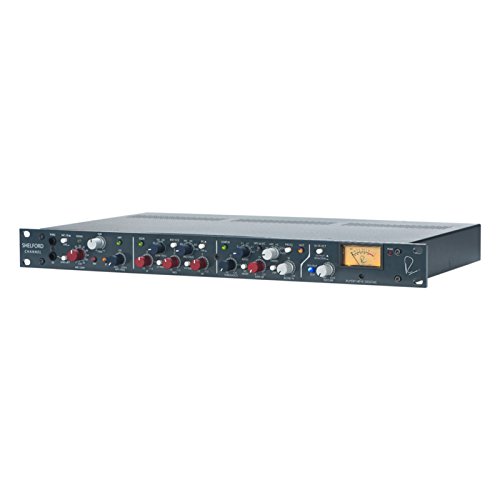
- Transformer-gain microphone preamp
- Inductor EQ and diode-bridge compressor
- Sidechain stereo-link sends and returns
Best For: Analog mono recording chains needing integrated tone shaping
Compact SSL Control
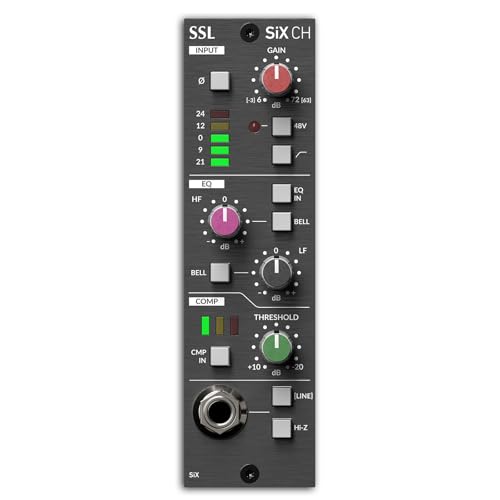
- 500 Series mic pre, EQ, and compressor
- Single-knob compressor with variable threshold
- Front-panel TRS input with 1 MΩ Hi-Z switch
Best For: Project studios using a 500 Series rack
Tube and Optical Versatility
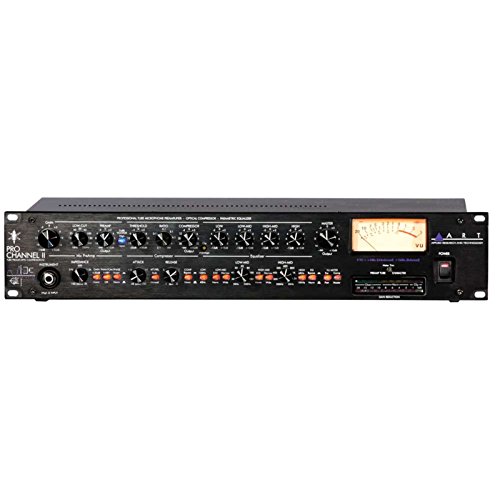
- Tube mic preamp, EQ, and selectable compressor
- Optical or tube compressor modes
- Selectable VU metering for three signal points
Best For: Tube-based vocal and instrument recording
Flexible Tube Processing

- Class A 12AX7 tube preamplifier
- Three-band EQ with variable mid-band Q
- VCA compressor with auto attack/release
Best For: Rack-based studios processing varied sources
Versatile 4-Channel Pick
- Four-channel tube/FET preamp and DI
- Tone-blending control for flexible character
- 8-channel 24-bit/192kHz A/D conversion
Best For: Multi-input studio recording setups
Tube Channel-Strip Choice
dbx DBX676FX Tube Channel Strip
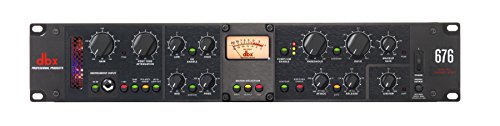
- 250-volt Class-A tube preamp
- Compressor/limiter with side-chain insert
- Sweepable-mid 3-band parametric EQ
Best For: Tone-focused vocal and instrument tracking
Compact Processing Value

- Compression, de-esser, enhancer, and gate
- XLR and 1/4-inch input connectivity
- Compact 1U rack-mount design
Best For: Single-channel vocal and spoken-word processing
Versatile Digital Recording Hub – ART VoiceChannel Tube Channel Strip
The ART VoiceChannel is a practical channel strip with optical compressor-style dynamics functionality for recording setups that need tube warmth, tone shaping, and flexible routing. Its single-channel design combines a tube preamp with compressor, expander, de-esser, and gate controls, plus extensive digital connectivity.
Best For: Home and project studios recording vocals, instruments, or direct sources while needing USB and multiple digital output options.
Pros:
- Tube preamp design provides warmth and definition.
- Includes compressor, expander, de-esser, and gate functions.
- Supports USB, ADAT, AES/EBU, S/PDIF, and TOSLink connectivity.
Cons:
- It is limited to one channel.
- The range of connectivity may be more than a simple analog setup requires.
Choose the VoiceChannel when digital integration is a priority alongside broad dynamics control. Its 192 kHz maximum sample rate and computer connectivity make it especially adaptable for modern recording workflows.
Classic Optical Dynamics – Warm Audio WA-2A Optical Compressor
The Warm Audio WA-2A is a focused one-channel optical compressor for engineers who want smooth, tube-based dynamics processing. While it is not a complete channel strip, it can serve as the compressor stage in a channel strip with optical compressor setup or as a dedicated vocal and instrument processor.
Best For: Recording chains that need dedicated optical compression with an all-discrete signal path, tube circuitry, and transformer-based connectivity.
Pros:
- Uses a custom optical photocell for optical compression.
- Features an all-discrete tube signal path.
- Includes Cinemag transformers and balanced XLR connectivity.
Cons:
- It provides compression only rather than preamp and EQ functions.
- Its single-channel design limits stereo processing without additional hardware.
The WA-2A makes the most sense when compression quality is the priority and other channel-strip functions are already covered elsewhere. Its 20 Hz–20 kHz frequency range suits a broad range of recording sources.
High-Voltage Tube Channel Strip – Avalon VT-737sp Tube Channel Strip
The Avalon VT-737sp is a premium single-channel tube channel strip built around a high-voltage, discrete Class A design. For shoppers comparing a channel strip with optical compressor options, this unit offers a tube-based recording front end with microphone, line, and instrument inputs, though the supplied specifications do not identify its compressor type.
Best For: Vocal and instrument recording chains that prioritize tube circuitry, substantial gain range, and Class A signal handling.
Pros:
- Uses four Sovtek 6922 dual-triode vacuum tubes.
- Provides transformer-balanced microphone input and balanced line operation.
- Includes front-panel instrument input and up to +58 dB of microphone gain.
Cons:
- It is limited to one channel.
- The supplied notes do not specify compressor details or optical compression.
The VT-737sp is best evaluated as a tube channel-strip centerpiece rather than selected solely for optical compression. Its flexible input architecture and high-voltage Class A topology make it a strong fit for detailed single-source recording.
Inductor EQ and Diode-Bridge Control – Shelford Channel Preamp, EQ & Compressor
Rupert Neve Designs Shelford Channel Microphone Preamp, Inductor EQ & Diode Bridge Compressor
Check Price On AmazonThe Shelford Channel is a mono channel strip pairing a transformer-gain microphone preamp with an inductor EQ and diode-bridge compressor. For buyers seeking a channel strip with optical compressor characteristics, note that this model uses a diode-bridge compressor instead, giving the signal path a different design focus.
Best For: Engineers wanting a complete analog mono channel with transformer coloration, dedicated EQ, compression, and sidechain routing.
Pros:
- Combines microphone preamp, inductor EQ, and compressor sections.
- Uses a transformer-gain preamp and transformer output stage.
- Includes sidechain stereo-link sends and returns.
Cons:
- Its compressor is diode-bridge rather than optical.
- It is a single mono channel.
The Shelford Channel is a compelling alternative when integrated EQ and transformer-based tone matter more than an optical compressor design. Its sidechain connections also add useful routing flexibility for advanced analog setups.
Compact SSL Control – SiX Channel Strip 500 Series
Solid State Logic SiX Channel Strip 500 Series | Mic-Pre, EQ, and Single Knob Compressor
Check Price On AmazonThe Solid State Logic SiX Channel Strip is a compact channel strip with optical compressor-style simplicity for 500 Series setups. It combines a microphone preamp, EQ controls, and a single-knob compressor, while the front-panel TRS input and Hi-Z switch make it practical for line-level and instrument sources.
Best For: Home and project studios building a flexible 500 Series vocal or instrument chain.
Pros:
- Single-knob compressor with variable threshold for straightforward dynamics control.
- Includes +48V phantom power and a switchable 75 Hz, 12 dB/octave high-pass filter.
- Front-panel TRS input includes a 1 MΩ Hi-Z switch for compatible instruments.
Cons:
- Requires a compatible 500 Series rack or enclosure.
- Provides one channel rather than a stereo pair.
This is a sensible choice when you want SSL channel-strip features in a compact format and prefer quick, uncomplicated compressor adjustment over extensive controls.
Tube and Optical Versatility – ART Pro Channel II
ART Pro Channel II Microphone Preamp/Compressor/EQ Professional Tube Based Selectable VU Metering
Check Price On AmazonThe ART Pro Channel II is a full-size channel strip with a tube microphone preamp, tube EQ, and selectable optical/tube compressor. For anyone shopping for a channel strip with optical compressor functionality, its three-module design offers more shaping options than a minimal preamp-and-compressor unit.
Best For: Vocal and instrument recording in professional or project studios that want tube-based processing and selectable metering.
Pros:
- Combines independent tube mic preamp, switchable optical/tube compressor, and tube EQ modules.
- Selectable VU metering can monitor mic pre output, compressor output, or main output.
- Provides XLR, 1/4-inch TRS, and 1/4-inch TS connectivity.
Cons:
- At 13.4 pounds, it is substantially less portable than a compact module.
- Tube-based circuitry may be more than needed for users seeking a simple channel strip.
Choose this model when you want a more feature-rich recording path with tube coloration, selectable compression character, and dedicated output monitoring in one unit.
Flexible Tube Processing – PreSonus Studio Channel
The PreSonus Studio Channel combines a high-voltage Class A 12AX7 tube preamplifier, three-band EQ, and VCA compressor in a rack-mountable channel strip. It is not an optical compressor design, but its variable VCA compression, auto attack and release, and flexible EQ make it a capable alternative for shaping recorded sources.
Best For: Studios needing a versatile rack unit for microphones, instruments, keyboards, and synths.
Pros:
- Class A tube preamplifier includes tube drive, phantom power, polarity reverse, and a -20 dB pad.
- Three-band EQ offers a parametric mid band plus selectable shelving or peak behavior on high and low bands.
- VCA compressor provides automatic attack/release and soft or hard knee options.
Cons:
- Uses a VCA compressor rather than an optical compressor.
- The 1U rack format requires suitable rack space.
The Studio Channel is a strong fit when broad control matters more than optical compression specifically, especially for users who want tube preamp character alongside detailed EQ and compressor controls.
Versatile 4-Channel Pick – Universal Audio 4-710d
The Universal Audio 4-710d is a strong choice when you need a channel strip with optical compressor-style dynamics control across multiple inputs. Its four-channel tube/FET preamp and DI design include a tone-blending knob, while built-in 8-channel 24-bit/192kHz A/D conversion supports direct integration with digital recording systems.
Best For: Studios recording several microphones or instruments that need flexible analog preamp tones and onboard conversion.
Pros:
- Four-channel tube/FET preamp and DI configuration.
- Tone-blending knob provides additional sound-shaping flexibility.
- Includes 8-channel 24-bit/192kHz A/D conversion.
Cons:
- Its 11.5-pound size and multi-channel design may be more than a compact setup needs.
- The supplied notes do not specify the software-update status.
Choose the 4-710d when channel count and flexible preamp character matter more than a single-channel, minimalist workflow. It is particularly suited to expanding a larger recording rig.
Tube Channel-Strip Choice – dbx DBX676FX Tube Channel Strip
The dbx DBX676FX is a full-featured channel strip with optical compressor appeal for users who want tube preamp character alongside dynamics and EQ. Its high-voltage Class-A tube preamp is paired with a compressor/limiter, side-chain insert, 3-band parametric EQ with sweepable mids, and front-panel instrument input.
Best For: Vocal, instrument, and live or studio sources that benefit from tube coloration, compression, limiting, and detailed EQ in one rack unit.
Pros:
- 250-volt high-voltage Class-A tube preamp supports warm, clear, or dirty tones.
- Combines compressor/limiter processing with a side-chain insert.
- 3-band parametric EQ includes sweepable mid frequencies.
- Offers XLR and 1/4-inch connectivity plus a front-panel instrument input.
Cons:
- The 2U rack-mount format takes more rack space than a 1U processor.
- At 13 pounds, it is relatively substantial for a single-channel strip.
The DBX676FX makes sense when hands-on tone shaping is a priority. Its tube preamp, dynamics section, and sweepable EQ provide a complete front-end path for recording or live use.
Compact Processing Value – dbx DBX286S Channel Strip
The dbx DBX286S is a compact channel strip with optical compressor-style vocal control, built around a microphone and instrument preamp with several independent processors. Compression, de-essing, enhancer, and expander/gate sections make it practical for shaping a single source before recording, streaming, or live use.
Best For: Single-channel vocals, microphones, instruments, and spoken-word setups needing straightforward front-end processing.
Pros:
- Includes compression, de-esser, enhancer, and expander/gate sections.
- Loop-out and insert connections allow additional processor integration.
- Accepts XLR microphone and 1/4-inch line or instrument connections.
- 1U rack-mount format and status LEDs suit compact setups.
Cons:
- It provides one channel, so it is not intended for multi-input recording.
- The supplied notes do not identify a dedicated optical-compressor circuit.
The DBX286S is a practical pick when you want several useful processors in a compact single-channel strip. Its de-esser, enhancer, gate, and loop-out options add flexibility beyond basic compression.
How We Picked the Best Channel Strip with Optical Compressor
We evaluated these products by looking at the parts of a recording front end that matter most: preamp design, compressor topology, EQ control, metering, I/O, channel count, build quality, and practical studio workflow. We also considered whether each unit is best suited to vocals, bass, guitars, keyboards, voice-over, or broader tracking duties.
Not every product here is a traditional single-channel strip with a built-in optical compressor. The selection also includes dedicated optical compressors and flexible preamp processors that may pair well with an existing preamp or expand a hybrid setup. This gives you useful alternatives when a single all-in-one unit is not the ideal fit.
Quick Comparison
Tube channel strips generally appeal to engineers who want harmonic color, gentle saturation, and a polished vocal character. Solid-state and 500 Series designs often provide faster response, cleaner headroom, and easier integration into compact or modular systems. Dedicated optical compressors can be a strong choice when you already own a preamp and want to add smooth, program-dependent gain reduction.
Also check the connection options before buying. Analog outputs are standard, while digital outputs, multiple channels, insert points, and direct monitoring can make a major difference in a modern interface-based studio. A unit with several preamp channels may offer better long-term value than a feature-heavy single-channel strip if you regularly track ensembles or stereo sources.
Key Buying Factors for a Channel Strip with Optical Compressor
Compression Character
Optical compression is typically associated with smooth, forgiving gain control that works well on vocals, bass, and sustained instruments. Look for adjustable threshold, ratio, attack, release, and makeup gain controls when you need precise shaping. Simpler designs can be easier to use, but they offer less control over transient detail and pumping.
Preamp and Tube Design
Decide whether you want clean gain, transformer color, or tube saturation. Tube stages can add body and harmonic richness, but they may also introduce noise or reduce headroom when driven aggressively. A wide input-gain range and a reliable pad, phase switch, and high-pass filter improve flexibility with different microphones and sources.
EQ, Metering, and Routing
Parametric EQ provides more corrective control, while shelving or semi-parametric sections are often faster for broad tonal shaping. Accurate VU or LED metering helps you set levels confidently, especially when recording through analog hardware. Inserts, sidechain access, and independent bypass switches are valuable for more advanced signal-flow decisions.
Format and Connectivity
Rack units suit permanent studio installations, while 500 Series modules require a compatible chassis but save space. Digital outputs can simplify conversion, and multiple inputs or channels are useful for drums, stereo instruments, and live tracking. Confirm connector types, power requirements, and available output routing before ordering.
Who Should Buy Which Channel Strip with Optical Compressor?
Choose an all-in-one tube channel strip if you primarily record vocals, voice-over, bass, or solo instruments and want a repeatable tracking chain with tonal shaping built in. A dedicated optical compressor is better for buyers who already have a favorite preamp and want a focused dynamics upgrade.
Engineers working in compact or expandable studios should consider a 500 Series strip for modular flexibility. If you record multiple sources at once, a multi-channel preamp and compressor offers more practical value than a single premium channel. For beginners, prioritize straightforward controls, clear metering, and useful protection features; experienced mixers may prefer deeper EQ, routing, and compression controls.