Choosing the best channel strip with parametric equalizer can make vocal recording, instrument tracking, and mix preparation faster and more consistent. The right unit combines useful tone shaping with the connections and controls your studio actually needs.
This roundup includes tube channel strips, 500-series processors, digital consoles, and standalone EQ options. Use the guide below to narrow the field by signal path, control depth, rack space, and intended application.
Best 10 Channel Strip with Parametric Equalizer Picks for 2026
Tube-Driven Digital Hub

- Tube preamp with warmth and definition
- Compressor, expander, de-esser, and gate
- USB plus multiple digital outputs
Best For: Flexible single-channel recording setups
Classic 500-Series Tone

- 500-series rack module
- Dedicated parametric EQ
- E-Series SSL-inspired design
Best For: Modular 500-series EQ setups
Complete Tube Channel Strip

- Class A 12AX7 tube preamp
- Three-band parametric EQ
- VCA compressor with flexible controls
Best For: Project and professional studio tracking
Surgical 500-Series Shaping
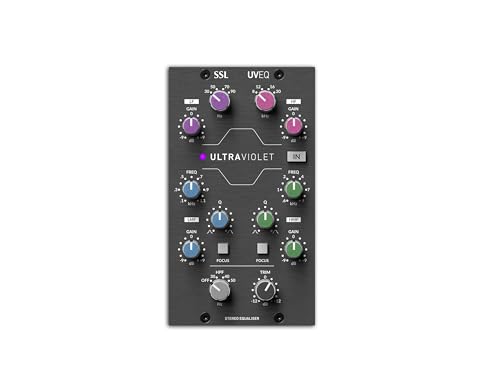
- Dual fully parametric mid-bands
- High-pass filter and output trim
- Surgical or creative analog EQ
Best For: Precise analog tonal shaping
Versatile Digital Hub

- 40 inputs and 25 buses
- 16 programmable Midas preamps
- 32 x 32 USB audio interface
Best For: Studio and live setups needing extensive digital routing
Precision Rack EQ
Rockville REQ231 Dual 31-Band EQ
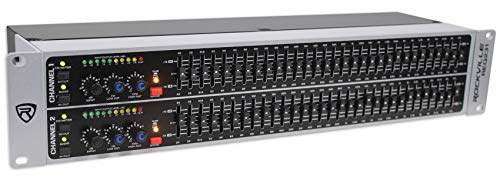
- Dual 31-band graphic equalizer
- 20 Hz to 20 kHz range
- Balanced XLR I/O and subwoofer output
Best For: Stereo tuning and hands-on 1/3-octave EQ adjustments
High-Capacity Console
Behringer X32 Digital Mixing Console

- 40 inputs and 25 buses
- 32 programmable Midas preamps
- 25 motorized faders and 16 XLR outputs
Best For: Large studio and live-sound systems
Flexible 15-Band Control
EQX-215S Stereo Graphic Equalizer

- Dual 15-band control with up to ±12 dB adjustment
- Low-cut frequency control and dedicated bass output
- 1U rack mount with XLR and 1/4-inch TRS connections
Best For: Home audio, DJ, studio, and installed systems needing accessible dual-channel EQ.
Maximum Band Precision
Rockville REQ231 V2 31-Band EQ

- Dual 31-band constant-Q graphic EQ from 20 Hz–20 kHz
- Selectable ±6 dB or ±12 dB band adjustment
- Subwoofer output, filters, LED metering, and balanced I/O
Best For: Live sound and installed systems requiring detailed system tuning.
Visual EQ Monitoring
EQ-231 31-Band Stereo Equalizer

- Dual 31-band control with up to ±12 dB adjustment
- Low-cut switch for rumble, hum, and other low-frequency noise
- Four-segment LED ladders for gain and output monitoring
Best For: Home audio, DJ, live, and studio setups needing visible EQ feedback.
Tube-Driven Digital Hub – ART VoiceChannel
The ART VoiceChannel is a versatile channel strip with parametric equalizer applications in a single-channel recording setup. Its tube preamp is paired with compressor, expander, de-esser, and gate controls, while USB and multiple digital outputs support flexible studio connectivity.
Best For: Recording vocals, instruments, and other sources when tube character, dynamics control, and digital output options are priorities.
Pros:
- Tube preamp design offers warmth and definition.
- Includes compressor, expander, de-esser, and gate processing.
- Supports USB, ADAT, AES/EBU, S/PDIF, and TOSLink outputs.
Cons:
- Provides one channel.
- Its extensive connectivity may be more than a simple analog setup requires.
The VoiceChannel is a strong all-in-one input solution for home and project studios that need both analog-style processing and broad digital integration. Choose it when connectivity is as important as tone shaping.
Classic 500-Series Tone – E-EQ Parametric Equalizer
The E-EQ is a 500-series parametric equalizer module built around the E-Series approach to classic SSL sound. It is a focused choice for users who want dedicated equalization in a compatible 500-series rack rather than an all-in-one channel strip.
Best For: 500-series users seeking a dedicated EQ module with an SSL-inspired sonic character.
Pros:
- Designed for the 500-series rack format.
- Offers parametric equalization in a dedicated module.
- Part of the E-Series EQ and dynamics module family.
Cons:
- It is an EQ module, not a complete preamp-and-compressor channel strip.
- Requires a compatible 500-series rack format.
The E-EQ makes sense when your rack already provides the required 500-series infrastructure and you want to build a modular processing chain. It is less suitable if you need microphone preamplification or dynamics control in the same unit.
Complete Tube Channel Strip – PreSonus STUDIOCHANNEL
The PreSonus STUDIOCHANNEL combines a Class A 12AX7 tube preamplifier, VCA compressor, and three-band parametric equalizer in a 1U rack unit. For shoppers comparing a channel strip with parametric equalizer options, it offers mic, instrument, and line inputs plus practical tone-shaping controls.
Best For: Studio and project-studio recording of vocals, instruments, keyboards, and synths.
Pros:
- Combines tube preamp, compressor, and three-band EQ.
- Mid-band EQ has variable Q, while high and low bands support shelving or peak operation.
- Includes phantom power, polarity reverse, high-pass filter, and a -20 dB pad.
Cons:
- Uses a 1U rack format, so it requires rack or suitable placement space.
- The supplied notes specify a one-year warranty for the original purchaser from an authorized dealer.
STUDIOCHANNEL is the most complete traditional channel-strip option in this group. Its combination of tube gain, flexible EQ, and VCA compression makes it a practical choice when you want several recording stages in one unit.
Surgical 500-Series Shaping – SSL Ultraviolet EQ
The SSL Ultraviolet EQ is a dedicated analog equalizer for precise tonal shaping, with dual fully parametric mid-bands and a high-pass filter. It suits buyers who want the EQ-focused side of a channel strip with parametric equalizer workflow, including both surgical correction and creative coloration.
Best For: Engineers needing precise stereo EQ control in an analog 500-series-style processing setup.
Pros:
- Dual fully parametric mid-bands support detailed frequency shaping.
- Includes a high-pass filter and dedicated output trim.
- Offers both surgical precision and creative color.
Cons:
- It is a dedicated EQ rather than a full preamp-and-dynamics channel strip.
- Its analog signal format does not provide the digital connectivity listed for the ART unit.
The Ultraviolet EQ is a focused tool for engineers who prioritize flexible, accurate equalization over an all-in-one channel strip. Its dual parametric mid-bands make it particularly appealing for detailed tonal work.
Versatile Digital Hub – Behringer X32 Producer
The Behringer X32 Producer is a rack-mountable digital console suited to studio and live work. While it is not a dedicated channel strip with parametric equalizer, its 40-input design, programmable Midas preamps, motorized faders, and digital mixing workflow provide extensive channel-processing flexibility.
Best For: Studio or live users who need a compact digital console with broad routing, USB interfacing, and remote-control support.
Pros:
- 40 inputs and 25 buses support complex setups.
- Includes 16 fully programmable Midas-designed mic preamps.
- 32 x 32 USB 2.0 audio interface supports computer-based recording.
- Motorized faders, scene management, and iPad/iPhone control streamline operation.
Cons:
- It is a full digital mixing console rather than a simple single-channel strip.
- Its 25.1-pound, rack-mountable format may be more equipment than a small setup needs.
The X32 Producer makes the most sense when you want channel control, routing, recording, and live mixing in one unit. Choose it over a standalone channel strip when system-wide flexibility matters more than a compact analog signal path.
Precision Rack EQ – Rockville REQ231 Dual 31-Band EQ
Rockville REQ231 Dual 31 Band 1/3 Octave Graphic Equalizer with Sub-Output, Grey
Check Price On AmazonThe Rockville REQ231 is a dual-channel graphic equalizer, not a traditional channel strip with parametric equalizer. Its 31-band-per-channel layout, selectable boost or cut range, and balanced XLR connections make it useful for detailed frequency shaping in a rack-based audio system.
Best For: Stereo system tuning, room correction, and users who prefer hands-on 1/3-octave graphic EQ control.
Pros:
- Provides 31 bands per channel across a 20 Hz to 20 kHz range.
- Selectable +/-6 dB or +/-12 dB cut and boost ranges offer control over adjustment depth.
- Balanced XLR inputs and outputs support professional-style connections.
- Includes variable low- and high-cut filters plus a subwoofer output.
Cons:
- Graphic EQ sliders do not provide parametric frequency, Q, and gain control.
- Its dual-channel design is focused on EQ rather than full channel-strip processing.
If your priority is visual, multi-band frequency correction, the REQ231 offers a straightforward and affordable approach. However, shoppers specifically seeking a channel strip with parametric equalizer controls should look for a model with adjustable center frequency and bandwidth.
High-Capacity Console – Behringer X32 Digital Mixing Console
The Behringer X32 is a large-format digital mixing console for studio and live applications. It is not a dedicated channel strip with parametric equalizer, but its 40-input, 25-bus architecture, 32 programmable Midas preamps, and motorized faders offer a broad platform for managing multiple sources.
Best For: Larger studio, venue, and live-sound systems that need extensive inputs, outputs, and hands-on digital console control.
Pros:
- Offers 40 inputs and 25 buses for complex production workflows.
- Includes 32 fully programmable Midas-designed mic preamps.
- Provides 25 automated motorized 100 mm faders for hands-on control.
- Features 16 XLR outputs, additional line I/O, dual headphone connections, and channel LCD scribble strips.
Cons:
- At 45.4 pounds, it is substantially less portable than a compact channel strip.
- Its broad console feature set may be excessive for a simple single-channel application.
- The supplied notes do not identify dedicated parametric-EQ specifications.
The X32 is best viewed as a complete digital mixing environment rather than a focused channel strip. Its input capacity, programmable preamps, and control surface are valuable when you need to coordinate an entire production, but a dedicated channel strip may be a better fit for one source at a time.
Flexible 15-Band Control – EQX-215S Stereo Graphic Equalizer
If you need a channel strip with parametric equalizer-style control for a home audio system, DJ setup, or rack-based installation, the EQX-215S offers practical dual-channel tone shaping. Its 15 adjustable bands per channel, low-cut control, and dedicated bass output give you useful ways to refine system response.
Best For: Home audio systems, live events, studios, and installations that need straightforward dual-channel EQ control.
Pros:
- 15 bands per channel with adjustable control of up to ±12 dB.
- Low-cut feature with a dedicated frequency adjustment knob for reducing unwanted low-end noise.
- XLR balanced and 1/4-inch TRS connections, plus a dedicated bass output with adjustable frequency.
- 1U rack-mount design with bypass operation and included cables.
Cons:
- Provides graphic EQ bands rather than true parametric frequency, Q, and gain controls.
- Offers fewer bands than a 31-band equalizer.
- Designed for 110V AC power.
The EQX-215S is a sensible choice when you want accessible dual-channel shaping and subwoofer integration without a more complex control layout. It is especially appealing for users who value rack compatibility and flexible connections.
Maximum Band Precision – Rockville REQ231 V2 31-Band EQ
For buyers comparing a channel strip with parametric equalizer capabilities, the Rockville REQ231 V2 stands out with detailed dual-channel graphic control across the full 20 Hz–20 kHz range. Its constant-Q filters, selectable boost/cut range, and system filters make it suited to more deliberate live-sound and installation tuning.
Best For: Live sound, installed systems, and users who want extensive dual-channel frequency adjustment with monitoring and subwoofer integration.
Pros:
- Dual 31-band, 1/3-octave graphic EQ with constant-Q filters.
- Selectable ±6 dB or ±12 dB adjustment per band, plus ±15 dB master level control.
- Variable low-cut and high-cut filters help manage rumble and extreme frequencies.
- Balanced XLR and 1/4-inch TRS I/O, subwoofer output, LED metering, and true bypass.
Cons:
- Uses graphic EQ controls rather than true parametric EQ controls.
- Its rack-mount design and extensive controls may be more than needed for simple home setups.
- Specified for 110V AC power.
With 31 bands, selectable control ranges, filtering, and useful output metering, the REQ231 V2 is the strongest fit here for detailed system correction. It makes the most sense when you need broad control and professional-style signal routing.
Visual EQ Monitoring – EQ-231 31-Band Stereo Equalizer
If your channel strip with parametric equalizer search prioritizes broad frequency coverage and clear front-panel feedback, the EQ-231 is a practical dual-channel graphic equalizer. Its 31 bands per channel, low-cut switch, bypass function, and LED ladders support hands-on adjustment for home audio, DJ, live, and studio applications.
Best For: Users who want detailed stereo EQ shaping with visible level and gain-reduction monitoring.
Pros:
- 31 adjustable bands per channel with up to ±12 dB control.
- Low-cut switch helps reduce wind noise, floor rumble, and electrical hum.
- Four-segment LED ladders provide visual feedback for gain reduction and output levels.
- Supports XLR balanced and 1/4-inch TRS unbalanced inputs and outputs.
Cons:
- It is a graphic equalizer, not a true parametric equalizer.
- The supplied notes do not specify a dedicated subwoofer output.
- At 6.69 pounds, it is less lightweight than a compact desktop EQ.
The EQ-231 is a solid option when visual monitoring matters as much as frequency control. Its 31-band layout offers detailed shaping, while the low-cut and bypass switches keep routine troubleshooting simple.
How We Picked the Best Channel Strip with Parametric Equalizer
We focused on the features that matter when building or upgrading a recording and mixing setup: equalizer flexibility, preamp or channel-strip functionality, signal quality, connectivity, format, control layout, and likely use cases. The selection spans true channel strips with preamps and dynamics, modular 500-series EQ, console-based processing, and graphic equalizers that may suit broader sound-system duties.
Because these products are not identical categories, compare them by role rather than assuming every model replaces a complete vocal channel. A standalone EQ can shape tone effectively, but it may require a separate preamp, compressor, or interface.
Quick Comparison
| Type | Best suited to | What to check |
|---|---|---|
| Tube channel strip | Vocal and instrument tracking | Preamp character, compression, outputs, maintenance |
| 500-series parametric EQ | Modular studio racks | Chassis compatibility, available bands, headroom |
| Digital console | Multi-channel recording and live mixing | Routing, I/O, software control, learning curve |
| Graphic equalizer | Room, PA, DJ, and system correction | Band resolution, noise performance, balanced connections |
Key Buying Factors for a Channel Strip with Parametric Equalizer
Signal Path and Processing
Determine whether you need microphone gain, compression, de-essing, gating, or only equalization. A full channel strip is more useful for tracking because it can control dynamics before the signal reaches the recorder. If you already own a quality preamp and compressor, a dedicated EQ may offer more precise tonal control.
EQ Design
Parametric EQ generally provides adjustable frequency, gain, and bandwidth, making it useful for surgical cuts and broad boosts. Graphic EQ offers fixed frequency bands and fast visual adjustment, which can be preferable for PA tuning or room correction. Check the number of bands, frequency range, filter types, and whether the EQ can be bypassed.
Connectivity and Format
Confirm input and output types, available digital connections, insert points, and operating levels. Tube and rack units may integrate differently from USB or networked consoles. For a 500-series option, verify that your rack supplies the required power and has enough space.
Workflow and Headroom
Large consoles provide extensive routing but demand more setup time. Hardware channel strips offer immediate hands-on control, while digital systems can store scenes and settings. Look for clear metering, accessible bypass controls, and sufficient headroom for strong transient sources.
Who Should Buy Which Channel Strip with Parametric Equalizer?
Choose a tube channel strip if you primarily record vocals, bass, or single instruments and want preamp character plus hands-on dynamics control. A 500-series parametric EQ is a better fit for a modular studio that already has a suitable preamp and wants focused tone shaping.
Consider a digital console if you need many inputs, flexible routing, recallable mixes, or live and studio versatility. Graphic equalizers are most appropriate for DJ systems, home audio rigs, PA setups, and broad system tuning rather than detailed vocal tracking. Before buying, match the processor to your existing signal chain, available rack space, and the number of channels you expect to use regularly.