The best channel strips for live sound can improve vocal clarity, control dynamics, and simplify signal routing before audio reaches the main mix. However, this list includes several product types, from full-format mixers to dedicated tube processors and direct boxes.
Use the guide below to separate true channel-strip functionality from broader live-audio equipment, then match features, inputs, outputs, and operating style to your venue or setup.
Best 10 Channel Strips for Live Sound Picks for 2026
Compact Effects Mixer

- 12-channel analog mixer
- Built-in GigFX effects engine
- USB connectivity for recording
Best For: Small live rigs and content creation
Large Digital Console

- 40-input, 25-bus design
- 32 programmable Midas preamps
- Motorized faders and scene management
Best For: Large live productions and complex routing
Tube Processing Strip

- Class A 12AX7 tube preamp
- VCA compressor and three-band EQ
- Mic, line, and instrument inputs
Best For: Dedicated vocal and instrument processing
Eight-Channel DI Solution

- Eight-channel active direct box
- Mains or phantom-powered operation
- XLR and 1/4-inch interfaces
Best For: Multi-instrument live signal matching
Tube-Powered Precision

- Tube preamp for warmth and definition
- Compressor, expander, de-esser, and gate
- USB plus multiple digital outputs
Best For: Focused processing of vocals or instruments
Expandable Live Control

- Individual XLR and 6.35mm channel inputs
- Selectable 48V phantom power
- USB recording, mixing, and playback
Best For: Bands and expanding live audio setups
Compact Sub-Mixing Solution
Moukey MAMX2 6-Channel Line Mixer

- Six channels with independent volume controls
- Stereo/mono switching for flexible routing
- Compact, low-noise design for line-level sources
Best For: Small live rigs, keyboards, and instrument sub-mixes
Professional Tone Shaping
dbx 676FX Tube Mic Preamp Channel Strip
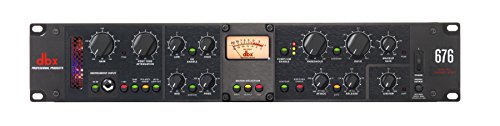
- High-voltage Class-A tube preamp
- Compressor, limiter, and parametric EQ
- Rackmountable 2U design with XLR and quarter-inch I/O
Best For: Rack-based live vocal and instrument processing
Vocal Processing and USB Capture
Behringer Ultravoice UV1 USB Channel Strip

- Single-channel mic/line preamp
- Built-in compression, gate, and de-esser
- USB interface with up to 192 kHz support
Best For: Solo vocals, presentations, and computer-connected live setups
Compact Effects Mixer – Mackie ProFX12v3
The Mackie ProFX12v3 is a practical choice for smaller live rigs needing multiple inputs, onboard effects, and USB connectivity. Its 12-channel layout and XLR inputs make it a flexible option among channel strips for live sound, especially when a full digital console would be excessive.
Best For: Small live performances, content creation, recording, and compact sound systems.
Pros:
- 12-channel analog design suits compact setups.
- Built-in GigFX effects engine adds onboard processing.
- USB connectivity supports recording and content creation.
- Includes Onyx preamps and USB cable.
Cons:
- Offers fewer channels than larger live consoles.
- Its analog format lacks the extensive automation of a digital console.
Choose the ProFX12v3 when straightforward operation, built-in effects, and USB integration matter more than a large channel count or advanced digital routing.
Large Digital Console – Behringer X32
The Behringer X32 is built for complex studio and live applications, combining 40 inputs, 25 buses, programmable Midas preamps, and motorized faders. For channel strips for live sound, it is suited to productions that need extensive routing, recall, and hands-on control.
Best For: Large live productions, studios, and systems requiring many inputs and buses.
Pros:
- Provides 40 inputs and 25 buses.
- Includes 32 fully programmable Midas-designed mic preamps.
- Motorized 100 mm faders support scene management and quick overview.
- Offers 16 XLR outputs plus additional line inputs and outputs.
Cons:
- At 45.4 pounds, it is substantially heavier than compact mixers.
- Its large feature set may be more than small setups require.
The X32 makes the most sense when input capacity, flexible bus architecture, and automated fader control are central to the workflow.
Tube Processing Strip – PreSonus StudioChannel
The PreSonus StudioChannel combines a Class A 12AX7 tube preamplifier, VCA compressor, and three-band EQ in a rack-mountable format. It is a focused option for channel strips for live sound when you want dedicated tonal shaping for a microphone or instrument before the signal reaches the mixer.
Best For: Vocal, instrument, keyboard, and synth processing in rack-based setups.
Pros:
- Combines tube preamp, compressor, and EQ in one unit.
- Includes mic, line, and instrument inputs.
- Offers phantom power, polarity reverse, high-pass filter, and pad.
- Rack-mountable steel chassis suits installed or touring systems.
Cons:
- It is a single channel strip rather than a multi-input mixer.
- Its 10.5-pound weight adds rack-system bulk.
The StudioChannel is a strong fit when hands-on preamp, compression, and EQ control is more valuable than broad console-style channel capacity.
Eight-Channel DI Solution – Behringer DI800 V2
The Behringer DI800 V2 is an eight-channel active direct box designed for impedance and signal matching between instruments, mixers, and amplifiers. It can complement channel strips for live sound by providing XLR and quarter-inch connectivity for multi-instrument setups.
Best For: Live events, recording studios, and setups connecting several instruments to a mixer.
Pros:
- Provides eight channels in one unit.
- Supports mains or phantom-powered operation.
- Offers XLR and 1/4-inch interfaces.
- Uses servo-balanced operation for an ultra-flat frequency response.
Cons:
- It is a direct box, not a complete channel strip with EQ and compression.
- Its main role is signal matching rather than creative tone shaping.
Consider the DI800 V2 when reliable multi-channel instrument interfacing is the priority and processing will be handled elsewhere in the signal chain.
Tube-Powered Precision – ART VoiceChannel
For live engineers who also record, the ART VoiceChannel is a flexible channel strip with a tube preamp, dynamics processing, and extensive digital connectivity. Its single-channel design makes it a focused option for shaping a vocal, instrument, or other source before routing it to a mixer or recording system.
Best For: Vocal and instrument processing where tube warmth, detailed dynamics control, and digital output options are useful.
Pros:
- Tube preamp design provides warmth and definition.
- Includes compressor, expander, de-esser, and gate controls.
- Supports USB, ADAT, AES/EBU, S/PDIF, and TOSLink connectivity.
- Handles sample rates up to 192 kHz.
Cons:
- Only one channel is available.
- Its 5.5 kg weight may be less convenient for highly mobile setups.
The VoiceChannel is a strong choice among channel strips for live sound when you want comprehensive source processing and flexible routing in one unit. Its single-channel format is best suited to a priority input rather than whole-band mixing.
Expandable Live Control – 12-Channel USB Mixer
This 12-channel mixer is designed for live setups that need individual channel control, USB recording, and flexible master-section routing. Each channel strip accepts XLR and 6.35mm inputs, making it a practical hub for microphones and instruments in band, DJ, or production environments.
Best For: Professional bands, expanding live rigs, and users who want channel-by-channel control with computer-based recording.
Pros:
- Individual channel strips support XLR and 6.35mm inputs.
- Selectable 48V phantom power supports condenser microphones.
- USB connectivity enables recording and mixing with a computer.
- Master controls cover output, effects routing, monitor mixes, and playback.
Cons:
- The supplied details list the number of channels as 8, despite the 12-channel product title.
- USB playback requires a data-capable USB cable.
- Connectivity details identify auxiliary technology rather than a broader list of digital interfaces.
For channel strips for live sound, this mixer emphasizes overall workflow and expansion rather than standalone studio-style processing. Verify the channel count and input requirements before purchase, especially if your setup depends on twelve simultaneous channels.
Non-Audio Strip – Brush Door Weather Seal
This product is a brush weather strip for doors and windows, not an audio channel strip or live-sound device. It is included here only to clarify the mismatch: it cannot serve as one of the channel strips for live sound, but it may help reduce drafts and outside noise in a room used for audio work.
Best For: Sealing compatible door or window slots against drafts, dust, moisture, and some outside noise.
Pros:
- Fits slot widths of 5mm, 6mm, or 7mm and listed gap sizes of 6mm, 8mm, or 12mm.
- Slides into place without adhesive or tools.
- Flexible polypropylene material is designed for durable sealing.
- Provides a 5m, approximately 16ft, length.
Cons:
- It has no audio inputs, outputs, preamp, or channel processing.
- It is not suitable for live sound, recording, or mixing applications.
- Fit depends on accurately measuring the door or window slot.
Do not select this item for a live audio rig. Consider it only as a building-maintenance accessory that could support room comfort and noise reduction around an audio space.
Compact Sub-Mixing Solution – Moukey MAMX2 6-Channel Line Mixer
For simple channel strips for live sound setups, the Moukey MAMX2 is a compact line mixer designed to combine multiple sources into one output. It offers independent volume controls, stereo/mono switching, and DC 5V operation for keyboards, guitars, bass, drum sets, and other line-level sources.
Best For: Small clubs, bars, keyboard rigs, and straightforward sub-mixing.
Pros:
- Six-channel mixer with independent volume controls.
- Supports stereo or mono signal routing with the appropriate TRS or TS cables.
- Compact, low-noise design for quick line-level mixing.
- DC 5V power expands placement flexibility.
Cons:
- TRS and TS cables are not included.
- Requires a suitable external CE- or UL-certified power supply.
- Designed for line-level mixing rather than a full-featured channel strip.
The MAMX2 is a practical choice when you need uncomplicated source combining rather than extensive processing. Its small footprint and separate level controls make it useful for compact live rigs and instrument sub-mixes.
Professional Tone Shaping – dbx 676FX Tube Mic Preamp Channel Strip
The dbx 676FX is a full-featured option for channel strips for live sound, combining a high-voltage Class-A tube preamp with compression, limiting, and a three-band parametric EQ. Its XLR and quarter-inch connections, front-panel instrument input, and rackmountable 2U format suit more demanding live and recording systems.
Best For: Performers and engineers who need detailed vocal or instrument processing in a rack-based setup.
Pros:
- 250-volt tube preamp supports warm, clear, or driven tones.
- Integrated compressor/limiter helps produce louder, cleaner output.
- Three-band parametric EQ includes sweepable mids for precise shaping.
- Offers XLR and quarter-inch connectivity plus a side-chain insert.
Cons:
- Its 2U rack format is less portable than compact desktop units.
- At 13 pounds, it adds noticeable weight to a rack.
- Its broader control set may be more than a simple live sub-mix requires.
The 676FX is suited to users who want hands-on control over preamp tone and dynamics before a signal reaches the main system. It is a stronger fit for processed vocals, instruments, and rack-based live rigs than for basic source combining.
Vocal Processing and USB Capture – Behringer Ultravoice UV1 USB Channel Strip
The Behringer Ultravoice UV1 combines a single-channel mic/line preamp with USB audio connectivity, making it a flexible choice among channel strips for live sound and computer-based workflows. Its processing features include compression, a gate, and an express de-esser for shaping one input channel.
Best For: Solo vocalists, presenters, and small live systems that also need USB recording or computer integration.
Pros:
- Combines a one-channel mic/line preamp with a USB audio interface.
- Includes compression, gate, and express de-esser processing.
- Supports up to 192 kHz sample rate.
- Works with Windows 10 and Mac OS X 10.4 or higher.
Cons:
- Only one channel is provided.
- The supplied notes do not specify analog connector types or rack dimensions.
- Its feature set is focused on a single processed source rather than multi-channel mixing.
The UV1 makes sense when one vocal or mic/line source needs basic dynamics and de-essing alongside direct USB connection. It is less appropriate when your live setup requires several independently controlled inputs.
How We Picked These Channel Strips for Live Sound
We prioritized practical live-audio capabilities: microphone preamps, EQ, compression, limiting, direct outputs, USB or digital connectivity, and dependable signal routing. Because the selected products cover different categories, we also considered how each one fits into a real signal chain. Full mixers suit bands, venues, and small production teams, while dedicated channel strips are better for processing one important source such as a lead vocal. DI boxes and line mixers serve narrower but useful roles and should not be mistaken for complete channel strips.
Build quality, control access, rack or desktop practicality, and ease of operation also matter in live settings. A feature-rich unit is not automatically the best choice if it slows down setup or provides controls your operator will not use.
Quick Comparison
| Best For | Look For | Examples From This List |
|---|---|---|
| Small bands and venues | Multiple inputs, onboard effects, USB recording | Mackie ProFX12v3, compact mixers |
| Larger productions | High channel count, buses, digital routing | Behringer X32 |
| Lead vocal or instrument processing | Mic preamp, EQ, compressor, limiter | ART VoiceChannel, dbx 676FX |
| Direct instrument connection | Impedance matching, balanced outputs, ground lift | Behringer DI800 V2 |
| Personal vocal recording and live use | USB interface, preamp, voice processing | Behringer UV1 |
Key Buying Factors for Channel Strips for Live Sound
Input and Output Requirements
Count microphones, instruments, playback sources, monitors, and recording feeds before choosing. Check whether you need XLR microphone inputs, line inputs, instrument impedance, balanced outputs, insert points, direct outs, or digital expansion. A dedicated strip may process one source exceptionally well, but a mixer offers much greater routing flexibility.
Processing and Control
For vocals and prominent instruments, a usable preamp, high-pass filter, EQ, compressor, and limiter can be more valuable than a long feature list. Tube stages may provide a particular tonal character, while clean solid-state preamps are often preferable when transparency and predictable gain are priorities. Look for controls that can be adjusted quickly during a performance.
Connectivity and Workflow
USB is useful for multitrack recording, playback, and computer-based editing, but confirm the channel count and driver compatibility. Digital mixers provide recall and extensive routing, though they require more setup and operator familiarity. Analog units are often faster to understand at the console.
Noise, Durability, and Installation
Live equipment must tolerate repeated transport and noisy power environments. Favor metal construction, secure connectors, clear metering, and adequate headroom. Rackmount units are convenient for fixed systems or touring racks; desktop mixers may be easier for small clubs and mobile performers.
Who Should Buy Which Channel Strips for Live Sound?
Choose a compact mixer such as the Mackie or a comparable small-format model if you need straightforward control for a band, rehearsal space, café, or small club. Choose the Behringer X32 when you need many inputs, buses, scenes, and scalable digital routing.
Select the ART VoiceChannel, dbx 676FX, PreSonus STUDIOCHANNEL, or Behringer UV1 when one vocal or instrument deserves dedicated preamp and dynamics processing. The UV1 is especially appealing if USB recording and voice-focused operation matter. Choose the DI800 V2 for multiple direct instrument feeds and balanced connections rather than full mixing. The Moukey line mixer is best reserved for simple sub-mixing, while the weather-stripping item is unrelated to audio and should not be considered a channel strip.