The right document camera can make worksheets, books, lab equipment, and physical demonstrations easier to share in a classroom or online meeting. The models in this roundup range from compact USB cameras to versatile units with 4K capture, built-in microphones, lighting, and wireless connectivity.
Use the buying guide below to compare image quality, compatibility, coverage, portability, and classroom-friendly features before choosing a document camera for your setup.
Best 10 Document Camera Picks for 2026
Best High-Resolution Pick
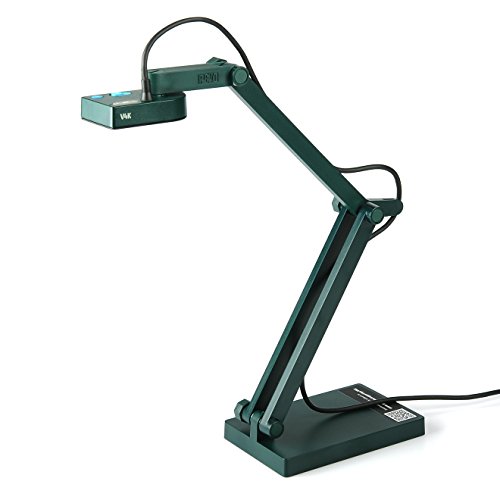
- 8MP capture up to 3264 x 2448
- Up to 30 fps at full HD
- Fast autofocus and broad compatibility
Best For: Teachers and presenters seeking detailed, smooth video
Best for Large Documents

- 13MP 4K capture at up to 30 fps
- Supports A3 documents and artwork
- Includes lighting and Documate tools
Best For: Large-format classroom and art presentations
Best Portable 2-in-1

- 8MP Ultra HD image capture
- Flips between document camera and webcam
- Lightweight, foldable, and USB plug-and-play
Best For: Mobile teaching and remote work setups
Best Value Classroom Option

- 8MP 2448P capture for clear lessons
- A3/A4 coverage with folding arm
- Autofocus, LED lighting, and microphone
Best For: Everyday classroom teaching and desk demonstrations
Best Wireless Document Camera
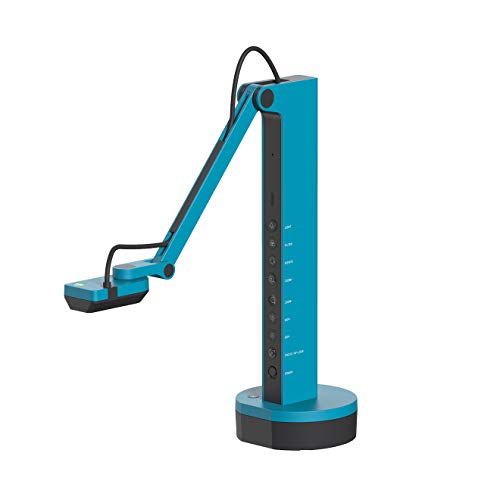
- Wi-Fi, HDMI, and USB connectivity
- 8MP capture with near-4K USB stills
- 9–12-hour battery and 33-foot wireless range
Best For: Flexible classroom and presentation setups
Best Plug-and-Play Document Camera

- 8MP imaging with 30fps streaming
- Autofocus and 3.9-inch macro capability
- Includes lighting, microphone, and Documate software
Best For: Desktop teaching and USB video conferencing
Best A3 Document Camera
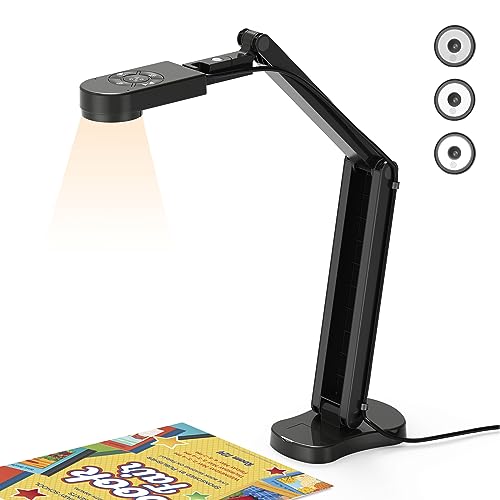
- A3-size capture area for large documents
- 8MP output up to 2448p at 30fps
- Foldable stand, LED lighting, and dual microphones
Best For: Large-page teaching and 2D/3D demonstrations
Flexible Teaching Pick
Gawervan 1080P USB Document Camera

- 1080P video at 30fps
- Foldable 360-degree lens design
- Dual noise-reduced microphones
Best For: Portable classroom lessons and remote teaching
High-Resolution Classroom Pick

- 8MP, 2448P video output
- A3-size coverage area
- Three-level LED brightness adjustment
Best For: Large classroom materials and detailed demonstrations
Adjustable Budget Option
PAKOTOO 8MP USB Document Camera

- 2448P video with one-button autofocus
- A3/A4 coverage and foldable body
- Physical brightness and exposure controls
Best For: Portable USB classroom demonstrations
Best High-Resolution Pick – IPEVO V4K
The IPEVO V4K is a high-resolution document camera for teachers, presenters, and remote workers who want detailed live images without excessive lag. Its 8MP Sony CMOS sensor, fast autofocus, and compatibility with Mac, Windows, and Chromebook systems make it a versatile choice for documents, demonstrations, and video calls.
Best For: Educators and presenters who prioritize sharp image quality and smooth full-HD streaming.
Pros:
- Captures images up to 3264 x 2448 pixels with an 8MP sensor.
- Streams at up to 30 fps in full HD for responsive demonstrations.
- Fast autofocus and strong low-light color and noise performance.
- Works with Mac, PC, Chromebook, and a range of software.
Cons:
- Its listed system requirements may be demanding for older computers.
- The maximum shooting area is approximately 13.46 x 10.04 inches.
The V4K is a practical document camera when image clarity and focus speed matter most. Its multi-jointed stand and broad software compatibility add flexibility for regular classroom or conferencing use.
Best for Large Documents – INS-2 UHD 4K
The INS-2 UHD 4K is a professional document camera designed for large materials, artwork, and two-page spreads. Its 13MP Sony sensor, A3 capture area, built-in lighting, and presentation software make it especially useful for classrooms, art instruction, and exhibition-style presentations.
Best For: Educators and art instructors displaying large documents, artwork, and detailed demonstrations.
Pros:
- Records 4K video at 3840 x 2160 and up to 30 fps.
- Flexible arm supports documents up to A3 size.
- Includes LED lighting, anti-glare sheet, dual autofocus, and macro capability.
- Documate software provides annotation, recording, scanning, whiteboard, and OCR tools.
Cons:
- At 2.3 pounds, it is less portable than compact document cameras.
- Compatibility details vary by operating system version, particularly for Mac and iPad.
Choose the INS-2 when coverage and presentation features outweigh portability. Its A3 support and included software make it a strong fit for large-format teaching and creative work.
Best Portable 2-in-1 – IPEVO DO-CAM
The IPEVO DO-CAM is a compact document camera that also works as a webcam for face-to-face communication. Its 8MP Sony CMOS sensor, adjustable sections, lightweight design, and USB plug-and-play setup make it convenient for mobile teaching, remote work, and presentations in different locations.
Best For: Remote workers, teachers, and presenters who need a portable document camera and webcam in one device.
Pros:
- Captures up to 3264 x 2448 with an 8MP Sony CMOS sensor.
- Flips between document sharing and face-to-face webcam use.
- Lightweight at approximately 0.74 pounds and easy to store or carry.
- USB plug-and-play compatibility with Mac, PC, Chromebook, and third-party software.
Cons:
- Manual focus requires more adjustment than an autofocus model.
- The attached USB cable is approximately 3.28 feet long.
The DO-CAM is a sensible choice for users who value portability and dual-purpose functionality. It gives up some convenience through manual focus, but its flexible design makes switching between documents and webcam communication simple.
Best Value Classroom Option – 8MP USB Document Camera
This 8MP document camera is built for classroom lessons, online tutoring, and desk-based demonstrations. It combines 2448P capture, A3/A4 coverage, an adjustable folding arm, autofocus, three-level LED lighting, and a built-in microphone in a straightforward USB setup.
Best For: Teachers and presenters needing broad document coverage, simple controls, and integrated audio.
Pros:
- Captures documents, handwriting, and objects at up to 8MP and 2448P.
- A3/A4 shooting area suits books, worksheets, crafts, and artwork.
- Autofocus and three LED brightness levels support changing conditions.
- Built-in microphone and up to 30fps video support lessons and meetings.
Cons:
- It does not support HDMI, Wi-Fi, or Bluetooth.
- Standard use is centered on compatible Windows PCs and Chromebooks, with USB-C adapter support.
This model offers a useful feature set for everyday teaching and demonstrations, especially when A3/A4 coverage is important. It is best suited to users comfortable with a wired USB workflow rather than wireless or HDMI connections.
Best Wireless Document Camera – IPEVO VZ-X
The IPEVO VZ-X is a versatile document camera for classrooms, presentations, and remote meetings. Its Wi-Fi, HDMI, and USB connectivity lets you use it with computers, mobile devices, projectors, TVs, and monitors, while the rechargeable battery supports extended wireless sessions.
Best For: Teachers and presenters who want flexible wireless or wired connectivity and a large capture area.
Pros:
- 8MP sensor delivers up to 1080p over Wi-Fi and HDMI and near-4K still quality over USB.
- Offers Wi-Fi, HDMI, and USB connection options with compatibility across Windows, Mac, Chromebook, iOS, Android, and Apple TV.
- Swiveling head, multi-jointed stand, LED lighting, and up to 33 feet of wireless range improve positioning flexibility.
- Built-in battery provides approximately 9–12 hours of use.
Cons:
- At 2.6 pounds, it is heavier than some compact USB-only models.
- Wireless operation requires battery management and a compatible Wi-Fi setup.
Choose this document camera if connectivity flexibility is a priority. Its broad device support and long battery life make it especially useful for presentations that move between a desk, projector, and mobile device.
Best Plug-and-Play Document Camera – INSWAN INS-1
The INSWAN INS-1 is a practical USB document camera for online teaching, live demonstrations, and video conferencing. It combines 8MP imaging with autofocus, a built-in microphone, LED lighting, and bundled software for annotations, recording, snapshots, and image adjustments.
Best For: Users who want a compact, USB-connected document camera with autofocus and useful software controls.
Pros:
- 8MP Sony camera captures up to 3264 × 2448 images and streams at 30 fps across resolutions.
- Autofocus and macro capability support close-up subjects as near as 3.9 inches.
- Built-in LED, anti-glare sheet, seven-segment brightness control, and image flip help with difficult lighting and positioning.
- Includes INSWAN Documate software with annotation, recording, snapshots, rotation, and digital zoom tools.
Cons:
- Uses USB connectivity rather than wireless operation.
- Compatibility notes vary by operating-system version, so users should check requirements before buying.
This document camera is a strong fit for a straightforward desktop setup. Its plug-and-play USB design and included software make it well suited to distance learning and demonstrations where advanced wireless features are unnecessary.
Best A3 Document Camera – THUSTAR 8MP Visualiser
The THUSTAR 8MP document camera is designed for large pages, live demonstrations, and distance education. Its foldable multi-joint stand covers an A3-size area, while adjustable lighting, manual brightness controls, image inversion, and dual microphones support flexible classroom and conferencing use.
Best For: Teachers and presenters who need to show large documents or 2D and 3D objects through a USB connection.
Pros:
- Captures an A3-size area of up to 16.5 × 11.6 inches, according to the supplied specifications.
- 8MP imaging supports up to 2448p output at 30 fps, with one-press autofocus and macro capture down to 3.94 inches.
- Fourteen LED beads provide three brightness levels for challenging lighting conditions.
- Foldable multi-joint design, image inversion, brightness buttons, and dual noise-reducing microphones add practical flexibility.
Cons:
- USB 2.0 connectivity limits the setup to compatible computers and USB-equipped devices.
- The supplied notes do not indicate wireless connectivity.
Consider this document camera when coverage area matters more than wireless convenience. Its A3 capture space and foldable stand are useful for worksheets, books, artwork, and larger physical demonstrations.
Flexible Teaching Pick – Gawervan 1080P USB Document Camera
This document camera is a flexible choice for teachers, remote instructors, and home users who need to show worksheets, 3D objects, or demonstrations. Its 360-degree lens, foldable design, manual focus, and 1080P video make it practical for live lessons and video calls.
Best For: Teachers and remote presenters who want a portable document camera with a built-in microphone and broad computer compatibility.
Pros:
- 1080P video at 30 frames per second with manual focus for detailed demonstrations
- 360-degree lens and foldable hose support flexible viewing angles
- Dual built-in microphones help reduce background noise
- Compatible with Windows, Mac, Chromebook, Teams, Skype, and similar apps
Cons:
- Manual focus requires adjustment when changing subjects or distances
- USB connectivity may require an adapter depending on the computer
- It does not include water resistance
Choose this Gawervan model if portability, integrated audio, and straightforward live teaching are more important than advanced scanning features.
High-Resolution Classroom Pick – Kitchbai 8MP 4K Visualiser
This Kitchbai document camera is designed for teachers who need a broad, detailed view of classroom materials. Its 8MP sensor, 2448P output, A3 coverage, adjustable brightness, and foldable multi-joint body support both paper documents and 3D demonstrations.
Best For: Educators and presenters who want high-resolution imaging, adjustable lighting, and coverage for larger A3-size materials.
Pros:
- 8MP sensor delivers up to 2448P video at 30 frames per second
- Captures areas up to 16.5 by 11.6 inches for A3 documents
- Three brightness levels help with challenging lighting conditions
- Dual microphones provide noise-reduced audio for online sessions
Cons:
- Its tall, extended design may take more desk space when in use
- Focus is activated with a button rather than continuously tracking movement
- Compatibility starts at Windows 7, macOS 10.11, and Chrome OS versions listed by the manufacturer
For detailed worksheets, artwork, and science demonstrations, this model offers a strong feature set, especially when A3 coverage and image adjustment are priorities.
Adjustable Budget Option – PAKOTOO 8MP USB Document Camera
This PAKOTOO document camera combines 8MP imaging with practical controls for classroom and distance-learning use. It can cover A3 or A4 materials, rotate across multiple angles, and adjust brightness and exposure through physical buttons.
Best For: Teachers who need a foldable USB document camera for paper materials, 3D objects, and online lessons without HDMI or iPad support.
Pros:
- 2448P resolution with one-button autofocus
- Covers documents up to 16.5 by 11.6 inches
- Three brightness levels and 10 exposure levels support varied lighting
- Foldable, multi-joint design supports portable setup and multiple angles
Cons:
- Does not support zoom or HDMI features
- Not compatible with iPad according to the supplied notes
- Requires selecting “USB Camera” in the computer system rather than being fully plug and play
This is a practical fit for users who value resolution, physical image controls, and portability, provided the lack of HDMI, zoom, and iPad support is acceptable.
How We Picked the Best Document Cameras
We focused on the features that have the greatest effect on everyday teaching and presentation use: resolution, autofocus performance, capture area, connection options, microphone quality, lighting, portability, and compatibility. The selection includes established IPEVO models alongside capable USB options designed for classrooms and home offices.
Resolution matters, but it is not the only measure of performance. A camera that focuses quickly, shows a full A3 or A4 page, and works reliably with your computer may be more useful than one with a higher headline specification but awkward software or limited compatibility.
Quick Comparison
| Priority | Look for | Best suited to |
|---|---|---|
| Simple classroom sharing | USB plug-and-play operation and a built-in light | Teachers using a laptop or Chromebook |
| Detailed demonstrations | 8MP or 4K capture, autofocus, and a wide A3 view | Documents, textbooks, crafts, and science equipment |
| Flexible presentation setups | HDMI, Wi-Fi, or multiple connection modes | Rooms where the camera is not beside the computer |
| Online instruction | Built-in microphone and webcam support | Video calls, tutoring, and hybrid lessons |
Key Buying Factors for a Document Camera
Resolution and Focus
An 8MP camera is generally detailed enough for printed pages and close-up objects, while 4K models can preserve more fine detail when the image is enlarged. Autofocus is useful when switching between a flat page and a three-dimensional object, but manual focus or focus locking can help prevent distracting adjustments during a lesson.
Capture Area and Positioning
Check whether the camera can cover A4 or A3 material at the working distance available on your desk. A flexible neck, image rotation, and the ability to point downward or toward a whiteboard make positioning easier. Foldable designs are convenient for storage and travel.
Connections and Compatibility
USB is usually the simplest choice for Mac, Windows, and Chromebook users, provided the camera supports standard webcam applications. HDMI can connect directly to a display, while Wi-Fi adds freedom from a cable but may require more setup. Confirm your operating system, conferencing software, and available ports before buying.
Lighting and Audio
Built-in LED lights help with shadowed pages and uneven room lighting. Adjustable brightness is preferable for glossy documents. A built-in microphone can simplify remote teaching, although users who already own a headset or dedicated microphone may not need to prioritize it.
Who Should Buy Which Document Camera?
Choose a compact USB model if you mainly present documents from a laptop and want the easiest setup. Select a 4K or high-megapixel camera if you regularly show small text, artwork, technical parts, or detailed experiments. A wireless or multi-mode model makes sense for presenters who need HDMI, Wi-Fi, and USB flexibility. For hybrid classrooms and frequent video calls, prioritize a built-in microphone, dependable webcam support, and adjustable lighting. Finally, choose an A3-capable model if you often display large worksheets, books, maps, or multiple objects at once.