Choosing among the best electronic drum kits for beginners means balancing realistic playability, quiet practice, useful learning tools, and a setup that fits your space. The right kit should make it easy to start playing without quickly becoming limiting.
This roundup compares 10 beginner-focused options with mesh or quiet pads, built-in sounds, USB or MIDI connectivity, accessories, and features suited to home practice. Use the guide below to narrow the choices by budget, learning goals, and playing style.
Best 10 Electronic Drum Kits for Beginners Picks for 2026
Best Starter Kit for Young Players

- Quiet mesh pads and cymbals
- 150 sounds with guided lessons
- Adjustable, foldable youth-friendly rack
Best For: Young beginners practicing at home
Best Feature-Rich Beginner Set
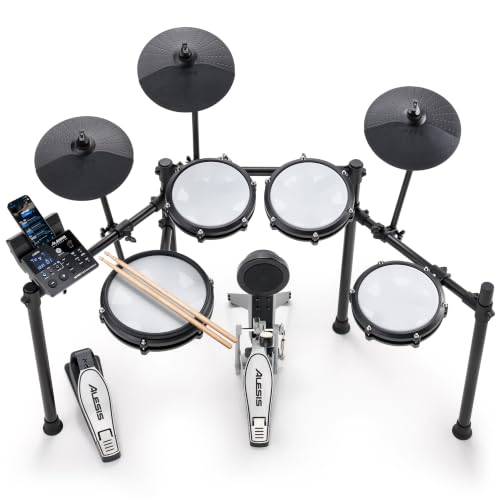
- All-mesh heads with larger snare
- 440+ sounds and customizable kits
- Bluetooth, USB MIDI, and Drumeo access
Best For: Beginners planning to explore recording and software
Best for Guided Home Practice

- Mesh pads with quieter practice
- Coach, exercises, and accompaniment tracks
- Complete bundle with throne and headphones
Best For: Beginners who prefer structured practice features
Best Simple Connected Starter Set

- Compact kit with quiet mesh heads
- Bluetooth play-along and USB MIDI
- 100 keep-forever Melodics lessons
Best For: New players wanting simple, connected practice
Best All-Around Starter

- 200 sounds, 20 kits, and 20 play-along songs
- Includes throne, sticks, headphones, and cables
- Foldable with USB MIDI and AUX connectivity
Best For: Beginners wanting a complete, versatile home-practice setup
Best Compact Mesh Kit

- Quiet mesh pads suit home practice
- Foldable, compact rack simplifies storage
- Includes throne, sticks, headphones, and two-year warranty
Best For: Kids and beginners practicing in compact or shared spaces
Best for Sound Variety

- 360 sounds and 20 preset kits provide broad variety
- All-mesh heads help reduce playing noise
- Dual Bluetooth, USB, recording, and metronome features
Best For: Beginners exploring sounds, recording, and connected practice
Best Overall

- Full mesh pads for responsive, quiet practice
- 31 kits and 450+ sounds
- Includes throne, headphones, sticks, and lessons
Best For: Beginners wanting a complete, feature-rich mesh kit
Best for Growing Players

- Expressive six-level velocity response
- 360 sounds with preset and custom kits
- Wireless playback and USB-MIDI connectivity
Best For: Beginners planning to use apps and expand their skills
Best Compact Starter

- Foldable frame for easier storage
- Quiet mesh pads with rim and cymbal functions
- Includes drum coach, throne, headphones, and sticks
Best For: Teenagers and beginners with limited practice space
Best Starter Kit for Young Players – Donner DED-70
For families seeking electronic drum kits for beginners, the Donner DED-70 offers a ready-to-play setup with quiet mesh pads, headphones, sticks, a throne, and built-in learning support. Its adjustable, foldable rack is designed for younger players ages 6–14.
Best For: Young beginners who need a compact, apartment-friendly kit with guided lessons and a broad selection of sounds.
Pros:
- Four dual-layer mesh pads and oversized cymbals provide responsive, quieter practice.
- Includes 150 sounds, 15 customizable kits, 10 demo songs, and 40 Melodics lessons.
- Comes with headphones, throne, sticks, and two pedals.
- Adjustable, collapsible design supports easier storage and portability.
Cons:
- A power amplifier is required for sound output when not using headphones.
- The included USB power bank is not included.
- Its youth-oriented sizing may be less suitable for larger adult players.
The DED-70 is a practical starter bundle for children and younger teens, especially where quiet practice and easy storage matter. Buyers should plan for amplification if they want to play aloud.
Best Feature-Rich Beginner Set – Alesis Nitro Max
The Alesis Nitro Max is one of the more expandable electronic drum kits for beginners, combining all-mesh heads, Bluetooth, USB MIDI, and a large onboard sound library. Its foldable rack keeps the setup practical for home practice.
Best For: Beginners who want realistic mesh response, extensive sounds, Bluetooth play-along, and room to explore recording or software.
Pros:
- Includes a 10-inch dual-zone snare, three mesh toms, and three cymbals.
- Offers 32 BFD kits, 16 user kits, and more than 440 sounds.
- Bluetooth supports play-along practice, while USB MIDI supports computers and DAWs.
- Includes a 90-day Drumeo access period and a compact foldable rack.
Cons:
- The feature-rich module may be more than a very casual beginner needs.
- Additional sound expansion can involve separate BFD software or downloads.
- The product information lists a one-year manufacturer warranty, which may be shorter than some buyers expect.
With its larger snare, quiet mesh construction, Bluetooth, and software connectivity, the Nitro Max is a strong choice for beginners who expect their interests to grow beyond basic practice.
Best for Guided Home Practice – Donner DED-80
The Donner DED-80 is a complete option for shoppers comparing electronic drum kits for beginners who want structured practice. It combines mesh pads, included accessories, coaching features, and a foldable frame suited to home or apartment use.
Best For: Beginners who value built-in exercises, accompaniment tracks, silent headphone practice, and a full starter bundle.
Pros:
- Double-layer mesh heads provide a realistic playing feel with reduced noise.
- Includes 180 sounds, 15 kits, 30 demo songs, a drum coach, and 30 accompaniment tracks.
- Ships with a throne, sticks, headphones, pedals, cables, and drum stand.
- USB MIDI connectivity supports DAW-based music creation.
Cons:
- A power amplifier is required for sound output outside headphone use.
- The youth-sized stand may not suit every adult player’s preferred setup.
- The Melodics lessons require contacting customer service for access, and the software subscription is not included.
The DED-80 stands out for learners who need motivation and practice structure built into the module. Its included accessories also reduce the need to purchase essential starter items separately.
Best Simple Connected Starter Set – Alesis Turbo Max
The Alesis Turbo Max keeps the beginner experience straightforward while adding useful connected features. This compact kit includes mesh heads, Bluetooth audio, guided lessons, a throne, headphones, and the pedals and rack needed to start playing.
Best For: New drummers who want an uncomplicated setup for quiet practice, play-along sessions, and gradual skill building.
Pros:
- Includes four 8-inch mesh drumheads and three 8-inch cymbals for quieter, responsive practice.
- Provides 12 kits, 110 sounds, 20 play-along tracks, and rhythmic exercises.
- Bluetooth enables wireless play-along audio from compatible devices.
- Includes 100 Melodics lessons to keep and supports USB MIDI, recording, and DAW use.
Cons:
- Its sound library is smaller than the Nitro Max’s listed 440-plus sounds.
- The Melodics package includes a 30-day Premium trial, while the 100 lessons are provided to keep.
- The compact layout may offer less playing space than larger kits.
The Turbo Max is a sensible entry point for beginners who prioritize ease of use and useful learning tools over the largest possible sound library. Bluetooth and USB MIDI also give it flexibility as skills develop.
Best All-Around Starter – AODSK UAED-403TS
For beginners comparing electronic drum kits for beginners, the AODSK UAED-403TS is a well-equipped option with four drum pads, three cymbals, a throne, sticks, headphones, and required cables. Its foldable design also makes it practical for home practice and storage.
Best For: Beginners who want a complete, portable kit with many sounds and practice features.
Pros:
- Includes throne, sticks, headphones, and cables.
- Offers 200 sounds, 20 drum kits, and 20 play-along songs.
- Foldable frame, AUX input, USB MIDI, and headphone output support flexible practice.
Cons:
- Its 24-pound weight may be less convenient than lighter beginner kits.
- The supplied notes do not specify a mesh playing surface; the pads use high-density rebound sponge.
The AODSK stands out as a ready-to-use learning setup with a broad sound library and useful connectivity. It is a sensible choice when variety and included accessories matter more than the lightest possible design.
Best Compact Mesh Kit – HAMPBACK MK-0
The HAMPBACK MK-0 is a compact choice for shoppers seeking electronic drum kits for beginners, especially kids and players with limited space. Its quiet mesh pads, foldable rack, and included accessories make it easy to start practicing at home.
Best For: Beginners and kids who prioritize quiet play, portability, and simple storage.
Pros:
- Uses four quiet double-layer mesh pads and three rubber-covered cymbals.
- Includes a throne, sticks, headphones, and necessary gear.
- Foldable rack fits under a bed or against a wall, and the kit supports power-bank use.
Cons:
- Its 68 sounds and 12 kits offer less tonal variety than some competing options.
- The supplied notes do not list a kick-drum pad size or a dedicated kick tower.
With a space-conscious rack and quiet mesh surfaces, the MK-0 is geared toward approachable practice in bedrooms or shared spaces. Its smaller sound library is a reasonable tradeoff for portability and beginner-friendly convenience.
Best for Sound Variety – Xkorce 8-Piece Kit
For beginners who want electronic drum kits for beginners with extensive sound options, the Xkorce kit provides 360 sounds, 20 preset kits, and one user-custom kit. Its all-mesh heads, dual Bluetooth, and recording features add flexibility for practice and experimentation.
Best For: Beginners who want broad sound selection, quiet mesh surfaces, and smartphone or computer connectivity.
Pros:
- Includes four mesh pads, a standalone silicone kick, and three cymbals.
- Provides 360 sounds, 20 preset kits, one custom kit, and recording functions.
- Dual Bluetooth, USB connectivity, headphones, sticks, cables, and bracket are included.
Cons:
- The supplied notes do not mention a throne.
- Three toms are single-zone mesh pads, which may offer less triggering detail than multi-zone pads.
The Xkorce is compelling for learners who expect to explore different genres or connect with devices and software. Its complete mesh configuration and extensive module features make it more flexible than a bare-bones starter set.
Best Overall – Donner DED-200
For beginners comparing electronic drum kits for beginners, the Donner DED-200 stands out with full mesh heads, a broad sound library, and useful practice tools. Its included throne, headphones, sticks, pedals, and foldable rack make it a ready-to-play home setup.
Best For: Beginners who want realistic mesh-pad feel, extensive sounds, and an all-in-one practice kit.
Pros:
- Full mesh pads provide responsive, acoustic-style feel and quiet practice.
- Includes 31 kits, more than 450 sounds, 50 play-along songs, recording, and a metronome.
- Comes with a throne, headphones, sticks, pedals, rack, and USB MIDI.
- Includes access to Melodics virtual lessons without a subscription service.
Cons:
- The feature-rich module may be more than a very casual beginner needs.
- The kit’s listed item weight is substantial, which may make moving it less convenient.
The DED-200 is a particularly complete choice for learners who expect to practice regularly and want room to explore different sounds and recording features as their skills develop.
Best for Growing Players – AKLOT B-CORE 530 PRO
The AKLOT B-CORE 530 PRO is a strong option among electronic drum kits for beginners who want a complete setup with expressive response and useful connectivity. It combines quiet mesh pads, dual-zone playing areas, wireless playback, and USB-MIDI support for lessons and music software.
Best For: Beginners who want dynamic playing response, lots of assignable sounds, and connectivity for learning apps.
Pros:
- Includes mesh pads, dual-zone cymbals, throne, headphones, sticks, pedals, rack, and a lesson book.
- Six-level velocity layering helps distinguish soft taps, steady strokes, and accents.
- Offers 20 preset kits, 10 custom kits, and 360 built-in sounds.
- Wireless playback and USB MIDI work with compatible apps and music software.
Cons:
- The larger feature set may require more setup and exploration than a basic starter kit.
- Wireless and software functionality depends on compatible devices or applications.
With eight assignable zones across its mesh pads and room to save custom kits, the B-CORE 530 PRO is designed to remain useful as a beginner moves beyond basic practice.
Best Compact Starter – AODSK AED-403
The AODSK AED-403 keeps the beginner setup straightforward with quiet mesh pads, a foldable metal frame, and the core accessories needed to start practicing. For shoppers seeking electronic drum kits for beginners in a compact format, its headphone mode, drum coach, and USB MIDI are practical additions.
Best For: Teenagers and beginners who need a portable, space-conscious kit for home practice.
Pros:
- Three mesh pads, a mesh snare with rim function, and three full-strike-zone cymbals offer an authentic playing feel.
- Foldable metal frame is convenient for storage or moving between practice spaces.
- Includes 15 kits, 195 sounds, a metronome, drum coach, and easy-read LED display.
- Comes with a throne, sticks, headphones, cables, AUX input, and USB MIDI.
Cons:
- Its 15 kits and 195 sounds are fewer than those offered by the other listed options.
- The supplied warranty is limited to 90 days from purchase.
The AED-403 is a sensible entry point when easy storage and essential practice features matter more than having the largest sound library or the most advanced module.
How We Picked the Best Electronic Drum Kits for Beginners
We focused on the features that matter most to new players: pad layout, playing feel, noise control, sound variety, connectivity, included accessories, and ease of setup. Mesh heads generally provide a more natural rebound and quieter response than basic rubber pads, although the kick pedal and cymbal impact can still transmit vibration through floors.
We also considered whether each kit includes essentials such as a drum throne, headphones, sticks, kick hardware, and lesson compatibility. Sound counts are useful for variety, but they are less important than responsive pads, dependable controls, and a module that makes practice straightforward.
Quick Comparison
| Feature | What to look for | Why it matters |
|---|---|---|
| Pad type | Quiet mesh pads, preferably dual-zone | Improves feel, dynamics, and practice comfort |
| Module | Multiple kits, coaching tools, and easy controls | Supports varied practice as skills develop |
| Connectivity | USB MIDI, Bluetooth, or audio input | Enables apps, recording, and play-along practice |
| Included gear | Throne, pedals, sticks, and headphones | Reduces extra setup costs |
Key Buying Factors for Electronic Drum Kits for Beginners
Playing Feel and Noise
Prioritize mesh snare and tom pads if realistic rebound and quieter practice are important. Check the kit’s footprint and confirm that the kick pedal works with your preferred footwear and playing position. Headphones make the module nearly silent, but pad strikes and pedal movement remain audible in some rooms.
Learning and Connectivity Features
Built-in metronomes, coaching modes, songs, and app support can turn a kit into a more useful practice system. USB MIDI is valuable for connecting to a computer or music software, while Bluetooth can simplify wireless play-along audio when supported. A large sound library is helpful, but clear navigation matters just as much.
What Is Included
Compare complete bundles carefully. A kit that includes a throne, headphones, sticks, and all pedals may cost less overall than a cheaper-looking set that requires several separate purchases. Also verify whether the listed cymbal and kick configurations match your expectations.
Who Should Buy Which Electronic Drum Kits for Beginners?
For the Simplest First Setup
Choose a complete bundle with headphones, sticks, throne, and pedals if you want to begin immediately with minimal shopping. This is often the best route for casual learners and parents buying a first kit.
For More Realistic Practice
Look for four or more quiet mesh pads, a dedicated kick pad, and dual-zone or choke-capable cymbals. These features are better suited to learners who expect to practice regularly and develop stronger technique.
For App-Based Learning and Recording
Select a model with USB MIDI and, ideally, Bluetooth or dependable audio connections. These options suit students who plan to use lessons, play along with tracks, record performances, or connect to a computer.
For Growing Musicians
Favor a flexible module with plenty of kits, sounds, coaching tools, and expansion potential. Beginners do not need the largest sound count, but a more capable module can delay the need to upgrade as playing skills improve.