Flexible audio snake cables simplify multi-channel connections by bundling several balanced audio lines into one manageable run. They can reduce stage clutter, speed setup, and keep mixer, microphone, and patch-bay connections organized.
This roundup covers compact short-run snakes, longer XLR options, TRS-to-XLR designs, and channel counts suited to home studios, rehearsals, live events, and professional production.
Best 10 Flexible Audio Snake Cables Picks for 2026
Best Long-Reach Value
100FT Braided XLR Cable 2-Pack

- Two 100-foot male-to-female XLR cables
- Braided, tangle-resistant jacket
- Supports balanced audio and DMX512
Best For: Large venues, events, and home studios needing long runs
Best Traditional Stage Snake
8-Channel Low-Profile XLR Snake

- Eight send and four return connections
- 50-foot stage-ready cable layout
- Numbered connectors simplify patching
Best For: Live stages, recording sessions, and multi-channel setups
Best Ethernet-Based Setup
4-Channel XLR-over-Ethernet Kit

- Carries four XLR channels over one Ethernet run
- Includes male and female pigtail boxes
- Supports audio, AES/EBU, and DMX
Best For: Professional systems using Cat5/Cat6 or EtherCON cabling
Best Compact Multi-Channel Pick
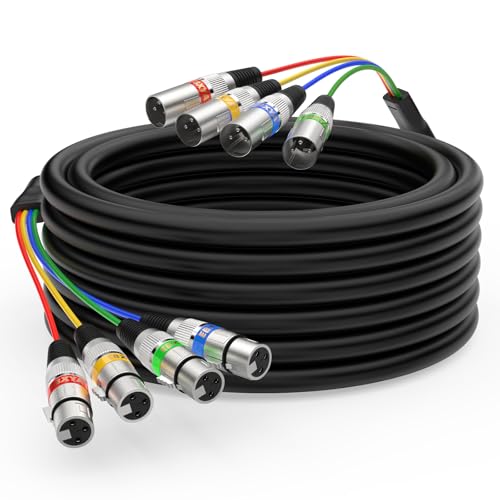
- Four balanced XLR channels in one cable
- 50-foot run reduces setup clutter
- Shielded construction for interference resistance
Best For: Live sound, recording, and four-source microphone setups
Compact TRS Routing Pick

- Four shielded TRS channels
- Color- and number-marked connectors
- Compact six-foot length
Best For: Short studio and live-sound TRS connections
Easy-Identify XLR Pick
Cable Matters 4-Channel XLR Snake

- Four male-to-female XLR channels
- Shielding helps reduce interference
- Color-coded for faster setup
Best For: Compact XLR stage and studio connections
Long-Run Stage Box Pick

- Eight XLR channels over 25 feet
- Numbered stage-box connections
- Rugged cord with circuit board
Best For: Longer stage, recording, and studio XLR runs
Color-Coded Reach

- Six bundled XLR male-to-female channels
- 10-foot length with matched color markers
- Shielding and metal locking connectors
Best For: Organized XLR setups in studios, rehearsal spaces, and live sound
Multi-Input Flexibility
PRORECK 8-Channel TRS-to-XLR Snake

- Eight simultaneous TRS-to-XLR channels
- Shielded copper-core construction
- Numbered, color-marked connectors
Best For: Professional setups requiring TRS-to-XLR female connections
Eight-Channel XLR Control

- Eight XLR male-to-female channels
- Shielding for reduced EMI and RFI
- Color- and number-marked connectors
Best For: Multi-channel stage, studio, and live XLR systems
Best Long-Reach Value – 100FT Braided XLR Cable 2-Pack
For long cable runs, this two-pack is a practical choice among flexible audio snake cables. Each 100-foot male-to-female XLR cable uses a braided jacket, dual shielding, and high-purity oxygen-free copper conductors for balanced audio connections, with support for DMX512 signal transmission.
Best For: Large venues, outdoor events, home studios, and users who want a spare extra-long XLR cable.
Pros:
- Includes two 100-foot 3-pin XLR cables.
- Braided jacket helps resist tangles, kinks, and everyday wear.
- Designed for microphones, mixers, effect pedals, and DMX LED equipment.
Cons:
- Extra-long cables can be more than needed for compact setups.
- Listed for indoor use despite suitability for event wiring.
This is the strongest pick when reach and backup value matter. Its 2-pack format and braided construction make it useful for larger audio or lighting layouts.
Best Traditional Stage Snake – 8-Channel Low-Profile XLR Snake
This 50-foot unit is built for organized multi-channel stage connections. As flexible audio snake cables go, it combines eight send channels with four return connections, numbered endpoints, and a circuit-board design intended to simplify setup and help reduce external noise.
Best For: Live performances, recording sessions, stage setups, and studios using multiple XLR channels.
Pros:
- Provides eight send channels and four return connections.
- Numbered connectors make channel identification easier.
- Rugged cable construction is designed for repeated transport and use.
Cons:
- Its 50-foot length may not suit very large venues.
- Uses a specialized multi-connector layout rather than simple one-to-one XLR cables.
Choose this model when channel organization is more important than maximum reach. The numbered fantail and box connections can make larger analog or digital console setups easier to manage.
Best Ethernet-Based Setup – 4-Channel XLR-over-Ethernet Kit
For systems that need a compact network-style connection, this kit offers a different approach to flexible audio snake cables. Its two pigtail boxes convert an EtherCON-compatible Ethernet connection into four XLR connections, supporting analog audio, digital audio, AES/EBU, and DMX applications.
Best For: Professional audio setups, events, studios, and installations that already use Cat5/Cat6 or EtherCON-style cabling.
Pros:
- Connects four XLR channels through a single Ethernet cable run.
- Includes male and female XLR pigtail boxes.
- Supports audio, AES/EBU, and DMX signal applications.
Cons:
- Requires a suitable Ethernet cable for the run.
- More specialized than a conventional wired XLR snake.
This kit is best for users who want to reduce cable bulk and use an existing structured-cabling approach. It offers configuration flexibility, but it is less plug-and-play than a standard XLR snake.
Best Compact Multi-Channel Pick – 4-Channel 50FT XLR Snake
This 50-foot cable keeps four balanced XLR connections in one organized run. It is a straightforward option among flexible audio snake cables, using oxygen-copper conductors, a high-density woven shield, nickel-plated contacts, and metal connectors with strain reliefs.
Best For: Connecting multiple microphones, DI boxes, mixers, amplifiers, phantom power supplies, or speakers in live and studio environments.
Pros:
- Combines four male-to-female XLR channels in one cable.
- 50-foot length helps reduce clutter and trip hazards.
- Shielding and balanced connections are designed to resist interference.
Cons:
- Only one 4-channel cable is included.
- 50 feet may be limiting for larger stage layouts.
For everyday multi-microphone and studio routing, this is a simple, space-saving choice. It provides the core organization of a snake without the extra complexity of Ethernet-based systems or larger channel counts.
Compact TRS Routing Pick – PRORECK 4-Channel TRS Snake
For short studio, mixer, or live-sound runs, this PRORECK option is one of the more practical flexible audio snake cables. Its four shielded TRS channels, copper conductors, and numbered, color-marked connectors help keep multi-signal setups organized while limiting unwanted interference.
Best For: Short indoor studio recordings, live-sound setups, and multi-track connections using TRS equipment.
Pros:
- Four channels transmit multiple audio signals at once.
- Shielding is designed to reduce EMI and RFI interference.
- Numbered and color-marked connectors simplify identification.
- Six-foot length and standard TRS connectors suit compact setups.
Cons:
- Six feet may be limiting for larger stages or distant equipment.
- TRS connectors are less suitable for setups requiring XLR connections.
This is a sensible choice when you need a compact, clearly labeled TRS snake rather than a long stage box. Confirm that your equipment uses compatible standard TRS connections before buying.
Easy-Identify XLR Pick – Cable Matters 4-Channel XLR Snake
The Cable Matters 4-channel model is a flexible audio snake cable for professional setups that rely on XLR connections. Its male-to-female configuration, shielding, flexible jacket, and color-coded channels make it useful for organized stage, studio, and mixer connections.
Best For: Indoor or outdoor stage performances, studio recording, and professional audio equipment using XLR connections.
Pros:
- Four-channel XLR connectivity supports professional audio setups.
- Shielding helps minimize interference and signal loss.
- Color-coded channels make connections quicker to identify.
- Six-foot length and flexible jacket support compact, frequently changed setups.
Cons:
- The six-foot version may not reach across larger stages.
- It is designed for XLR equipment rather than TRS-only systems.
Choose this cable when clear channel identification and dependable XLR routing matter more than extended reach. Its six-foot length is best suited to nearby equipment rather than long stage runs.
Long-Run Stage Box Pick – PRORECK 8-Channel XLR Snake
For longer stage and recording layouts, this PRORECK model provides eight XLR channels over a 25-foot run. As flexible audio snake cables go, it is built for routing multiple signals to a stage box, with numbered connectors, a circuit board, and a rugged cord intended for repeated use.
Best For: Live performances, stage setups, recording sessions, and studios needing an eight-channel XLR run.
Pros:
- Eight channels provide more routing capacity than four-channel models.
- Twenty-five-foot length supports more flexible stage placement.
- Numbered connectors help match the fantail and box connections.
- Circuit-board construction is designed to support solid connections and reduce external noise.
Cons:
- The longer eight-channel design is more cable than compact setups may need.
- It uses XLR connections and is not intended for TRS-only equipment.
- The listed configuration includes four XLR female connectors on the box and eight XLR male fantail connectors, so connector needs should be checked carefully.
This is the strongest fit here for expanding stage-side routing and keeping a console connection organized over distance. Verify the supplied connector arrangement and available inputs before ordering.
Color-Coded Reach – 6-Channel XLR Snake Cable
For organized multi-microphone setups, this 10-foot option is a practical pick among flexible audio snake cables. It combines six XLR male-to-female lines in one bundled cable, with matched color markers to simplify routing and troubleshooting.
Best For: Stages, rehearsal spaces, recording studios, DJ setups, and live sound systems using XLR connections.
Pros:
- Six XLR channels provide multiple connections in one cable run.
- Color-coded ends make channels easier to identify.
- Oxygen-free copper, foil, and braided shielding help reduce RF and EMI interference.
- Metal locking connectors and a flexible outer jacket support repeated use and easier storage.
Cons:
- Six channels may be limiting for larger setups requiring more inputs.
- The 10-foot length may not suit equipment positioned farther apart.
This is a well-organized choice for users who want a flexible six-channel XLR snake with straightforward channel identification and shielding for cleaner signal transmission.
Multi-Input Flexibility – PRORECK 8-Channel TRS-to-XLR Snake
This PRORECK cable is designed for routing eight audio signals at once, making it a useful option when comparing flexible audio snake cables for professional setups. Its 10-foot TRS-to-XLR female configuration and color-marked connectors help simplify connections across compatible equipment.
Best For: Professional stage, studio, live sound, surround sound, and multi-track recording applications using TRS-to-XLR connections.
Pros:
- Eight channels carry multiple audio signals simultaneously.
- Shielding helps block electromagnetic and radio-frequency interference.
- Copper conductors support signal transmission with minimal loss.
- Numbered and color-marked connectors speed up setup and identification.
Cons:
- TRS-to-XLR female connectors are less suitable for setups requiring standard XLR-to-XLR connections.
- The listed 10-foot length may be short for widely spaced equipment.
- It is specified for indoor use.
Choose this model when your system specifically needs eight TRS-to-XLR female channels and quick visual identification. Confirm connector requirements before buying, since its configuration differs from an XLR-only snake.
Eight-Channel XLR Control – PRORECK 8-Channel XLR Snake
When your rig uses standard XLR connections, this 10-foot PRORECK model offers eight bundled male-to-female channels in a single cable. It is a practical candidate among flexible audio snake cables for reducing cable clutter while keeping channels easy to trace.
Best For: Professional stage, studio, and live applications using multiple standard XLR connections.
Pros:
- Eight XLR male-to-female channels support multiple audio connections.
- Shielding helps minimize EMI and RFI interference.
- Color and number markings make channel matching quicker.
- Standard XLR connectors offer broad compatibility with mixers, speakers, amplifiers, and instruments.
Cons:
- The 10-foot cable may not provide enough reach for larger stages.
- Its eight-channel format may be more than needed for smaller systems.
- It is listed for indoor usage.
This model is a strong fit for users who want eight standard XLR lines consolidated into one organized run. Its color-and-number identification is especially useful when multiple channels must be connected quickly.
How We Picked These Flexible Audio Snake Cables
We focused on practical specifications that affect setup speed, signal reliability, and long-term usability. The selection includes 4-, 6-, and 8-channel designs, cable lengths from 6 to 100 feet, and both XLR and 1/4-inch TRS configurations. We also considered connector direction, shielding, color coding, construction details, and whether each cable suits portable, stage, studio, or fixed-installation use.
Because cable layout varies by system, no single snake is best for every buyer. The right choice depends on the number of channels you need, the connectors on your equipment, and how far the snake must run.
Quick Comparison
- Short runs: Six-foot and 10-foot snakes work well for racks, patch bays, compact stages, and studio furniture.
- Medium runs: Twenty-five- to 50-foot models provide useful reach for stage boxes, mixers, and rehearsal spaces.
- Long runs: A 100-foot two-pack is suited to larger venues or installations requiring extended cable paths.
- Channel capacity: Four channels are convenient for small setups, while six- and eight-channel versions leave more room for expansion.
- Connector types: Check whether you need XLR male-to-female, TRS-to-XLR, or a pigtail-style arrangement before ordering.
Key Buying Factors for Flexible Audio Snake Cables
Channel Count and Length
Choose enough channels for your current inputs plus reasonable headroom. Measure the actual route, including turns and vertical runs, rather than selecting a length based only on room size. Extra length is useful, but excessive slack can create trip hazards and storage problems.
Connector Compatibility
Confirm the gender and connector format at both ends. Standard XLR snakes are common for microphones and balanced line-level equipment, while TRS-to-XLR models can connect mixer outputs, patch bays, and other professional audio hardware. A mismatch may require adapters that add bulk and additional connection points.
Shielding and Durability
Shielding helps protect low-level audio from electromagnetic interference, especially around lighting, power cables, and digital equipment. Look for sturdy strain relief, flexible outer jackets, secure connector housings, and color-marked channels when the cable will be deployed frequently.
Routing and Storage
A flexible cable is easier to coil, transport, and position around stands or stage edges. Avoid sharply bending the snake or placing heavy equipment on it. Store it in loose, consistent coils to reduce stress and prolong conductor life.
Who Should Buy Which Flexible Audio Snake Cables?
Home-studio users should favor short, compact snakes that reduce rack and desk clutter. Small bands and rehearsal spaces may benefit from four- or six-channel 10- to 50-foot models. Live-sound operators should prioritize the required channel count, generous reach, rugged connectors, and clear channel identification. Installers and larger venues should measure routes carefully and consider longer snakes or multiple smaller runs for easier service and replacement.