The best folding instrument stands keep your instrument accessible at home, on stage, or during travel without taking up much space. This roundup compares 10 compact options for guitars and other folk instruments.
We focused on practical details that matter in daily use, including stability, padding, adjustability, folded size, and compatibility with different instrument shapes.
Best 10 Folding Instrument Stands Picks for 2026
Best Budget Pick
Amazon Basics Folding Guitar Stand

- Fits acoustic and electric guitars
- Three adjustable width settings
- Folds flat with padded contact points
Best For: Affordable everyday guitar storage and transport
Best Lightweight Folk Stand
Hercules GS303B TravLite Stand

- Weighs 1.9 pounds
- Folding design for transport
- Rubber foam contact points and pads
Best For: Portable support for lighter folk instruments
Best Premium Protection
K&M Heli 2 Folding Acoustic Stand

- Four-position adjustable support
- Cork-infused rubber contact points
- Folds flat and supports several instruments
Best For: Protective, adjustable support for gigging musicians
Best Compact Small-Instrument Stand
OnStage GS5000 Fold-Flat Stand

- Designed for small instruments
- Folds to a 1.25-inch thickness
- 7 mm steel wire construction
Best For: Space-saving storage and transport for small instruments
Everyday Adjustable Pick
Amazon Basics Foldable Guitar Stand

- Lightweight and foldable for storage
- Adjustable height with locking friction knob
- Padded tripod support for standard instruments
Best For: Home practice and temporary setups with standard guitars
Tour-Ready A-Frame
CAHAYA Folding Universal Guitar Stand

- Compact upper section folds for transport
- Reinforced steel construction for frequent moving
- Adjustable cradle fits many string instruments
Best For: Concerts, tours, festivals, and portable performance setups
Compact Multi-Instrument Option
Foldable Tripod Stand for Small Instruments

- Foldable tripod packs easily
- Stable triangular metal base
- Fits ukulele, violin, banjo, and mandolin
Best For: Portable support for smaller string instruments
Lightweight Adjustable Pick
Compact Folding Instrument Stand
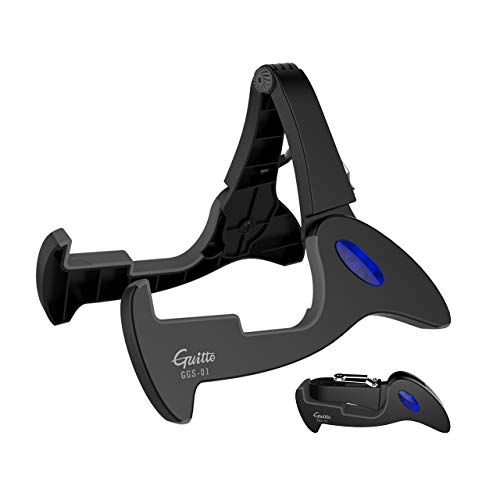
- About 0.99 lb and folds small
- Two-level adjustable arms
- Padded contact points and non-slip feet
Best For: Traveling musicians needing a compact, versatile stand
Multi-Instrument A-Frame

- Folds flat without installation
- Foam arms and silicone feet
- Fits guitars, basses, banjos, and more
Best For: Flexible home or travel storage across several instruments
Heavy-Duty A-Frame
Protective Folding Guitar Stand

- Thickened alloy-steel tubing
- Listed 40-pound load capacity
- Folds flat and requires no assembly
Best For: Stable support for home studios, stages, and travel
Best Budget Pick – Amazon Basics Folding Guitar Stand
If you need versatile folding instrument stands for regular practice, performances, or storage, this Amazon Basics A-frame stand accommodates both acoustic and electric guitars. Its adjustable width, padded contact points, and flat-folding design make it a practical everyday option.
Best For: Guitarists seeking an affordable, portable stand for acoustic or electric guitars.
Pros:
- Three adjustable width settings fit most guitar shapes.
- Soft foam arms and back rest help protect the instrument.
- Folds flat and includes non-slip rubber feet.
- Lightweight metal construction requires no assembly.
Cons:
- Its 10 kg load capacity and single-level design are intended for one instrument.
- The A-frame format is made for guitars rather than a broad range of folk instruments.
This is a straightforward choice when portability, easy setup, and basic padded protection matter more than specialized features.
Best Lightweight Folk Stand – Hercules GS303B TravLite Stand
The Hercules GS303B is one of the more compact folding instrument stands for musicians who want a lightweight solution for a folk instrument. Its folding design, rubber foam contact points, and non-slip pads focus on convenient transport and stable placement.
Best For: Folk-instrument players who prioritize a compact, lightweight stand.
Pros:
- Weighs 1.9 pounds for easier carrying.
- Folding design simplifies storage and transport.
- Rubber foam contact points help cushion the instrument.
- Non-slip rubber pads support stable placement.
Cons:
- The listed load capacity is 5 pounds, so heavier instruments may not be suitable.
- The supplied notes do not specify adjustable width or multiple positions.
With its modest weight and protective contact surfaces, the GS303B is a sensible travel-oriented pick when your instrument falls within its 5-pound capacity.
Best Premium Protection – K&M Heli 2 Folding Acoustic Stand
The K&M Heli 2 adds adjustable support and finish-friendly materials to the folding instrument stands category. Its four-position support system, adjustable crossbar, cork-infused rubber contact points, and sturdy steel construction make it suitable for acoustic guitars and several other instruments.
Best For: Gigging musicians and owners of acoustic guitars, cellos, or French horns who want adjustable padded support.
Pros:
- Four-position support system accommodates different instrument sizes.
- Cork-infused rubber contact points help protect the finish.
- Folds flat for transport and storage.
- Also supports headless guitars, cellos, and French horns.
Cons:
- Its specialized construction may be more than needed for simple guitar storage.
- The supplied listing identifies it specifically as an acoustic guitar stand, so compatibility should be checked for other instruments.
This stand stands out for musicians who want a durable, adjustable frame with thoughtful contact protection and broader instrument compatibility.
Best Compact Small-Instrument Stand – OnStage GS5000 Fold-Flat Stand
The OnStage GS5000 is a compact option among folding instrument stands, designed specifically for small instruments. Its fold-flat profile and 7 mm steel wire construction make it useful when storage space and easy transport are priorities.
Best For: Musicians who need a simple, portable stand for a small instrument.
Pros:
- Designed for small instruments.
- Folds to a compact 11.42 x 11 x 1.25-inch profile.
- Uses 7 mm thick steel wire construction.
- Tripod base provides a three-point support layout.
Cons:
- It is not intended as a full-size guitar stand.
- The supplied notes do not mention padded contact points or adjustable positions.
Choose the GS5000 when you want a straightforward, space-saving stand for smaller instruments rather than a feature-rich or full-size guitar model.
Everyday Adjustable Pick – Amazon Basics Foldable Guitar Stand
This lightweight Amazon Basics stand is a practical choice when you need folding instrument stands for home practice, temporary setups, or easy transport. Its adjustable height and padded contact points accommodate most standard acoustic, electric, and bass guitars, along with banjos.
Best For: Everyday home use, practice sessions, and portable setups with standard-size guitars or similar instruments.
Pros:
- Foldable, lightweight design is convenient to carry and store.
- Adjustable height with a friction knob helps fit different instruments.
- Rubber padding and non-slip feet help protect the instrument and floor.
- Self-centering lower yoke and tripod base support stable placement on flat surfaces.
Cons:
- Not recommended for oversized, unusually shaped, or non-standard instruments.
- Requires fully extended legs and a properly tightened knob for secure use.
- Stability can vary with instrument weight distribution and setup conditions.
This is a sensible, compact stand for routine use, especially if adjustable height matters. It is better suited to flat-surface home or temporary setups than heavy-duty studio applications.
Tour-Ready A-Frame – CAHAYA Folding Universal Guitar Stand
For musicians who prioritize compact transport, this CAHAYA model is one of the more travel-friendly folding instrument stands. Its folding upper section, reinforced steel construction, and adjustable cradle width support a broad range of instruments without loose screws or tubes to misplace.
Best For: Performances, tours, festivals, ceremonies, and musicians moving between locations with guitars or smaller string instruments.
Pros:
- Folding A-frame design stores and transports easily.
- Thick alloy-steel body and reinforced welds are suited to frequent moving.
- Flexible width and stepped cradle arms fit acoustic, classical, electric, and bass guitars, plus ukuleles, banjos, and violins.
- EVA padding and non-slip feet help protect instruments and limit movement.
Cons:
- The A-frame floor design provides one level rather than multiple-instrument storage.
- Its broad compatibility may still require careful positioning for unusual instrument shapes.
This stand offers a strong balance of portability, range, and simple setup. Choose it when you want a folding A-frame that can travel often and accommodate more than one standard string-instrument type.
Compact Multi-Instrument Option – Foldable Tripod Stand for Small Instruments
This compact metal tripod is a straightforward option among folding instrument stands for smaller string instruments. Its triangular base is designed for steady support, while the foldable construction makes it easy to pack and carry to lessons, rehearsals, or performances.
Best For: Ukuleles, violins, mini guitars, banjos, and mandolins that need a portable, compact floor stand.
Pros:
- Foldable three-legged design is convenient for packing and transport.
- Steady triangular base provides stable support.
- Metal construction is described as anti-rust and water-resistant.
- Minimalist black finish suits a range of performance or display settings.
Cons:
- The supplied notes do not specify padding at the instrument contact points.
- Its stated instrument range focuses on smaller instruments rather than full-size guitars.
- Installation is required before use, according to the product notes.
This is a useful pick when portability and a small footprint matter most. Its listed compatibility makes it particularly appealing for compact instruments, while full-size guitar users may prefer a dedicated guitar stand.
Lightweight Adjustable Pick – Compact Folding Instrument Stand
For musicians seeking folding instrument stands that are easy to carry, this adjustable tripod model offers a lightweight option for acoustic guitars, ukuleles, basses, and electric guitars. Its two-level movable-arm design and secure lock system provide flexible positioning without requiring assembly.
Best For: Traveling musicians and players who need a compact, adjustable stand for several instrument types.
Pros:
- Weighs about 0.99 lb and folds into a small size for storage or travel.
- Soft padding at the contact points helps protect instruments from scratches.
- Adjustable two-level arms accommodate guitars, ukuleles, basses, and electric guitars.
- Non-slip rubber feet and a secure lock system help keep the stand stable.
Cons:
- The listed load capacity is limited to one instrument.
- Its plastic construction may appeal less to shoppers seeking an all-metal stand.
This is a practical choice when portability and broad compatibility matter most. The light build and folding design suit practice sessions, travel, and space-conscious storage.
Multi-Instrument A-Frame – Folding Guitar Stand
This A-frame option is among the practical folding instrument stands for musicians who want quick setup and easy storage. It arrives without installation, folds flat in seconds, and uses padded arms plus silicone feet to support a range of instruments.
Best For: Home storage, travel, and musicians who use guitars, basses, ukuleles, banjos, violins, or cellos.
Pros:
- A-frame construction and four non-slip silicone feet provide a firm grip.
- Soft EVA foam arm pads help guard instruments against scratches and damage.
- Folds flat quickly for transport, storage, parties, or rehearsals.
- Supports multiple instrument types, including guitars, bass, banjo, cello, and ukulele.
Cons:
- This listed model has one level and a single-instrument capacity.
- At about 0.91 kg, it is heavier than the lightweight tripod option in this roundup.
Choose this stand if you prefer a straightforward metal A-frame with protective padding and broad instrument compatibility. Its quick-folding format is especially useful when floor space and portability are priorities.
Heavy-Duty A-Frame – Protective Folding Guitar Stand
Musicians comparing folding instrument stands for stage, studio, or travel may prefer this heavy-duty A-frame model. It uses thickened alloy-steel tubing, a wide base, and protective foam and rubber contact surfaces while remaining ready to use straight from the package.
Best For: Players who prioritize a sturdy, high-capacity stand for guitars, basses, banjos, and ukuleles.
Pros:
- Thickened steel tubing and a wide-based A-frame support stability.
- Listed load capacity is up to 40 pounds.
- Thick EVA foam arms and a soft rubberized back help protect instrument finishes.
- Arrives assembled and folds flat for gigs, rehearsals, and storage.
Cons:
- Its approximately 0.85 kg weight is less lightweight than the smallest travel stands.
- The stand has one level, so it is designed for one instrument at a time.
This model is the sturdiness-focused pick in the group. Its metal construction, high listed capacity, and full protective contact system make it a strong fit for musicians who want more substantial support without giving up foldability.
How We Picked These Folding Instrument Stands
We selected stands across several common designs, including A-frame, tripod, fold-flat, and compact folk-instrument models. Our comparison emphasizes secure support, protective contact points, portability, ease of setup, and compatibility with acoustic, electric, and bass guitars as well as smaller instruments such as violins, ukuleles, banjos, and mandolins.
Because product construction and dimensions can vary, check the current listing for weight limits, supported instrument sizes, folded measurements, and available safety features before ordering.
Quick Comparison
| Stand type | Best suited for | Notable advantage |
|---|---|---|
| A-frame | Most guitars | Simple, compact, and quick to fold |
| Tripod or adjustable | Mixed guitar sizes | Flexible height and wider positioning options |
| Fold-flat | Travel and storage | Minimal packed footprint |
| Folk-instrument stand | Ukulele, violin, mandolin, or banjo | Better fit for smaller bodies and necks |
Key Buying Factors for Folding Instrument Stands
Instrument Compatibility
Confirm that the stand supports your instrument’s body width, depth, and shape. A standard guitar stand may not securely hold a violin or ukulele, while a bass guitar can require a broader, more robust frame.
Stability and Weight Distribution
Look for a broad base, secure hinges, and feet that resist sliding. Heavier instruments benefit from wider support and a lower center of gravity. Avoid placing a stand where it can be easily bumped or caught by a cable.
Padding and Finish Protection
Foam, rubber, or cork contact points help reduce scratches and slipping. Check that padding covers every area touching the instrument, especially the lower supports and neck rest.
Portability and Storage
A foldable model is useful for rehearsals, performances, and small rooms, but compare its folded size and weight rather than assuming every compact stand travels equally well. A locking or firmly tensioned folding mechanism is preferable for repeated setup.
Adjustability
Height or width adjustment can improve fit across acoustic, electric, and bass guitars. However, more moving parts can add setup time, so choose adjustability only when you need it.
Who Should Buy Which Folding Instrument Stands?
Choose a basic A-frame if you want an affordable, straightforward stand for one guitar. A fold-flat model is a practical choice for musicians who regularly travel or have limited storage space. Adjustable tripod-style stands suit households with multiple guitar types, while a dedicated folk-instrument stand is better for violins, ukuleles, mandolins, and banjos.
If you need several stands for a teaching room, rehearsal space, or instrument collection, multipacks can offer better value, provided their padding and stability meet your needs. For stage use, prioritize fast setup, a secure base, and clearly visible protective contact points over the smallest possible folded size.