Choosing among guitar effects processors for home studios can be challenging: some prioritize realistic amp modeling, while others focus on hands-on control, portability, or simple recording workflows.
We compare 10 versatile options across features, connectivity, sound-shaping flexibility, and value to help you find a processor that fits your space, equipment, and playing style.
Best 10 Guitar Effects Processors for Home Studios Picks for 2026
Versatile Studio-to-Stage Hub

- 240+ effects with 140+ amp and cab models
- 6-in/4-out USB-C interface with re-amping
- Expression pedal, looper, drums, IR loader, and gig bag
Best For: Home-studio players who also perform live
Portable Patch Workhorse

- Compact GT-series processor with iconic amps and effects
- Built-in expression pedal and assignable control switch
- Battery operation offers up to seven hours of playing time
Best For: Beginners and mobile guitarists
Routing-Rich Recording Center
Valeton GP-200 USB/MIDI Processor

- 240+ effects and up to 11 modules per patch
- USB-C interface with re-amping and extensive I/O
- MIDI, balanced XLR, FX loop, looper, drums, and IR loading
Best For: Connected home studios using MIDI and re-amping
Pedalboard Command Center

- 100+ HX effects with up to nine simultaneous
- Legacy effects from multiple Line 6 pedal families
- LED-ring switches and scribble strips for rig control
Best For: Amp-based rigs needing advanced effects control
Most Feature-Rich
HeadRush Core Multi-Effects Pedal

- Guitar, vocal, amp-modeling, and recording features
- Neural Amp Modeler and Smart Amp Cloner support
- Touchscreen, USB audio, Wi-Fi, Bluetooth, and MIDI
Best For: Musicians building a versatile guitar-and-vocal home studio
Best Compact Pro Option
BOSS GX-10 Guitar & Bass Processor

- GX-100 sound engine in a compact design
- 32 amps, 170 effects, and up to 15 routing blocks
- Expression pedal, footswitches, and speaker IR support
Best For: Guitarists or bassists needing flexible studio tones in limited space
Best Budget Practice Tool
Zoom G1X FOUR Multi-Effects Processor

- 71 effects and 13 amp models
- Looper, 68 rhythm patterns, and expression pedal
- Headphone, aux, battery, and Guitar Lab support
Best For: Beginners and practice-focused home musicians
Best Hands-On Choice
BOSS ME-90 Multi-Effects Processor
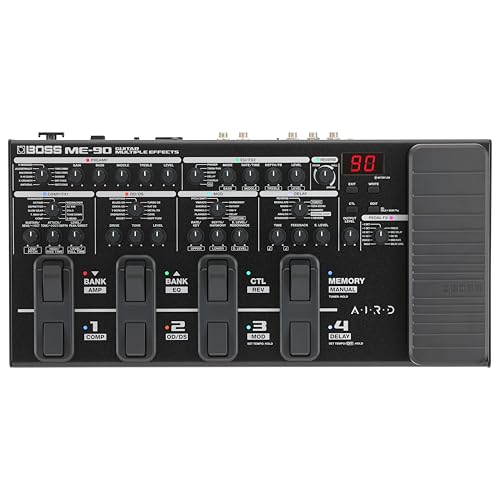
- 60 effects with 11 AIRD amp models and IR loading
- Eight footswitches plus expression pedal
- USB-C, effects loop, and Tone Studio integration
Best For: Players who want intuitive, stompbox-style control
Best Screen-Based Studio Value
NUX MG-30 Multi-Effects Processor
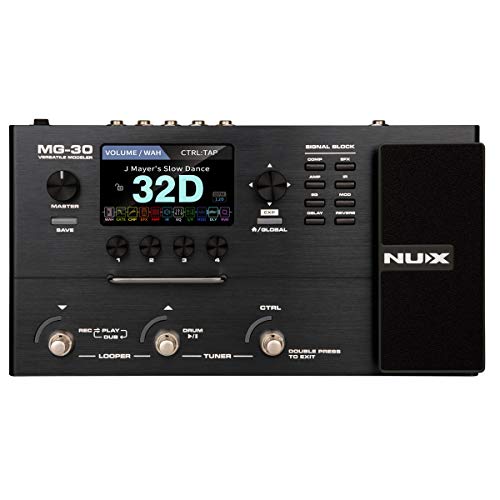
- 4-inch color LCD with 11-block routing
- 56 effects, amp models, and 1024-sample IR support
- USB audio, MIDI, and included NMP-2 footswitch
Best For: Players needing visual editing and flexible studio routing
Best Portable NAM and IR Platform
Valeton GP-50 Effects Processor
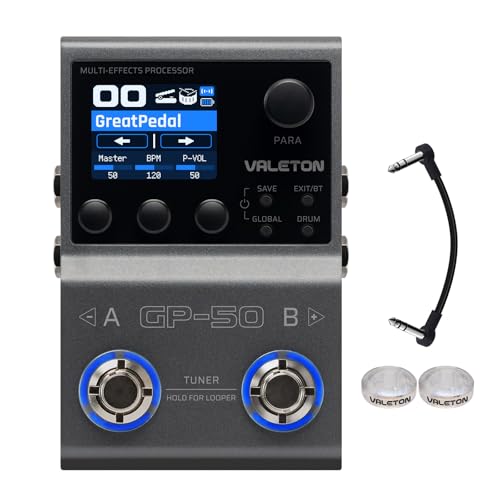
- 100+ effects with nine simultaneous modules
- NAM and third-party IR loading
- USB audio, Bluetooth control, and rechargeable battery
Best For: Mobile guitarists exploring modern modeling and re-amping
Versatile Studio-to-Stage Hub – Valeton GP-200 Bundle
For guitar effects processors for home studios, the Valeton GP-200 is a flexible choice when you want amp modeling, effects, recording connectivity, and practice tools in one unit. Its USB-C interface supports 6-in/4-out audio, loopback, and re-amping across Windows, macOS, iOS, and Android.
Best For: Home-studio players who also need a capable live and practice rig.
Pros:
- Over 240 effects, including 140+ amp and cabinet models.
- USB-C audio interface with loopback and re-amping support.
- Includes an expression pedal, looper, drum machine, IR loader, and gig bag.
- Offers a rugged metal chassis and customizable footswitch layout.
Cons:
- Its broad feature set may require more setup time than a simpler pedal.
- It is a corded unit rather than battery powered.
The GP-200 stands out as an all-in-one workstation for recording, sound design, rehearsal, and performance. It is especially appealing if you want one processor to cover both studio duties and stage use.
Portable Patch Workhorse – BOSS GT-1 Compact Processor
The BOSS GT-1 is a compact option for guitar effects processors for home studios, particularly when portability and straightforward patch editing matter. It combines the GT-series sound engine with USB connectivity, an expression pedal, and battery operation for flexible practice or mobile recording setups.
Best For: Beginners and mobile players who want recognizable BOSS effects in a lightweight unit.
Pros:
- Compact, lightweight design with a built-in expression pedal.
- Easy Select and Easy Edit functions support quick patch changes.
- Four AA batteries provide up to seven hours of playing time.
- USB connectivity and downloadable BOSS Tone Central patches add flexibility.
Cons:
- It does not list the more extensive routing and audio I/O of larger processors.
- The unit uses four AA batteries for portable operation.
The GT-1 makes sense when you value an approachable interface and easy transport over extensive studio routing. Its battery capability also gives it an advantage for songwriting away from a fixed setup.
Routing-Rich Recording Center – Valeton GP-200 USB/MIDI Processor
Valeton GP-200 Multi-Effects Processor for Guitar & Bass, Expression Pedal, MIDI, USB Interface
Check Price On AmazonAmong guitar effects processors for home studios, this Valeton GP-200 is suited to players who need extensive connections as well as a large effects library. It provides balanced XLR and 1/4-inch outputs, an FX loop, MIDI, auxiliary and headphone connections, plus a USB-C 6-in/4-out interface with re-amping.
Best For: Home-studio guitarists who need MIDI, external routing, and direct recording options.
Pros:
- Supports up to 11 movable modules with 240+ effects and 256 patches.
- Includes balanced XLR outputs, FX loop, and five-pin MIDI I/O.
- USB-C interface supports 6-in/4-out recording and re-amping.
- Built-in looper, drum patterns, expression pedal, and 20 user IR slots.
Cons:
- There is no battery operation; it requires the included power supply.
- The number of routing and editing options may be more than casual users need.
This version is a strong fit for a more connected studio, especially where MIDI control, re-amping, and balanced outputs are useful. It also remains practical for rehearsal through its looper, drums, and headphone output.
Pedalboard Command Center – Line 6 HX Effects Processor
The Line 6 HX Effects is a focused choice among guitar effects processors for home studios when your priority is a powerful effects unit for an existing amp and pedal rig. It offers more than 100 HX effects, legacy effects from several Line 6 families, and control features designed for hands-on pedalboard operation.
Best For: Guitarists building an amp-based rig around advanced effects and centralized control.
Pros:
- Provides more than 100 HX effects with up to nine running simultaneously.
- Includes legacy effects from M13, M9, M5, DL4, MM4, FM4, and DM4 units.
- Capacitive-sensing switches include LED rings and scribble strips.
- Can serve as the command center for an amp and pedal rig.
Cons:
- It is centered on effects and does not list amp modeling or USB audio functionality.
- Its larger, heavier pedalboard format is less portable than compact processors.
The HX Effects is best viewed as a sophisticated effects and control hub rather than an all-in-one recording interface. It is a compelling option when you already have an amp setup and want centralized access to a broad Line 6 effects collection.
Most Feature-Rich – HeadRush Core Multi-Effects Pedal
The HeadRush Core is a powerful choice for guitar effects processors for home studios, combining amp modeling, vocal processing, recording, looping, and extensive connectivity in one unit. Its USB audio interface, touchscreen, IR support, and Neural Amp Modeler compatibility make it especially versatile for direct recording and tone experimentation.
Best For: Home-studio musicians who want one processor for guitar, vocals, recording, amp capture, and practice.
Pros:
- Includes guitar and vocal effects, amp modeling, Auto-Tune, looper, drum machine, and USB recording.
- Supports Neural Amp Modeler captures, third-party impulse responses, and Smart Amp Cloner technology.
- Offers Wi-Fi, Bluetooth, MIDI, an effects loop, XLR and 1/4-inch outputs, and a 7-inch touchscreen.
- Provides gapless preset switching with reverb and delay spillover for smoother changes.
Cons:
- Its broad feature set and larger footprint may be more than a simple home setup requires.
- It requires corded power and weighs about 3.9 kg.
For creators who want a central recording and performance hub, the Core offers unusually deep functionality. It is best suited to users who will take advantage of its amp-capture tools, connectivity, and vocal features.
Best Compact Pro Option – BOSS GX-10 Guitar & Bass Processor
The BOSS GX-10 is a compact option among guitar effects processors for home studios, using the GX-100 sound engine in a smaller format. It combines high-resolution processing, flexible signal routing, speaker IR support, and practical foot control for recording or streamlined desktop setups.
Best For: Guitarists and bassists who want professional-grade modeling and flexible routing in a portable processor.
Pros:
- Uses 24-bit AD, 32-bit DA, and 32-bit floating-point processing at a 48 kHz sampling rate.
- Offers 32 amplifier types, 170 BOSS effects, and up to 15 assignable signal-chain blocks.
- Supports onboard speaker options and loaded WAV speaker impulse responses.
- Includes three footswitches, multiple control modes, and an integrated expression pedal.
Cons:
- Its compact control layout provides fewer footswitches than larger floor processors.
- The supplied notes identify USB-C connectivity but do not specify a built-in USB audio interface.
The GX-10 is a strong fit when sound quality and routing flexibility matter more than an expansive physical control surface. Its compact chassis makes it practical for smaller studios, travel rigs, and guitar or bass setups.
Best Budget Practice Tool – Zoom G1X FOUR Multi-Effects Processor
The Zoom G1X FOUR is a straightforward and portable choice among guitar effects processors for home studios. It provides 71 effects, 13 amp models, a looper, rhythm patterns, an expression pedal, and headphone monitoring, giving beginners and practice-focused players a useful way to develop tones without a complex setup.
Best For: Beginners, songwriters, and home players who want affordable effects, looping, rhythms, and silent practice.
Pros:
- Includes 71 built-in effects, 13 amp models, a 30-second looper, and 68 rhythm patterns.
- Supports headphones and auxiliary audio for quiet practice and play-along sessions.
- Includes an expression pedal and access to patch editing through Zoom Guitar Lab.
- Battery-powered operation makes it convenient for portable practice.
Cons:
- Its 30-second looper is less spacious for extended arrangements.
- It offers fewer amp models and effects than the larger processors in this roundup.
- The supplied notes do not identify it as a dedicated USB audio interface for direct computer recording.
The G1X FOUR favors accessibility over advanced studio routing. It is a sensible starting point for practicing, sketching song ideas, and exploring effects before moving to a more elaborate recording system.
Best Hands-On Choice – BOSS ME-90 Multi-Effects Processor
BOSS ME-90 Guitar Multi-Effects Guitar Processor | All-In-One Guitar Processor
Check Price On AmazonFor guitar effects processors for home studios, the BOSS ME-90 is a practical all-in-one option for players who want quick, hands-on tone shaping. Its knob-based interface, AIRD amp models, IR loading, USB-C connection, and effects loop support both practice and recording setups.
Best For: Guitarists who prefer stompbox-style controls and a broad library of ready-to-edit effects.
Pros:
- Includes 60 effects, 11 AIRD amp models, and IR loading.
- Eight multifunction footswitches and an expression pedal provide extensive control.
- USB-C, an effects loop, and BOSS Tone Studio support home-studio workflows.
- Offers 36 preset patches and 36 user patch locations.
Cons:
- Optional Bluetooth connectivity requires an additional adaptor.
- The feature-rich layout may take time to explore fully.
The ME-90 stands out when immediate physical control matters more than a screen-heavy editing experience. It is a versatile choice for building and recalling guitar sounds at home or onstage.
Best Screen-Based Studio Value – NUX MG-30 Multi-Effects Processor
The NUX MG-30 is a flexible choice among guitar effects processors for home studios, especially for users who want detailed routing and amp modeling. Its 4-inch color LCD, USB audio interface, IR loader, and included NMP-2 footswitch make it suitable for recording, editing, and rehearsal.
Best For: Guitar, bass, and acoustic players who need deep signal-chain control and a visual editing interface.
Pros:
- Provides 56 effect modules and flexible 11-block signal routing.
- Includes 28 electric, two acoustic, and five bass amp models.
- Supports 1024-sample IRs and adjustable send/return placement.
- USB supports audio interfacing, MIDI, editing, and firmware updates.
Cons:
- Its extensive routing and modeling options may feel complex for beginners.
- Stomp-style control depends on the included NMP-2 and additional control setup.
With broad instrument support and studio-friendly connectivity, the MG-30 is a strong fit for creators who want to experiment with detailed chains. The large display helps make its many editing options easier to navigate.
Best Portable NAM and IR Platform – Valeton GP-50 Effects Processor
The Valeton GP-50 combines a compact multi-effects unit with NAM and cabinet IR loading, making it an appealing option among guitar effects processors for home studios. Its USB audio, Bluetooth app control, rechargeable battery, and headphone output support quiet practice and portable recording.
Best For: Guitarists and bassists who want modern capture, IR, wireless editing, and battery-powered flexibility.
Pros:
- Offers more than 100 HD effects with up to nine simultaneous modules.
- Loads up to 20 third-party cabinet IR files and 80 NAM files.
- Provides 2-in/2-out USB audio with re-amping support.
- Includes Bluetooth 5 app control, drum patterns, and a rechargeable battery.
Cons:
- Its dual-footswitch layout offers less immediate control than larger processors.
- The 1.77-inch screen is compact for detailed editing.
- Advanced NAM and IR features may require additional setup and file management.
The GP-50 is especially compelling for compact home rigs that benefit from headphone practice, USB recording, and custom model loading. Its battery operation also makes it easier to move between a desk, rehearsal space, and pedalboard.
How We Picked These Guitar Effects Processors for Home Studios
We selected processors that cover the main needs of home players and recording musicians, including amp and cabinet modeling, effects variety, direct recording, headphone monitoring, preset management, and practical foot control. We also considered whether each unit suits beginners, compact practice setups, or more demanding studio workflows.
Because “best” depends on how you play and record, this list includes budget-friendly multi-effects units alongside more advanced processors with deeper routing, MIDI, impulse-response support, and vocal or acoustic-guitar capabilities.
Quick Comparison
| Priority | Look for |
|---|---|
| Quiet practice | Headphone output, compact design, and easy preset access |
| Direct recording | USB audio, amp modeling, cabinet or IR loading |
| Live-style control | Expression pedal, footswitches, scenes, and looper functions |
| Advanced studio routing | MIDI, flexible signal chains, snapshots, and multiple outputs |
Key Buying Factors for Guitar Effects Processors for Home Studios
Modeling and Effects Quality
Check whether the processor offers the amp models and effects you actually use. A broad effects count is less important than responsive distortion, convincing cabinet simulation, usable reverbs and delays, and enough editing control to shape tones quickly.
Recording and Monitoring Connections
For computer-based recording, USB audio can reduce the need for additional hardware. Headphone output is valuable for late-night practice, while balanced outputs, auxiliary input, and re-amping support may matter in a more developed studio. Confirm compatibility with your computer and preferred recording software.
Workflow and Control
Consider how much time you want to spend programming. Touchscreens and color displays can simplify editing, while dedicated knobs and footswitches may be faster during rehearsals. An expression pedal and looper are useful additions, but they also increase size and cost.
Presets, Routing, and Expansion
Look for enough patch storage, user-friendly preset organization, and signal-chain flexibility. MIDI, Bluetooth app control, firmware updates, and IR loading can extend the unit’s useful life as your setup grows.
Who Should Buy Which Guitar Effects Processors for Home Studios?
- Beginners and casual players: Choose a compact, affordable unit with simple controls, built-in amp modeling, headphones, and a useful selection of presets.
- Home recordists: Prioritize USB audio, convincing cabinet simulation or IR loading, quiet outputs, and flexible signal routing.
- Players who perform with presets: Look for multiple footswitches, scenes or patch changes, an expression pedal, and a dependable looper.
- Advanced guitarists: Consider deeper editing, MIDI, simultaneous modules, custom IR support, and routing options for integrating pedals and studio gear.
- Guitarists with broader setups: If you also play bass, acoustic guitar, or sing, choose a processor with suitable models, vocal effects, or dedicated input flexibility.
The best choice is the unit that matches your workflow rather than the one with the longest feature list. Before buying, confirm its input and output connections, physical footprint, editing method, and whether its recording features fit the rest of your home studio.