Finding the right guitar multi effects processor for metal means balancing tight high-gain tones, usable amp and cab models, fast switching, and enough routing flexibility for live or recording use.
This roundup focuses on units that can handle modern metal demands without wasting time on features that won’t matter on stage or in the studio.
Best 10 Guitar Multi Effects Processor for Metal Picks for 2026
Best Compact Option
Valeton GP-50 with NAM and IR Loading
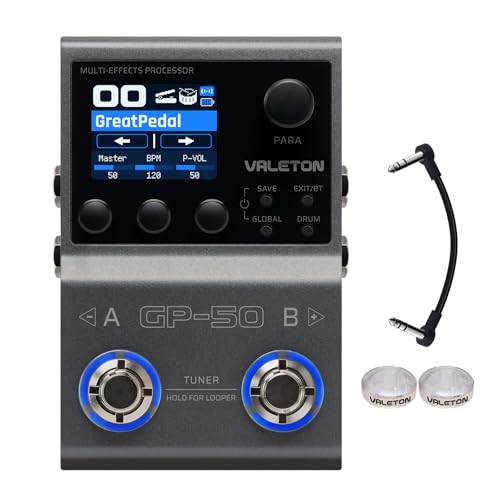
- 100+ HD effects with NAM and IR loading
- Up to 9 modules and 100 patch slots
- Bluetooth app control plus rechargeable battery
Best For: traveling players and pedalboard users who want modern modeling in a compact box
Best Practice Pick
KMF-1 for Tighter Rehearsal Rigs
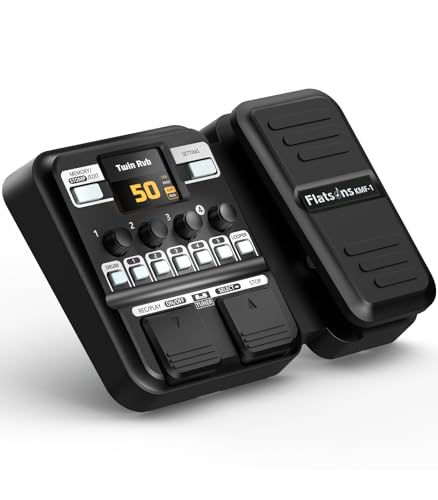
- 77 effects, 18 amp models, and 18 cab sims
- 50 presets plus tuner, looper, and 42 drum rhythms
- Expression pedal support and AA battery option
Best For: practice players who want simple presets and useful built-in rehearsal features
Best Premium Floorboard
Zoom G6 for Deep Tone Building
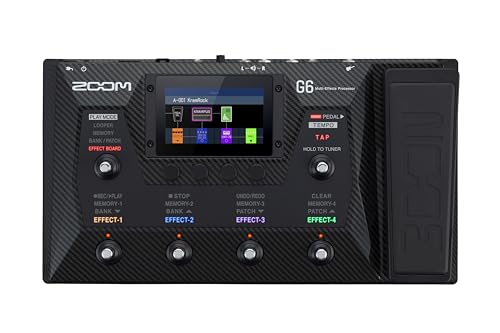
- 7 simultaneous effects plus amp modeling
- 4.3-inch touchscreen with 240 patches
- USB audio interface and 2 hours of looping
Best For: advanced players who want a touch-controlled floorboard for editing and recording
Budget Practice Pick
MOOER GE100 for Metal Tone Building

- 80 preset patches and 80 user patches
- 66 effect types with expression pedal control
- 180-second looper plus drum machine
Best For: budget practice, basic metal tones, and home use
Most Versatile Modeler

- 200 presets, 170 effects, and 55 amp models
- Supports MNRS, GNR, GIR, and NAM loading
- Up to 9 hours of battery life
Best For: players who want a battery-powered modeler for metal and recording
Best Portable Starter
Zoom G1X Four for Metal Practice

- 71 effects and 13 amp models
- 30-second looper with 68 rhythm patterns
- Battery powered with headphone-friendly practice use
Best For: small, portable practice with basic metal tones
Metal-Ready All-Rounder
MOOER GE200 Plus Intelligent Guitar Processor

- Over 270 effect models with 255 memory slots
- MNRS and third-party IR support up to 2048 points
- XLR, headphone, USB MIDI, and ASIO interface support
Best For: Players who want an all-in-one processor for metal tones, practice, and recording
Compact Metal Practice Rig
MOOER GE150 Plus Compact Guitar Multi Effects Processor

- 198 preset patches and 55 preamp models
- NAM, MNRS, and third-party IR support
- Built-in expression pedal with looper and drum machine
Best For: Players who want a portable processor with modern tone loading and practice tools
Stage-Focused Metal Processor
MOOER GE150 Pro Guitar Multi Effects Processor

- Four multi-purpose footswitches for live control
- 200 presets with 55 amp preamps and 26 cab sims
- 20 IR slots plus OTG recording and looper support
Best For: Players who want a compact processor with stronger live control and recording features
Editor's Pick – Donner Arena 2000 for High-Gain Flexibility
If you’re shopping for a guitar multi effects processor for metal, the Donner Arena 2000 stands out for its wide effect library, amp/cab modeling, and live-friendly I/O. Its 278 effect types, 80 amp simulations, and 50 cabinet simulations give you plenty of room to build aggressive rhythm tones and lead sounds without feeling limited.
Best For: Players who want a feature-rich all-rounder with strong metal tone options and stage-ready connectivity.
Pros:
- 278 total effect types, including simulations suited to heavy styles
- 100 IRs total, with support for third-party IRs
- 60-second looper plus 40 drum rhythms for practice and demos
- XLR out, MIDI in, aux in, and headphone output for flexible use
Cons:
- Requires external power and does not include a battery compartment
- Learning and editing the deeper feature set may take time
The Arena 2000 is a strong choice if you want deep tone-shaping options in one unit and plan to move between bedroom practice, recording, and live performance.
Best Compact Option – Valeton GP-50 with NAM and IR Loading
The Valeton GP-50 is a compact guitar multi effects processor for metal players who want modern modeling tools in a small pedalboard-friendly unit. With more than 100 HD effects, NAM loading, IR cabinet loading, and up to 9 simultaneous modules, it gives you a flexible way to build tighter high-gain chains and store plenty of sounds.
Best For: Guitarists who want a portable, battery-powered processor with modern loading features and app control.
Pros:
- Supports NAM files and IR cabinet loading for modern tone shaping
- Up to 9 modules at once for complex signal chains
- BT app control and 100 patch slots for easy organizing
- Built-in rechargeable battery for portable use
Cons:
- Smaller format means fewer physical controls than larger floor units
- Best suited to players comfortable with app-based editing
If you want a lightweight processor with current-generation modeling support, the GP-50 delivers a lot of versatility in a very compact footprint.
Best Practice Pick – KMF-1 for Tighter Rehearsal Rigs
The KMF-1 is a practical guitar multi effects processor for metal if you want solid practice tools and straightforward tone shaping. It includes 77 effects, 18 amp models, 18 cabinet simulators, and a 32-bit DSP platform with IR sampling, so you can build heavier sounds and rehearse with backing tools in one unit.
Best For: Beginners and practice-focused players who want presets, rhythm support, and a built-in battery option.
Pros:
- 77 effects with 18 amp models and 18 cab sims
- 50 presets, tuner, 30-second looper, and 42 drum rhythms
- Expression pedal support with assignable control options
- Can run on 6 AA batteries for short portable sessions
Cons:
- Battery runtime is limited compared with mains-powered units
- Not as expansive as larger processors with deeper effect libraries
This is a sensible choice if your priority is easy rehearsal use, preset-based switching, and enough amp/cab options to cover heavy playing styles.
Best Premium Floorboard – Zoom G6 for Deep Tone Building
For players seeking a guitar multi effects processor for metal with a premium workflow, the Zoom G6 offers serious flexibility. It can chain up to 7 effects plus amp modeling simultaneously, includes 70 preloaded IRs, and gives you a touchscreen interface that makes building heavier tones and switching patches fast.
Best For: Guitarists who want a large, touch-based processor for advanced tone editing, looping, and recording.
Pros:
- Up to 7 simultaneous effects plus amp modeling
- 4.3-inch touchscreen with four play modes
- 2 hours of loop time saved to SD card
- USB audio interface support for direct DAW recording
Cons:
- Larger floorboard design takes up more space
- May be more feature-rich than casual users need
The G6 is a strong fit if you want a performance-focused processor with deep patch control, built-in looping, and easy computer integration.
Budget Practice Pick – MOOER GE100 for Metal Tone Building
If you want a guitar multi effects processor for metal that’s affordable and easy to shape into heavier tones, the MOOER GE100 gives you a lot to work with. It includes 80 preset patches, 80 user patches, 66 effect types, and an expression pedal, so you can build and save high-gain sounds without needing a complicated setup.
Best For: Players who want a low-cost multi-effects unit for practice, basic metal tones, and home use.
Pros:
- 80 preset patches plus 80 user patches for building a custom library
- 66 effect types across 8 effect modules for broad tone shaping
- 180-second looper and drum machine support practice and songwriting
- Line out mode helps keep a usable tone when playing without an amp
Cons:
- Less advanced than the higher-end amp modeler in this group
- Fewer modern modeling features than the GE150 Pro Li
- Best suited to practice and straightforward editing rather than deep studio control
Overall, the GE100 is a practical entry point if you need metal-ready effects, looping, and patch saving in a simple package. It’s strongest as a budget-friendly practice and experimentation tool.
Most Versatile Modeler – MOOER GE150 Pro Li Metal Rig
The MOOER GE150 Pro Li is the most feature-packed guitar multi effects processor for metal in this group, especially if you want amp modeling and modern recording options. It offers 200 factory presets, 170 effects, 55 amp models, 26 cab sims, and support for MNRS, GNR, GIR, and NAM files, giving you a wide range of heavy tones and ways to refine them.
Best For: Guitarists who want a battery-powered modeler for metal, live flexibility, and recording-focused tone shaping.
Pros:
- 200 presets, 170 effects, and 55 amp models for broad tone coverage
- 20 AMP slots and 20 CAB slots for MNRS, GNR, GIR, and NAM support
- Integrated lithium battery delivers up to 9 hours of use
- Four multi-purpose footswitches improve control for switching and live performance
Cons:
- More complex than a simpler practice processor
- Battery-powered design may be more than some players need
- Best value depends on whether you’ll use the advanced model loading features
If you need flexibility for modern metal tones, this is the strongest all-around option here. The combination of modeling depth, battery operation, and performance controls makes it the most complete rig in the lineup.
Best Portable Starter – Zoom G1X Four for Metal Practice
The Zoom G1X Four is a compact guitar multi effects processor for metal players who want simple portability and enough tools to practice heavier sounds. With 71 effects, 13 amp models, a 30-second looper, 68 rhythm patterns, and battery power, it covers the essentials for building riffs and practicing at home or on the go.
Best For: Players who want a small, battery-powered practice unit with basic amp modeling and metal-friendly effects.
Pros:
- 71 built-in effects and 13 amp models for tone variety
- 30-second looper supports riff-building and solo practice
- 68 rhythm patterns help keep practice sessions moving
- Battery power and headphone support make it easy to use anywhere
Cons:
- Shorter looper time than the MOOER GE100
- Less deep modeling and control than the GE150 Pro Li
- Best for practice and experimentation rather than advanced stage rigs
The G1X Four is a sensible choice if portability matters most and you mainly need a compact way to practice metal tones. It doesn’t try to do everything, but it covers the basics well for everyday playing.
Metal-Ready All-Rounder – MOOER GE200 Plus Intelligent Guitar Processor
If you want a guitar multi effects processor for metal that also handles practice, recording, and preset management, the MOOER GE200 Plus is built to do a lot in one box. It offers over 270 effect models, 255 memory slots, MNRS and third-party IR support, plus XLR outs and USB MIDI for a flexible modern setup.
Best For: Players who want a feature-rich all-in-one processor for metal tones, home practice, and DAW integration.
Pros:
- Over 270 effect models across 255 memory slots for broad tone shaping.
- Supports MNRS files and third-party IR cabinet sims up to 2048 points.
- XLR outputs, headphone out, USB MIDI, and low-latency ASIO audio interface support.
- Built-in drum machine, metronome, and 60-second looper for practice and songwriting.
Cons:
- Complex feature set may be more than a minimalist player needs.
- Focused on versatility rather than a stripped-down, plug-and-play layout.
The GE200 Plus stands out if you need a metal-capable processor that also covers recording and rehearsal duties. Its routing, cloud support, and editing tools make it especially practical for players who like building and refining presets.
Compact Metal Practice Rig – MOOER GE150 Plus Compact Guitar Multi Effects Processor
The MOOER GE150 Plus is a compact guitar multi effects processor for metal players who want a portable setup with serious editing and practice tools. It includes 198 preset patches, 55 preamp models, third-party IR loading, NAM and MNRS support, plus spill-over for smoother preset changes.
Best For: Guitarists who want a travel-friendly processor with modern tone loading and useful practice features.
Pros:
- 198 preset patches and 55 preamp models for wide tonal coverage.
- Supports third-party IRs, NAM models, and MOOER MNRS files.
- Spill-over delay and reverb help transitions sound natural between presets.
- Built-in expression pedal, 80-second stereo looper, and drum patterns for practice.
Cons:
- Three-footswitch layout may feel limited compared with larger floor units.
- Compact design trades extra switching flexibility for portability.
For players who value portability without giving up modern model loading options, the GE150 Plus is a strong fit. It is especially appealing if you want a compact unit for metal practice, preset changes, and quick recording via USB-C.
Stage-Focused Metal Processor – MOOER GE150 Pro Guitar Multi Effects Processor
If you need a guitar multi effects processor for metal with more hands-on control, the MOOER GE150 Pro is designed around four multi-purpose footswitches and an expanded control workflow. It offers 200 factory presets, 55 amp preamps, 26 cabinet simulations, 20 IR slots, and support for MNRS sample files and OTG recording.
Best For: Players who want a compact but performance-friendly processor with deeper live control.
Pros:
- Four multi-purpose footswitches provide flexible preset and function control.
- 200 factory presets plus 55 amp preamps and 26 cabinet simulations.
- Supports MNRS files, 20 IR slots, and OTG recording for modern workflows.
- Built-in 80-second stereo looper, drum machine, and metronome modes.
Cons:
- More stage-oriented controls may be more than casual home users need.
- Standard model is mains-powered, so it is less grab-and-go than the battery version mentioned in the notes.
The GE150 Pro makes sense if your metal rig needs practical foot control and a broad preset palette in a compact format. Its mix of amp/cab modeling, IR support, and recording features gives it a strong balance of performance and convenience.
How We Picked the Best Guitar Multi Effects Processor for Metal
For this roundup, we looked at processors that suit metal players first: convincing amp distortion, compatible cab simulation or IR loading, noise-friendly signal chains, preset capacity, expression control, and practical outputs such as USB or XLR. We also favored units with editing tools that make it easier to dial in rhythm, lead, and ambient presets quickly.
Quick Comparison
Broadly speaking, the models here split into a few useful categories. Some are best for all-in-one convenience with built-in drum and looper tools. Others focus on deeper tone shaping, expanded I/O, and modern capture features like IR or NAM support. If you want the simplest setup, choose a compact unit with strong stock sounds. If you want a more studio-ready Guitar Multi Effects Processor for Metal, prioritize units with better routing, external control, and flexible output options.
Key Buying Factors for a Guitar Multi Effects Processor for Metal
High-Gain Amp and Cab Quality
Metal tones depend on tight low end, controlled fizz, and enough gain without becoming muddy. Look for processors with convincing amp models, cab simulations, or third-party IR support so you can shape the attack and top end properly.
Noise Control and Preset Management
Gate tools, clean signal paths, and easy preset switching matter a lot for palm-muted riffs and fast set changes. A large preset library helps, but organization is just as important as quantity.
Connectivity and Stage Use
USB, MIDI, XLR, and external foot control can make a big difference if you record direct, play live, or need to integrate the unit with other pedals and software. Battery power may help for rehearsals, but stage players should pay close attention to power and output options.
Editing Speed and Workflow
Color screens, app control, and clearly laid-out modules make a unit easier to use. If you like experimenting with tones, features like IR loading, NAM support, and spillover can be especially valuable.
Who Should Buy Which Guitar Multi Effects Processor for Metal?
If you want a simple practice-friendly setup, go for a compact processor with drum patterns, tuner, and a built-in expression pedal or volume control. If you need serious gigging flexibility, choose a model with XLR out, MIDI, and better preset management. Studio players and tone tinkerers should lean toward units with IR loading, capture support, and deeper amp/cab editing. In short, the best Guitar Multi Effects Processor for Metal is the one that gives you the right balance of tone quality, workflow, and outputs for how you actually play.