The right stand keeps your instrument secure, accessible, and ready when the set begins. For live performers, stability matters just as much as portability—especially when stages are crowded, uneven, or frequently rearranged.
This roundup covers 10 stand styles for guitars, brass instruments, percussion, accordions, handpans, and microphones, with options for compact setups and demanding performance environments.
Best 10 Instrument Stands for Live Performances Picks for 2026
Compact Folk Instrument Pick
Hercules GS303B TravLite Stand

- Folding design for easy transport
- Rubber foam contact points
- 5-pound load capacity
Best For: Portable folk instrument setups
Professional Flugelhorn Stand

- Legs store inside the bell
- Five-leg stable base
- Protective rubber and felt pads
Best For: Traveling flugelhorn performers
Heavy-Duty Orchestral Support
Hercules DS538B Multi Orchestral Stand

- 44-pound load capacity
- Adjustable backrest
- Locking folding yoke
Best For: Large orchestral instruments and stage use
Adjustable Accordion Support

- Six adjustable height positions
- Fits diatonic accordions
- Collapses for transport
Best For: Accordion players performing or practicing
Balanced Stage Support

- Medium-weight, single-braced metal design
- Adjustable snare basket, height, and angle
- 15 kg load capacity for stage or studio use
Best For: Drummers seeking stable, adjustable snare support
Large-Instrument Stability
Hercules DS553B Tuba/Euphonium Stand

- Purpose-built for tuba and euphonium
- Adjustable height with removable instrument pad
- Foldable legs and 55.1-pound load capacity
Best For: Large brass players needing padded, adjustable support
Portable Percussion Display
Adjustable Wooden Handpan Stand

- Fits 12- to 22-inch handpans and tongue drums
- Foldable wooden tripod with adjustable rope
- Sponge pads help cushion instrument contact
Best For: Handpan players needing lightweight portable support
Best Portable Guitar Stand
Amazon Basics Folding Guitar Stand

- Three width settings fit most acoustic and electric guitars
- Padded metal frame with non-slip rubber feet
- Folds flat and arrives fully assembled
Best For: Portable guitar support for gigs and rehearsals
Best Adjustable Mic Stand
InnoGear Tripod Boom Arm Stand

- Height adjusts from 28.1 to 89.8 inches
- Rotating, detachable boom arm supports flexible positioning
- Includes clips, adapter, cable clips, and carrying bag
Best For: Performers needing flexible microphone placement
Best Stable Guitar Tripod
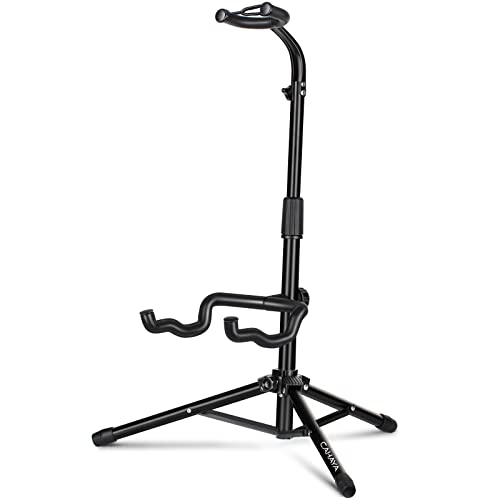
- Adjustable height from 30.7 to 37 inches
- Padded support fits guitars, bass, banjos, and mandolins
- Reinforced tripod base folds flat for transport
Best For: Multi-instrument players needing adjustable stability
Compact Folk Instrument Pick – Hercules GS303B TravLite Stand
The Hercules GS303B is a lightweight, folding option for musicians comparing instrument stands for live performances. Its rubber foam contact points and non-slip pads help provide a protective, stable place for a compatible folk instrument between sets.
Best For: Folk instrument players who need a compact, portable stand with a 5-pound load capacity.
Pros:
- Folding design is convenient for transport and storage.
- Rubber foam contact points help protect the instrument.
- Non-slip rubber pads add stability.
- Lightweight 1.9-pound construction.
Cons:
- Limited to a 5-pound load capacity.
- Designed for folk instruments rather than broad multi-instrument use.
Choose this stand when portability and protective contact points matter more than heavy-duty capacity. Its simple one-level design suits straightforward stage and rehearsal setups.
Professional Flugelhorn Stand – K&M 15240 In-Bell Stand
The K&M 15240 is a specialized in-bell stand for flugelhorn players evaluating instrument stands for live performances. Its detachable five-leg base folds for storage in the instrument bell, while the rubber peg tip and felt pads help protect the finish.
Best For: Flugelhorn musicians who want a compact, German-made stand that travels inside the instrument.
Pros:
- Folding legs store in the flugelhorn bell.
- Five-leg base provides a stable resting platform.
- Rubber and felt contact points help reduce scratches and abrasions.
- Lightweight design weighs 0.43 kg.
Cons:
- Specialized for flugelhorn use.
- 3.5-pound load capacity is lower than heavy-duty orchestral stands.
This is a strong choice for performers who prioritize compact packing and instrument protection. The in-bell storage design is especially useful when case space is limited between gigs.
Heavy-Duty Orchestral Support – Hercules DS538B Multi Orchestral Stand
The Hercules DS538B is built for musicians who need substantial support from instrument stands for live performances. Its folding locking yoke, adjustable backrest, and 44-pound load capacity make it suited to larger orchestral instruments and demanding stage setups.
Best For: Orchestral musicians needing a high-capacity stand with adjustable support and a locking fold mechanism.
Pros:
- Supports up to 20 kg, or 44 pounds.
- Adjustable backrest helps support the instrument securely.
- Folding yoke includes a locking pin for positioning.
- Locking pin also helps secure the stand when folded or set up.
Cons:
- At 4.7 pounds, it is heavier than compact specialty stands.
- Its 15.6-inch height and pedestal base may take more stage space.
Consider this model when load capacity and secure support are primary concerns. It is less focused on ultra-light portability, but the adjustable backrest and locking components add practical confidence for performance use.
Adjustable Accordion Support – Nomad Music Accordion Stand
The Nomad Music Adjustable Accordion Stand gives accordion players a dedicated option among instrument stands for live performances. Its adjustable L-brackets offer six height positions, while the stand collapses for transport to gigs, rehearsals, and practice sessions.
Best For: Accordion players who want adjustable playing height and quick access to a securely positioned instrument.
Pros:
- Six height options from 16-1/2 to 23-3/4 inches.
- Designed to fit diatonic accordions.
- Collapses for transport and storage.
- Aluminum and rubber construction balances portability with instrument contact protection.
Cons:
- Compatibility is focused on diatonic accordions.
- One-level design offers less flexibility than multi-tier stands.
- One-year manufacturer warranty is shorter than some competing stand warranties.
This stand is a practical match for accordionists who need the instrument within easy reach while performing. Its height range helps accommodate different playing preferences, and its collapsible design simplifies gig transport.
Balanced Stage Support – Yamaha SS-740A Snare Stand
Yamaha SS-740A Snare Stand - Medium Weight, Single-Braced | Medium-weight construction
Check Price On AmazonFor drummers comparing instrument stands for live performances, the Yamaha SS-740A offers a practical balance of portability and stability. Its medium-weight, single-braced design is suited to stage setups where dependable support matters without unnecessary bulk.
Best For: Drummers needing a durable, adjustable snare stand for performances, rehearsals, or studio use.
Pros:
- Medium-weight construction balances portability and stability.
- Single-braced metal legs help reduce bulk while maintaining strength.
- Adjustable basket, height, and angle support a customized setup.
- 15 kg load capacity and stage- and studio-ready construction.
Cons:
- At 6.7 pounds, it may not be the lightest option for frequent transport.
- Designed specifically for snare drums rather than multiple instrument types.
The SS-740A is a straightforward choice for players who want professional-grade Yamaha construction, secure snare positioning, and useful adjustments in a medium-weight format.
Large-Instrument Stability – Hercules DS553B Tuba/Euphonium Stand
Among instrument stands for live performances, the Hercules DS553B is purpose-built for tuba and euphonium players. Its adjustable height, removable instrument pad, and foldable legs make it a practical choice for performance spaces, rehearsals, and transport.
Best For: Tuba and euphonium players who need adjustable, padded support with a high stated load capacity.
Pros:
- Designed specifically for tuba and euphonium support.
- Adjustable height accommodates different playing setups.
- Removable instrument pad provides cushioned contact.
- Foldable legs assist with storage and transport.
Cons:
- Its specialized design is not intended for general-purpose instrument use.
- At 5.2 pounds, it adds noticeable weight to a mobile setup.
With a 55.1-pound load capacity and performance-focused features, the DS553B is a sensible dedicated stand for large brass instruments that need stable, padded positioning.
Portable Percussion Display – Adjustable Wooden Handpan Stand
For musicians seeking instrument stands for live performances, this wooden tripod stand provides adjustable support for 12- to 22-inch handpans and steel tongue drums. Its foldable construction, cushioning, and rope adjustment make it convenient for performances, rehearsals, and outdoor sessions.
Best For: Handpan and steel tongue drum players who value lightweight, foldable support and a natural wood appearance.
Pros:
- Compatible with 12- to 22-inch handpans and steel tongue drums.
- Triangular tripod structure provides a stable support design.
- Non-slip sponge pads help cushion instrument contact.
- Folds for storage and transport and weighs approximately 0.6 kg.
Cons:
- Compatibility is limited to the stated instrument size range.
- Users should verify fit and stability before playing.
- Unfinished wood may require more care than a coated finish.
This stand is a lightweight, portable option for percussionists who need flexible positioning and easy storage without sacrificing a distinctive wooden look.
Best Portable Guitar Stand – Amazon Basics Folding Guitar Stand
For guitarists comparing instrument stands for live performances, this Amazon Basics A-frame stand emphasizes quick setup, portability, and padded support. Its adjustable width accommodates most acoustic and electric guitar shapes, while the metal frame folds flat for transport.
Best For: Guitarists who need a lightweight, ready-to-use stand for gigs, rehearsals, and compact storage.
Pros:
- Fits most acoustic and electric guitars with three adjustable-width settings.
- Soft foam arms and back rest help protect the instrument.
- Folds flat and includes non-slip rubber feet for convenient transport and stable placement.
- Fully assembled metal construction supports up to 10 kg.
Cons:
- Designed for one guitar at a time.
- A-frame design may offer less specialized neck support than taller stands.
This is a practical choice when fast deployment and easy packing matter more than advanced height adjustment. Its simple, padded design suits players who want dependable floor support without assembly.
Best Adjustable Mic Stand – InnoGear Tripod Boom Arm Stand
For singers, speakers, and creators choosing instrument stands for live performances, the InnoGear tripod mic stand offers broad height adjustment and a flexible boom arm. Its steel construction, detachable boom, included clips, and carrying bag make it suitable for adaptable stage or rehearsal setups.
Best For: Vocalists and performers who need a height-adjustable microphone stand that packs down for transport.
Pros:
- Adjusts from 28.1 to 89.8 inches for varied performers and setups.
- Boom extends from 16 to 30 inches and rotates horizontally and vertically.
- Thickened steel tripod weighs about 4.2 pounds for a more stable base.
- Includes two mic clips, a screw adapter, cable clips, and a carrying bag.
Cons:
- Its multiple knobs and detachable boom require more setup than a basic straight stand.
- The tripod footprint may take more floor space than a compact stand.
The TS186 is a versatile pick for performances that require precise microphone positioning. Removing the boom converts it to a straight stand, while the included bag supports transport between venues.
Best Stable Guitar Tripod – CAHAYA Folding Guitar Stand
For players seeking instrument stands for live performances, the CAHAYA folding guitar stand combines adjustable height with a reinforced tripod base. Thick foam contact points, uneven support arms, and a secure neck holder help accommodate guitars, basses, and several other stringed instruments.
Best For: Performers who want adjustable, padded support for multiple guitar and string-instrument styles.
Pros:
- Height adjusts from 30.7 to 37 inches, with a separate adjustable base height.
- Tripod structure, extended legs, and rubber feet provide a stable floor stance.
- Thick sponge padding protects contact points, while the neck holder helps secure the instrument.
- Supports acoustic and electric guitars, bass, banjo, mandolin, and V-shaped guitars.
Cons:
- Its adjustable structure has more components to position than a simple A-frame stand.
- The listed dimensions indicate a larger setup footprint than a flat tabletop-style holder.
CAHAYA’s design is well suited to varied instrument collections and performance environments where stability and height flexibility are priorities. It still folds flat for storage and transport, making it practical for concerts, tours, festivals, and practice.
How We Picked the Best Instrument Stands for Live Performances
We focused on stands that solve practical stage and rehearsal problems: secure instrument support, useful adjustability, manageable weight, compact storage, and suitability for repeated transport. The selection includes specialized stands, such as tuba, euphonium, flugelhorn, accordion, snare, and handpan models, alongside versatile guitar and microphone stands.
Because “best” depends on the instrument and performance setup, we considered each stand’s intended use rather than treating every model as interchangeable. A stand designed for a guitar should not be expected to support a brass instrument, and a lightweight folding model may prioritize portability over maximum rigidity.
Quick Comparison
| Best For | Stand Types to Consider | What to Prioritize |
|---|---|---|
| Guitarists | A-frame and tripod guitar stands | Padded contact points, folding design, stable footprint |
| Brass players | Flugelhorn, tuba, and euphonium stands | Instrument-specific fit, weight support, secure base |
| Orchestral musicians | Multi-instrument and snare stands | Height adjustment, bracing, placement flexibility |
| Accordion and handpan players | Dedicated adjustable stands | Wide support surface, balance, playing access |
| Vocalists and presenters | Tripod boom microphone stands | Height range, boom reach, locking hardware |
Key Buying Factors for Instrument Stands for Live Performances
Fit and Weight Capacity
Choose a stand made for your instrument’s shape and center of gravity. Dedicated brass, percussion, accordion, and handpan stands generally provide better support than generic holders. Confirm the manufacturer’s intended instrument type and avoid relying on appearance alone.
Stability on Stage
Look for a broad footprint, strong bracing, non-slip feet, and padded contact points. Single-braced stands can be lighter, while double-braced or multi-leg designs may offer extra rigidity. Consider the stage surface and how often performers or cables may pass nearby.
Portability and Setup
Folding stands are useful for musicians carrying several instruments or traveling between venues. Check the folded size, carrying weight, and whether adjustment knobs or locking pins can be operated quickly during a changeover.
Adjustability and Access
Height and angle adjustments should place the instrument or microphone within comfortable reach without creating an unstable load. For performance stands, make sure the design supports playing access rather than merely displaying the instrument.
Protection and Durability
Foam or rubber padding helps prevent scratches and reduces slipping. Inspect hinges, joints, welds, and locking mechanisms, particularly if the stand will be loaded into vehicles and used several times per week.
Who Should Buy Which Instrument Stands for Live Performances?
Guitarists who want a simple, inexpensive stage solution should start with a padded A-frame or folding tripod model. Players with heavier or unusually shaped instruments should choose a dedicated stand, such as a tuba, euphonium, flugelhorn, accordion, or handpan design.
Drummers and orchestral musicians benefit from stands with dependable height adjustment and reinforced support. A multi-instrument stand can suit setups that change between pieces, while a purpose-built snare stand is often the better choice for precise placement.
For vocalists, instrumentalists, and presenters, a tripod boom microphone stand provides the reach and positioning flexibility needed on stage. If you frequently perform in small venues, prioritize compact folded dimensions; if your setup remains in one location, favor stability and heavier construction.