Traveling with an instrument often means balancing limited luggage space with the need for dependable support between rehearsals, performances, and practice sessions. The right stand should fold quickly, protect the instrument’s finish, and remain stable on unfamiliar floors.
This roundup compares 10 portable options for guitars, basses, violins, ukuleles, banjos, mandolins, clarinets, flutes, oboes, and sheet music. Use the buying guide below to match the stand’s design, folded size, padding, and adjustment range to your instrument and travel routine.
Best 10 Instrument Stands for Travel Picks for 2026
Compact Folk Instrument Pick

- Folding folk-instrument stand
- Foam contact points and rubber pads
- 1.9 pounds; 5-pound capacity
Best For: Traveling with compatible folk instruments
Adjustable Guitar Travel Stand

- Fits electric and acoustic guitars
- Three adjustable width settings
- Padded, fold-flat metal design
Best For: Guitarists needing adjustable travel support
Small Instrument Folding Stand

- Designed for small instruments
- Folds to 1.25 inches thick
- Lightweight 1.5-pound steel-wire frame
Best For: Compact packing for smaller instruments
Woodwind Stand for Travel

- Fits clarinet, flute, and oboe
- Folds and separates for packing
- 10.24-ounce tripod design
Best For: Traveling woodwind players and gigging musicians
Best Overall Sheet Music Stand
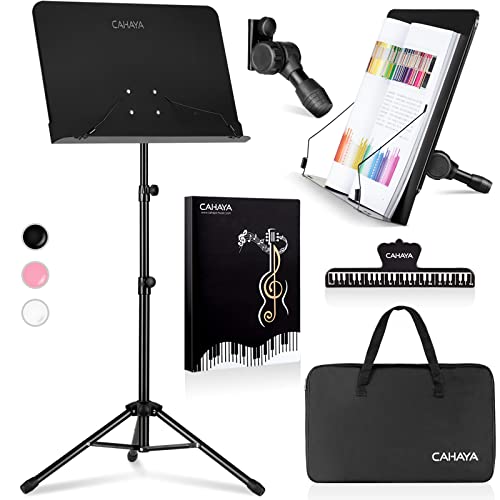
- Converts from floor stand to desktop stand
- 31.4–57-inch height range with 180° tilt
- Includes bag, folder, and sheet music clip
Best For: Versatile sheet music and device support for lessons, rehearsals, and gigs
Best Compact Instrument Stand
Foldable Stand for String Instruments

- Fits violin, ukulele, banjo, mandolin, and mini guitar
- Stable three-legged triangular base
- Foldable metal design for easy transport
Best For: Traveling players with smaller string instruments
Best Adjustable Travel Music Stand
Vekkia Perforated Sheet Music Stand

- 32–56-inch adjustable height
- 180° tilting tray for flexible viewing
- Includes carrying bag for travel and storage
Best For: Students and performers needing an adjustable stand for school, band, or home
Lightweight Guitar Travel Stand
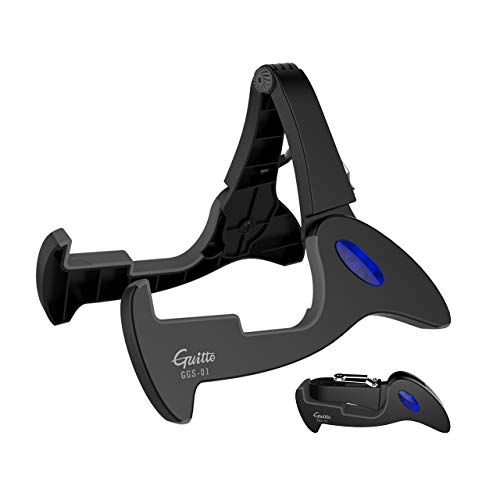
- About 0.99 lb and folds small
- Adjustable for guitars, basses, and ukulele
- Padded supports and non-slip feet
Best For: Traveling guitarists needing a lightweight multi-instrument stand
Universal Woodwind Travel Stand

- Supports four listed woodwind types
- Locking three-leg metal tripod
- Includes flannel storage pouch
Best For: Traveling woodwind players and teachers using multiple instruments
Best Simple Pick

- Lightweight foldable design
- Height-adjustable support for standard guitars
- Padded contact points and rubber feet
Best For: Everyday travel and practice with standard guitar or bass shapes
Compact Folk Instrument Pick – Hercules GS303B TravLite
For musicians seeking instrument stands for travel, the Hercules GS303B is a compact folk-instrument option with a folding design, non-slip rubber pads, and foam contact points. Its 1.9-pound weight and 5-pound load capacity make it suited to lighter instruments and easy transport.
Best For: Traveling with compatible folk instruments that need padded, non-slip support.
Pros:
- Folding design for convenient transport and storage
- Rubber foam contact points help protect the instrument
- Non-slip rubber pads add stability
- Lightweight 1.9-pound construction
Cons:
- Limited to a 5-pound load capacity
- Designed specifically for folk instruments rather than broad instrument compatibility
This is a practical travel stand when compact storage and padded contact points matter most, provided your instrument fits its intended folk-instrument design and stays within the load limit.
Adjustable Guitar Travel Stand – Amazon Basics Folding A-Frame
Among instrument stands for travel, this Amazon Basics A-frame offers three adjustable width settings for most electric and acoustic guitar shapes. It arrives fully assembled, folds flat, and combines a lightweight metal frame with padded support arms and a back rest.
Best For: Guitarists who want an adjustable, ready-to-use stand for electric or acoustic guitars.
Pros:
- Three adjustable-width settings accommodate many guitar shapes
- Folds flat for transport and storage
- Soft foam arms and back rest protect the guitar
- Non-slip rubber feet improve stability
Cons:
- At 3.5 pounds, it is heavier than some compact instrument stands
- Its A-frame design is intended for guitars rather than smaller instruments
With no assembly required and a 10-kilogram load capacity, this stand is a flexible choice for guitar travel, especially when adjustable width and padded contact areas are priorities.
Small Instrument Folding Stand – OnStage GS5000
The OnStage GS5000 is a straightforward option for musicians comparing instrument stands for travel with small instruments in mind. Its 7mm steel-wire construction folds flat to 11.42 by 11 by 1.25 inches, making it convenient to pack and store.
Best For: Small instruments that need a lightweight, fold-flat tripod stand.
Pros:
- Designed specifically for small instruments
- Folded profile is only 1.25 inches thick
- Lightweight 1.5-pound construction
- Steel-wire frame provides a simple, durable structure
Cons:
- Not intended for larger instruments
- The supplied notes do not specify padding or a load capacity
This stand emphasizes portability and simplicity rather than extensive adjustment or cushioning. Its compact folded dimensions make it useful when packing space is limited and the instrument is appropriately small.
Woodwind Stand for Travel – CashBeat Foldable Tripod
The CashBeat foldable tripod is aimed at musicians looking for instrument stands for travel, particularly clarinet, flute, and oboe players. It separates for packing, uses three metal legs with non-slip rubber feet, and weighs just 10.24 ounces.
Best For: Woodwind players carrying a compact stand to gigs, rehearsals, performances, or exhibitions.
Pros:
- Compatible with clarinets, flutes, oboes, and similarly sized woodwinds
- Foldable, removable design fits efficiently in storage or a gig bag
- Tripod legs have thickened non-slip rubber feet
- Composite, metal, and rubber construction weighs 10.24 ounces
Cons:
- The notes do not specify a load capacity
- Setup requires securing the top section to the tripod base with a screw
- Compatibility is focused on woodwinds and similarly sized instruments
Its very low weight and compact folding format make the CashBeat especially travel-friendly. The adaptable woodwind compatibility is useful for players who carry more than one instrument, while the lack of a stated load rating calls for reasonable use.
Best Overall Sheet Music Stand – CAHAYA Dual-Use Music Stand
For musicians comparing instrument stands for travel, the CAHAYA stands out as a versatile sheet music option that converts to a desktop stand. Its adjustable height, folding tripod, included carrying bag, and accessory bundle make it practical for lessons, rehearsals, and gigs.
Best For: Musicians who need one portable stand for seated or standing use, sheet music, tablets, or a lightweight laptop.
Pros:
- 2-inch-deep tray and reinforced spring arms hold thick books, tablets, and lightweight laptops.
- Height adjusts from 31.4 to 57 inches, while the tray tilts up to 180 degrees.
- Folds into the included carrying bag and includes a desktop stand, folder, and clip.
- 0.9 mm steel construction, a widened tripod base, and rubber feet support stability.
Cons:
- At 3.02 kg, it is heavier than a compact instrument-only stand.
- The 12-pound capacity is intended for sheet music and lightweight devices rather than heavier equipment.
Choose this model when flexibility matters most. The conversion feature and broad height range offer more use cases than a basic music stand, though the added accessories and sturdier construction increase its travel weight.
Best Compact Instrument Stand – Foldable Stand for String Instruments
If you need instrument stands for travel, this foldable metal tripod is a straightforward option for smaller string instruments. Its compact design is tailored to ukulele, violin, mini guitar, banjo, and mandolin, making it easy to pack for lessons or performances.
Best For: Players who want a lightweight, foldable stand for a ukulele, violin, mini guitar, banjo, or mandolin.
Pros:
- Designed to support several smaller string instruments.
- Three-legged triangular base provides stable support.
- Foldable construction makes it easy to install, pack, and carry.
- Metal build has a powder-coated finish and is described as anti-rust and water-resistant.
Cons:
- It is tailored to smaller instruments rather than a broad range of full-size gear.
- The supplied details do not list height adjustment or an included carrying bag.
This is a practical pick for musicians who prioritize portability and simplicity. Confirm that your instrument matches the listed types before buying, since the stand is designed around smaller string instruments.
Best Adjustable Travel Music Stand – Vekkia Perforated Sheet Music Stand
The Vekkia portable perforated stand is a solid choice for shoppers seeking instrument stands for travel, school, band, or home use. It combines a broad 32-to-56-inch height range with a 180-degree tilting tray and a carrying bag for easier transport and storage.
Best For: Students, band members, and performers who want an adjustable sheet music stand with flexible viewing angles.
Pros:
- Height adjusts from 32 to 56 inches for different playing positions.
- Tray tilts 180 degrees to accommodate varied viewing angles.
- Thick metal construction and a three-layer anti-rust coating support durability.
- Quick assembly, easy storage, and an included carrying bag suit travel.
Cons:
- At 3.02 kg, it may be less convenient than lighter travel stands.
- The supplied details focus on sheet music use and do not mention device-specific supports.
Pick the Vekkia when adjustable positioning and corrosion resistance are higher priorities than minimum carry weight. Its travel bag and quick-storage design make it suitable for regular transport between school, home, and performances.
Lightweight Guitar Travel Stand – Compact Adjustable A-Frame
If you need instrument stands for travel, this foldable guitar stand is a compact option for acoustic, electric, bass, and ukulele players. It weighs about 0.99 pounds, requires no assembly, and folds small for practice sessions, gigs, or storage.
Best For: Guitarists and bassists who want a lightweight, adjustable stand for several standard instrument types.
Pros:
- Folds into a small, portable size for transport.
- Adjustable two-level arms support multiple guitar and ukulele types.
- Soft padding, rubber feet, and a secure lock help protect and stabilize the instrument.
Cons:
- Designed to hold one instrument at a time.
- Its compact floor-stand design may be less suitable for unusually large instrument bodies.
This is a practical travel stand when low weight and quick setup matter most. Its adjustable support and protective contact padding add useful flexibility for musicians carrying different instruments.
Universal Woodwind Travel Stand – Foldable Locking Tripod
Among instrument stands for travel, this Vangoa tripod is built for musicians carrying several woodwinds. It accommodates flute, clarinet, oboe, and soprano saxophone, then folds into a compact form with a flannel pouch for a backpack, gig bag, or suitcase.
Best For: Woodwind players, teachers, and doublers who need one portable stand for multiple instruments.
Pros:
- Compatible with flute, clarinet, oboe, and soprano saxophone.
- Locking metal tripod and wide stance support stability on carpets or stages.
- Includes a flannel carry pouch and protective rubber feet.
- Made with corrosion-resistant plastic and sturdy metal joints.
Cons:
- Weighs about 1.1 pounds, making it heavier than some compact guitar stands.
- Its single-level design is intended for one instrument at a time.
The locking tripod and included pouch make this a well-equipped option for lessons, commuting, and performances. Its main advantage is versatility for woodwind players who would otherwise need several holders.
Best Simple Pick – Foldable Padded Tripod
This foldable guitar stand is a straightforward choice for shoppers comparing instrument stands for travel, home practice, and temporary setups. Its tripod base, adjustable height, and padded contact points support most standard acoustic, electric, bass guitars, and banjos when used on a flat surface.
Best For: Players who want a lightweight, height-adjustable stand for standard guitars and basses.
Pros:
- Foldable and lightweight at about 0.51 kg for transport and storage.
- Supports most standard acoustic, electric, bass guitars, and similar instruments.
- Rubber padding and anti-slip feet help reduce scratching and movement.
- Friction knob adjusts height and secures the upper yoke.
Cons:
- Not recommended for oversized or unusually shaped instruments.
- Requires fully extended legs and properly tightened adjustments for stability.
- Best suited to flat, even surfaces and temporary rather than heavy-duty studio use.
This stand offers useful adjustability without adding much carrying weight. It is a sensible travel and practice solution for standard guitar shapes, provided the setup is secured on a level floor.
How We Picked These Instrument Stands for Travel
We focused on portability, instrument compatibility, setup simplicity, and practical protection. The selection includes compact floor stands, A-frame and tripod designs, small woodwind holders, and convertible music stands. We also considered features that matter when traveling, such as fold-flat construction, padded contact points, adjustable height, non-slip feet, and the ability to fit in a gig bag or suitcase.
Because instruments vary considerably in shape and balance, compatibility matters as much as portability. A stand designed for an acoustic guitar is not automatically suitable for a flute or violin, so verify the intended instrument before buying.
Quick Comparison
| Stand Type | Best For | Main Travel Advantage |
|---|---|---|
| Compact guitar stand | Acoustic, electric, or bass guitars | Fast setup and small folded footprint |
| Small instrument stand | Violins, ukuleles, banjos, and mandolins | Lightweight support for smaller instruments |
| Woodwind holder | Flute, clarinet, or oboe | Dedicated fit and minimal luggage space |
| Sheet music stand | Players who need reading support | Adjustable height or desktop conversion |
Key Buying Factors for Instrument Stands for Travel
Folded Size and Weight
Check the folded dimensions rather than relying only on the word “portable.” A stand that fits inside a gig bag is easier to carry than one that requires separate luggage space. Lightweight metal or reinforced plastic can reduce fatigue, but extremely light designs may sacrifice stability.
Instrument Fit and Protection
Look for padded yokes, foam-covered contact points, rubber feet, and secure support arms. Confirm that the stand accommodates your instrument’s body width, neck shape, or endpin design. For valuable finishes, avoid exposed metal touching the instrument.
Stability and Adjustability
Tripod stands can offer a broad base, while A-frame designs are often quicker to fold and store. Adjustable height is useful for guitars and music stands, but every hinge or locking point should close firmly. Test the stand on uneven floors if you expect to use it outdoors or at informal venues.
Setup and Storage
A travel stand should open without complicated assembly. Locking mechanisms, folding joints, and adjustment knobs should be easy to operate repeatedly. If you fly or use public transport, prioritize designs that can be secured inside a case rather than carried loosely.
Who Should Buy Which Instrument Stands for Travel?
Guitarists and bassists should choose a padded A-frame or tripod model sized for their instrument. Players carrying smaller stringed instruments may prefer a compact multi-instrument stand, provided its supports match the instrument’s body and finish. Flute, clarinet, and oboe players should use dedicated woodwind holders for a more secure fit and smaller footprint.
Musicians who need to read charts or sheet music should choose an adjustable music stand, especially one that converts to desktop use when table space is available. For frequent travel, prioritize the lightest model that still feels stable with your instrument placed on it. For occasional trips, extra padding and a wider base may be worth the modest increase in folded size.