A great modeling mic can turn one recording chain into a full mic locker. If you want flexible vocal capture without buying multiple high-end condensers, a large diaphragm modeling microphone is one of the smartest upgrades you can make.
Below, we’ve rounded up the best options for creators who want realistic tone shaping, easy studio integration, and dependable results for vocals, voice-over, and instrument tracking.
Best 10 Large Diaphragm Modeling Microphone Picks for 2026
Studio-Ready Flexibility
Slate Digital VMS ML-1A Bundle

- 18 mic models plus Radio France Signature options
- 8dB self-noise and 145dB max SPL handling
- Includes stand, XLR cable, and software
Best For: Studios wanting an all-in-one modeling mic bundle
Premium Post-Tracking Control

- Models 38 classic microphones
- Adjust mic type and polar pattern after tracking
- Stereo recording for guitar, strings, and horns
Best For: Engineers needing premium post-tracking mic control
Compact Modeling Value

- Large-diaphragm cardioid condenser design
- 8dB self-noise and 145dB max SPL handling
- Includes shock mount, soft-case, and models packs
Best For: Users who want a practical ML-1A modeling mic package
Stereo Modeling Option

- Models 20 classic microphones
- Dual Mode for snare drums and guitar cabs
- Change mic type and polar pattern after tracking
Best For: Producers wanting flexible modeling with dual-mode options
Studio-Ready Vocal Pick
Stellar X3 Large Diaphragm Condenser Microphone

- Hand-tuned K67-style capsule
- 3-micron mylar for added sensitivity
- High-pass filter and -10 dB pad
Best For: Vocal and voice-over recording with close-mic control
Modeling Instrument Specialist
Antelope Audio Verge Small Diaphragm Condenser Modeling XLR Microphone

- Vintage microphone emulations included
- Accurate capture with high SPL handling
- XLR studio package with accessories
Best For: Instrument recording with modeled vintage tones
Versatile All-Purpose Choice
MXL 2003A Large Diaphragm Condenser Multi Purpose FET Microphone

- Vintage-modeled capsule design
- Transformerless FET preamp
- High-pass filter and -10 dB pad
Best For: General studio recording with flexible onboard controls
Neutral Studio Choice
TZ Stellar X2 Large-Diaphragm Cardioid Condenser
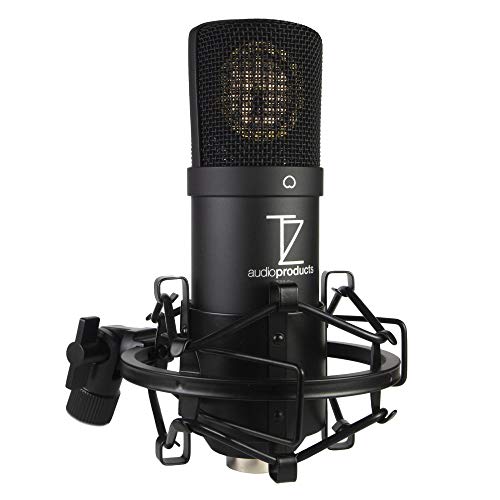
- Balanced, neutral sound that avoids harshness
- Low-noise transformerless circuit under 13dBA
- Includes shockmount and useful recording accessories
Best For: Vocals and detailed studio sources that need a smooth, even condenser tone
Budget Studio Workhorse
Mackie EM-91C Large-Diaphragm Condenser

- Affordable professional-quality condenser mic
- Cardioid pattern reduces ambience for focused takes
- Includes shock mount and XLR cable
Best For: Home and project studios needing an inexpensive, rugged condenser
DIY Capsule Upgrade
34mm RK-87 Large-Diaphragm Condenser

- Built for repair, upgrade, and DIY microphone work
- Bright sound profile for high-end mic projects
- Wide 25V-110V operating range with 140dB SPL
Best For: DIY builders restoring or upgrading RK-87-style microphones
Studio-Ready Flexibility – Slate Digital VMS ML-1A Bundle
If you want a large diaphragm modeling microphone that can cover vocals, acoustic instruments, and even drums, the Slate Digital VMS ML-1A bundle is built for flexible studio use. Its modeling workflow adds control over mic character after tracking, while the included stand, XLR cable, and software make it easier to get recording right away.
Best For: Home and project studios that want a complete modeling-mic bundle for vocals, instruments, and tracking versatility.
Pros:
- Includes 18 mic models plus the Radio France Signature collection for expanded tonal options.
- 8dB self-noise and a 3-position pad switch support clean recordings and loud sources up to 145dB.
- Microphone Model Morphing, Proximity Slider, and Rumble Filter give you extra sound-shaping control.
- Bundle includes a tripod stand and XLR cable for a more complete setup.
Cons:
- The bundled software and modeling features may be more than needed for simple single-mic use.
- Best value depends on whether you’ll use the included stand and cable.
This is a strong pick if you want one large diaphragm modeling microphone that can adapt to multiple recording jobs without swapping hardware. It leans toward flexibility and control, especially for users who want to experiment with different mic tones.
Premium Post-Tracking Control – Universal Audio Sphere DLX
The Universal Audio Sphere DLX is a large diaphragm modeling microphone for users who want serious control after the take is recorded. With dual gold-sputtered diaphragms and the ability to change mic type, polar pattern, and other characteristics after tracking, it fits demanding vocal and instrument sessions where flexibility matters.
Best For: Engineers and creators who want high-end modeling control for vocals, stereo instrument recording, and detailed mic matching.
Pros:
- Models 38 of the most sought-after microphones ever made.
- Lets you change mic type, polar pattern, and other characteristics after tracking.
- Can record acoustic guitar, strings, and horns in stereo with a single microphone.
- Uses dual gold-sputtered diaphragms and is described as having the lowest noise in its class.
Cons:
- Its advanced feature set may be more than casual users need.
- Single-mic workflow may not suit those who prefer simple, fixed-purpose recording.
If you want a modeling mic that emphasizes post-recording control and premium capture quality, this one stands out. It is especially appealing for sessions where you want to audition different microphone sounds without re-recording the performance.
Compact Modeling Value – Slate Digital ML-1A Mic
The Slate Digital ML-1A is a large diaphragm modeling microphone aimed at users who want a straightforward cardioid condenser with strong core specs. It pairs low 8dB self-noise with a 3-position pad switch, and the included shock mount plus soft-case make it easier to integrate into a small studio or mobile setup.
Best For: Recordists who want a large diaphragm modeling microphone with practical accessories and expansion pack options.
Pros:
- Large-diaphragm cardioid condenser design for voice and instrument recording.
- Extremely low 8dB self-noise for cleaner captures.
- 3-position pad switch helps handle sources up to 145dB max SPL.
- Includes a shock mount, soft-case, and compatibility with standard swivel mounts.
Cons:
- Expansion packs add value, but the core package is still geared toward a modeling workflow.
- Cardioid-only design may be limiting for users wanting multiple polar patterns.
This version makes sense if you want the ML-1A platform in a more compact, accessory-friendly package. It keeps the important recording specs intact while leaving room to expand the mic model library later.
Stereo Modeling Option – Universal Audio Sphere LX
The Universal Audio Sphere LX is a large diaphragm modeling microphone for users who want flexible mic shaping in a simpler package. It lets you change mic type, polar pattern, and other characteristics after tracking, and its Dual Mode can create rich-sounding combinations on sources like snare drums and guitar cabs.
Best For: Musicians and producers who want a modeling mic with stereo-friendly and dual-mode recording options.
Pros:
- Models 20 of the most sought-after microphones ever made.
- Lets you change mic type and polar pattern after tracking.
- Dual Mode supports rich-sounding combinations on snare drums and guitar cabs.
- Dual gold-sputtered diaphragms and low-noise design suit detailed recording work.
Cons:
- Fewer modeled microphones than the Sphere DLX.
- Its feature set is still geared toward users comfortable with modeling workflows.
The Sphere LX is a solid fit if you want the flexibility of a modeling microphone but do not need the larger model library of the DLX. It focuses on useful tracking control and creative source options while keeping the concept straightforward.
Studio-Ready Vocal Pick – Stellar X3 Large Diaphragm Condenser Microphone
If you want a large diaphragm modeling microphone style of condenser for vocals or voice-over work, the Stellar X3 is built around a hand-tuned K67-style capsule. The design aims for smoother mids and better off-axis coloration than many standard K67-style capsules, while the 3-micron mylar diaphragm is meant to improve sensitivity and signal-to-noise performance.
Best For: Vocal recording, voice-over, and close-mic sessions where you want built-in control over proximity effect and headroom.
Pros:
- Hand-tuned K67-style capsule with smoother midrange response
- 3-micron mylar capsule design for added sensitivity
- High-pass filter helps reduce proximity effect and rumble
- -10 dB pad adds headroom for louder sources
Cons:
- Requires 48V phantom power through an XLR interface
- Handheld form factor may not suit every studio setup
The included springless shockmount is a useful bonus if you want to keep vibration out of recordings, and the mic’s all-metal build adds to the overall studio-focused package. It looks geared toward practical recording control rather than flashy extras.
Modeling Instrument Specialist – Antelope Audio Verge Small Diaphragm Condenser Modeling XLR Microphone
The Antelope Audio Verge is a small diaphragm modeling microphone made for accurate instrument capture and studio applications. Its appeal is the included vintage mic emulations, which give you a range of modeled tones in one XLR mic while still being suited for detailed, high-SPL recording.
Best For: Instrument recording and studio work when you want accurate capture plus vintage-style mic emulations.
Pros:
- Includes vintage microphone emulations
- Designed for both nuanced accuracy and high SPL recording
- XLR connection for studio setups
- Comes with shockmount, cable, and activation materials
Cons:
- Uses a nonstandard battery requirement according to the listing
- Emulation features may be more than you need for basic recording
If your priority is flexible tone shaping for instruments, this mic stands out for bundling modeling features with a straightforward XLR setup. It is less about simplicity and more about giving you multiple sonic options in one package.
Versatile All-Purpose Choice – MXL 2003A Large Diaphragm Condenser Multi Purpose FET Microphone
The MXL 2003A is a large diaphragm condenser microphone built as a flexible all-purpose option for music recording. Its vintage-modeled capsule, transformerless FET preamp, and included high-pass filter and -10 dB pad make it a practical choice when you need one mic to handle a range of sources.
Best For: General studio recording when you need a versatile large diaphragm condenser with useful onboard controls.
Pros:
- Vintage-modeled capsule design for realistic recordings
- Transformerless FET preamp for smooth, even response
- Switchable high-pass filter helps tame low-end rumble
- Switchable -10 dB pad adds flexibility for louder sources
Cons:
- Requires 48V phantom power
- 90-day warranty is shorter than some alternatives
With its included high-isolation shock mount and broad compatibility across common recording devices, the 2003A is built for practical studio use. It is a straightforward multipurpose condenser rather than a specialized modeling mic, but that can be an advantage if you want one dependable tool.
Neutral Studio Choice – TZ Stellar X2 Large-Diaphragm Cardioid Condenser
If you want a large diaphragm modeling microphone-style capture that stays balanced in a mix, the TZ Stellar X2 is built around a neutral, carefully tuned sound. It aims to avoid the harsh top end that can make condenser recordings fatiguing, while still keeping the sensitivity needed for vocals and other detailed sources.
Best For: Singers, home studios, and creators who want a smooth, neutral condenser sound with low noise.
Pros:
- Balanced and neutral frequency response that avoids harshness
- High-grade brass and Japanese mylar capsule for detailed capture
- Low-noise transformerless JFET circuit with a noise floor under 13dBA
- Includes shockmount, adapter, foam wind cover, and carrying accessories
Cons:
- Requires an audio interface with 48V phantom power
- XLR connection is not direct-to-computer ready
- Cardioid design keeps the focus narrow, which may not suit every recording setup
Overall, the Stellar X2 stands out for users who care more about clean, even tone than a hyped studio character. It looks especially practical for recording subtle sources where low noise and a smooth response matter.
Budget Studio Workhorse – Mackie EM-91C Large-Diaphragm Condenser
The Mackie EM-91C is a straightforward large diaphragm modeling microphone option for buyers who want professional-style condenser performance without spending much. Its cardioid pattern is designed to reduce ambience, making it a practical pick for vocals and instruments in both home and larger studios.
Best For: Budget-minded studio users who want a rugged XLR condenser for vocals and instruments.
Pros:
- Affordable professional-quality condenser microphone
- Cardioid polar pattern helps reduce room ambience
- Rugged, reliable construction for regular use
- Includes shock mount and XLR cable
Cons:
- Needs an audio mixer or XLR recording setup
- Not a direct USB microphone
- Basic feature set compared with more specialized studio mics
If you need a dependable condenser for recording without a big investment, the EM-91C keeps the focus on core essentials. The included accessories and practical build make it easy to put to work right away.
DIY Capsule Upgrade – 34mm RK-87 Large-Diaphragm Condenser
This 34mm large diaphragm modeling microphone capsule is aimed at users who want to repair, upgrade, or build higher-end microphones. The notes describe it as a bright-sounding diaphragm suited to projects involving high-end tube or transistor microphones, with an operating voltage range of 25V to 110V.
Best For: DIY builders and technicians upgrading or restoring RK-87-style microphones.
Pros:
- Designed for maintenance, repair, and DIY microphone upgrades
- Bright sound character suited to high-end mic projects
- Operates across a wide 25V to 110V range
- Supports a maximum SPL of 140dB at 1kHz
Cons:
- Not a complete ready-to-record microphone
- Requires DIY knowledge and proper installation
- Very specific use case compared with standard studio mics
For technically inclined users, this RK-87-style capsule is more of a component than a finished product. Its value is in microphone repair, customization, and restoration work where the capsule itself is the priority.
How We Picked These Large Diaphragm Modeling Microphones
We focused on microphones and bundles that give buyers the most practical value: solid capsule quality, believable modeled tones, usable software workflows, and compatibility with common studio setups. We also considered whether each option makes sense for first-time buyers, project studios, and users who need a more flexible vocal chain.
Quick Comparison
The biggest differences usually come down to modeling depth, included software, and how much outboard support you need to unlock the mic’s full potential. Some models are closer to a complete system with plug-ins and accessories, while others are better suited to buyers who already have a preamp, interface, and preferred recording workflow.
Key Buying Factors for a Large Diaphragm Modeling Microphone
Modeling Ecosystem
Check whether the mic uses dedicated plug-ins, proprietary software, or a broader ecosystem. The best experience comes from a system that is stable, easy to recall in a session, and offers convincing target microphones rather than just generic EQ changes.
Included Accessories and Workflow
Many buyers overlook the value of the bundle. Shock mounts, cables, stands, and software licenses can significantly change the real-world cost and convenience of a Large Diaphragm Modeling Microphone package.
Polar Pattern and Source Use
Some modeling mics are aimed primarily at vocals, while others are more versatile for voice-over, acoustic guitar, and close-miked instruments. Look at the native pattern, off-axis behavior, and whether the system supports multiple capture styles.
Noise, Sensitivity, and Gain Needs
Modeling cannot fully fix a noisy recording front end. Make sure your interface or preamp provides clean gain and that the microphone has the output level and self-noise performance you need for quiet sources.
Who Should Buy Which Large Diaphragm Modeling Microphone?
If you want the most all-in-one path, choose a bundle that includes the microphone, software, and essential mounting hardware. If you already own a strong interface and want more control over tone shaping, a standalone model with a robust software platform may be the better fit.
Creators focused on vocals and voice-over should prioritize flexibility and realistic modeled character changes. Engineers who record multiple sources may prefer a mic that can still behave like a dependable studio condenser even when the modeling feature is not the main attraction. For most buyers, the right Large Diaphragm Modeling Microphone is the one that balances authenticity, simplicity, and total setup cost.