Consistent time is the foundation of tight bass playing, whether you are practicing scales, learning songs, or locking in with a drummer. The right metronome makes that work easier by offering a clear pulse, useful tempo control, and features that fit your practice setup.
We selected 10 metronomes for bass guitars across digital, rechargeable, mechanical, tuner-equipped, and advanced portable designs. Use the guide below to narrow the options by accuracy, sound, portability, and the way you prefer to practice.
Best 10 Metronomes for Bass Guitars Picks for 2026
Best All-Rounder

- Combines metronome, tuner, and tone generator
- 30–260 BPM with eight rhythm options
- Large angled LCD and jog-dial controls
Best For: Bassists wanting one device for timing and tuning
Best Professional Practice Hub

- Customizes rhythms with Note Mixing
- Includes drum patterns and four metronome sounds
- Supports bass input, headphones, footswitch, and MIDI
Best For: Advanced bass practice and synchronized rehearsal setups
Best Rechargeable Option
Compact 3-in-1 Digital Metronome

- Rechargeable via included USB cable
- Combines metronome, tuner, and tone generator
- Offers clip, microphone, and direct cable pickup
Best For: Portable bass practice with headphone-friendly operation
Best Traditional Design

- Metal movement for stable mechanical operation
- 40–208 BPM with five beat selections
- Battery-free wind-up design for simple practice
Best For: Beginners who prefer a loud, tactile mechanical beat
Best All-in-One Pick
Donner Rechargeable 3-in-1 Metronome Tuner

- Trainer Rhythm Mode gives visual timing feedback
- Tunes bass and other instruments with 430–450 Hz calibration
- Rechargeable, compact, and headphone-ready
Best For: Bassists wanting rhythm training and tuning in one portable unit
Best Mechanical Option
Linrax M2 Wood-Grain Mechanical Metronome

- Battery-free wind-up spring mechanism
- Loud pendulum beat with 40–208 BPM range
- Protective cover and brake support transport
Best For: Bassists who prefer a traditional, no-battery metronome
Best Lightweight Digital Pick
MT-41 Rechargeable Metronome Tuner

- Metronome, tuner, and tone generator in one
- Bass support with 430–450 Hz calibration
- Bright display and LED beat indicator in a 2.82-ounce body
Best For: Mobile bass practice and players prioritizing low weight
Classic Wind-Up Pick

- 40–208 BPM range with five beat selections
- Loud wood-block-style sound for rhythm practice
- Battery-free wind-up spring mechanism
Best For: Traditional, battery-free bass practice
Tuning Combo Choice
Cecilio Digital Metronome Tuner

- Dedicated tuning mode for bass
- 30–230 BPM tempo range
- Large LCD plus headphone output
Best For: Bassists needing tuning and timing in one device
Feature-Rich Digital Pick
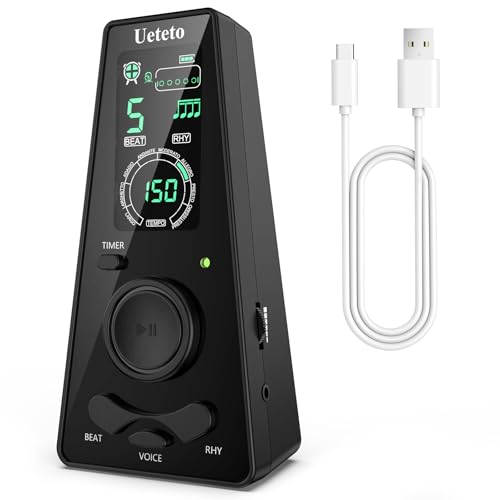
- Nine rhythms, ten beat settings, and 40–208 BPM
- Headphone jack, volume control, and flashing LED
- About 16 hours of use per charge
Best For: Portable, silent, feature-rich bass practice
Best All-Rounder – Donner DMT-01 Tuner Metronome
For players comparing metronomes for bass guitars, the Donner DMT-01 is a versatile practice companion that combines timing, tuning, and pitch reference in one compact unit. Its broad tempo range, selectable rhythms, and large angled display make it practical for daily practice or live use.
Best For: Bassists who want a combined metronome, tuner, and tone generator.
Pros:
- Combines a metronome, chromatic tuner, and tone generator.
- Offers 30–260 BPM, 0–9 beats per measure, and eight rhythms.
- Large LCD screen with a 45° viewing angle.
- Jog dial simplifies tempo, pitch, and mode adjustments.
Cons:
- Requires one AAA battery.
- Its feature set may be more than needed for players seeking only a basic metronome.
The DMT-01 is a strong all-purpose choice when bass practice involves both timing and tuning. Its flexible controls and instrument support add useful range without requiring separate devices.
Best Professional Practice Hub – BOSS DB-90 Dr. Beat
BOSS DB-90 Dr. Beat Portable Metronome (DB-90), BLACK | The Versatile and Professional Dr. Beat
Check Price On AmazonThe BOSS DB-90 Dr. Beat is aimed at bassists who want more than a simple click. It supports customized rhythms, built-in play-along patterns, direct guitar or bass connection, headphone monitoring, and hands-free control through a footswitch.
Best For: Advanced players, rehearsals, and rhythm-focused practice setups.
Pros:
- Note Mixing allows quick rhythm customization.
- Includes dozens of play-along drum patterns.
- Offers four metronome sounds, including a human voice.
- Supports bass connection, headphones, footswitch control, and MIDI sync.
Cons:
- At 16 ounces, it is heavier than compact practice metronomes.
- Requires a 9V battery.
- Its advanced connectivity may be unnecessary for basic tempo practice.
With its rhythm customization and connection options, the DB-90 is especially capable for structured bass practice and synchronized setups. It is a feature-rich option for players who want a more interactive timing tool.
Best Rechargeable Option – Compact 3-in-1 Digital Metronome
This rechargeable 3-in-1 unit is a convenient pick for bassists seeking portable metronomes for bass guitars. It combines timing, tuning, and tone generation, while offering microphone, clip, and direct cable pickup options for flexible practice in different environments.
Best For: Mobile musicians who want rechargeable power, headphone practice, and multiple pickup methods.
Pros:
- Rechargeable battery can be charged from a power bank or computer.
- Supports metronome, tuner, and tone-generator functions.
- Provides 30–250 BPM, 0–9 beats, and eight rhythms.
- Includes clip pickup, headphone jack, adjustable volume, and a large color LCD.
Cons:
- Tempo range is slightly narrower than some comparable digital models.
- Its rechargeable battery requires USB charging rather than a quick battery swap.
The compact design and included pickup make this a practical travel and lesson companion. It is particularly useful when you want quiet practice or reliable bass detection without carrying several separate accessories.
Best Traditional Design – Mechanical Bass Metronome
This mechanical model offers a straightforward alternative to electronic metronomes for bass guitars. Its metal movement, loud sound, and traditional wind-up operation provide a tactile way for beginners to practice steady tempo and develop rhythmic awareness.
Best For: Beginners and players who prefer a simple, battery-free mechanical metronome.
Pros:
- Metal movement is designed for long-term use and stable performance.
- Provides a 40–208 BPM range.
- Includes 0, 2, 3, 4, and 6 beat selections.
- Simple wind-up operation is easy for beginners and children.
Cons:
- Does not include digital tuning, tone-generation, or headphone features.
- At 1.12 pounds and nearly 8 inches tall, it is less portable than compact digital units.
- Requires manual winding before practice.
For musicians who value an audible, traditional beat, this wood-grain metronome keeps operation uncomplicated. Its louder mechanical sound and clear controls make it a solid foundational tool for learning bass timing.
Best All-in-One Pick – Donner Rechargeable 3-in-1 Metronome Tuner
For players comparing metronomes for bass guitars, the Donner combines timing practice, instrument tuning, and tempo detection in a compact rechargeable unit. Its adjustable tempo, headphone output, and bright display make it practical for bass practice at home or on the go.
Best For: Bassists who want rhythm training, tuning, and portable operation in one device.
Pros:
- Trainer Rhythm Mode provides visual feedback on whether your playing matches the beat.
- Supports bass tuning, adjustable A4 calibration from 430–450 Hz, and tempo detection.
- Offers 30–280 BPM, beat settings from 0–9, adjustable volume, and a headphone jack.
- Rechargeable design with a full-angle VA HD LCD color display.
Cons:
- A USB-C charging cable is not included.
- Its many modes may require consulting the manual during initial setup.
The Donner is a flexible choice when a bassist wants more than a basic click track. Trainer feedback and built-in tuning add useful practice tools, while the rechargeable pocket-sized design keeps the setup simple.
Best Mechanical Option – Linrax M2 Wood-Grain Mechanical Metronome
For bassists who prefer a traditional, battery-free approach, the Linrax M2 offers an audible pendulum beat and straightforward controls. Its wind-up mechanism, sturdy protective cover, and classic wood-grain appearance suit focused practice with acoustic or electric bass.
Best For: Players who want a simple mechanical metronome with a loud beat and no batteries.
Pros:
- Wind-up spring mechanism operates without batteries.
- Produces a loud sound for tracking tempo while practicing bass and other instruments.
- Provides a 40–208 BPM range with selectable downbeats of 0, 2, 3, 4, and 6.
- Protective cover, pendulum brake, and fixed grooves help with storage and transport.
Cons:
- It lacks digital features such as tuning, headphone output, or visual beat indicators.
- At 1.14 pounds, it is heavier than the compact digital alternatives here.
The M2 is a good fit for bass practice built around a clear, physical pulse. Choose it if reliability, simplicity, and a traditional visual pendulum matter more than portability or multifunction features.
Best Lightweight Digital Pick – MT-41 Rechargeable Metronome Tuner
The MT-41 is a lightweight option for anyone seeking metronomes for bass guitars with extra practice functions. It combines a metronome, tuner, and tone generator, with a bright color screen and flashing beat indicator for clear feedback during home, studio, lesson, or travel use.
Best For: Bassists who want a very light rechargeable practice accessory with tuning and visual tempo feedback.
Pros:
- Combines a metronome, tuner, and tone generator in one device.
- Supports bass tuning and A4 calibration from 430–450 Hz.
- Bright LCD color display and dual-color LED indicator improve visibility.
- Pocket-sized 2.82-ounce design fits easily in an instrument case or gig bag.
Cons:
- The supplied notes do not specify the metronome’s tempo range or beat settings.
- It uses a USB charging connection, but the included accessories are not specified.
The MT-41 emphasizes portability and clear visual feedback rather than a large control set. Its low weight and three-in-one design make it especially convenient for bassists moving between practice spaces.
Classic Wind-Up Pick – Donner Mechanical Metronome
If you prefer a traditional practice tool, the Donner Mechanical Metronome is a straightforward option among metronomes for bass guitars. Its loud wood-block-style sound, pendulum operation, and broad 40–208 BPM range make it useful for building steady timing without batteries.
Best For: Bass players who want a classic, battery-free metronome for focused rhythm practice.
Pros:
- Offers tempos from 40 to 208 BPM with 0, 2, 3, 4, and 6 beat selections.
- Produces a loud beat sound that can help players track rhythm and accents.
- Uses a wind-up spring mechanism, so batteries are not required.
- Simple pendulum controls are suitable for beginners and children.
Cons:
- Requires winding before use.
- Does not include digital features such as a display, headphones, or tuner.
- Its pyramid-style body is less compact than a pocket digital unit.
The Donner is a good fit if dependable, visible pendulum movement and an audible click matter more to you than portability or electronic controls.
Tuning Combo Choice – Cecilio Digital Metronome Tuner
The Cecilio Digital Metronome Tuner combines timing and pitch control in one compact device, making it a practical choice among metronomes for bass guitars. Its dedicated bass tuning mode, 30–230 BPM range, large LCD, and instrument and headphone connections support both setup and practice.
Best For: Bassists who want a metronome and chromatic tuner in one portable unit.
Pros:
- Includes a dedicated bass tuning mode alongside guitar, violin, and cello/viola modes.
- Provides a 30–230 BPM pendulum-simulating metronome.
- Large 2 1/4-inch LCD displays tuning notes, beat patterns, and tempo settings.
- Offers a 1/4-inch input and 3.5mm headphone jack for connected or silent practice.
Cons:
- Requires two AAA batteries.
- Its feature set may be more than needed if you only want a basic click.
- The supplied notes do not specify adjustable metronome volume.
For bass players who regularly tune before practicing, this Cecilio model can reduce gear clutter while covering a wider tempo range than many traditional metronomes.
Feature-Rich Digital Pick – Ueteto Rechargeable Metronome
The Ueteto Digital Metronome is a flexible option among metronomes for bass guitars, with visual, audible, and headphone-based timing cues. It adds nine rhythm patterns, adjustable volume, timer settings, and rechargeable operation in a compact body suited to practice bags.
Best For: Bass players who want rechargeable portability, visual tempo feedback, and varied digital practice controls.
Pros:
- Provides 40–208 BPM, nine rhythm patterns, ten beat settings, and volume control.
- Includes a flashing LED, LCD display, and English vocal counting for multiple timing references.
- Offers a 3.5mm headphone jack for silent practice and adjustable headphone volume.
- Charges in about two hours and provides up to 16 hours of continuous use.
Cons:
- Requires charging rather than using a replaceable battery.
- Its numerous settings may feel unnecessary for players seeking a simple click.
- The supplied notes do not mention a built-in bass tuner.
Choose the Ueteto if you want more control than a basic metronome provides, especially for quiet practice, structured sessions, or rehearsing with varied rhythms.
How We Picked the Best Metronomes for Bass Guitars
We focused on features that matter during real bass practice: dependable tempo control, an audible pulse that can cut through low-frequency playing, visibility from a music stand or amp area, and straightforward operation. The selection includes compact digital units, rechargeable models, mechanical metronomes, tuner combinations, and more feature-rich practice tools.
We also considered versatility. A metronome that supports bass alongside guitar, violin, piano, drums, or other instruments can provide better long-term value, especially for musicians who practice or perform with multiple instruments.
Quick Comparison
| Type | Best For | Main Advantage | Potential Trade-Off |
|---|---|---|---|
| Digital metronome | Everyday practice | Precise settings and compact size | Requires batteries or charging |
| Rechargeable digital | Frequent practice | Convenient USB-style power management | Must be recharged |
| Metronome tuner | Bassists wanting one device | Combines timing and tuning | May have fewer dedicated rhythm features |
| Mechanical metronome | Traditional practice setups | No batteries and an easy-to-see pendulum | Less portable and less flexible |
| Advanced portable unit | Structured rhythm training | More patterns, accents, or input options | Higher cost and a steeper learning curve |
Key Buying Factors for Metronomes for Bass Guitars
Sound and Volume
Bass notes can mask a quiet click, particularly when practicing through an amplifier. Look for adjustable volume, a strong speaker, headphone support, or an output option if you need the pulse to remain clear at higher playing levels.
Tempo Range and Beat Control
A broad tempo range helps with slow exercises, gradual speed increases, and faster lines. Beat subdivisions, accent settings, tap tempo, and rhythmic patterns are useful when you are working beyond simple quarter-note clicks.
Display and Controls
A readable screen is valuable when checking tempo, beat, tuning, or battery status. Large buttons and simple controls make it easier to change settings without interrupting practice. Mechanical models provide excellent visual feedback but generally offer less precise adjustment.
Tuner and Power Options
A built-in chromatic tuner can reduce the amount of equipment you carry to lessons or rehearsals. For regular use, rechargeable models can be convenient; battery-powered units may be preferable when you want quick replacement power away from an outlet.
Who Should Buy Which Metronomes for Bass Guitars?
Choose a digital metronome tuner if you want one affordable device for tuning and timing. These are practical for beginners, students, and gig bags with limited space.
Choose a rechargeable model if you practice often and prefer not to keep spare batteries available. Check charging indicators and expected runtime before buying.
Choose a mechanical metronome if you value a visible pendulum, simple operation, and battery-free use. It is especially suitable for home practice and traditional lesson environments.
Choose an advanced portable metronome if you need stronger rhythm-training features, louder monitoring options, or more control over accents and subdivisions. For most bassists, the best choice is the model that stays audible, is easy to adjust, and supports a practice routine you will actually maintain.