A good pop filter can make a noticeable difference when recording vocals, podcasts, voiceovers, and livestreams with a condenser microphone. It helps reduce harsh bursts of air from sounds such as “P” and “B” while also providing a basic layer of protection against moisture.
This roundup covers 10 popular options, including dual- and triple-layer mesh filters, foam windscreens, flexible gooseneck shields, and model-specific covers for microphones such as the Blue Yeti and Audio-Technica AT2020.
Best 10 Microphone Pop Filters for Condenser Microphones Picks for 2026
Flexible Dual-Layer Shield
Adjustable Pop Filter for Condenser Microphones
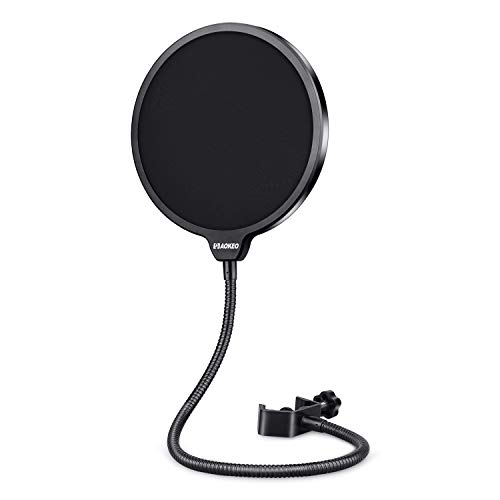
- Dual-layer screen helps control plosives
- 360° gooseneck adjusts placement
- Clamp fits many stands and booms
Best For: Adjustable stand- or boom-mounted recording setups
AT2020 Foam Pair
Windscreens for Audio-Technica Condenser Mics

- Includes two foam windscreen covers
- Designed for AT2020-series microphones
- Helps reduce noise, dust, and moisture
Best For: AT2020 owners wanting simple replacement covers
Studio Gooseneck Shield

- Dual-layer screen targets air blasts
- Adjustable steel gooseneck holds position
- Clamp fits compatible stands and booms
Best For: Flexible studio vocal and streaming setups
Compact Foam Cover
Mudder 50mm Windscreen for Blue Mics

- Fits Blue Yeti and Yeti Pro models
- High-density foam reduces wind interference
- Helps shield against dust and saliva
Best For: Blue Yeti users wanting a direct-fit foam cover
Best Adjustable Screen
Aokeo Three-Layer Mic Pop Filter

- Three-layer screen helps control airflow and plosives
- 360° gooseneck and filter adjustment
- Clamp mount with two screens and one-year warranty
Best For: Flexible studio, streaming, singing, and voice recording setups
Best Foam Cover
SUNMON Windscreen for AT2020 Microphones

- Fits several listed Audio-Technica condenser models
- 5 g foam cover helps limit surrounding sound
- Useful for podcasts, interviews, videos, and field recording
Best For: Compatible Audio-Technica AT2020-series microphone owners
Best Enclosed Acoustic Filter
Penypeal Microphone Isolation Ball

- Five-sided foam enclosure helps reduce noise and reflections
- Double-layer opening targets plosives and wind interference
- Fits removable microphone jackets measuring 50–75 mm
Best For: Portable voice recording with compatible XLR or USB microphones
Blue Yeti Foam Cover

- Designed for Blue Yeti and Yeti PRO
- Fits some mics up to 2.5 inches wide
- Foam helps reduce wind and unwanted noise
Best For: Blue Yeti owners wanting a close-fitting foam cover
Studio Pop Shield
Adjustable Double-Screen Filter

- Six-inch double-screen design
- 13.5-inch flexible gooseneck
- Fits many mics and stands
Best For: Home vocal recording setups needing adjustable placement
PEMOTech Three-Layer Shield

- Three-layer plosive and wind filtering
- Fits microphones from 45–61 mm
- Direct elastic-band mounting
Best For: Compatible condenser mics needing a compact mounted shield
Flexible Dual-Layer Shield – Adjustable Pop Filter for Condenser Microphones
For shoppers comparing microphone pop filters for condenser microphones, this model combines a dual-layer screen with a flexible gooseneck. Its clamp-based design is suited to singers, streamers, and actors who want to reduce plosives, hissing, and saliva exposure during recording.
Best For: Users who want adjustable positioning and broad compatibility with microphone stands or tubular boom mounts.
Pros:
- Dual-layer construction disperses and contains air blasts.
- 360-degree gooseneck allows adjustment of angle and microphone distance.
- Rotating clamp with scratch-proof gripper supports varied mounting setups.
- Swivel mount simplifies installation, removal, and repositioning.
Cons:
- Requires a suitable stand or boom for clamp mounting.
- The microphone is not included.
Choose this option if flexible placement and a supported metal gooseneck matter more than a compact foam cover. The included warranty information also provides added purchase reassurance.
AT2020 Foam Pair – Windscreens for Audio-Technica Condenser Mics
Audio-Technica AT2020 Pop Filter - 2 Windscreens for AT2020 & AT-2035 Microphones (Black)
Check Price On AmazonThese two foam windscreens are a straightforward accessory for shoppers seeking microphone pop filters for condenser microphones, particularly Audio-Technica AT2020-series models. They are designed to cover compatible microphones while helping reduce unwanted noise and protect against dust and moisture.
Best For: AT2020, AT2020USB, and AT2020USB+ owners who want a simple two-cover replacement or spare set.
Pros:
- Designed for several Audio-Technica AT2020-series microphones.
- Two foam covers provide a spare or replacement option.
- Quilted material is described as durable and easy to clean.
- Suitable for vocals, instruments, podcasts, interviews, and calls.
Cons:
- Compatibility is focused on specified AT2020-series microphones.
- Foam covers do not offer the adjustable stand-mounted positioning of a gooseneck filter.
- The microphone is not included.
This pair makes sense when you prefer a lightweight foam cover and already use a compatible AT2020 microphone. Check the exact model before ordering because the listed compatibility is specific.
Studio Gooseneck Shield – NEEWER Dual-Layer Pop Filter
The NEEWER Professional Microphone Pop Filter is a practical choice among microphone pop filters for condenser microphones when you want a traditional screen with flexible placement. Its dual-layer design targets air blasts and plosives, while the clamp supports compatible stands and boom mounts.
Best For: Singers, streamers, and actors seeking a repositionable screen for a home or studio recording setup.
Pros:
- Dual layers help disperse remaining air pressure after the first screen.
- Steel gooseneck supports angle and distance adjustments.
- Scratch-proof rotating clamp offers broad mounting compatibility.
- Swivel mount makes setup and relocation straightforward.
Cons:
- Needs a compatible tubular boom or microphone stand.
- It is larger and heavier than a basic foam windscreen.
- The microphone is not included.
This is a solid fit for buyers who want adjustable screen positioning and dedicated plosive control. Its stand-mounted format is less suitable if you need a cover that attaches directly to the microphone.
Compact Foam Cover – Mudder 50mm Windscreen for Blue Mics
For Blue Yeti and Blue Yeti Pro owners comparing microphone pop filters for condenser microphones, this Mudder 50mm foam windscreen offers a direct-fit cover format. High-density foam helps reduce unwanted noise and wind interference while protecting the microphone from dust and saliva.
Best For: Blue Yeti and Blue Yeti Pro users recording podcasts, streams, interviews, or voiceovers indoors or outdoors.
Pros:
- Designed for Blue Yeti and Blue Yeti Pro microphones.
- High-density foam helps reduce wind interference and unwanted noise.
- Protects against dust and saliva during regular use.
- Useful for singing, streaming, podcasts, and field recordings.
Cons:
- Compatibility is limited to the listed Blue microphone models.
- It arrives compressed and needs time to regain its original shape.
- Only the foam cover is included.
This cover is a convenient low-profile alternative to a clamp-mounted screen, especially for portable or simple desk setups. Allow it to expand before use, and verify your microphone model for a proper fit.
Best Adjustable Screen – Aokeo Three-Layer Mic Pop Filter
For shoppers comparing microphone pop filters for condenser microphones, the Aokeo P10 is a flexible choice when precise positioning and plosive control matter. Its three-layer screen is designed to reduce airflow noise, hissing, lisping, and plosives from sounds such as “B,” “T,” and “P.”
Best For: Singers, streamers, actors, and home or professional recording setups needing adjustable screen placement.
Pros:
- Three-layer screen supports airflow blocking and noise control.
- 360-degree adjustment for both the gooseneck and circular filter.
- Scratch-resistant clamp and swivel mount support flexible installation.
- Includes two screens, a mount, and a clamp, with a one-year warranty.
Cons:
- The 0.27 kg metal-and-plastic design may be less convenient than a lightweight foam cover.
- Requires a compatible stand or mounting surface for installation.
The P10 stands out when you want a traditional screen filter with substantial adjustment range. Its clamp and gooseneck make it easier to position between the speaker and microphone during recording.
Best Foam Cover – SUNMON Windscreen for AT2020 Microphones
The SUNMON foam windscreen is a simple option among microphone pop filters for condenser microphones, particularly compatible Audio-Technica studio models. It slips over supported microphones to help reduce surrounding sound, wind interference, and saliva exposure during recording.
Best For: AT2020-series owners recording videos, interviews, podcasts, voice recordings, or field audio.
Pros:
- Designed for AT2020, AT2020USB, AT2020USB+, AT-2035, AT-2050, ATR2500, ATR2500X, and AT-4040 microphones.
- Lightweight foam construction weighs only 5 g.
- Helps reduce surrounding sounds and protect the microphone from saliva.
- Compact, straightforward design is suitable for video and voice recording.
Cons:
- The package includes only one foam windscreen.
- Compatibility is centered on the listed Audio-Technica microphone models.
- Foam construction does not provide the adjustable positioning of a clamp-mounted screen.
This SUNMON cover is best for users who want a lightweight, low-fuss layer of protection for a compatible Audio-Technica condenser microphone. Confirm your microphone model before ordering.
Best Enclosed Acoustic Filter – Penypeal Microphone Isolation Ball
The Penypeal isolation ball takes a more enclosed approach to microphone pop filters for condenser microphones. Its five-sided sound-absorbing foam design and double-layer opening are intended to reduce plosives, wind interference, reflections, and saliva spray for cleaner voice recordings.
Best For: XLR or USB microphone users seeking portable acoustic isolation for desktop, studio, live, or outdoor recording.
Pros:
- Five-sided seal design helps reduce noise from multiple directions.
- Double-layer opening supports plosive control while keeping the microphone focused on the voice.
- Compatible with many microphones featuring a removable jacket diameter between 50 and 75 mm.
- Lightweight 120 g design mounts to desktop stands, tripods, cantilever arms, and floor stands.
Cons:
- Microphone fit depends on the removable jacket diameter being between 50 and 75 mm.
- Its enclosed foam form may be bulkier than a basic foam cover or flat pop screen.
- The supplied notes do not specify a universal fit for microphones outside the stated diameter range.
Choose the Penypeal when reducing reflections and off-axis noise is as important as controlling plosives. Its included holder and portable construction make it adaptable, but measuring the microphone first is essential.
Blue Yeti Foam Cover – Washable Yeti Pop Filter
This foam cover is a simple option among microphone pop filters for condenser microphones, especially if you use a Blue Yeti, Yeti PRO, or similarly sized mic. Its breathable foam construction is designed to reduce wind and unwanted noise without requiring a stand-mounted setup.
Best For: Blue Yeti, Yeti PRO, Yeti Nano, and compatible microphones up to about 2.5 inches in diameter.
Pros:
- Designed specifically for Blue Yeti and Yeti PRO microphones.
- May also fit compatible MXL and Audio-Technica microphones up to 2.5 inches in diameter.
- Washable foam construction helps reduce wind interference and unwanted noise.
Cons:
- Fit depends on the microphone model and its diameter.
- Not a universal stand-mounted pop filter.
Choose this cover when convenience, portability, and a close-fitting foam design matter more than adjustable positioning. Confirm your microphone’s dimensions before ordering.
Studio Pop Shield – Adjustable Double-Screen Filter
Pop Filter For Studio Microphone, Pop Shield Mic Wind Screen For Better Vocal Recordings
Check Price On AmazonThis stand-mounted pop shield is a versatile pick among microphone pop filters for condenser microphones. It uses a 6-inch double screen, flexible gooseneck, swivel mount, and adjustable clamp to help manage plosives, hisses, and moisture during vocal recording.
Best For: Home studios and vocalists using compatible microphones and stands, including Blue Yeti, Rode, ATR2500, MXL, and other USB microphones.
Pros:
- Six-inch double screen helps reduce pops, lisps, and hisses.
- Flexible 13.5-inch gooseneck and 360-degree swivel support positioning.
- Secure screw and adjustable clamp help hold the filter in place.
- Compatible with many microphones and stands.
Cons:
- Microphone is not included.
- Requires a suitable stand or mounting point.
- Its larger screen may be less compact than a foam cover.
This is a practical low-cost choice when you want adjustable placement and broad compatibility. The improved gooseneck and secure mounting are useful for repeatable vocal setups.
PEMOTech Three-Layer Shield – Metal Mesh Mic Filter
The PEMOTech shield is a clamp-free option among microphone pop filters for condenser microphones, attaching directly to compatible microphone bodies. Its three-layer construction combines foam, metal mesh, and etamine to reduce plosives, breath sounds, crackles, and wind interference.
Best For: Compatible 45–61 mm microphones such as the AT2020, AT2035, Rode NT1A, Rode NT-USB, MXL 770, and Samson Meteor.
Pros:
- Three layers provide foam, metal mesh, and etamine filtering.
- Elastic bands and an inner rubber ring help secure the shield.
- Helps reduce pops, breath sounds, crackles, and wind interference.
- Metal mesh design helps protect the microphone from saliva.
Cons:
- Not compatible with Blue Yeti microphones.
- Only fits microphones with diameters from 45 to 61 mm.
- Microphone is not included.
This filter suits users who prefer a compact, microphone-mounted shield and whose mic falls within the specified diameter range. Check compatibility carefully, particularly because it is explicitly not designed for Blue Yeti.
How We Picked These Microphone Pop Filters for Condenser Microphones
We focused on designs intended for common condenser microphones used in home studios, podcast setups, streaming spaces, and voiceover work. The selection includes clamp-on pop shields, foam covers, mesh screens, and enclosed isolation-style filters to suit different recording environments.
We also considered construction, attachment method, compatibility, flexibility, portability, and the likely balance between plosive control and natural vocal clarity. Because microphone dimensions and mounting hardware vary, compatibility should always be confirmed before purchase.
Quick Comparison
| Filter Type | Best For | Main Advantage | Watch For |
|---|---|---|---|
| Dual- or triple-layer mesh | Vocals, podcasts, and streaming | Strong plosive control with adjustable positioning | Clamp size and arm stability |
| Foam windscreen | Compact or portable setups | Simple installation and low profile | Exact microphone fit |
| Model-specific cover | Blue Yeti or AT2020 users | Convenient, tailored coverage | Limited compatibility |
| Isolation ball or enclosed shield | Close-mic vocal recording | Broader airflow and reflection control | Size, positioning, and desk space |
Key Buying Factors
Filter Material and Layers
Mesh filters are a versatile choice for spoken word and singing because they redirect plosive air without heavily covering the microphone. Multi-layer designs can offer additional control, while foam windscreens are lightweight and convenient. Foam may also reduce some high-frequency detail, so it is worth considering whether portability or maximum openness matters more.
Compatibility and Fit
Check the microphone’s grille diameter, body shape, and mounting arrangement. A foam cover must fit snugly without pressing against the capsule, while a clamp-on screen needs enough clearance on a stand or boom arm. Model-specific options are often easiest, but universal shields provide more flexibility if you use multiple microphones.
Mounting and Positioning
A flexible gooseneck makes it easier to maintain a consistent distance between your mouth and the filter. Look for a firm clamp, a stable arm, and enough adjustment range for your setup. The filter should sit between your mouth and the microphone without blocking headphones, controls, or the camera view.
Recording Environment
Pop filters address plosives; they do not replace acoustic treatment or solve room echo. If your space is untreated, an enclosed acoustic shield may help with nearby reflections, but microphone placement and room treatment usually have a greater effect on overall sound quality.
Who Should Buy Which Microphone Pop Filters for Condenser Microphones?
For Podcasters and Streamers
Choose a dual- or triple-layer clamp-on mesh filter with a flexible arm. It offers dependable plosive protection and can be repositioned for different speakers or microphones.
For Blue Yeti and AT2020 Owners
A model-specific foam cover or pop filter is a practical choice when you want straightforward installation. Verify the listed model compatibility, especially if the microphone has a different grille or mounting configuration.
For Singers and Voice Actors
A larger mesh shield or isolation-style filter can provide consistent coverage during close-mic recording. Prioritize stable positioning and transparent airflow handling over the smallest possible design.
For Portable and Budget Setups
A foam windscreen is usually the simplest option. It takes little space, installs quickly, and works well for basic speech recording, travel kits, and compact desk setups.