A good pop filter helps reduce harsh plosive sounds when you speak directly into a microphone. That can make podcast dialogue easier to understand while protecting recordings from distracting bursts of low-frequency air.
This roundup compares 10 microphone pop filters for podcasting, from adjustable metal-mesh shields to compact foam covers designed for popular microphones such as the Blue Yeti, AT2020, and Rode PodMic.
Best 10 Microphone Pop Filters for Podcasting Picks for 2026
Dual-Layer Control
NEEWER Professional Microphone Pop Filter Shield

- Dual-layer screen helps contain air blasts
- Adjustable steel gooseneck
- Clamp fits many stands and booms
Best For: Adjustable podcast and vocal recording setups
Compact Mic-Mounted Guard
FIFINE U1 Mic Pop Filter Screen

- Curved metal screen for plosive control
- Fits compatible 40–70 mm microphones
- Includes two replacement rubber bands
Best For: Compatible FIFINE mics and compact podcast desks
Classic Gooseneck Design
SAMSON PS04 Microphone Pop Filter

- 4.75-inch dual-layer nylon mesh
- Flexible 8-inch gooseneck
- Universal mic stand adapter
Best For: Traditional studio podcasting and vocal recording
Foam Mic Protection
Audio-Technica AT2020 Pop Filter

- Two foam windscreens included
- Designed for AT2020-series microphones
- Helps guard against dust and moisture
Best For: AT2020 owners wanting compact replacement covers
Best Adjustable Shield
Dual-Layer Gooseneck Pop Filter

- Dual-layer screen helps contain air blasts
- 360° gooseneck enables precise positioning
- Clamp mounts to compatible booms and stands
Best For: Flexible podcast and vocal recording setups
Best Foam Cover
Blue Yeti Microphone Windscreen

- Designed for Blue Yeti and Yeti Pro
- Washable foam helps reduce wind noise
- Also fits some microphones up to 2.5 inches
Best For: Blue Yeti podcasting and voice recording
Best Three-Layer Mic Shield
PEMOTech Three-Layer Pop Filter

- Three-layer foam, mesh, and etamine construction
- Fits compatible 45–61 mm microphones
- Not compatible with Blue Yeti
Best For: Vocal recording, podcasting, streaming, and YouTube setups
Best Blue Yeti Fit
YOUSHARES Six-Layer Blue Yeti Pop Filter

- Designed specifically for Blue Yeti microphones
- Six-layer mesh and sponge filtering
- Includes adjustable gooseneck and foam windscreen
Best For: Blue Yeti podcasting, streaming, video, and voice recording
Best Wide-Fit Value
Aokeo B-7 Three-Layer Pop Filter
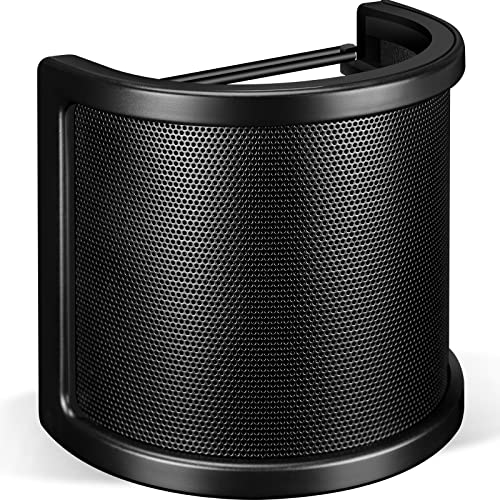
- Three-layer construction reduces plosives and breath sounds
- Fits compatible 45–63 mm microphones
- Includes a stated two-year warranty
Best For: Podcasting, vocals, streaming, gaming, and YouTube recording
Dual-Layer Control – NEEWER Professional Microphone Pop Filter Shield
For creators comparing microphone pop filters for podcasting, the NEEWER Professional Microphone Pop Filter Shield uses two layers to disperse and contain air blasts before they reach the microphone. Its adjustable gooseneck and clamp make it practical for podcasting, streaming, singing, and voice work.
Best For: Podcasters and vocalists who want adjustable positioning and broad stand compatibility.
Pros:
- Dual-layer design helps reduce plosives and remaining air pressure.
- Flexible steel gooseneck supports angle and distance adjustments.
- Rotating clamp fits various tubular booms and microphone stands.
- Helps reduce hissing, lisping, and moisture reaching the microphone.
Cons:
- The microphone is not included.
- Its clamp-and-gooseneck setup may take more space than a compact mic-mounted filter.
This is a versatile choice when precise placement matters. The metal construction, swivel mount, and dual-screen design make it a strong all-purpose option for a podcasting setup.
Compact Mic-Mounted Guard – FIFINE U1 Mic Pop Filter Screen
The FIFINE U1 is a compact option among microphone pop filters for podcasting, wrapping around compatible microphones to help block air blasts and plosive noise. Its rubber-band mounting system keeps the filter close to the mic while limiting obstruction during recording.
Best For: FIFINE microphone owners and podcasters seeking a compact, mic-mounted filter.
Pros:
- Fits select FIFINE microphones and mics measuring 40–70 mm in diameter.
- Curved metal screen helps reduce wind, air blasts, and plosive noise.
- Rubber padding helps protect the microphone from scratches.
- Includes two extra rubber bands for different microphone sizes.
Cons:
- Not suggested for dynamic microphones such as the AM8, K688, or TANK3.
- Compatibility depends on microphone diameter and shape.
- The microphone is not included.
The U1 stands out for its low-obstruction, close-fitting design. Check your microphone’s dimensions and type before buying, especially if you use a dynamic microphone.
Classic Gooseneck Design – SAMSON PS04 Microphone Pop Filter
The SAMSON PS04 is a straightforward choice among microphone pop filters for podcasting, using a 4.75-inch dual-layer nylon mesh screen to reduce “P-Pops.” Its flexible 8-inch gooseneck makes it easy to position in front of most studio microphones.
Best For: Studio podcasters who prefer a traditional, adjustable pop filter.
Pros:
- Dual-layer nylon mesh helps reduce plosive P-Pops.
- Flexible 8-inch gooseneck allows easy positioning.
- Universal mic stand adapter supports use with most microphones in a studio setting.
- Steel construction is designed for durability.
Cons:
- The microphone is not included.
- The 4.75-inch screen may provide less coverage than larger filters.
This model keeps the feature set focused on the essentials: a dual-layer screen, flexible neck, and stand adapter. It is a sensible fit for standard studio-style podcasting without extra mounting complexity.
Foam Mic Protection – Audio-Technica AT2020 Pop Filter
Audio-Technica AT2020 Pop Filter - 2 Windscreens for AT2020 & AT-2035 Microphones (Black)
Check Price On AmazonThese two foam windscreens offer a simple alternative among microphone pop filters for podcasting, particularly for Audio-Technica AT2020-series microphones. They are designed to help with wind and background noise while also protecting the microphone from dust and moisture.
Best For: AT2020, AT2020USB, and AT2020USB+ owners who want replacement foam covers.
Pros:
- Designed for Audio-Technica AT2020, AT2020USB, and AT2020USB+ microphones.
- Two foam windscreen covers are included.
- Helps protect the microphone from dust and moisture.
- Suitable for podcasting, voiceovers, interviews, calls, and other vocal uses.
Cons:
- Compatibility is focused on specified AT2020-series microphones.
- Foam covers are not an adjustable stand-mounted pop filter.
- The microphone is not included.
This two-pack is most useful when you need a lightweight, replaceable cover for a compatible AT2020 microphone. It provides a compact form of protection, but buyers seeking precise filter positioning may prefer a gooseneck model.
Best Adjustable Shield – Dual-Layer Gooseneck Pop Filter
For podcasting setups that need flexible positioning, this dual-layer screen is a practical choice among microphone pop filters for podcasting. Its clamp and adjustable gooseneck let you set the filter’s angle and distance from the microphone while helping reduce plosives, hissing, and lisping.
Best For: Podcasters, singers, streamers, and actors who want an adjustable filter for a compatible microphone stand or boom.
Pros:
- Dual-layer design disperses and contains air blasts.
- Flexible 360° gooseneck supports angle and distance adjustments.
- Rotating clamp is designed for various tubular booms and microphone stands.
- Helps reduce plosives, hissing, and lisping while protecting the microphone from spit.
Cons:
- Requires a suitable tubular boom or microphone stand for the clamp.
- The external arm and screen take up more space than a foam cover.
This is the most adaptable option in the group, especially when precise placement matters. Choose it if you want a traditional pop screen with a supported, repositionable arm rather than a slip-on windscreen.
Best PodMic Fit – Foam Cover for Rode PodMic
Designed specifically for the Rode PodMic, this foam cover is a compact option among microphone pop filters for podcasting. The porous foam helps reduce plosives, breath, wind, and pop noise without requiring a separate stand-mounted screen.
Best For: Rode PodMic owners recording podcasts, gaming audio, or streams who want a simple protective cover.
Pros:
- Customized fit for the Rode PodMic.
- Helps block plosives, breath, pop, and wind noise.
- Foam construction helps protect against dust, moisture, and flying spittle.
- Lightweight design weighs about 10 grams.
Cons:
- Designed for the Rode PodMic and may not fit other microphones.
- It is a foam cover rather than an adjustable external pop filter.
- The Rode PodMic is not included.
For PodMic users who value easy installation and a low-profile design, this cover is a straightforward solution. Verify that you own the compatible microphone before buying.
Best Foam Cover – Blue Yeti Microphone Windscreen
This washable foam cover is a simple choice among microphone pop filters for podcasting with a Blue Yeti. It is designed for the Blue Yeti and Yeti Pro, with compatibility also listed for the Yeti Nano and select microphones up to 2.5 inches in diameter.
Best For: Blue Yeti, Yeti Pro, and compatible large-microphone users who want a ready-to-use foam windscreen.
Pros:
- Designed specifically for Blue Yeti and Yeti Pro microphones.
- Also listed as compatible with Blue Yeti Nano, MXL, and Audio Technica models.
- Foam helps reduce wind and other unwanted noise.
- Washable construction supports repeated use.
Cons:
- Compatibility with other microphones depends on the model and its diameter.
- Foam coverage does not provide adjustable distance or angle positioning.
- It may not suit users seeking a separate stand-mounted screen.
This cover makes sense for a Blue Yeti desk setup where convenience and a close-fitting design are priorities. Check your microphone’s dimensions if you plan to use it with a different model.
Best Three-Layer Mic Shield – PEMOTech Three-Layer Pop Filter
For creators comparing microphone pop filters for podcasting, this PEMOTech model uses a three-layer construction of foam, metal mesh, and etamine to help reduce plosives, breath sounds, wind interference, and recording crackle. Its elastic-band and rubber-ring design fits microphones measuring 45–61 mm in diameter.
Best For: Vocal recording, podcasting, streaming, and YouTube setups using compatible cylindrical microphones.
Pros:
- Three filter layers target pops, breath noise, wind, and crackles.
- Fits a broad range of 45–61 mm microphones, including several Audio-Technica, Rode, MXL, and CAD models.
- Helps protect the microphone from saliva while keeping the shield easy to install and remove.
Cons:
- Not compatible with the Blue Yeti.
- Fit depends on the microphone measuring within the stated 45–61 mm range.
This is a practical choice when you want a compact, microphone-mounted shield and your mic falls within the specified diameter range. Confirm compatibility before ordering, especially if you use a Blue Yeti.
Best Blue Yeti Fit – YOUSHARES Six-Layer Blue Yeti Pop Filter
Among microphone pop filters for podcasting, the YOUSHARES model is specifically designed for the Blue Yeti. It combines double metal mesh with two layers of high-density windproof sponge and includes a separate foam windscreen to help reduce plosives, dust, vapor, and unwanted recording noise.
Best For: Blue Yeti owners recording podcasts, streams, videos, and voice content.
Pros:
- Designed specifically for the Blue Yeti microphone.
- Six-layer filtering construction is intended to reduce plosives and capture a clearer, more natural voice.
- Includes a 360-degree adjustable gooseneck, swivel clip, and separate foam windscreen.
Cons:
- Its compatibility is focused on the Blue Yeti rather than a broad range of microphones.
- The filter and included windscreen require an attachment setup, so placement must be adjusted to suit your recording position.
For Blue Yeti users, this package stands out because it combines a dedicated pop filter with a foam cover. The adjustable gooseneck provides flexibility for positioning the filter at the desired angle and distance.
Best Wide-Fit Value – Aokeo B-7 Three-Layer Pop Filter
This Aokeo B-7 is a versatile option for shoppers seeking microphone pop filters for podcasting and vocal work. Its foam, metal mesh, and etamine layers are designed to reduce plosives, breath sounds, wind interference, and crackles, while the elastic bands and inner rubber ring help secure it to compatible microphones measuring 45–63 mm in diameter.
Best For: Podcasting, vocal recording, streaming, gaming, and YouTube setups using compatible 45–63 mm microphones.
Pros:
- Three-layer design helps address pops, breath noise, wind, and crackles.
- Supports a slightly wider stated microphone range than many similar shields: 45–63 mm.
- Includes a durable synthetic metal mesh and rubber bands, with a stated two-year warranty.
Cons:
- Does not fit the Blue Yeti.
- Compatibility still depends on the microphone’s diameter and shape.
The B-7 makes sense for users who want a microphone-mounted filter with broad compatibility across common recording microphones. Its wider 45–63 mm range and warranty add practical appeal, but Blue Yeti owners should choose a dedicated model instead.
How We Picked These Microphone Pop Filters for Podcasting
We selected options across the main styles used by podcasters: clamp-on gooseneck filters, microphone-specific foam covers, and layered handheld-mic shields. We considered compatibility, construction, positioning flexibility, portability, and the type of recording setup each filter suits. Because fit varies substantially between microphones, compatibility is weighted as heavily as the filter material itself.
No pop filter can replace good microphone technique. Speaking slightly off-axis, maintaining a consistent distance, and controlling room noise still matter. The right filter should complement those habits without blocking the microphone or making placement awkward.
Quick Comparison
| Filter Style | Best For | Main Advantage | Watch For |
|---|---|---|---|
| Clamp-on metal mesh | Desk-mounted podcast microphones | Adjustable positioning and durable construction | Needs enough desk or stand space |
| Foam microphone cover | Blue Yeti and PodMic users | Simple installation and compact design | Must match the microphone body closely |
| Layered mesh-and-foam shield | Handheld or flexible setups | Multiple barriers against plosives | May change microphone handling and appearance |
| Replacement or dual-screen filter | Existing compatible microphones | Useful backup or multi-microphone coverage | Confirm the exact model fit |
Key Buying Factors for Microphone Pop Filters for Podcasting
Compatibility and Fit
Start with the microphone model and its physical dimensions. Foam covers are often made for a specific body shape, while clamp-on filters attach to a stand or boom arm. A loose cover can slip, and an overly tight one may interfere with controls, vents, or the microphone grille.
Filter Construction
Metal mesh screens are usually durable and easy to position in front of a studio microphone. Foam covers are lighter, less intrusive, and convenient for portable or broadcast-style microphones. Multi-layer designs add coverage but can be bulkier. Choose the construction that fits your recording environment rather than assuming more layers always produce better sound.
Mounting and Adjustment
A flexible gooseneck makes it easier to place the filter a few inches from the microphone without touching it. Check the clamp range, thread compatibility, and whether your boom arm or stand can support the added weight. For travel, a slip-on cover is typically faster to install.
Maintenance and Visibility
Pop filters collect moisture and speaking debris over time. Removable foam covers should be cleaned or replaced as recommended, while mesh screens should be kept dry and wiped carefully. If you record video, consider whether the filter blocks your face, microphone controls, or camera framing.
Who Should Buy Which Microphone Pop Filters for Podcasting?
For Desk-Based Podcasters
Choose a clamp-on metal-mesh model if you use a boom arm or desktop stand and want precise positioning. These filters are practical for interviews, solo shows, and regular studio recording.
For Blue Yeti Owners
A Blue Yeti-specific foam cover or fitted windscreen is the simplest choice. It installs quickly and avoids the extra arm, clamp, and desk space required by a traditional pop shield.
For AT2020 or PodMic Users
Look for a cover or filter explicitly designed for your microphone. A model-specific fit generally provides better coverage and fewer clearance problems than a generic screen.
For Mobile and Handheld Recording
A layered slip-on shield is convenient when you move between locations or hold the microphone. Prioritize a secure fit, low weight, and easy cleaning over maximum screen size.
For Beginners on a Budget
A basic foam cover can be an inexpensive starting point, while a flexible clamp-on filter offers more control as your setup develops. Whichever style you choose, position it between your mouth and the microphone without touching the capsule or grille.