If you need clean routing, reliable zone control, and better protection for your speakers and amplifiers, the right processor can make a major difference. A good multi-zone loudspeaker management processor helps you manage crossover points, EQ, delay, and limiting from one centralized unit.
Below, we’ve narrowed the field to 10 strong options for installed sound, live performance, and commercial audio setups, with a focus on practical features, flexibility, and value.
Best 10 Multi-Zone Loudspeaker Management Processor Picks for 2026
Rack-Ready All-in-One Control
dbx DriveRack 260 Loudspeaker System

- 2x6 architecture with crossover, EQ, compression, and limiting
- AFS feedback suppression and Auto-EQ support live tuning
- PeakStopPlus limiting and delay help protect and align speakers
Best For: FOH engineers and installers who need comprehensive rack-based speaker management
Zone Processing for Installed Audio
dbx ZonePRO 641 Digital Processor
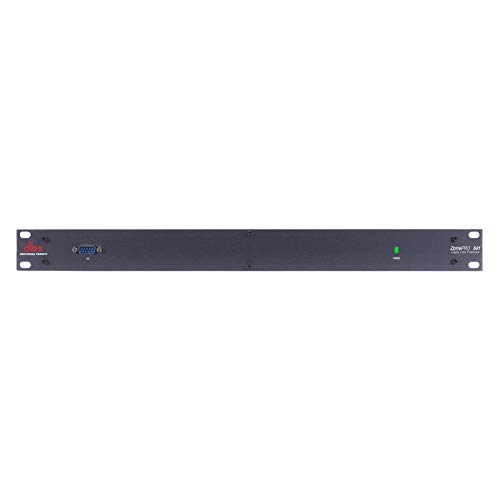
- Six inputs include mic/line and RCA source options
- Four balanced, RF-filtered outputs for installed systems
- Built-in mic preamps with 15V phantom power
Best For: Commercial installs needing zone routing and balanced output control
Precision Budget Tuning
Behringer ULTRADRIVE DCX2496LE Processor

- 2 inputs and 6 outputs for flexible loudspeaker routing
- 24-bit/96 kHz converters with 113 dB dynamic range
- Dynamic EQ and parametric EQ for inputs and outputs
Best For: Budget-minded buyers wanting precise digital crossover and EQ control
Modern App-Controlled Tuning
dbx DriveRack PA2 Loudspeaker Processor
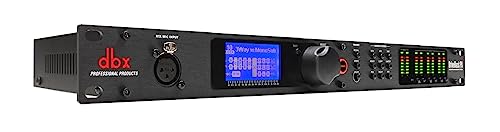
- Setup Wizard, AutoEQ, and AFS streamline tuning and feedback control
- Mobile and computer control works across Android, iOS, Mac, and Windows
- Includes crossover, EQ, compression, limiting, and alignment delay
Best For: Live sound users who want app-based control and guided tuning
Precision DSP Crossover
Peavey VSX 26e Loudspeaker Management

- Balanced inputs with digital EQ, delay, and limiting
- Crossover options from 1st to 8th order with multiple alignments
- Signal generator included for setup and tuning
Best For: Venues and installers needing detailed PA tuning and protection
Commercial Zone Matrix
DBX ZonePro 640 Bundle with ZC1 Controller

- 6 inputs and 4 outputs for matrix-style zone routing
- Includes ZC1 wall-mounted programmable zone controller
- Offers AFS, EQ, compression, limiting, and filters
Best For: Restaurants and commercial installs needing zone routing plus wall control
Compact 3x6 Processor
Ashly Protea 3.6SP Loudspeaker System

- 3-in/6-out processor for flexible speaker management
- Front-panel LCD and parameter control for quick edits
- USB and XLR connectivity for live or fixed installs
Best For: Smaller pro audio installs needing direct front-panel control
Stage-Ready 260-Channel DSP
Dual-Input, Six-Output Speaker Manager

- 260-channel processing with advanced crossover and effects
- Dante networking for low-latency audio transmission
- Rugged build for demanding stage environments
Best For: Large stage performances and Dante-based PA systems
Rack-Mount DSP Matrix
DP-26 2-In/6-Out Loudspeaker Manager

- 2-in/6-out processor with crossover, EQ, limiter, and delay
- 1U rack unit with front-panel and PC software control
- USB, RS485, and RS232 connectivity options
Best For: Line arrays and rack-mounted PA installations
Graphic LCD Rack Processor

- 2-in/6-out layout for loudspeaker management
- Includes stereo output limiting and speaker delay
- 24-bit A/D conversion with 110dB+ dynamic range
Best For: Stage setups that need core limiter and delay tools
Rack-Ready All-in-One Control – dbx DriveRack 260 Loudspeaker System
If you need a multi-zone loudspeaker management processor that handles system tuning from one rack unit, the dbx DriveRack 260 is built for the job. Its 2×6 architecture gives you crossover, EQ, compression, limiting, delay, and feedback control in a single processor, making it a practical fit for venues that need straightforward signal management.
Best For: FOH engineers, installers, and live sound setups that need flexible speaker management and real-time feedback control.
Pros:
- 2-input, 6-output design covers full system management in one unit.
- Includes Auto-EQ, 28-band graphic EQ, compressor, subharmonic synth, and feedback eliminator.
- AFS helps reduce feedback during unpredictable live performances.
- PeakStopPlus limiting and alignment delay support speaker protection and timing control.
Cons:
- Best suited to users comfortable with rack gear and system setup.
- More processor than a simple plug-and-play solution.
The DriveRack 260 stands out as a versatile all-in-one processor for venues that want detailed control without adding multiple separate boxes. If you need a dependable multi-zone loudspeaker management processor with strong tuning and protection tools, this is a solid candidate.
Zone Processing for Installed Audio – dbx ZonePRO 641 Digital Processor
The dbx ZonePRO 641 is a practical multi-zone loudspeaker management processor for installed sound systems that need input routing and zone output control. With six total inputs, four outputs, and built-in mic preamps, it is aimed at distributed audio setups where source management matters as much as speaker processing.
Best For: Commercial audio installs that need zone routing, balanced outputs, and onboard mic/line input flexibility.
Pros:
- Six total inputs support a mix of mic/line and RCA sources.
- Four electronically balanced, RF-filtered Euroblock outputs suit installed systems.
- Built-in mic preamps with 15V phantom power add source flexibility.
- Rack-friendly metal construction and compact 1U format.
Cons:
- Fewer outputs than larger loudspeaker management systems.
- More focused on zone processing than full-featured live-sound tuning.
This model is best viewed as an installed-audio processor rather than a touring system manager. If your priority is clean zone control and practical input/output handling, the ZonePRO 641 fits that niche well.
Precision Budget Tuning – Behringer ULTRADRIVE DCX2496LE Processor
The Behringer ULTRADRIVE DCX2496LE is a multi-zone loudspeaker management processor designed for users who want detailed control with high-resolution conversion. Its 2-input, 6-output layout, 24-bit/96 kHz converters, and dynamic EQ tools make it a strong fit for systems that need precise crossover and EQ management.
Best For: Budget-conscious users who want flexible crossover, EQ, and output routing in a digital processor.
Pros:
- 2 analog inputs and 6 analog outputs offer flexible system routing.
- 24-bit/96 kHz conversion and 113 dB dynamic range support strong signal integrity.
- Dynamic EQ and parametric EQ are available for inputs and outputs.
- Compact 2 kg design is easy to integrate into a rack.
Cons:
- Notes do not list advanced auto setup or feedback suppression tools.
- Requires manual configuration for tuning and system matching.
For users who value conversion quality and routing flexibility over automation, this processor offers a capable feature set. It makes sense for systems that need a straightforward digital management approach without a lot of extras.
Modern App-Controlled Tuning – dbx DriveRack PA2 Loudspeaker Processor
The dbx DriveRack PA2 is a multi-zone loudspeaker management processor built for users who want modern control and fast setup. It combines a setup wizard, AutoEQ, AFS, crossover tools, EQ, compression, limiting, and alignment delay, with mobile and computer control for convenient adjustments.
Best For: Live sound users and system techs who want app-based control plus automated tuning tools.
Pros:
- Setup Wizard and Streamlined AutoEQ simplify system tuning.
- AFS and dbx compression help manage feedback and dynamics.
- Supports Android, iOS, Mac, and Windows control.
- Includes crossover support, subharmonic synthesis, graphic EQ, and alignment delays.
Cons:
- Dependent on compatible mobile or computer platforms for remote control.
- Feature-rich setup may be more than needed for basic systems.
The PA2 is a strong choice when you want modern workflow tools alongside traditional loudspeaker processing. For users who value guided setup and flexible control across devices, it delivers a well-rounded package.
Precision DSP Crossover – Peavey VSX 26e Loudspeaker Management
If you want a multi-zone loudspeaker management processor with flexible tuning tools, the Peavey VSX 26e is built for dialing in PA systems with precision. It offers balanced inputs, multiple EQ filter types, and crossover options from 1st to 8th order, making it a practical fit for live sound and install work where control matters.
Best For: Venues, live sound systems, and installers who need detailed crossover, EQ, delay, and limiting control.
Pros:
- PEQ, Low-Shelf, Hi-Shelf, and multiple filter types for detailed tuning
- Butterworth, Bessel, and Linkwitz-Riley crossover alignments up to 48 dB/Oct
- Built-in signal generator with sine, white noise, and pink noise
- Channels can be linked for simplified stereo operation
Cons:
- Designed for pro audio use, so it may be more complex than basic systems need
- Tabletop form factor may not suit rack-centric setups as neatly
The VSX 26e stands out when you need precise digital control rather than a simple preset processor. For PA tuning, driver protection, and system alignment, it gives installers and sound teams the kind of adjustable toolkit that makes fine-tuning easier.
Commercial Zone Matrix – DBX ZonePro 640 Bundle with ZC1 Controller
The DBX ZonePro 640 bundle is a strong multi-zone loudspeaker management processor option for commercial audio layouts that need routing and wall-panel control. With 6 inputs, 4 outputs, plus the included ZC1 controller, it is aimed at restaurants, retail, and similar installs where flexible zone control and system processing are both important.
Best For: Commercial spaces that need matrix routing, zone control, and DSP processing in one bundle.
Pros:
- 6-in/4-out matrix processor suited to multi-zone distribution
- Includes ZC1 wall-mounted programmable zone controller
- Processing tools include AFS, compression, limiting, noise gating, EQ, and filters
- Supports RS-232 control and wall panel control for installations
Cons:
- Bundle is geared toward installed commercial systems rather than portable use
- Setup will likely be more involved than a simple plug-and-play processor
This package is especially useful when you need central processing and user-friendly zone access in the same system. The added controller and broad set of dynamics and EQ tools make it a practical fit for fixed commercial audio projects.
Compact 3×6 Processor – Ashly Protea 3.6SP Loudspeaker System
The Ashly Protea 3.6SP is a compact multi-zone loudspeaker management processor for setups that need three inputs and six outputs in a small, straightforward unit. Its front-panel parameter control, LCD screen, and USB connectivity make it a practical choice for live sound or fixed installations where direct access to processing matters.
Best For: Compact pro audio systems and fixed installs that need a 3-in/6-out processor with local control.
Pros:
- 3-in/6-out design supports flexible loudspeaker management
- Front-panel parameter control with LCD screen for direct editing
- USB and XLR connectivity for system integration
- Built for live sound and fixed installations
Cons:
- Only three audio channels, so it is better for smaller systems
- Lower maximum output power than larger rack processors
If you need a manageable processor with hands-on control, the 3.6SP keeps the feature set focused and practical. It is best suited to users who want a reliable loudspeaker system processor without the complexity of a larger matrix platform.
Stage-Ready 260-Channel DSP – Dual-Input, Six-Output Speaker Manager
If you need a multi-zone loudspeaker management processor for demanding live sound work, this dual-input, six-output unit is built around high-precision DSP, crossover control, and Dante networking. It’s aimed at large-scale stage setups where low-latency transmission, flexible routing, and reliable processing matter more than compact simplicity.
Best For: Large stage performances, complex PA rigs, and Dante-based audio networks.
Pros:
- 260-channel digital audio processing with advanced crossover and effects support
- Dante connectivity for low-latency, high-fidelity network audio transmission
- 24-bit/192kHz sampling for studio-grade audio performance
- Rugged housing and heat-resistant components for demanding environments
Cons:
- Geared toward professional systems rather than simple plug-and-play home use
- Details are focused on stage integration, so smaller setups may not use all capabilities
This is a strong fit when your priority is dependable processor control across a large system. The combination of Dante support, high sample rate processing, and robust construction makes it especially practical for live production environments.
Rack-Mount DSP Matrix – DP-26 2-In/6-Out Loudspeaker Manager
The DP-26 is a practical multi-zone loudspeaker management processor for line array systems and other installed audio setups. It combines crossover, EQ, limiter, delay, and filter tools in one 1U rack unit, with both front-panel control and PC software available for setup.
Best For: Line array systems, rack installations, and users who want PC or hardware control options.
Pros:
- 2-in/6-out design with crossover, equalizer, limiter, delayer, and filter functions
- 1U rack-mountable format with front-panel and PC software control
- USB, RS485, and RS232 connectivity for flexible system integration
- 96kHz sampling, 32-bit DSP, and 24-bit A/D and D/A conversion
Cons:
- Setup can be more involved than a basic standalone processor
- Feature depth may be more than needed for small or simple systems
For installers who need broad control in a single rack space, the DP-26 offers a lot of processing tools and configuration flexibility. Its stored user programs and long-distance control options make it well suited to more structured PA deployments.
Graphic LCD Rack Processor – PA2 2-In, 6-Out Audio Manager
This 2-in, 6-out audio processor is positioned as a loudspeaker management tool for stage sound equipment and high-performance audio solutions. Based on the supplied details, it highlights stereo output limiting, speaker delay, and 24-bit conversion, making it a straightforward choice for users who want core processing features in one rack-style unit.
Best For: Basic loudspeaker management and stage sound setups needing limiter and delay functions.
Pros:
- 2-in/6-out processing layout suited to speaker management use
- Stereo output limiter helps protect equipment from overload
- Speaker fine-tuning delay supports synchronized playback
- 24-bit A/D conversion with dynamic range exceeding 110dB
Cons:
- Supplied notes are broad and do not list as much system detail as competing processors
- Product information appears less specific about advanced routing or network features
If you want an audio processor focused on the essentials, this model centers on limiting, delay, and conversion quality. It looks best suited to users who need practical control rather than a feature-heavy management platform.
How We Picked the Best Multi-Zone Loudspeaker Management Processor
We focused on processor capability, channel count, output flexibility, EQ and limiter tools, installation suitability, and overall ease of integration. For a Multi-Zone Loudspeaker Management Processor, the most important factor is not just sound quality, but whether it can reliably handle the routing and protection needs of your specific system.
We also considered whether a unit is better suited to fixed commercial audio, portable PA use, or larger stage and line-array applications.
Quick Comparison
Some processors are built for compact PA systems, while others are better for restaurant, retail, and venue distribution. In general, 2-in/6-out designs offer strong flexibility for zone-based or sub/top management, while 6×4 matrix-style processors are a better fit when you need multiple sources routed to multiple zones.
If you need simple PA tuning, choose a streamlined unit. If you need source-to-zone routing, paging support, or wall-controller compatibility, prioritize a matrix processor with more control options.
Key Buying Factors for a Multi-Zone Loudspeaker Management Processor
Input and Output Count
Check whether the processor matches your system architecture. A small live rig may only need a few outputs, while a commercial install may require multiple zones, paging paths, or submixes.
Processing Tools
Look for crossover filters, parametric EQ, delay, compression, and limiting. These features help align speakers, protect equipment, and improve clarity across different rooms or coverage areas.
Routing and Matrix Control
If you are managing multiple rooms or zones, matrix flexibility matters. A strong Multi-Zone Loudspeaker Management Processor should let you assign sources to outputs without awkward workarounds.
Installation and Control
Consider front-panel usability, software control, presets, and wall-panel compatibility. For commercial spaces, easy day-to-day operation is often as important as audio performance.
System Protection
Limiters and proper output management help prevent overloads and speaker damage, especially in systems that run all day or are operated by non-technical staff.
Who Should Buy Which Multi-Zone Loudspeaker Management Processor?
Choose a compact DSP processor if you are tuning a PA, club system, or portable rig and want straightforward control. Choose a matrix-style model if your priority is commercial zoning, distributed audio, or source routing across multiple rooms.
For larger venues and more demanding installs, prioritize units with deeper processing, more outputs, and stronger control integration. If you are balancing live sound and permanent installation needs, a versatile Multi-Zone Loudspeaker Management Processor with presets and flexible routing is usually the safest long-term choice.