Qobuz rewards a capable streaming setup, but the right network audio player can make a bigger difference to everyday use than specifications alone suggest. The best options combine reliable Qobuz access with strong DAC performance, intuitive control, and connections that fit your existing stereo.
We compare 10 network audio players and streamers for different systems, from compact upgrades to sophisticated digital sources with displays, preamp functions, CD playback, and high-resolution support.
Best 10 Network Audio Player for Qobuz Picks for 2026
Best All-Around Pick
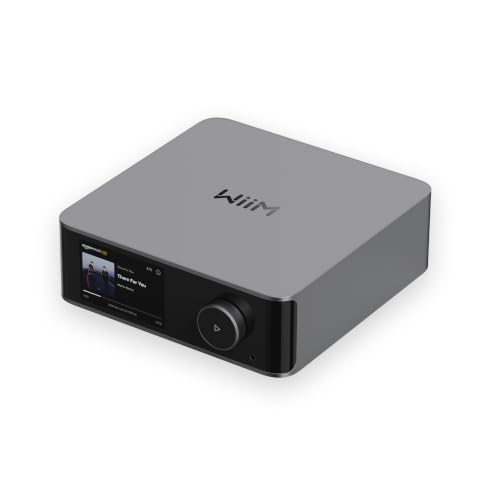
- Qobuz Connect and 24-bit/192 kHz playback
- ESS DAC with touchscreen control
- HDMI ARC, phono, USB, and headphone outputs
Best For: Flexible stereo and home-theater systems
Best CD and Storage Hub

- Combines CD playback with Qobuz streaming
- Supports DSD512 and PCM up to 768 kHz/32-bit
- Expandable storage up to 8TB
Best For: Large digital libraries and CD collections
Best Portable Option

- Built-in Qobuz streaming over Wi-Fi
- Supports LDAC, aptX, AirPlay, and DLNA
- Up to 2TB microSD expansion
Best For: Portable Qobuz listening and headphones
Best Simple Stereo Upgrade

- Qobuz Connect with up to 24-bit/192 kHz output
- Optical, coaxial, RCA, Ethernet, and Wi-Fi
- AirPlay 2, Google Cast, and multiroom support
Best For: Adding Qobuz to an existing stereo
Portable Qobuz Hi-Fi Player

- Online Qobuz and Tidal support
- Native DSD256 and PCM 384kHz playback
- Up to 2TB microSD expansion
Best For: Portable listening and large local music libraries
All-in-One Qobuz Music Hub

- Streamer, DAC, and preamp in one unit
- Supports up to DSD512 and 768kHz/32-bit
- NAS, NVMe, USB, and CD-drive support
Best For: Flexible home hi-fi systems with local and network libraries
Premium Qobuz Network Streamer

- Built-in Qobuz Connect and StreamMagic
- ESS SABRE32 Reference DAC
- HDMI eARC, AirPlay 2, Chromecast, and Roon Ready
Best For: Modern home hi-fi systems and multi-room listening
Reference-Grade Transport
Eversolo T8 Music Streamer Transport

- Qobuz and Qobuz Connect support
- Electrically isolated digital outputs
- Dual femtosecond clocks and Wi-Fi 6
Best For: External-DAC systems needing flexible, low-noise digital transport
All-in-One Music Hub

- Qobuz, TIDAL, AirPlay and DLNA support
- Built-in CD playback and ripping
- Dual drive bays for up to 8TB storage
Best For: Listeners wanting streaming, CDs and local music in one component
System-Friendly Streamer

- Integrated Qobuz and TIDAL access
- XLR, RCA, HDMI and digital outputs
- DSD512 support with HDMI ARC
Best For: Flexible hi-fi or TV-connected systems needing analog and digital output
Best All-Around Pick – WiiM Ultra
The WiiM Ultra is a versatile network audio player for Qobuz, supporting playback up to 24-bit/192 kHz through its WiiM Home app and Qobuz Connect. Its touchscreen, ESS DAC, broad wired connectivity, and room-correction tools make it a practical centerpiece for a stereo or home-theater setup.
Best For: Listeners who want one feature-rich streamer for Qobuz, local libraries, analog sources, headphones, and home audio systems.
Pros:
- Supports Qobuz, Qobuz Connect, Roon Ready, NAS, and DLNA playback.
- Includes an ESS ES9038 Q2M DAC, 3.5-inch touchscreen, and up to 24-bit/192 kHz streaming.
- Offers HDMI ARC, phono, RCA, optical, coaxial, USB, headphone, and subwoofer connections.
- Supports multiroom audio with WiiM, Amazon Echo, and Google Home devices.
Cons:
- It is incompatible with AirPlay and cannot function as an AirPlay receiver.
- The extensive feature set may be more than needed for a simple streaming-only system.
Choose the WiiM Ultra if you value connection flexibility and hands-on control as much as Qobuz playback. It is especially compelling when you want to integrate streaming with vinyl, television audio, headphones, or a powered subwoofer.
Best CD and Storage Hub – Kaiboer DMP-K8
The Kaiboer DMP-K8 combines CD playback, network streaming, and internal storage in a single component. As a network audio player for Qobuz, it supports the service alongside other apps while also offering AirPlay, DLNA, high-resolution decoding, and outputs for use as a digital transport or DAC source.
Best For: Audiophiles who want Qobuz streaming alongside physical CDs, local storage, and a large front-panel display.
Pros:
- Combines a CD player with network streaming and supports Qobuz, TIDAL, Amazon Music, and other services.
- Supports decoding up to PCM 768 kHz/32-bit and DSD512.
- Includes dual drive bays and supports up to 8TB of storage.
- Provides AirPlay, DLNA, USB, HDMI, and optical connectivity.
Cons:
- It has no headphone jack.
- Its larger feature set and storage capability may be unnecessary for users who only need Qobuz playback.
- The supplied notes do not identify a current software-update status.
The DMP-K8 is a substantial choice for a digital library that includes both discs and downloaded files. Its storage expansion and large display make it more suitable for a dedicated listening setup than a minimalist streaming system.
Best Portable Option – HiBy R1
The HiBy R1 is a compact network audio player for Qobuz with built-in Wi-Fi, a touchscreen, and pre-installed Qobuz and TIDAL apps. It is designed primarily as a portable player, but its Bluetooth, AirPlay, DLNA, wired headphone, and expandable-storage features also let it serve smaller home audio setups.
Best For: Portable listening with Qobuz, Bluetooth headphones, wired headphones, and expandable local music storage.
Pros:
- Includes built-in Qobuz and TIDAL streaming over Wi-Fi.
- Supports DSD256 and PCM up to 384 kHz/32-bit.
- Offers LDAC, aptX, AirPlay, DLNA, and microSD expansion up to 2TB.
- Provides a 3-inch touchscreen and up to 15.5 hours of wired playback.
Cons:
- Offline downloading for Qobuz and TIDAL is not supported.
- Its 3.5mm output and portable design are less suited to complex component-based systems.
- It has a shorter playback focus than a mains-powered network streamer.
The R1 makes sense when portability matters more than extensive home-system connectivity. It is a convenient way to access Qobuz directly, while Bluetooth and AirPlay broaden its usefulness beyond personal headphone listening.
Best Simple Stereo Upgrade – WiiM Pro Plus
The WiiM Pro Plus is a straightforward network audio player for Qobuz that adds high-resolution streaming to an existing stereo. It supports Qobuz Connect, up to 24-bit/192 kHz playback, Ethernet and Wi-Fi, and digital or analog outputs, making it a practical upgrade without replacing an amplifier or receiver.
Best For: Existing stereo owners who want Qobuz, Spotify Connect, TIDAL Connect, and multiroom streaming in a compact add-on.
Pros:
- Supports Qobuz and Qobuz Connect with up to 24-bit/192 kHz output.
- Includes optical, coaxial, RCA, Ethernet, Wi-Fi, and Bluetooth connectivity.
- Works with AirPlay 2, Google Cast, Alexa, Roon Ready, NAS, and DLNA systems.
- Supports multiroom playback and includes voice and preset controls.
Cons:
- It can receive AirPlay streams but cannot transmit AirPlay to other AirPlay devices.
- It is primarily a streamer and does not include a built-in display for browsing music.
- Some high-resolution capabilities depend on the music service and source content.
The Pro Plus is a strong fit for upgrading a conventional stereo with modern streaming features. Select it when you want Qobuz and multiroom compatibility while keeping your existing amplifier and speakers.
Portable Qobuz Hi-Fi Player – HiBy R1
The HiBy R1 is a compact network audio player for Qobuz listeners who want streaming and local high-resolution playback in a portable device. It supports online Qobuz and Tidal access, Wi-Fi, Bluetooth audio output, and microSD expansion up to 2TB.
Best For: Portable listening, Qobuz streaming, and large local music libraries.
Pros:
- Supports online Qobuz and Tidal streaming plus internet radio.
- Decodes up to DSD256 natively and PCM 384kHz/32-bit.
- Offers Bluetooth 5.1 with LDAC, aptX, AAC, and SBC support.
- Supports microSD cards up to 2TB and up to 15 hours of playback.
Cons:
- Qobuz and Tidal streaming are online-only.
- Bluetooth is output-only and cannot pair with phones, computers, or other players.
- No built-in storage; a compliant microSD card is required.
The R1 is a flexible choice when portability matters more than traditional hi-fi system integration. Its expandable storage and high-resolution decoding are appealing, but buyers should plan around the required microSD card and output-only Bluetooth design.
All-in-One Qobuz Music Hub – Kaiboer DMP-K7 Plus
The Kaiboer DMP-K7 Plus is an ambitious network audio player for Qobuz and other streaming services, combining a streamer, DAC, preamp, and digital music library in one chassis. It also supports NAS access, USB storage, external CD drives, and high-resolution formats up to DSD512.
Best For: Home hi-fi systems needing streaming, local-library access, DAC functionality, and preamp control.
Pros:
- Combines music streamer, DAP, DAC, and preamp functions.
- Supports 768kHz/32-bit audio and DSD512 decoding.
- Provides NAS access through NFS and SMB, plus WebDAV support.
- Includes 64GB eMMC storage and supports internal NVMe and external USB storage up to 16TB.
Cons:
- Does not support Bluetooth.
- Its extensive storage and system features may be more than a simple streaming setup requires.
- The supplied notes do not specify Qobuz directly among the supported services.
The DMP-K7 Plus is best considered a central digital source for a serious home system rather than a basic Qobuz endpoint. Its storage, NAS connectivity, and conversion hardware offer substantial flexibility, while the lack of Bluetooth may limit casual wireless use.
Premium Qobuz Network Streamer – Cambridge Audio CXN100 SE
The Cambridge Audio CXN100 SE is a dedicated network audio player for Qobuz, with Qobuz Connect built in alongside Spotify Connect, TIDAL Connect, and Deezer. Its StreamMagic Gen 4 platform, SABRE reference DAC, HDMI eARC, and broad wired and wireless connectivity make it a strong fit for a modern stereo system.
Best For: Hi-fi owners seeking a polished Qobuz streamer with TV integration and multiple control options.
Pros:
- Includes Qobuz Connect, Spotify Connect, TIDAL Connect, and Deezer.
- Uses an ESS ES9028Q2M SABRE32 Reference DAC.
- Offers HDMI eARC, USB audio, coaxial, TOSLINK, AirPlay 2, Chromecast, and Bluetooth aptX HD.
- Supports Roon Ready operation, multi-room compatibility, and app control.
Cons:
- It is designed as a home component rather than a portable player.
- The supplied details do not state the maximum supported PCM or DSD resolution.
- Its broad feature set may be unnecessary for buyers seeking only a basic Qobuz endpoint.
The CXN100 SE is the most straightforward choice here for a conventional home network audio system centered on Qobuz. It combines direct service support with useful inputs, TV connectivity, and multi-room options, making it easier to integrate than a portable player or a more specialized all-in-one digital hub.
Reference-Grade Transport – Eversolo T8 Music Streamer Transport
For listeners building a high-resolution system around an external DAC, the Eversolo T8 is a network audio player for Qobuz focused on clean digital transport. It supports Qobuz, Qobuz Connect, TIDAL and other streaming protocols, while offering multiple isolated digital outputs and Wi-Fi 6 connectivity.
Best For: Audiophiles who already own a DAC and want flexible, electrically isolated digital connections.
Pros:
- Supports Qobuz, Qobuz Connect, TIDAL Connect, Roon Ready and Spotify Connect Lossless.
- Offers IIS, coaxial, AES/EBU, USB Audio and optical outputs with electrical isolation.
- Dual femtosecond clocks, a 6-inch touchscreen, remote control and mobile-app support.
- Includes room-calibration features and a 10-band parametric EQ.
Cons:
- It is a transport rather than an all-in-one DAC or amplifier.
- SFP modules are purchased separately and SFP+ is not supported.
- Its broad connectivity may be more than a simple streaming setup requires.
The T8 is the strongest fit when output flexibility and digital isolation matter more than built-in analog amplification. Its Qobuz support and extensive clocking and connectivity features make it a serious source component for a carefully assembled system.
All-in-One Music Hub – Kaiboer DMP-K8 Plus Streamer
The Kaiboer DMP-K8 Plus is a network audio player for Qobuz that combines streaming, DAC, preamp, CD playback and local-storage support in one component. Its large touchscreen and app control make it practical for users who want broad functionality without assembling several separate boxes.
Best For: Listeners wanting Qobuz, CD ripping, local storage and DAC functions in a single music hub.
Pros:
- Supports Qobuz, TIDAL, Amazon Music, Spotify Connect Lossless, AirPlay and DLNA.
- Combines streamer, DAC, preamp, DAP and CD player functions.
- Includes dual drive bays supporting up to 8TB of storage.
- Large 7.8-inch touchscreen displays album art, lyrics, spectrum information and VU meters.
Cons:
- The app connects through Wi-Fi, and the supplied notes state that Bluetooth is not available.
- Its larger feature set may be unnecessary for users seeking a basic network streamer.
- Storage drives are an additional consideration for buyers who want local capacity.
Choose the DMP-K8 Plus when convenience and media management are priorities. It is particularly appealing for Qobuz users who also want CD playback, ripping, expandable storage and a large on-device interface.
System-Friendly Streamer – Eversolo DMP-A6 Gen 2
The Eversolo DMP-A6 Gen 2 is a network audio player for Qobuz designed to fit into a modern hi-fi or home-theater system. It provides integrated access to Qobuz and other services, supports high-resolution formats through the EOS engine, and adds HDMI ARC, trigger control and both analog and digital connections.
Best For: Qobuz listeners who want a polished streamer with analog outputs, local-library support and TV integration.
Pros:
- Deeply integrates Qobuz, TIDAL, Highresaudio, Presto Music and other services.
- Supports DSD512, multichannel DSD, MQA and other high-resolution formats.
- Provides XLR and RCA analog outputs plus HDMI, USB, optical and coaxial outputs.
- HDMI ARC and trigger functions simplify integration with televisions and compatible system components.
Cons:
- Some listed third-party services, including Apple Music, are marked with qualifications in the supplied details.
- The extensive inputs and outputs may be unnecessary for a basic stereo setup.
- It is primarily a source and decoder, so speakers or amplification are still required.
The DMP-A6 Gen 2 is a balanced choice for buyers who want Qobuz access without giving up system flexibility. Its analog outputs, high-resolution decoding and HDMI ARC make it easier to use as the central source in a two-channel or mixed TV-and-music system.
How We Picked the Best Network Audio Player for Qobuz
We focused on features that matter when using Qobuz as a primary music service: dependable network connectivity, native or clearly supported Qobuz streaming, high-resolution playback, useful control options, and compatibility with common stereo components. We also considered whether each model works best as a transport, standalone source, DAC, preamp, or all-in-one system component.
Sound quality depends on the rest of the system, so specifications such as DSD and PCM support were treated as indicators of flexibility rather than automatic proof of superior performance. App quality, screen design, outputs, input selection, and ease of setup are equally important for daily listening.
Quick Comparison
| Type | Best For | Features to Look For |
|---|---|---|
| Compact streamer | Upgrading an existing amplifier | Reliable Wi-Fi, app control, digital outputs |
| Streamer with DAC | Direct connection to an amplifier | Analog outputs, volume control, quality DAC |
| Premium network player | High-end stereo systems | Low-noise design, strong clocking, robust power supply |
| All-in-one player | Replacing several components | Preamp functions, storage, CD or power-amplifier support |
| Portable Qobuz player | Headphones and flexible listening | Touchscreen, battery operation, Bluetooth, headphone output |
Key Buying Factors for a Network Audio Player for Qobuz
Qobuz Access and Control
Check whether Qobuz is built into the manufacturer’s app or accessed through a supported platform such as AirPlay or Chromecast. Native integration is usually more convenient for browsing albums, playlists, favorites, and hi-res formats.
DAC and Output Options
If you already own a DAC, prioritize a model with a clean digital output. If the player will connect directly to an amplifier, compare its analog outputs, volume control, and DAC implementation. Balanced outputs can be useful in compatible systems, while optical and coaxial outputs improve flexibility.
Network Reliability and Formats
Dual-band Wi-Fi is convenient, but Ethernet is preferable for a fixed system when available. Consider support for the resolution you actually use, plus gapless playback, DSD, local files, USB storage, and playback from a network library.
System Fit
Measure available space and check how the player will be controlled. A front display is helpful for quick navigation, while app-only models can be smaller and less expensive. Confirm compatibility with your amplifier, powered speakers, headphones, or existing streaming ecosystem.
Who Should Buy Which Network Audio Player for Qobuz?
Choose a compact WiiM-style streamer if you want an affordable way to add Qobuz to an established stereo. A player with a built-in DAC and display is better for listeners who want a simple, visually accessible source without adding another box.
Consider a Cambridge Audio, Eversolo, or comparable premium network player when you have revealing equipment and want stronger connectivity, construction, control, or upgrade potential. All-in-one DMP-style models suit buyers replacing multiple components, especially when CD playback, storage, preamp duties, or amplification are important.
Finally, HiBy portable players are the practical choice for headphone listeners who want Qobuz on the move. Before buying, confirm current firmware and service support, then match the player’s outputs and control method to the way you listen most often.