The right optical cable can keep a home studio’s digital audio setup clean, quiet, and easy to manage. These Toslink options cover short rack connections, soundbars, interfaces, consoles, and longer cable runs.
Below, you’ll find options selected for different budgets, lengths, connector designs, and installation needs—followed by a practical guide to choosing the best fit for your system.
Best 10 Optical Audio Cables for Home Studios Picks for 2026
Everyday Studio Connectivity
Amazon Basics 6-Foot Toslink Cable

- Multi-channel optical digital audio
- Flexible PVC jacket with gold-plated connectors
- Six-foot length for nearby components
Best For: Short connections between compatible studio and home-theater devices
Long-Run Flexibility
KabelDirekt 10ft Optical TOSLINK Cable

- Ten-foot length for flexible placement
- TOSLINK-to-TOSLINK compatibility
- Interference-resistant fiber-optic construction
Best For: Longer connections to soundbars, amplifiers, DACs, and stereo systems
Audiophile-Focused Design
Pangea Audio Premier SE Fiber Optic Cable

- Premium multi-core plastic optical fiber
- Made for high-performance audiophile applications
- Compact 0.6-meter cable length
Best For: Short optical connections in audiophile-oriented setups
Extended Rack Runs
Monoprice 12ft Optical Toslink Cable

- Twelve-foot reach for separated equipment
- Avoids ground-loop and electrical interference
- Molded strain relief with lifetime warranty
Best For: Longer source-to-receiver connections in studio racks
Flexible Value Pick
Xrmai 6ft Optical Audio Cable 2-Pack
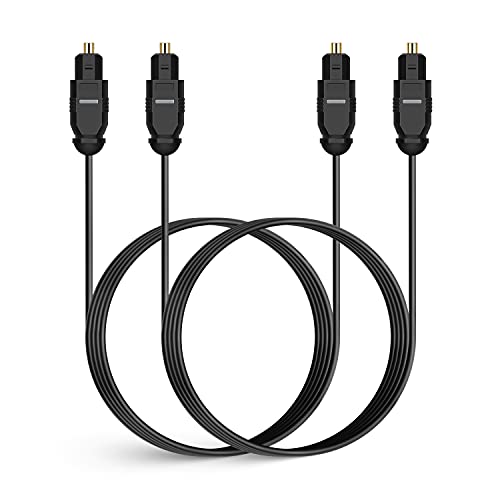
- Two 6-foot optical cables included
- Supports PCM and surround formats
- Angled connectors and dust caps
Best For: Multiple short optical connections on a budget
Long-Run Studio Pick
iVANKY 10ft Braided Optical Cable

- Extra-long 10-foot reach
- Japan Toray fiber core
- Braided, bend-resistant, CL3-rated jacket
Best For: Longer or more demanding equipment layouts
Durable Everyday Pick

- Flexible braided nylon jacket
- Supports PCM and surround formats
- 18-month warranty included
Best For: A durable single-cable connection
Long-Run Studio Connectivity

- 25-foot reach for flexible equipment placement
- Supports PCM, ADAT, LPCM, and surround formats
- Durable jacket with lifetime warranty
Best For: Longer home-studio and AV connections
Heavy-Duty Short Run
Monoprice Premium 6ft Toslink Cable

- Six-foot length for nearby components
- Metal mesh jacket resists nicks and kinks
- Polished fiber tips and gold-plated ferrule
Best For: Compact setups needing reinforced cable construction
Everyday Studio Connectivity – Amazon Basics 6-Foot Toslink Cable
For home studios that need dependable optical audio cables for home studios, this 6-foot Amazon Basics Toslink cable offers a straightforward way to connect compatible audio equipment. Its flexible PVC jacket, gold-plated connectors, and support for multi-channel digital audio suit common indoor setups.
Best For: Short studio or home-theater connections between TVs, sound bars, audio systems, Blu-ray players, and game consoles.
Pros:
- Supports multi-channel fiber-optic digital audio.
- Flexible, lightweight cable with a rugged PVC exterior.
- Gold-plated connectors and protective buffer tubing help resist corrosion.
- Six-foot length works well for nearby components.
Cons:
- Removable protective caps must be removed before use.
- Six feet may be limiting for equipment placed farther apart.
This is a practical, uncomplicated option when your studio devices are close together and use standard Toslink connections. Check the cable length and available optical ports before ordering.
Long-Run Flexibility – KabelDirekt 10ft Optical TOSLINK Cable
The KabelDirekt 10-foot cable is a useful choice when optical audio cables for home studios need extra reach. It connects standard TOSLINK or S/PDIF equipment and uses a flexible PVC jacket designed to avoid electrical interference.
Best For: Longer runs from a television, console, streaming box, or computer to a soundbar, amplifier, DAC, or stereo system.
Pros:
- Ten-foot length provides added placement flexibility.
- Compatible with TOSLINK and S/PDIF interfaces.
- Fiber-optic construction is immune to electrical interference.
- Includes 24K gold-plated connectors and a 36-month manufacturer warranty.
Cons:
- A 10-foot cable can be excessive for tightly arranged equipment.
- It is intended for devices with optical inputs or outputs, not general-purpose audio connections.
For a home studio with components spread across a desk or rack, the added length is the main advantage. Confirm that both devices use compatible optical ports before purchasing.
Audiophile-Focused Design – Pangea Audio Premier SE Fiber Optic Cable
The Pangea Audio Premier SE targets listeners who want a more specialized option among optical audio cables for home studios. Its premium multi-core plastic optical fiber construction is positioned for high-performance audiophile applications, while the compact 0.6-meter length suits close component placement.
Best For: Short, high-performance connections between nearby optical audio components in an audiophile-oriented studio or listening setup.
Pros:
- Uses premium multi-core plastic optical fiber.
- Designed specifically for high-performance audiophile applications.
- Compact 0.6-meter length helps manage short connections.
- Male-to-male optical connectors support compatible equipment.
Cons:
- Its short length is unsuitable for widely spaced equipment.
- The supplied notes identify speaker compatibility but do not list broad device compatibility.
This cable makes the most sense when premium positioning and a short run match your system. Measure the distance between components and verify their optical connector requirements first.
Extended Rack Runs – Monoprice 12ft Optical Toslink Cable
For home studios where components sit farther apart, this 12-foot Monoprice cable offers useful reach without introducing electrical ground-loop, RF, or EM interference. It uses full-sized Toslink connectors, molded strain relief, and a 5.0 mm outer diameter.
Best For: Extended connections between audio sources or receivers with Toslink or S/PDIF optical ports.
Pros:
- Twelve-foot length accommodates separated equipment.
- Optical transmission avoids common ground-loop and electrical interference issues.
- Molded connector heads and strain-relief boots help protect cable junctions.
- Gold-plated ferrules resist corrosion, and the cable includes a lifetime warranty.
Cons:
- The longer cable may be cumbersome in compact setups.
- It requires compatible Toslink or S/PDIF optical ports.
This is a sensible long-run choice for a studio rack, especially when interference isolation is important. Its full-sized connectors and 12-foot length make port compatibility and cable routing worth checking in advance.
Flexible Value Pick – Xrmai 6ft Optical Audio Cable 2-Pack
If you need optical audio cables for home studios or other compact audio setups, this two-pack provides two 6-foot Toslink-style cables for connecting compatible equipment. Its cuboid connectors, removable dust caps, and flexible PVC jacket make it a practical choice for straightforward indoor installations.
Best For: Buyers who want two standard-length optical cables for TVs, soundbars, receivers, gaming consoles, or similar equipment.
Pros:
- Includes two 6-foot cables for backup or multiple connections.
- Supports uncompressed PCM and compressed 5.1 to 7.1 surround formats listed by the manufacturer.
- Cuboid connectors help identify the installation angle, while removable caps protect unused ends.
Cons:
- The 6-foot length may be limiting for equipment placed farther apart.
- The PVC jacket is less protective than a braided construction.
This is a sensible budget-oriented option when you need multiple short optical connections rather than a specialized studio cable. Verify that your equipment has compatible optical ports and that six feet is sufficient for your layout.
Long-Run Studio Pick – iVANKY 10ft Braided Optical Cable
For optical audio cables for home studios that need extra reach, this 10-foot iVANKY cable offers more placement flexibility than standard shorter leads. Its Japan Toray fiber core, braided nylon jacket, and CL3 rating make it suited to organized audio, home theater, and equipment-room setups.
Best For: Longer runs between TVs, DACs, receivers, speakers, consoles, and other devices with standard Toslink ports.
Pros:
- 10-foot length helps connect equipment spaced farther apart.
- Japan Toray fiber core is specified for lossless, zero-distortion transmission.
- Braided nylon construction is rated to withstand over 16,000 bends, and the cable is CL3-rated for in-wall installation.
Cons:
- A 10-foot cable can create extra slack in a compact setup.
- It is sold as a single cable rather than a multi-pack.
This is the strongest fit of the three when cable length and jacket durability are priorities. Its compatibility is broad, but your devices still need standard Toslink or optical ports.
Durable Everyday Pick – EMK 6ft Braided Toslink Cable
Among optical audio cables for home studios, the EMK 6-foot cable balances a manageable length with a braided nylon jacket and strain-relief construction. It is designed for compatible TVs, amplifiers, gaming consoles, projectors, and home theater equipment while supporting optical transmission that avoids electromagnetic and radio-frequency interference.
Best For: Everyday studio or entertainment setups needing one durable 6-foot optical connection with warranty coverage.
Pros:
- Braided nylon jacket and OD6.0mm strain relief help protect against kinks.
- Supports uncompressed PCM and 5.1 to 7.1 surround formats listed by the manufacturer.
- Includes an 18-month warranty and 30-day money-back guarantee.
Cons:
- Only one 6-foot cable is included.
- The length may not suit widely separated equipment.
The EMK is a practical middle-ground choice for a single dependable connection. Its braided exterior and included warranty add reassurance, while the 6-foot length keeps cable management relatively simple.
Long-Run Studio Connectivity – BlueRigger 25FT Toslink Cable
For home studios that need extra reach, this 25-foot option is a practical pick among optical audio cables for home studios. Its fiber-optic design avoids electrical interference, while support for PCM, surround formats, ADAT, and LPCM suits a range of digital audio setups.
Best For: Longer connections between a DAC, audio processor, receiver, or other Toslink-equipped studio and home-theater gear.
Pros:
- 25-foot length helps span larger rooms and equipment layouts.
- Supports uncompressed PCM, compressed 5.1/7.1 audio, ADAT, and LPCM.
- Flexible PVC jacket rated for 25,000+ bend cycles.
- Includes 24K gold-plated connectors, removable protective tips, and a lifetime warranty.
Cons:
- The long cable may be more than compact studio setups need.
- Protective connector covers must be removed before use.
Choose this BlueRigger when reach, broad format support, and interference-free optical transmission matter more than keeping the cable short.
Heavy-Duty Short Run – Monoprice Premium 6ft Toslink Cable
This six-foot Monoprice cable is a tidy choice for optical audio cables for home studios where equipment sits nearby. Its metal mesh jacket, reinforced connector heads, and polished fiber tips emphasize physical protection and dependable digital signal transfer.
Best For: Short connections between adjacent studio components, gaming consoles, home-theater equipment, and other Toslink-compatible devices.
Pros:
- Heavy-duty metal mesh jacket helps protect against nicks, cuts, and kinks.
- Square metal connector heads provide a robust connection design.
- Precision-polished fiber tips support signal transfer.
- Gold-plated ferrule resists corrosion.
Cons:
- Six-foot length may not suit widely separated equipment.
- The heavier construction may be less convenient where maximum flexibility is needed.
This is a sensible short-run option when cable protection and sturdy metal hardware are priorities in a compact studio rack or desk setup.
Maximum Reach – CableCreation 50FT Optical Cable
When your source and monitoring or processing equipment are far apart, this 50-foot CableCreation model stands out among optical audio cables for home studios. It supports standard Toslink connections and common PCM, surround, DTS-HD High Resolution, and LPCM formats.
Best For: Long indoor runs connecting distant TVs, consoles, Blu-ray players, sound systems, DACs, or other Toslink-equipped devices.
Pros:
- 50-foot length accommodates widely separated equipment.
- Supports uncompressed PCM and compressed 5.1/7.1 audio formats.
- Flexible, wear-resistant PVC outer layer.
- 24K gold-plated connectors and removable protective caps help maintain a clean connection.
Cons:
- Its 50-foot length can be excessive for desk-based studios.
- The cable should not be overfolded.
- It is specified for indoor use.
Pick this CableCreation cable when maximum distance is the deciding factor, but plan the route carefully and avoid tight folds during installation.
How We Picked the Best Optical Audio Cables for Home Studios
We focused on the factors that matter most for a dependable S/PDIF connection: connector fit, cable length, jacket construction, flexibility, stated compatibility, and value. The roundup includes compact cables for close-together components, longer options for rooms or entertainment systems, and reinforced designs for frequent handling.
Optical cables transmit digital audio as light, so expensive materials do not automatically produce better sound. A properly fitted, undamaged cable that meets your equipment’s format and distance requirements is usually the most important choice.
Quick Comparison
| Best For | What to Look For |
|---|---|
| Short studio racks | 0.6- to 6-foot cable with flexible handling |
| Soundbars and consoles | 6- to 12-foot length and secure connectors |
| Across-room routing | 25- to 50-foot cable with careful installation |
| Heavy everyday use | Durable jacket, strain relief, and protective connector caps |
| Budget setups | Basic Toslink cable with the correct connector and length |
Key Buying Factors for Optical Audio Cables for Home Studios
Compatibility and Format
Confirm that both devices use standard Toslink optical or S/PDIF ports. Optical connections commonly support stereo PCM and, depending on the equipment, compressed surround formats. They do not carry USB, HDMI ARC, or analog signals without compatible conversion hardware.
Length and Signal Routing
Choose the shortest length that comfortably reaches between components without sharp bends. Longer cables can be useful for wall-mounted televisions, soundbars, and separated racks, but they should be routed carefully and protected from crushing or tight kinks.
Build Quality and Flexibility
Look for molded strain relief, a jacket that bends without excessive resistance, and connectors that seat firmly. Mesh or reinforced jackets may help in high-traffic areas, while slimmer cables are easier to route behind desks and studio furniture.
Connector Protection
Remove any shipping caps before installation, but keep them for storage. Optical connector ends are sensitive to dirt and scratches; clean, protected ends help prevent dropouts and intermittent sound.
Who Should Buy Which Optical Audio Cables for Home Studios?
Choose a Short Cable for a Compact Rack
If your television, converter, receiver, or digital device sits nearby, a short cable reduces clutter and avoids unnecessary loops. This is the practical choice for tidy desktop or rack-mounted setups.
Choose a 6- to 12-Foot Cable for Typical Rooms
Most home studios, gaming stations, and soundbar installations will find this range easier to position. It offers routing flexibility without the excess slack of an unnecessarily long cable.
Choose a Long Cable for Difficult Layouts
For equipment across a room, behind furniture, or mounted at a distance, a 25- or 50-foot option can solve placement problems. Measure first, route gently, and avoid placing the cable where it may be stepped on.
Choose the Simplest Compatible Option
For optical connections, prioritize correct fit, appropriate length, and physical reliability over claims about premium sound improvements. Once the digital signal arrives without errors, a more expensive cable will not generally change the audio character.