A good recording studio equipment rack keeps gear organized, protected, and easy to access. Whether you need a desktop solution or a rolling cabinet, the right rack can make a studio feel cleaner and work more efficiently.
Below, we compare 10 of the best options for 2026, with choices for compact home studios, larger production rooms, and flexible AV setups.
Best 10 Recording Studio Equipment Rack Picks for 2026
Solid Bamboo 6U
Sound Town DIY 6U Bamboo Studio Rack

- Solid bamboo construction with pre-cut DIY assembly
- 6U capacity with 14.2-inch depth
- Side vents, EVA pads, and included screws
Best For: Home studios and portable 6U setups needing airflow and a clean look
Open Frame AV Rack
Tecmojo 12U Open Frame Network Rack

- Cold rolled steel frame with wall or floor mounting
- Includes two ventilated shelves and hardware
- Open layout for easy access to multiple devices
Best For: AV, IT, and studio setups that need a flexible open-frame rack
Angled Desktop 8U
Sound Town SDRK-8SLD Angled Studio Rack

- 8U rack with 19-inch compatibility
- 20-degree slanted desktop layout
- Baltic birch build with rear cable passthroughs
Best For: Compact home studios that want angled desktop access to rack gear
Walnut Woodgrain 8U
Wooden Desktop Studio Rack 8U Walnut

- True 19-inch rack compatibility with threaded rails
- 373mm usable depth for common studio gear
- Furniture-grade wood build with walnut finish
Best For: Studio workstations that need a clean-looking 8U desktop rack
Compact DIY Rack
Sound Town Solid Birch 2U Studio Rack

- 2U freestanding rack for small studio setups
- Pre-cut parts with rack rails and screws included
- 14-inch depth and golden oak finish
Best For: Small home studios needing a compact wood rack
Heavy-Duty Rolling Cabinet
AxcessAbles 16U Rolling AV Rack Cabinet
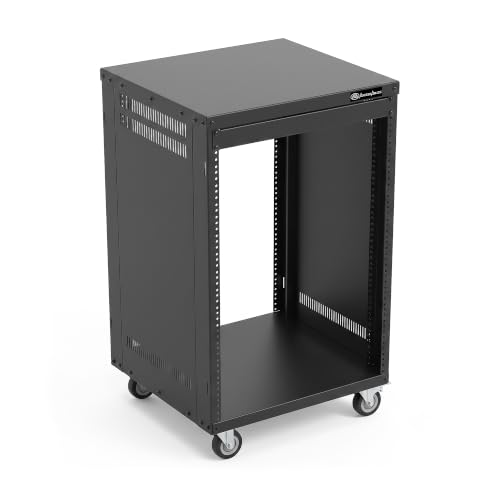
- 16U metal cabinet for 19-inch equipment
- Removable locking caster wheels for mobility
- Optional side panels for open-frame airflow
Best For: Larger studios or AV setups needing high capacity and mobility
Slanted Portable Rack
Sound Town 12U Slanted Studio Rack

- 12U slanted rack for easier front access
- Rubber feet plus included casters for flexibility
- Pre-cut plywood build with installed rack rails
Best For: Studio users wanting a portable slanted wood rack
Mobile Open-Frame Rack

- Caster wheels and leveling feet included
- Adjustable front and rear rails
- Cable gaskets and vented bottom
Best For: Musicians and studio users who need a movable 6U rack
Furniture-Style Slant Rack

- 8U slant rack with 19-inch width
- Furniture-grade walnut laminate finish
- Pre-cut DIY build with rack rails
Best For: Home studios that want a polished slanted rack
Desktop Wood Rack

- Compact 4U tabletop design
- Furniture-grade laminated oak panels
- Includes hardware and instructions
Best For: Small desktop studios and tidy workstation setups
Solid Bamboo 6U – Sound Town DIY 6U Bamboo Studio Rack
If you want a compact recording studio equipment rack that feels more furniture-like than industrial, this 6U Sound Town model is a practical option. The solid bamboo build, 14.2-inch depth, and side venting make it a simple fit for small studios, PA/DJ gear, or home audio setups that need orderly rack storage.
Best For: Home studios and portable setups that need a durable 6U rack with airflow and a clean bamboo look.
Pros:
- Solid bamboo construction for a sturdy, durable feel
- 6U capacity with 14.2-inch depth for compact rack gear
- Side venting helps airflow and heat dissipation
- Pre-installed rails and included 10/32 screws simplify mounting
Cons:
- Requires assembly before use
- Only 6U, so it may be too small for larger setups
- Tabletop format may not suit users wanting a full floor rack
This is a strong pick if you value easy assembly, decent ventilation, and a sturdy desktop footprint over maximum rack height. The included EVA pads also add a bit of stability and surface protection if you plan to stack or reposition it.
Open Frame AV Rack – Tecmojo 12U Open Frame Network Rack
For buyers who need a recording studio equipment rack that can also handle AV or networking hardware, this open-frame Tecmojo unit offers a flexible, heavy-duty layout. Its 12U steel construction, included ventilated shelves, and wall- or floor-mount options make it useful for multi-device spaces where stability and access matter.
Best For: AV, IT, and studio users who need an open-frame 12U rack with flexible mounting options.
Pros:
- Cold rolled steel frame with strong load ratings for wall or floor use
- Open-frame design keeps devices accessible
- Includes two ventilated 1U shelves and mounting hardware
- Ships with shelf stops, velcro straps, and setup aids like a template and video
Cons:
- Designed more like a network rack than a furniture-style studio rack
- Open frame may not hide cables or gear as neatly
- Assembly and placement planning are more involved than a simple desktop unit
This rack makes the most sense if you want a practical shared rack for audio, video, and network equipment rather than a decorative studio piece. The included accessories add value, especially if you need help organizing multiple devices in one place.
Angled Desktop 8U – Sound Town SDRK-8SLD Angled Studio Rack
If your recording studio equipment rack needs to sit on a desk and keep gear easy to see, this angled Sound Town turret rack is built for that job. It combines 8U capacity, a 19-inch rack standard, and a 20-degree slanted layout with dual rear cable passthroughs for compact home studio workflows.
Best For: Desktop studios that want angled access to rack gear in a compact 8U footprint.
Pros:
- 8U capacity with standard 19-inch compatibility
- 20-degree angled desktop design improves visibility and access
- 14.4-inch internal depth supports gear clearance and airflow
- Pre-installed 10-32 threaded rails and included screws ease setup
Cons:
- Desktop format limits total storage compared with larger racks
- Requires self-assembly
- Best suited to compact setups rather than deep rack fleets
For a home studio, this is a thoughtfully designed rack that prioritizes ergonomics and cable management. The Baltic birch plywood build and black espresso finish also give it a more polished studio appearance than basic metal alternatives.
Walnut Woodgrain 8U – Wooden Desktop Studio Rack 8U Walnut
When you want a recording studio equipment rack that blends into a desk setup, this wooden desktop rack offers a clean, furniture-style approach. It is built for standard 19-inch gear, uses threaded rails, and provides 373mm of usable depth, making it a strong fit for everyday studio essentials.
Best For: Studio users who want a stable 8U desktop rack with a clean wood finish and standard 19-inch compatibility.
Pros:
- True 19-inch compatibility with threaded rails
- 373mm usable depth suits many common studio devices
- Furniture-grade wood panels with a walnut woodgrain finish
- Pre-drilled panels and included hardware support easy DIY assembly
Cons:
- Users still need to measure gear depth carefully
- No built-in extras like shelves or ventilation features are listed
- Desktop design is less scalable than a larger open-frame rack
This rack is a good match if you want your gear close at hand without giving up a polished look. Its stable frame and straightforward assembly make it a practical choice for preamps, interfaces, compressors, and similar rack-mount audio tools.
Compact DIY Rack – Sound Town Solid Birch 2U Studio Rack
If you need a simple recording studio equipment rack for a small setup, this Sound Town 2U option keeps things compact and organized. It uses pre-cut parts, installed 10/32 rack rails, and a 19-inch width, making it a practical fit for basic studio gear storage in a home recording room.
Best For: Home studio users who want a small, freestanding 2U rack with a clean wood finish.
Pros:
- 2U size helps save space in smaller studio layouts.
- Pre-cut parts and included rack rail screws support DIY assembly.
- Solid Baltic birch plywood construction with a golden oak finish.
- 14-inch rack depth suits moderately sized equipment.
Cons:
- Assembly is required.
- Only 2U of rack space, so capacity is limited.
- Freestanding design may not suit users needing a larger rack cabinet.
This is a straightforward pick if your priority is a compact, attractive rack for a few essential studio components rather than high capacity. Its small footprint and included hardware make it easy to work into a home setup.
Heavy-Duty Rolling Cabinet – AxcessAbles 16U Rolling AV Rack Cabinet
This recording studio equipment rack is built for larger gear collections that need room, mobility, and airflow. The AxcessAbles 16U cabinet fits standard 19-inch equipment, includes front and rear rails, and uses removable locking caster wheels so you can move the rack or keep it in a fixed position.
Best For: Studio or AV users who need a high-capacity rolling rack for 19-inch gear.
Pros:
- 16U capacity offers much more room than compact studio racks.
- Locking 3-inch caster wheels make repositioning easier.
- Optional side panels allow an open-frame setup for added airflow.
- Compatible with standard 19-inch rack accessories and included screw packs for American and European standards.
Cons:
- Assembly is required.
- Its larger footprint may be more rack than a small home studio needs.
- Best suited for gear up to 18 inches deep.
If you want a serious equipment rack that can handle a wider range of studio, AV, or server gear, this one is the most flexible option in the group. The combination of capacity, caster mobility, and optional open-frame installation makes it adaptable to different rooms and workflows.
Slanted Portable Rack – Sound Town 12U Slanted Studio Rack
For buyers who want a recording studio equipment rack with easier front-panel access, this Sound Town 12U slanted design is a strong fit. It comes pre-cut for DIY assembly, includes installed 10/32 rack rails, and adds rubber feet plus casters for a setup that can stay put or move when needed.
Best For: Users who want a slanted 12U rack with portable floor placement and wood styling.
Pros:
- Slant design makes front equipment easier to operate.
- 12U capacity provides more space than a compact rack.
- Rubber feet and included casters add placement flexibility.
- Weathered brown plywood finish gives it a studio-friendly look.
Cons:
- Assembly is required.
- Wood construction may not appeal to users wanting a metal rack.
- Casters are included, but it is still a floor-mounted design.
This is a practical middle-ground choice if you want more space than a 2U rack but do not need a full cabinet. The slanted layout and mobility features make it especially useful for frequently adjusted studio gear.
Mobile Open-Frame Rack – RIVECO 6U Rolling Studio Rack
If you need a recording studio equipment rack that can move between sessions, the RIVECO POMU 6U is built around portability and flexible mounting. Its open-frame layout, caster wheels, and adjustable-depth rails make it a practical fit for compact studio, home theater, and IT setups where access and cable routing matter.
Best For: Musicians, DJs, and studio owners who want a rolling 6U rack for mixed audio, network, or AV gear.
Pros:
- Includes caster wheels plus leveling feet for mobility or added stability
- Front and rear rails with adjustable depth for different equipment sizes
- Built-in cable gaskets help keep wiring organized
- Open frame and vented bottom support airflow around gear
Cons:
- 6U capacity may be too small for larger rigs
- Open design offers less enclosure than a full cabinet
- Assembly is required
Overall, this is a versatile recording studio equipment rack for users who value access, airflow, and mobility over enclosed storage. The heavy-duty build and 600 lb capacity with leveling feet make it a solid utility choice for small to mid-size setups.
Furniture-Style Slant Rack – Sound Town DIY 8U Walnut Rack
The Sound Town SDRK-8WN is a recording studio equipment rack for anyone who wants a clean, furniture-style look without giving up usable 19-inch rack space. Its slant design and 8U capacity make it a strong fit for desktop or studio setups where gear needs to stay visible and easy to reach.
Best For: Home studios and project rooms that want a walnut-finish rack with a slanted working angle.
Pros:
- 8U capacity with 19-inch width and 15-inch depth
- Slant design improves access to mounted gear
- Furniture-grade walnut laminate gives it a polished look
- Pre-cut parts and included screws simplify DIY assembly
Cons:
- Assembly is required
- Wood construction may not suit users wanting a metal rack
- Limited to 8U of rack space
If your priority is a tidy workstation with a more finished appearance, this rack is a smart middle ground between studio furniture and functional gear storage. It keeps the focus on easy operation while still looking at home in a creative space.
Desktop Wood Rack – 4U Golden Oak Studio Shelf
This 4U recording studio equipment rack is designed as a desktop organizer for smaller audio setups. With its golden oak finish and tabletop mount style, it aims to keep devices close at hand while adding a more refined furniture look to a studio, office, or home workspace.
Best For: Desktop studio users who want a compact 4U rack with a wood finish and tabletop placement.
Pros:
- Compact 4U size fits neatly on a desk or workstation
- Furniture-grade laminated oak panels add style and protection
- Tabletop mounting keeps gear accessible
- Includes assembly instructions and hardware
Cons:
- Only offers 4U of storage space
- Wood desktop design is less suited to large rack builds
- Assembly is required
For smaller setups, this rack is a practical way to organize audio equipment without crowding the room. It prioritizes easy access and a tidy desktop layout, making it a good fit when space is limited and presentation still matters.
How We Picked the Best Recording Studio Equipment Rack
We focused on practical factors that matter most in a Recording Studio Equipment Rack: usable rack space, build quality, ventilation, mobility, and compatibility with standard 19-inch gear. We also considered whether each option makes sense for a home studio, project room, or larger equipment stack.
Quick Comparison
For small desks and tight spaces, compact 2U to 4U models are the easiest fit. If you need a central gear hub, 6U to 12U racks offer a better balance of capacity and footprint. Larger 16U cabinets are best when you want room to grow, easier cable management, and heavier gear support. Open-frame designs tend to run cooler, while enclosed wood racks often look better in a control room or living space.
Key Buying Factors for a Recording Studio Equipment Rack
Size and Rack Units
Start by counting your current gear, then add extra space for future upgrades. A Recording Studio Equipment Rack that is too small can become limiting fast, while oversized racks waste desk or floor space.
Depth and Compatibility
Not all rack gear has the same depth. Check internal clearance for interfaces, power conditioners, amplifiers, and patch bays. Deeper chassis are especially important for AV, networking, and mixed studio setups.
Ventilation and Heat
Active gear can generate heat, so airflow matters. Open-frame racks usually provide the best cooling, while enclosed wood or cabinet-style models should leave enough breathing room and avoid blocking vents.
Mobility and Placement
If your setup changes often, casters or wheels are helpful. If your rack will live on a desk, an angled or desktop design may improve visibility and access. Wall-mount or floor-standing options work better for larger permanent installations.
Materials and Style
Wood racks can blend into a home studio and reduce the industrial look of metal equipment. Metal racks often prioritize durability and support. Choose the style that matches your room, but make sure aesthetics do not come at the expense of stability.
Who Should Buy Which Recording Studio Equipment Rack?
Buy a compact desktop rack if you only need to hold a few interfaces or processors. Choose a mid-size 6U to 12U Recording Studio Equipment Rack if you are building a serious home studio and want room to expand. Go with a 16U rolling or open-frame cabinet if you manage multiple devices, need easier rear access, or want a more permanent professional layout.
If you are unsure, pick the rack that best fits your largest current unit and leaves headroom for one or two future additions. That simple rule helps avoid cramped installs and expensive replacements later.