The best samplers with velocity-sensitive pads make it easier to build beats, trigger samples, and perform dynamic parts without relying on a keyboard or mouse. The options in this roundup range from standalone sampling hardware to compact MIDI pad controllers.
We compare pad response, workflow, connectivity, portability, and performance features so you can choose a setup that fits live performance, studio production, finger drumming, or mobile beatmaking.
Best 10 Samplers with Velocity Sensitive Pads Picks for 2026
Portable MPC Creativity
Standalone Sampling Made Simple

- 16 responsive MPC pads and quick sample chopping
- Battery, speaker, microphone, and microSD storage
- Onboard effects plus USB-C audio/MIDI
Best For: Portable beatmaking and DAWless sampling
Live Drum Expansion
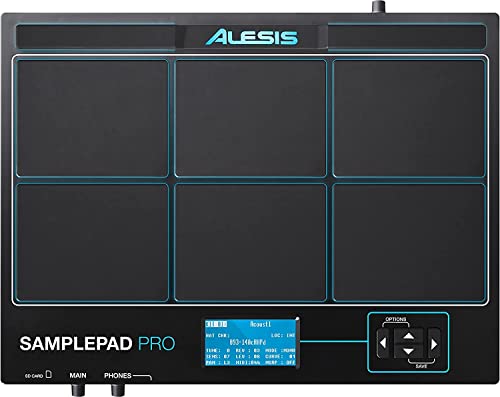
- Eight velocity-sensitive pads with LED illumination
- 200-plus built-in percussion and drum sounds
- External pad, pedal, MIDI, USB, and SD-card support
Best For: Live electronic drumming and percussion performance
Compact MIDI Triggering
Akai MPX8 Sample Pad Controller

- Eight velocity- and pressure-sensitive backlit pads
- SD-card WAV playback with kit editing
- USB MIDI and standard MIDI connectivity
Best For: Compact sample triggering and MIDI control
Multipad Production Hub

- Nine velocity-sensitive RGB pads and 4.3-inch display
- Built-in looper, sample loading, and 32GB storage
- Effects, A-LINK controls, and USB audio/MIDI
Best For: Live looping and full-featured electronic performance
Portable MPC-Style Choice

- 16 velocity-sensitive MPC pads
- 48 assignable pads across three banks
- Includes MPC Beats and Ableton Live Lite
Best For: Portable computer-based beat production
Standalone Drum Sampling Hub

- Nine dual-zone velocity-sensitive pads
- 592-plus sounds and 30 drum kits
- Imports samples and supports external triggers
Best For: Electronic drumming and live percussion setups
Pocket-Sized Pick

- 16 RGB velocity-sensitive pads with aftertouch
- Bluetooth, USB-C, Note Repeat, and four banks
- 16-hour battery in a 0.28-pound portable design
Best For: Traveling producers and compact mobile setups
Feature-Rich Production Pick

- 16 RGB pads with aftertouch and three velocity curves
- Eight assignable knobs and DAW transport controls
- Includes Cubase LE, WaveLab LE, and Melodics
Best For: Producers wanting pads plus expanded DAW control
Expressive Mobile Pick

- 16 RGB pads with four velocity curves and aftertouch
- Advanced Note Repeat with swing and tempo sync
- Wireless or USB-C operation across major platforms
Best For: Mobile finger drumming and flexible MIDI setups
Portable MPC Creativity – Standalone Sampling Made Simple
The Akai Professional MPC Sample is a practical choice for musicians seeking samplers with velocity sensitive pads and a self-contained workflow. Its 16 responsive pads, built-in microphone, speaker, rechargeable battery, and sample-chopping tools make it suitable for creating beats away from a computer.
Best For: Beginners, beatmakers, finger drummers, and DAWless producers who want portable MPC-style sampling.
Pros:
- Standalone, battery-powered design with built-in speaker and microphone
- 16 responsive pads, real-time timestretching, repitching, and sample chopping
- Built-in effects, factory kits, microSD storage, and USB-C audio/MIDI connectivity
Cons:
- MIDI DIN connectivity requires an adapter, which is not included
- Its compact display may feel limiting for users who prefer larger editing screens
Choose the MPC Sample if portability and quick idea capture matter more than a full-size production interface. It combines sampling, sequencing, effects, and finger-drumming features in a compact format.
Live Drum Expansion – Alesis SamplePad Pro
The Alesis SamplePad Pro is a performance-focused option among samplers with velocity sensitive pads. It provides eight velocity-sensitive rubber pads, built-in drum sounds, external trigger inputs, and SD-card sample storage for live playing and electronic drum setups.
Best For: Live performers and drummers who need playable pads, pedal inputs, and expandable percussion sounds.
Pros:
- Eight isolated, velocity-sensitive pads with blue LED illumination
- More than 200 built-in drum, cymbal, and percussion sounds
- Supports additional pads, kick and hi-hat pedals, MIDI, USB, and SD-card samples
Cons:
- SD card is not included
- It has less emphasis on sequencing and deep sample editing than a full sampler workstation
The SamplePad Pro is a sensible pick when expressive triggering and stage connectivity are priorities. Its pedal and expansion inputs make it more adaptable to drum-oriented rigs than a basic pad controller.
Compact MIDI Triggering – Akai MPX8 Sample Pad Controller
The Akai Professional MPX8 is a lightweight, straightforward choice for shoppers comparing samplers with velocity sensitive pads. Its eight backlit velocity- and pressure-sensitive pads can trigger samples from an SD card or control computer software and external MIDI equipment.
Best For: Producers who want an inexpensive, compact sample trigger for laptops, MIDI hardware, and small live setups.
Pros:
- Eight velocity- and pressure-sensitive pads with polyphonic aftertouch over MIDI
- Loads 16-bit mono WAV samples from SD or SDHC cards up to 32GB
- Includes USB MIDI, standard MIDI input/output, balanced outputs, and a headphone output
Cons:
- Internal sample playback is limited to supported 16-bit mono WAV files
- Sample assignments have a 30MB maximum
- Editing is handled through the computer-based sample kit editor rather than extensive onboard controls
The MPX8 works best as a compact trigger and MIDI controller rather than a complete production workstation. Its small footprint and broad MIDI connectivity make it useful where space and simple sample access matter.
Multipad Production Hub – Alesis Strike Multipad
The Alesis Strike Multipad is a feature-rich option for performers evaluating samplers with velocity sensitive pads. Its nine RGB-lit pads support one-shots, loops, and melodic parts, while the large display, built-in looper, effects, and 32GB of storage support more complete live production.
Best For: Live electronic drummers, loop performers, and producers who want sampling, effects, and performance control in one unit.
Pros:
- Nine velocity-sensitive RGB pads with a 4.3-inch display
- Built-in looper, USB sample loading, and more than 6GB of included content
- Five effects processors, A-LINK knobs, 32GB storage, and USB audio/MIDI interface
Cons:
- Its larger 14.2-by-13.8-inch footprint is less portable than compact pad samplers
- It may offer more production capability than users seeking only basic sample triggering need
The Strike Multipad stands out for performers who need a broad set of sounds and hands-on control. It is a stronger fit for complex live rigs and loop-based sets than for minimal sample playback.
Portable MPC-Style Choice – Akai MPD218
The Akai Professional MPD218 is a compact option for producers seeking samplers with velocity sensitive pads. Its 16 thick MPC-style pads support expressive drum, sample, and effect triggering, while three pad banks expand the controller to 48 assignable pads.
Best For: Beat makers who want a portable USB pad controller with hands-on MPC-style performance features.
Pros:
- 16 velocity-sensitive MPC pads for expressive triggering
- Three banks provide 48 assignable pads
- Includes MPC Beats, Ableton Live Lite, and Drum Synth 500
- USB powered and compact for mobile production
Cons:
- Requires a computer or compatible device for broader software-based sampling
- Only one USB port is listed
The MPD218 focuses on straightforward finger drumming and sample control rather than built-in sounds. Its portable design, assignable knobs, Note Repeat, and included software make it a practical entry point for computer-based beat production.
Standalone Drum Sampling Hub – LEKATO PD705
The LEKATO PD705 is a full percussion-focused choice among samplers with velocity sensitive pads. It combines nine dual-zone pads with 592-plus sounds, onboard drum kits, sample importing, and extensive MIDI, trigger, audio, and USB connectivity.
Best For: Drummers and performers who want an electronic percussion pad with built-in sounds, external triggers, and sample-import capability.
Pros:
- Nine dual-zone velocity-sensitive pads
- Includes more than 592 preset sounds and 30 drum kits
- Supports custom kits and sample imports through WaveManager
- Offers MIDI I/O, USB MIDI, trigger inputs, looper, and audio connections
Cons:
- Heavier and less compact than a basic MIDI pad controller
- Its percussion-oriented layout may be less suited to general melodic sample triggering
With its built-in library and standalone-style controls, the PD705 is more than a computer MIDI surface. It is a versatile performance pad for electronic drumming, backing-track control, external triggers, and custom sample setups.
Wireless RGB Performance Pad – EMP16 MIDI Pad Controller
The EMP16 is a flexible wireless option for producers comparing samplers with velocity sensitive pads. Its 16 RGB pads offer selectable velocity curves, aftertouch, and four banks for up to 64 assignable pads, while Bluetooth 5.0 supports cable-free connections to compatible devices.
Best For: Mobile beat makers and performers who want wireless connectivity, visual feedback, and extensive pad customization.
Pros:
- 16 RGB velocity-sensitive pads with three velocity curves
- Four banks expand control to 64 assignable pads
- Supports aftertouch, 16 Level, Full/Half Level, and Note Repeat
- Offers Bluetooth, USB MIDI, and standard MIDI input/output
Cons:
- AA batteries are not included
- Bluetooth compatibility is limited to supported devices and software setups
- It is a controller rather than a unit with a stated built-in sample library
The EMP16 stands out for flexible control rather than onboard sound generation. Battery operation, Bluetooth, RGB feedback, an OLED display, and multiple assignable controls make it well suited to portable production and live beat performance.
Pocket-Sized Pick – M-VAVE Pocket PAD
The M-VAVE Pocket PAD is a strong choice among samplers with velocity sensitive pads when portability matters. Its 16 RGB pads support velocity and aftertouch, while Bluetooth, USB-C, Note Repeat, and four pad banks make it practical for mobile beat making and DAW work.
Best For: Producers who want an especially compact wireless pad controller for travel, mobile setups, and quick DAW beat creation.
Pros:
- 16 velocity-sensitive RGB pads with aftertouch and four banks
- Bluetooth and USB-C connectivity with stated low-latency performance
- Rechargeable 16-hour battery in a 0.28-pound pocket-sized design
- Works with Ableton Live, FL Studio, Logic Pro, and GarageBand
Cons:
- Does not include built-in sounds; it controls compatible software or devices
- Its compact size may offer less hands-on space than larger pad controllers
The Pocket PAD stands out for musicians who prioritize minimal size and wireless flexibility. Note Repeat, Full Level, and automatic DAW mapping add useful workflow shortcuts without sacrificing expressive pad control.
Feature-Rich Production Pick – Donner STARRYPAD PRO
The Donner STARRYPAD PRO combines 16 velocity-sensitive RGB pads with polyphonic aftertouch, assignable knobs, and DAW controls. For shoppers comparing samplers with velocity sensitive pads, it offers a broader hands-on production setup than a pad-only controller.
Best For: Beat makers and producers who want expressive pads, physical mixing controls, transport buttons, and included learning or production software.
Pros:
- 16 RGB velocity-sensitive pads with polyphonic aftertouch and three velocity curves
- Eight assignable rotary knobs plus dedicated DAW transport controls
- Wireless MIDI and USB-C connectivity for computers and mobile devices
- Includes Cubase LE, WaveLab LE, and Melodics software licenses
Cons:
- Requires DAW software to generate sound and does not produce audio by itself
- Battery life is listed at up to 10 hours, shorter than some portable alternatives
The STARRYPAD PRO is the most control-oriented option here. Its knobs, software libraries, and bundled programs make it suitable for users who want to grow beyond basic finger drumming, while its compact battery-powered design remains practical for portable production.
Expressive Mobile Pick – JP-MINI Wireless MIDI Pad
The JP-MINI is a compact option among samplers with velocity sensitive pads, adding four velocity curves, polyphonic aftertouch, and detailed Note Repeat controls. It sends MIDI to a computer or mobile app rather than producing sounds internally, so it is best paired with virtual instruments or samples.
Best For: Mobile beat makers who need flexible wireless MIDI, expressive finger drumming, and advanced repeat functions in a very small controller.
Pros:
- 16 RGB pads with four velocity curves and polyphonic aftertouch
- Note Repeat supports multiple divisions, swing, latch or hold, and tempo sync
- Works wirelessly or over USB-C with Windows, macOS, iOS, Android, and HarmonyOS
- Maps pads to MIDI notes, CC, Program Change, or SysEx messages
Cons:
- Has no built-in sounds and requires compatible software or a virtual instrument
- Lightning devices require a separately sold Lightning-to-USB adapter
With its small 150-gram body, rechargeable battery, and unusually detailed repeat controls, the JP-MINI is tailored to mobile workflows. Choose it when expressive pad response and rhythmic manipulation are more important than onboard sound generation.
How We Picked the Best Samplers with Velocity Sensitive Pads
We focused on products that support expressive playing through velocity-sensitive pads, then compared how useful they are for real-world sampling and beat production. The selection includes standalone sample pads, multipads, USB MIDI controllers, and wireless options rather than treating every device as the same type of tool.
Our evaluation emphasizes pad layout and response, sample triggering, MIDI and USB connectivity, portability, onboard controls, expandability, and ease of integration with computers or other music equipment. Devices with more advanced performance features are not automatically better; the best choice depends on whether you need onboard sounds, software control, or a portable trigger surface.
Quick Comparison
| Best For | Look For |
|---|---|
| Standalone performance | Onboard sounds, storage, outputs, and footswitch or trigger support |
| Software production | USB MIDI, assignable pads, DAW compatibility, and reliable mapping |
| Finger drumming | Responsive velocity curves, comfortable spacing, and low-latency triggering |
| Live electronic drums | Multiple trigger zones, MIDI connectivity, rugged construction, and fast preset access |
| Portable beatmaking | Compact dimensions, USB power, battery or wireless support, and simple setup |
Key Buying Factors for Samplers with Velocity-Sensitive Pads
Pad Response and Playing Feel
Velocity sensitivity should translate softer and harder strikes into useful volume or tonal changes. Check whether the pads are designed for finger drumming, drumstick use, or both. Pad size, spacing, surface texture, and adjustable velocity curves can matter as much as the raw pad count.
Standalone Sampler or MIDI Controller
A standalone sampler can load or record sounds and produce audio without a computer. A MIDI controller generally depends on software, a hardware sound module, or another compatible device. Controllers are often lighter and less expensive, while standalone units can provide a faster live workflow and fewer cables.
Connectivity and Compatibility
USB MIDI is useful for computer-based production, while standard MIDI ports make it easier to connect hardware instruments. Also check for audio outputs, headphone monitoring, USB-C or USB-A requirements, Bluetooth support, and compatibility with your preferred DAW or mobile device.
Controls, Memory, and Workflow
Assignable knobs, banks, displays, onboard effects, preset management, and sample storage can speed up performance. If you intend to switch sounds live, prioritize clear navigation and quick access over a large feature list that is difficult to operate onstage.
Who Should Buy Which Samplers with Velocity Sensitive Pads?
Choose a standalone MPC-style sampler or multipad if you want to perform and arrange without constantly using a computer. These are the strongest choices for musicians who need onboard sounds, broader triggering options, or a self-contained live setup.
Choose a compact USB MIDI pad controller if you already produce in a DAW and mainly need expressive pads for drums, clips, or sample triggering. Models with 16 pads and assignable controls suit beatmakers who want more layout flexibility, while smaller units are easier to carry.
Choose a wireless or Bluetooth-capable controller if portability and reduced cable clutter are priorities. Confirm device compatibility and power requirements before buying, since wireless convenience can vary across computers, tablets, and music apps.
For electronic drummers and hybrid performers, prioritize durable construction, multiple trigger inputs, MIDI connectivity, and dependable velocity response. For beginners, a simpler controller with clearly labeled controls may be easier to learn than a feature-heavy sampler.