Choosing the right wireless in-ear monitor system for bands can make rehearsal tighter, reduce stage noise, and help every musician hear a cleaner mix.
This roundup focuses on practical options for different budgets, band sizes, and performance needs, from simple plug-and-play systems to more flexible pro setups.
Best 10 Wireless in Ear Monitor System for Bands Picks for 2026
Budget-Friendly 2.4GHz Starter
LEKATO MS-1 Wireless IEM for Small Bands
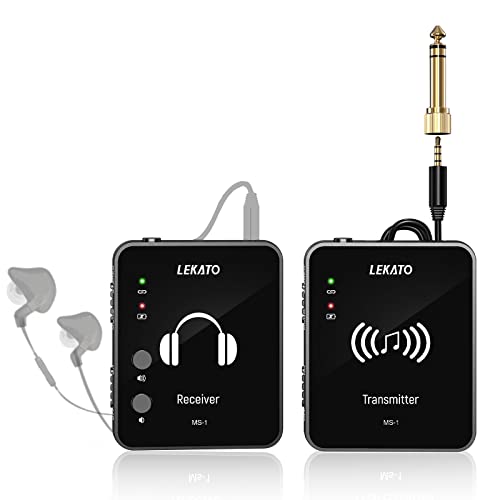
- Auto-pairing keeps setup quick and simple.
- Supports one transmitter to many receivers.
- Stereo 2.4GHz monitoring with low latency.
Best For: Small bands, churches, and rehearsal rooms needing easy stereo monitoring
Rack-Ready Four-Channel Choice
Phenyx Pro PTM-33-4B for Four Performers

- Four bodypacks suit a four-member band.
- Rack-friendly transmitter with loop outputs.
- UHF mono system with 4x25 frequencies.
Best For: Four-performer bands and worship teams needing separate mono mixes
Professional UHF Starter Set
Sennheiser XSW-IEM A Band Black
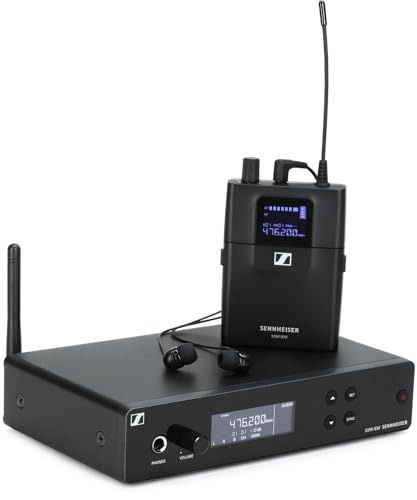
- Reliable professional UHF wireless connection.
- Focus mode, EQ, limiter, and manual control.
- Infrared sync for linking multiple receivers.
Best For: Bands wanting a pro-brand UHF starter system with flexible mix control
Long-Battery Practice Option

- Under 5 ms latency for real-time feedback.
- Over 8 hours of battery life per charge.
- Frequency hopping helps resist interference.
Best For: Guitar practice and small setups needing long battery life
Stereo UHF Rack System
Stereo UHF IEM for Stage and Studio

- True stereo or mono monitoring options.
- 900MHz band with 89 tunable frequencies.
- Up to 160 ft range and rack-mountable build.
Best For: Bands and stage users needing a flexible stereo UHF monitor system.
5.8GHz Scan-Mode IEM
5.8GHz Wireless IEM with Channel Scan

- 5.8 GHz true diversity wireless connection.
- Channel Scan mode helps pick a clean channel.
- 24-bit/48kHz audio with USB-C charging.
Best For: Smaller bands and rehearsal setups that want simple channel scanning and clear monitoring.
Compact Low-Latency IEM

- Under 4.5 ms mono latency for responsive monitoring.
- One transmitter supports up to 4 receivers.
- 6–8 hour battery life with LED indicators.
Best For: Small and medium bands needing a lightweight, low-latency monitor system.
Large Group Rack System
Wireless In Ear Monitor System for Bands

- 4 bodypacks and 4 earphones included
- UHF mono system with 2x40 preset frequencies
- Claimed 330-foot range in open spaces
Best For: Bands and worship teams needing a shared four-receiver monitor setup
Pro Low-Latency Pick
Wireless In Ear Monitor System for Bands

- 1ms latency with 48kHz/24-bit audio
- 7-channel UHF system with XLR and AUX/LINE
- USB-C rechargeable transmitter and receiver
Best For: Live bands and performers who want tighter timing and pro input options
Portable Rehearsal Choice
Wireless In Ear Monitor System for Bands

- 2.4GHz system with stereo and mono modes
- Up to 30 meters range in open spaces
- Lightweight clip-on design with rechargeable battery
Best For: Practice rooms, worship teams, and small-stage band monitoring
Budget-Friendly 2.4GHz Starter – LEKATO MS-1 Wireless IEM for Small Bands
If you want a wireless in ear monitor system for bands that is simple to set up and affordable for rehearsals or small gigs, the LEKATO MS-1 is built around convenience. It supports stereo transmission, auto-pairing, and one-to-many use, making it a practical pick for groups that need quick monitoring without a complicated setup.
Best For: Small and medium bands, church teams, and rehearsal spaces that want an easy wireless IEM with stereo support.
Pros:
- Supports up to 6 sets working at the same time with one transmitter to many receivers.
- Auto-pairing makes setup fast and removes channel selection guesswork.
- True stereo transmission with a stereo/mono input switch.
- 2.4GHz system with low latency, 24-bit/48kbps audio, and a 100 ft open-area range.
Cons:
- Battery life is listed at a little over 5 hours, which may be limited for longer sessions.
- Best results depend on using a stereo audio source and stereo cable for stereo mode.
Overall, the MS-1 is a straightforward wireless in ear monitor system for bands that want stereo sound and easy pairing without overcomplicating the workflow. Its biggest strengths are its group-friendly design and simple operation for everyday use.
Rack-Ready Four-Channel Choice – Phenyx Pro PTM-33-4B for Four Performers
For bands that need a more structured wireless in ear monitor system for bands, the Phenyx Pro PTM-33-4B is designed around four independent bodypacks and a rack-friendly transmitter. It uses UHF mono monitoring, offers four groups of left/right inputs and loop outputs, and is aimed at live stage, worship, and rehearsal setups where multiple performers need their own mix.
Best For: Four-person bands, worship teams, and live stage crews that want rack-mountable UHF monitoring with separate mixes.
Pros:
- Includes 4 bodypacks, making it a strong fit for a four-member band.
- Four groups of left/right inputs and loop outputs simplify mixer integration.
- UHF mono monitoring with 4×25 frequencies helps reduce interference.
- Range is listed at roughly 140-164 ft line of sight, with IR sync for quick receiver linking.
Cons:
- Mono-only monitoring may not suit users specifically looking for stereo IEM sound.
- Longer range can be affected by thick walls, glass, and metal blocks.
The PTM-33-4B stands out when you want a more professional, rack-oriented monitoring solution for a small band. It focuses on clarity, flexible routing, and easy multi-performer use rather than compact simplicity.
Professional UHF Starter Set – Sennheiser XSW-IEM A Band Black
If you want a wireless in ear monitor system for bands from a well-known pro audio brand, the Sennheiser XSW-IEM is positioned as a complete starter set for in-ear monitoring. It offers reliable UHF wireless connection, flexible audio modes, and tools like focus mode, EQ, limiter, and infrared syncing for receivers.
Best For: Bands and performers who want a professional UHF starter set with flexible control and easy receiver syncing.
Pros:
- Complete starter set for in-ear monitoring from Sennheiser.
- Professional UHF wireless range with reliable, easy-to-manage connection.
- Flexible audio modes, including easy presets and manual control.
- Focus mode, EQ, limiter, and infrared syncing add useful monitoring control.
Cons:
- The notes do not emphasize multi-receiver package quantity beyond the starter set.
- Battery life is listed at 6 hours, which may require planning for longer sessions.
The XSW-IEM is a strong fit for users who want a polished, professional monitoring setup rather than an entry-level experiment. Its mix of reliable UHF performance and flexible adjustment options makes it easy to tailor personal mixes on stage.
Long-Battery Practice Option – JOYO JW-07 2.4G Wireless IEM
The JOYO JW-07 is a practical wireless in ear monitor system for bands when the goal is practice, guitar work, or personal monitoring with simple wireless operation. It uses 2.4GHz transmission, auto pairing, and frequency hopping, while keeping latency low enough for real-time feedback during rehearsal or practice sessions.
Best For: Guitarists, DJs, and small practice setups that want a low-latency wireless IEM with long battery life.
Pros:
- Low latency under 5 ms for real-time monitoring feedback.
- Battery life is listed at over 8 hours per charge.
- Frequency hopping helps reduce interference from other wireless devices.
- 12 channel banks give users flexibility across practice setups.
Cons:
- One transmitter does not support multiple receivers.
- Open-space range is listed at 40-60 ft, which is shorter than some stage-focused systems.
The JW-07 is best viewed as a practice-friendly IEM rather than a multi-performer stage hub. For players who want stable signal, long battery life, and fast response time, it offers a focused and affordable monitoring option.
Stereo UHF Rack System – Stereo UHF IEM for Stage and Studio
If you want a wireless in ear monitor system for bands that keeps the mix clear and flexible, the Phenyx Pro PTM-10 is built around true stereo monitoring, selectable mono/stereo operation, and 900MHz wireless performance. It aims for practical stage use with tunable frequencies, moderate range, and controls that help you shape what you hear without adding clutter.
Best For: Bands, worship teams, and presenters who want a rack-mountable UHF IEM setup with stereo monitoring and solid control features.
Pros:
- True stereo monitoring with mono mode available for more focused feedback.
- 900MHz band with 89 tunable frequencies and support for up to 5 systems simultaneously.
- Up to 160 ft / 50 m operating range for stage, studio, speech, and lecture use.
- EQ, balance, limiter, PAD, and lock functions add useful monitoring control.
Cons:
- Wired setup accessories and rack-mount hardware may be more than casual users need.
- Range is solid, but not the longest in this group.
- Designed for professional monitoring, so it may feel less plug-and-play than simpler systems.
Overall, the PTM-10 is a capable pick if your priority is stable UHF monitoring with stereo detail and onboard adjustment tools. It fits best in organized stage or rehearsal setups where durability and flexibility matter.
5.8GHz Scan-Mode IEM – 5.8GHz Wireless IEM with Channel Scan
The Xvive U45 is a wireless in ear monitor system for bands that focuses on clean RF performance, high-resolution audio, and simple channel setup. Its 5.8GHz true diversity design, channel scan mode, and compact charging approach make it a practical option for rehearsals, home use, and live performance when you want dependable monitoring without much setup fuss.
Best For: Bands, home studios, and performers who want a compact 5.8GHz IEM system with easy channel scanning and clear audio.
Pros:
- 5.8 GHz true diversity wireless design helps avoid interference from other devices.
- Channel Scan mode simplifies finding a workable wireless channel.
- 20Hz–20kHz response with 24-bit/48kHz audio and a 110 dB signal-to-noise ratio.
- USB-C charging supports up to 5 hours of battery life, with quick top-up capability.
Cons:
- 100 ft / 30.5 m range is shorter than some stage-focused alternatives.
- Battery life is useful but limited for long sets without charging access.
- Best suited to straightforward monitoring rather than systems with lots of onboard tone-shaping controls.
For players who value channel management and clean audio over extra processing features, the U45 is an easy system to evaluate. It looks especially appealing for smaller-band setups where quick setup and reliable wireless behavior matter most.
Compact Low-Latency IEM – Low-Latency 2.4G Stereo IEM
If you need a wireless in ear monitor system for bands that is compact, easy to pair, and tuned for quick monitoring, the LEKATO MS-02 is built around low latency and one-to-many use. Its 2.4G stereo design, lightweight beltpack-style receiver, and battery/volume indicators make it a practical choice for rehearsals, church teams, and small stage setups.
Best For: Small to medium bands, church teams, and singers who want a lightweight wireless IEM with low latency and multi-receiver support.
Pros:
- Upgraded mono mode latency under 4.5 ms for responsive monitoring.
- One transmitter can send to up to 4 receivers for shared band use.
- 6–8 hours of battery life with LED status indicators for volume and power.
- 100 ft open-area range and mono/stereo switching for flexible setups.
Cons:
- Earbuds are not included and must be purchased separately.
- 2.4GHz systems can be more crowded than some UHF alternatives in busy environments.
- More compact and lightweight, so it may be less feature-rich than larger rack systems.
The MS-02 makes sense when portability and straightforward operation matter more than a full rack-style feature set. It is a good fit for groups that need a practical monitor link for rehearsals, church, or everyday performance use.
Large Group Rack System – Wireless In Ear Monitor System for Bands
If you need a wireless in ear monitor system for bands that can support multiple performers at once, this 2-channel UHF setup is built for larger stage and rehearsal use. It includes four bodypacks, preset frequency options, and a claimed 330-foot open-space range, making it a practical fit for groups that want shared monitoring from one transmitter.
Best For: Bands, church teams, and stage setups needing four bodypack receivers from one rack-style transmitter.
Pros:
- Includes 4 bodypack receivers and 4 in-ear earphones for group use.
- UHF PLL design with 2×40 preset frequencies helps reduce interference.
- Mono monitoring with zero-latency signal and built-in limiter circuitry.
- Metal transmitter, LCD screen, and IR sync support easier setup and monitoring.
Cons:
- Mono only, so it won’t suit users who specifically want stereo monitoring.
- Best performance depends on open line-of-sight and avoids thick walls or metal blocks.
- Bulkier rack-style design may be more than small solo setups need.
Overall, this is the most scalable option in the group if your priority is covering multiple band members from one system. It emphasizes stability, simple channel switching, and practical stage usability over compact portability.
Pro Low-Latency Pick – Wireless In Ear Monitor System for Bands
For players who want a wireless in ear monitor system for bands with stronger pro-audio features, this UHF unit focuses on low latency, clean signal quality, and flexible input options. Its 1ms delay, 48kHz/24-bit audio, and XLR plus AUX/LINE compatibility make it a solid stage-monitoring choice for live band workflows.
Best For: Performing musicians and live bands that want low-latency monitoring with XLR input flexibility.
Pros:
- 1ms ultra-low latency helps keep stage monitoring tightly synced.
- 48kHz/24-bit audio and over 106dB dynamic range support clear detail.
- 7 selectable UHF channels help reduce interference in busy environments.
- Rechargeable transmitter and receiver charge via USB-C for convenient reuse.
Cons:
- Listed range is 164 ft, which is shorter than some larger-stage systems.
- Battery life is up to 5 hours, so long shows may need charging planning.
- Single receiver package may not suit larger multi-musician setups without extras.
This model stands out when latency and input flexibility matter more than maximum range. For bands that rehearse, play clubs, or need quick setup with a mixer, it offers a useful balance of sound quality and stage practicality.
Portable Rehearsal Choice – Wireless In Ear Monitor System for Bands
This wireless in ear monitor system for bands is aimed at practice rooms, small stages, and everyday rehearsal use where simple setup matters more than advanced rack features. It uses 2.4GHz wireless transmission, supports stereo and mono modes, and offers up to 30 meters of range in open environments for flexible monitoring.
Best For: Rehearsals, worship, livestreaming, and small-stage musicians who want a lightweight monitor solution.
Pros:
- Supports both stereo and mono monitoring modes.
- Compact clip-on design keeps the receiver easy to wear during practice.
- Rechargeable battery offers up to 5 hours of continuous operation.
- Works with mixers, audio interfaces, active speakers, tablets, and computers.
Cons:
- 2.4GHz wireless is best for shorter-range open setups, not larger stages.
- Range tops out at 30 meters in open environments.
- Not as feature-rich for pro rack-mounted band rigs as UHF systems.
For musicians who mainly need a practical monitor for practice and smaller gigs, this model keeps the feature set straightforward. Its portability and broad device compatibility make it easy to use across rehearsal, recording, and live-stream setups.
How We Picked the Best Wireless in Ear Monitor System for Bands
We focused on systems that fit real band use: reliable wireless performance, usable range, low-latency monitoring, and straightforward setup. We also looked at whether a system supports stereo or mono monitoring, how many bodypacks it includes, and whether it is better suited to rehearsal, small gigs, or regular touring.
For a Wireless in Ear Monitor System for Bands, the best choice is usually the one that matches your stage size, monitoring style, and number of players—not just the one with the most features.
Quick Comparison
In general, 2.4GHz systems are often easier to set up and better for smaller stages or portable rigs, while UHF systems tend to offer more channel flexibility and stronger control in busier live environments. Stereo systems give more mix detail, while mono systems can be simpler and more stable for players who only need a clear feed.
One-to-many systems are useful when several band members need the same basic mix, while multi-bodypack systems make more sense when each musician needs an individual monitor feed.
Key Buying Factors for Wireless In-Ear Monitor System for Bands
Latency and Audio Quality
Low latency matters because even a small delay can make timing feel off. Look for systems that advertise fast response and clean audio transmission, especially if your band plays rhythmically dense material.
Range and Reliability
Check the usable range, not just the maximum marketing number. Also consider how the system handles interference, because crowded venues and rehearsal spaces can affect stability.
Mono Vs. Stereo
Mono is often enough for rehearsals and many live shows. Stereo can improve clarity and separation, especially for singers, drummers, and players who want more detailed placement in the mix.
Number of Bodypacks and Channels
Choose a system that matches your band size. A solo performer or duo may not need much, but a full band benefits from more bodypacks, more channel options, and easier mix management.
Connectivity and Setup
Look at the inputs and mounting options. XLR and AUX/line compatibility, rack-mount support, automatic pairing, and rechargeable packs can all make a system easier to integrate into a working rig.
Who Should Buy Which Wireless in Ear Monitor System for Bands?
If you want an easy, affordable setup for practice or small shows, a 2.4GHz stereo system is usually the most convenient. If you play larger venues or need more control, a UHF system with more channel choices is often the better long-term investment.
For bands that share one mix, a simple one-to-many package is efficient and cost-effective. For groups where each musician needs their own monitor feed, choose a multi-bodypack wireless in-ear monitor system with enough channels to keep everyone comfortable on stage.