Choosing the right wireless studio headphone system can make tracking, rehearsal, and live monitoring far easier. The best options keep latency low, audio clear, and setup simple.
Below, we’ve narrowed the field to 10 standout picks for different use cases, from studio-focused headphone systems to stage-ready wireless IEM solutions.
Best 10 Wireless Studio Headphone System Picks for 2026
Top Versatile Pick
OneOdio Studio Max 1 for DJ, studio, and PC use

- 20ms low-latency transmitter for monitoring and performance
- Bluetooth 5.3 plus 3.5mm/6.35mm wired compatibility
- Up to 120-hour Bluetooth battery life with Hi-Res Audio support
Best For: DJs, home producers, and multi-device users
Best for Reliable Monitoring
Xvive U45 5.8 GHz wireless monitor system

- 5.8 GHz true diversity wireless with stable RF connection
- Channel Scan Mode helps select the best channel fast
- 24-bit/48kHz audio and USB-C quick charging
Best For: Musicians and engineers needing dependable in-ear monitoring
Best for Guitar Practice
Positive Grid Spark NEO wireless headphone amp

- Built for electric, acoustic, and bass guitar practice
- Wireless transmitter with ultra-low latency and Bluetooth streaming
- AI-powered app tools for tones, chords, and learning
Best For: Guitarists who want a wireless headphone amp for practice and jamming
Best Budget Monitoring Pick
UHF wireless monitor system with pro earphone

- UHF design with 16 adjustable channels for interference control
- Includes pro earphone and multiple ear tips for fit
- Rechargeable transmitter and receiver with about 5-hour runtime
Best For: Singers, DJs, and bands needing a simple rechargeable IEM system
Flagship Wireless Studio Headphone System
OneOdio Studio Max 2 for DJing and Monitoring

- 9ms low-latency wireless mode
- LDAC, 2.4G, Bluetooth 6.0, and wired options
- Up to 120 hours of battery life
Best For: DJs and studio users who want fast wireless monitoring with wired backup
Multi-Receiver Wireless IEM Pick
LEKATO MS-1 for Rehearsals and Small Gigs
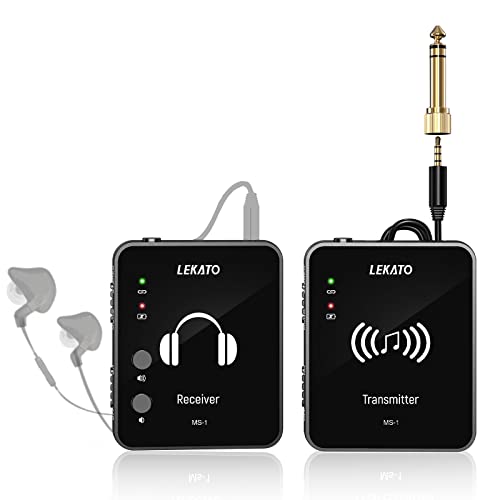
- One transmitter can support up to 6 receiver sets
- Auto-pairing simplifies setup
- 2.4GHz stereo monitoring with 100-foot range
Best For: Small bands and venues that want multiple in-ear receivers from one transmitter
Practice-Focused Wireless IEM System
JOYO JW-07 for Guitar and Live Monitoring

- Sub-5ms latency for real-time monitoring
- Automatic pairing for quick setup
- Over 8 hours of battery life
Best For: Guitarists and solo performers who need fast in-ear monitoring
5.8GHz Stability Pick
5.8GHz Wireless In-Ear Monitor System

- 5.8GHz wireless aims for cleaner, more stable signal than 2.4GHz.
- 48kHz/24-bit stereo audio and sub-5ms latency support tight monitoring.
- One-to-many auto pairing suits small bands and church teams.
Best For: Small bands, church teams, and rehearsal setups that need stable wireless monitoring.
Long-Run Monitoring Choice
AOKEO AK-680 Wireless In-Ear Monitor System
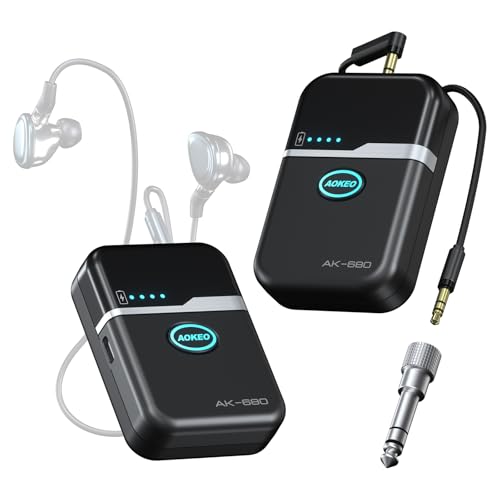
- 5.8G transmission targets cleaner monitoring in crowded wireless spaces.
- Up to 12 hours of battery life suits long sessions and gigs.
- Receiver volume controls and included adapters simplify setup.
Best For: Players who want easy setup, long battery life, and flexible connectivity.
Value Multi-Receiver Pick
LEKATO MS-02 Wireless In-Ear Monitor System

- One transmitter can send to up to 4 receivers for group monitoring.
- Under 4.5ms mono latency and 24bit/48KHz audio aim for clear response.
- 6-8 hour battery life and receiver volume controls add convenience.
Best For: Small bands, church teams, and practice rooms needing easy multi-receiver monitoring.
Top Versatile Pick – OneOdio Studio Max 1 for DJ, studio, and PC use
If you want a wireless studio headphone system that can move between DJ mixing, music production, gaming, and everyday listening, the OneOdio Studio Max 1 is built for that kind of flexibility. It combines a low-latency dongle mode, Bluetooth 5.3, and wired options so you can match the connection to the task.
Best For: DJs, home producers, and multi-device users who want one headset for wireless and wired studio work.
Pros:
- 20ms transmitter latency is well suited to monitoring, mixing, and performance-style use.
- Supports Bluetooth 5.3 plus 3.5mm and 6.35mm wired connections for broad compatibility.
- Up to 120 hours in Bluetooth mode and 50 hours with the dongle help reduce charging downtime.
- 50mm drivers, Hi-Res Audio, and LDAC support aim for detailed sound quality.
Cons:
- Not water resistant, so it is not meant for rough outdoor use.
- Bulky studio-style over-ear design may be less compact than portable headphones.
Overall, this is a strong all-in-one choice if you want a wireless studio headphone system that still keeps wired backup options on hand. The included case, rotating cups, and dual-mic ENC add practical value for work and travel.
Best for Reliable Monitoring – Xvive U45 5.8 GHz wireless monitor system
The Xvive U45 is a compact wireless studio headphone system for in-ear monitoring when you need a clean signal and a simple setup. Its 5.8 GHz true diversity design is aimed at stable monitoring for rehearsals, studio work, and live performance without fighting as much wireless congestion.
Best For: Musicians and engineers who need a dependable in-ear monitor system for rehearsal, studio, or small-stage use.
Pros:
- 5.8 GHz true diversity transmission is designed for a solid RF connection.
- Channel Scan Mode helps find the best wireless channel quickly.
- 24-bit/48kHz audio and 20Hz-20kHz response support detailed monitoring.
- USB-C charging and quick-charge support make it easier to stay powered.
Cons:
- Battery life is limited to up to 5 hours per charge.
- In-ear format is not for users who want over-ear studio headphones.
If your priority is dependable monitoring rather than a full-size headphone experience, this system makes sense. It focuses on clean, practical wireless performance with enough detail for professional audio monitoring.
Best for Guitar Practice – Positive Grid Spark NEO wireless headphone amp
The Positive Grid Spark NEO is a wireless studio headphone system built specifically for guitar practice, jamming, and tone creation. With custom drivers, a wireless transmitter, and Bluetooth streaming, it is designed to let guitarists play quietly while still getting an immersive, noise-isolating experience.
Best For: Guitar players who want a wireless headphone amp for practice, learning songs, and streaming music.
Pros:
- Includes a wireless transmitter with ultra-low latency for guitar use.
- Custom drivers and ultra-soft ear cups focus on noise-isolating comfort.
- Works with electric, acoustic, and bass guitars, plus Bluetooth music streaming.
- AI tools in the app help with tones, learning chords, and gear discovery.
Cons:
- Battery life is up to 6 hours, which is shorter than some general-purpose headphones.
- It is designed around guitar use, so it is less universal than a standard studio headset.
For players who want a dedicated wireless practice setup, Spark NEO is a focused and modern option. It is less of a general studio headphone and more of a purpose-built guitar rig you can wear.
Best Budget Monitoring Pick – UHF wireless monitor system with pro earphone
This wireless studio headphone system is aimed at performers and studio users who want a straightforward UHF in-ear monitor setup. It uses a metal-bodied receiver and transmitter, includes passive noise isolation, and offers 16 adjustable channels to help reduce interference in busy environments.
Best For: Singers, DJs, and bands that need a simple rechargeable IEM system with interference control.
Pros:
- UHF wireless design is meant to resist interference from other devices.
- 16 adjustable channels help you avoid conflicts at shared venues.
- Comes with a pro earphone and multiple ear tips for a more secure fit.
- Rechargeable battery charges in about two hours and runs for about five hours.
Cons:
- Battery life is moderate at around five hours.
- In-ear monitoring may not suit users looking for over-ear headphone comfort.
As a practical entry into wireless monitoring, this model covers the basics without unnecessary complexity. It is best suited to users who want adjustable channels, portable charging, and a no-fuss monitor solution.
Flagship Wireless Studio Headphone System – OneOdio Studio Max 2 for DJing and Monitoring
If you want a wireless studio headphone system that prioritizes speed without giving up audio detail, the OneOdio Studio Max 2 is built for that workflow. Its 9ms low-latency wireless mode, LDAC support, and dual 3.5mm/6.35mm jacks make it a strong fit for DJ monitoring, studio work, and instrument practice.
Best For: DJs, studio users, and musicians who want ultra-low latency plus wired and wireless flexibility.
Pros:
- 9ms latency is designed to minimize delay for DJ monitoring and other timing-sensitive use cases.
- LDAC support and 45mm drivers aim for higher-detail playback with a 20Hz-40kHz range.
- Switches between 2.4G wireless, Bluetooth 6.0, and wired modes for different setups.
- 120-hour battery life and fast charging help it handle long sessions.
Cons:
- At 350 g, it may feel heavier than lighter everyday headphones.
- It is an over-ear model, so it is not the right choice if you prefer compact monitoring gear.
Overall, the Studio Max 2 stands out when low latency and connection flexibility matter more than portability. It is a practical pick for buyers who want one pair that can move between studio monitoring, DJ use, and instrument work.
Multi-Receiver Wireless IEM Pick – LEKATO MS-1 for Rehearsals and Small Gigs
The LEKATO MS-1 is a wireless studio headphone system in in-ear monitor form, aimed at rehearsals, church setups, and small stage use. It supports one transmitter to multiple receivers, auto-pairing, stereo transmission, and a 2.4GHz connection designed for low-noise monitoring.
Best For: Bands, small venues, and practice setups that need one transmitter feeding several in-ear receivers.
Pros:
- Supports up to 6 sets working simultaneously with one transmitter to many receivers.
- Auto-pairing keeps setup simple and reduces channel selection steps.
- 2.4GHz wireless design offers low noise, low latency, and stereo transmission.
- Compact receivers and 100-foot open-area range suit small and medium performances.
Cons:
- Battery life is rated at just over 5 hours, which may be short for longer events.
- The system requires stereo audio and a stereo cable to get true stereo output.
- It is best suited to in-ear monitoring, not over-ear headphone listening.
If you need a straightforward monitoring system for group practice or modest live setups, the MS-1 keeps the feature set focused on convenience and shared use. It is a practical option when multiple receivers and easy pairing matter more than extra runtime.
Practice-Focused Wireless IEM System – JOYO JW-07 for Guitar and Live Monitoring
The JOYO JW-07 is a wireless studio headphone system for players who want simple in-ear monitoring with quick setup and low delay. With automatic pairing, sub-5ms latency, and 2.4GHz wireless operation, it is geared toward guitar practice, studio use, DJing, and live performance monitoring.
Best For: Guitar players and individual performers who want fast, reliable in-ear monitoring for practice or live use.
Pros:
- Less than 5ms delay supports real-time monitoring and practice feedback.
- Automatic pairing makes setup easier for quick sessions.
- 12 channel banks in 4 groups add flexibility for different instruments and setups.
- Over 8 hours of battery life and a 40-60 ft open-space range cover typical practice needs.
Cons:
- One transmitter is not supported to connect multiple receivers.
- It is centered on in-ear monitoring, so it is not a traditional over-ear headphone system.
The JW-07 is a solid choice if you want a no-fuss wireless monitor for personal playing and rehearsal. Its low latency and channel options make it especially useful for musicians who value timing and straightforward operation.
5.8GHz Stability Pick – 5.8GHz Wireless In-Ear Monitor System
If you want a wireless studio headphone system for monitoring that stays cleaner in busy RF environments, this 5.8GHz in-ear option is built around stable transmission and low-latency performance. It’s aimed at singers, drummers, guitarists, and small teams that need a simple monitor mix without the clutter of floor wedges or long cable runs.
Best For: Bands, church teams, and rehearsal spaces that need stable 5.8GHz wireless monitoring with easy setup.
Pros:
- 5.8GHz transmission is designed to be more interference-resistant than crowded 2.4GHz systems.
- 48kHz/24-bit stereo audio aims for clear, detailed monitoring with natural tone.
- Ultra-low latency under 5ms helps keep performance timing tight.
- Auto-pairing supports one transmitter feeding multiple receivers for team use.
Cons:
- Rated battery life is over 5 hours, which is shorter than some longer-running alternatives.
- Wireless range is listed at 100ft, so it’s better suited to compact setups than large stages.
- It’s an in-ear system, so you’ll need compatible earbuds or IEM earpieces.
Overall, this is a practical pick if your priority is cleaner wireless monitoring and quick setup rather than maximum battery life. The combination of 5.8GHz stability, low latency, and one-to-many pairing makes it especially useful for small live rigs and studio sessions.
Long-Run Monitoring Choice – AOKEO AK-680 Wireless In-Ear Monitor System
This wireless studio headphone system is designed for musicians who want simple, reliable in-ear monitoring with a clean mix. The AK-680 uses 5.8G transmission for cleaner signal integrity, and its lightweight receiver plus plug-and-play design make it easy to use for live stage work, studio recording, or home practice.
Best For: Musicians who want a straightforward wireless monitor system with long battery life and broad gear compatibility.
Pros:
- 5.8G wireless is positioned for cleaner, interference-resistant monitoring in busy WiFi environments.
- Up to 12 hours of battery life supports long rehearsals and back-to-back gigs.
- Volume buttons on the receiver let you adjust monitoring level on the fly.
- Includes a 3.5mm audio cable and 6.35mm adapter for flexible hookup options.
Cons:
- The product is sold as a single item, so check what’s included before planning multi-person setups.
- Latency is described as ultra-low, but no exact millisecond figure is listed in the notes.
- It uses an in-ear format, so earbuds or IEM tips are part of the overall setup.
For players who value battery life and easy operation, the AK-680 is a solid no-fuss monitoring option. Its practical controls, included adapters, and long runtime make it especially appealing for users who move between studio and stage.
Value Multi-Receiver Pick – LEKATO MS-02 Wireless In-Ear Monitor System
If you’re comparing a wireless studio headphone system for small-band monitoring, the LEKATO MS-02 stands out for its one-transmitter-to-many-receiver design and fast setup. It uses 2.4G stereo wireless transmission, sub-4.5ms mono latency, and a compact receiver with onboard level controls, making it a practical fit for rehearsals, church use, and recording sessions.
Best For: Small and medium groups that need multi-receiver monitoring with simple pairing and solid battery life.
Pros:
- Supports one transmitter to up to 4 receivers for shared monitor mixes.
- Upgraded latency is listed at under 4.5ms in mono mode for responsive monitoring.
- 6-8 hours of battery life helps cover rehearsals and typical performance blocks.
- Receiver includes 5-level volume control and LED battery/status indicators.
Cons:
- Earbuds are not included, so you’ll need to buy them separately.
- It uses 2.4GHz rather than 5.8GHz, which may matter in very crowded wireless environments.
- Wireless range is listed at 100ft in open areas, so it’s best for smaller spaces.
Overall, the MS-02 is a strong practical choice if you want easy one-to-many monitoring without a complicated setup. It balances latency, battery life, and receiver-level control in a compact package that suits everyday band and studio use.
How We Picked the Best Wireless Studio Headphone System
We focused on the factors that matter most in a Wireless Studio Headphone System: latency, sound quality, wireless stability, range, battery life, and how easy the system is to set up and live with. We also considered whether each option is better suited to critical studio listening, rehearsals, or stage monitoring.
Quick Comparison
If you want the simplest setup, look for auto-pairing, rechargeable transmitters, and straightforward controls. If you need the most accurate monitoring, prioritize low latency, stereo transmission, and dependable signal handling. For longer sessions, battery life and comfort matter just as much as specs.
Key Buying Factors for a Wireless Studio Headphone System
Latency
Lower latency is essential for vocals, instruments, and live cueing. Even a small delay can feel distracting during performance, so choose the lowest figure you can get within your budget.
Connection Type and Range
Bluetooth can be convenient, but purpose-built 2.4GHz, 5.8GHz, or UHF systems often deliver better monitoring performance. Check range carefully if you plan to move around a studio, rehearsal space, or stage.
Audio Quality
Look for stereo transmission, wide frequency response, and support for higher-resolution audio where available. A Wireless Studio Headphone System should preserve detail without adding hiss, dropouts, or harshness.
Battery Life and Portability
Long battery life reduces interruptions during sessions. Compact transmitters, beltpack receivers, and clip-on designs are especially useful when you need to travel or switch between rooms quickly.
Compatibility
Make sure the system matches your headphones, mixer, interface, amp, or instrument setup. Some products are designed for headphones, while others are better for in-ear monitoring or guitar rig use.
Who Should Buy Which Wireless Studio Headphone System?
Buyers who want a versatile Wireless Studio Headphone System for home recording should lean toward low-latency, easy-to-use models with solid battery life. Musicians who rehearse or perform live may prefer dedicated IEM systems with stronger signal reliability and bodypack receivers. Guitarists and hybrid players should consider models built specifically for instrument monitoring or amp-style use. If you need one system for multiple environments, choose the most flexible option with both wireless and wired support where possible.
In short, pick the system that best matches your workflow rather than chasing the highest spec sheet number. The right choice is the one that stays stable, sounds clean, and fits how you actually record or perform.