EKSA P100 Wired Headphones are aimed at listeners who want a simple wired monitor-style headphone with broad device compatibility.
If you need a budget-conscious pair for mixing, recording, practice, or everyday desktop use, the feature set is easy to understand.
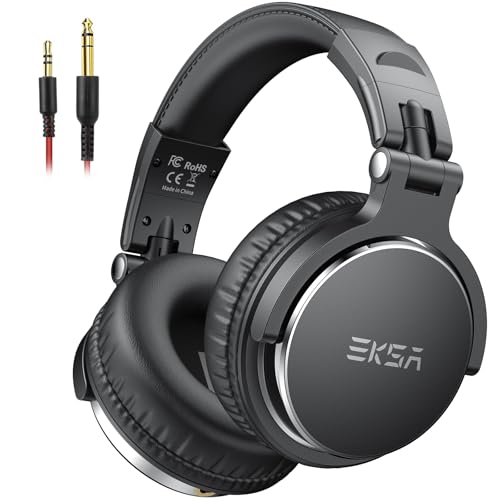
P100 Review Summary
The EKSA P100 is a straightforward buy for people who value wired reliability, strong compatibility, and a monitoring-friendly design over extra features.
It makes the most sense for home studio users, DJs, keyboard players, podcasters, and anyone who wants a simple over-ear headphone that can connect to common audio gear without adapters becoming a constant problem.
Verdict: the P100 looks best as a practical workhorse, not a luxury headphone.
Its appeal comes from the combination of 50mm drivers, a self-adjusting headband, swivel ear cups, and support for both 3.5mm and 6.35mm-style connections.
Review Scorecard
| Category | Score | Why it scores this way |
|---|---|---|
| Wired compatibility | 9/10 | The listing calls out support for smartphones, laptops, tablets, desktops, interfaces, mixers, and amps. |
| Monitoring flexibility | 8/10 | 90° swiveling ear cups support single-ear listening for DJ or studio work. |
| Comfort | 8/10 | Soft padded cushions and an adjustable, stretchable headband suggest extended-session use. |
| Sound potential | 8/10 | 50mm drivers and neodymium magnets are promising for clear stereo output and strong bass presence. |
| Practicality | 9/10 | This is a no-frills wired model with a shared audio port and broad gear support. |
| Long-session use | 8/10 | The self-adjusting fit and flexible headband are clearly tuned for fatigue reduction. |
| Ownership confidence | 8/10 | The listing includes a 24-month warranty and customer support, which adds reassurance. |
Key Features and Specifications of P100
The product identity is simple: EKSA P100 Wired Headphones built around studio-monitor, mixing, and DJ use.
The listing emphasizes a classic wired approach rather than Bluetooth, app control, or active noise features.
Here are the details that matter most:
| Feature | Evidence from listing |
|---|---|
| Driver size | 50mm speaker drivers |
| Magnet type | Neodymium magnets |
| Connection type | Wired only |
| Jack support | 3.5mm and 6.35mm audio jack compatibility |
| Ear cup design | 90° swiveling cups for single-ear monitoring |
| Headband | Self-adjusting, stretchable, and flexible |
| Comfort features | Soft padded ear cushions |
| Shared listening | Shared audio port for another pair |
| Use cases | Studio monitoring, mixing, DJing, podcasting, piano, guitar, computer recording |
| Support | 24-hour customer support and 2-year warranty stated in the listing |
The strongest practical point here is compatibility.
A headphone like this is easiest to recommend when a buyer wants something that can plug into common gear without much thought.
That includes a PC, keyboard, audio interface, amp, or mixer.
The other notable design choice is the monitoring-oriented cup movement.
Swiveling ear cups are useful when you want to cue audio with one ear, check a take, or quickly alternate between isolated and ambient listening during studio sessions.
The shared audio port is also worth noting.
That is not a glamorous feature, but it fits the product’s no-nonsense use case well because it makes it easier to share audio from a single source.
Pros and Cons of P100
Pros
- Strong wired compatibility across a wide range of devices and audio gear
- 50mm drivers and neodymium magnets suggest capable stereo output
- Swiveling ear cups support DJ-style and single-ear monitoring
- Soft cushions and flexible headband should help comfort in longer sessions
- Shared audio port adds a practical convenience feature
- Warranty and customer support are clearly stated
Cons
- Wired-only design will not suit buyers who want Bluetooth convenience
- The listing focuses on function, not premium materials or luxury finishes
- People wanting portable casual headphones may find the monitor style less versatile
- No built-in microphone or smart features are highlighted
The pro list is strongest for utility buyers.
The con list is mostly about what the headphone intentionally is not.
EKSA appears to be aiming at a work tool, so buyers should judge it on fit, compatibility, and monitoring utility rather than on lifestyle extras.
Who Should Buy P100?
Buy the EKSA P100 if you want a wired headphone for studio monitoring, mixing, DJ practice, or instrument/desktop use.
It is especially sensible for people who regularly connect to a keyboard, audio interface, mixer, guitar amp, or computer and prefer a headphone that stays simple and predictable.
It also makes sense for shared environments where the audio-sharing port is useful, or for users who want a comfortable over-ear design for longer sessions without moving into more complicated gear.
Skip it if you want wireless listening, built-in calling features, ANC, or a fashion-first everyday headphone.
The P100 is built around listening utility, not smart convenience.
Wired Monitoring Fit of P100
50mm Drivers and Stereo Balance
The 50mm driver size is one of the main reasons the P100 is positioned as a studio-style headphone.
The listing describes powerful bass, clear vocals, and crisp highs, which points to a balanced stereo presentation rather than a narrowly tuned bass-heavy profile.
For buyers, that usually means a better fit for monitoring and mixed playback than for casual “fun” tuning alone.
Swivel Cups for Session Work
The 90° swiveling cups are a meaningful feature for anyone who uses one-ear monitoring.
DJs, podcasters, and home-studio users often need to flip a cup off the ear quickly, and this design choice supports that workflow directly.
It is one of the clearest signs that the P100 is meant to be used actively rather than just worn passively.
Comfort for Longer Listening
The soft padded cushions, adjustable headband, and self-adjusting flexible structure point to comfort being a serious part of the design.
That does not guarantee perfect fit for every head shape, but it does suggest EKSA is trying to reduce the pressure and fatigue that can make monitor headphones annoying after a while.
Practical Connectivity
The P100’s value is tied closely to its wired compatibility.
Support for both 3.5mm and 6.35mm-style jacks makes it easier to use with consumer devices and pro audio equipment alike.
That kind of flexibility matters more than flashy extras when the headphone’s job is to get out of the way and work.
Alternatives to P100
If you want a different style of wired monitoring headphone, these are credible Amazon search alternatives:
The Sony MDR-7506 is a common reference point for wired monitoring.
The Audio-Technica M20x and M40x lines are sensible if you want familiar studio-headphone options at different feature and tuning levels.
The HD 280 Pro is worth a look if your priority is a traditional closed-back monitoring shape with a reputation for work-focused use.
Is P100 Worth It?
Yes, if you want a simple wired headphone for monitoring, mixing, practice, or desktop audio and you value compatibility more than convenience features.
The EKSA P100 looks worth considering because its design choices are consistent: big drivers, swivel cups, padded comfort, and broad wired support.
If you need wireless freedom, calling features, or a more lifestyle-oriented headphone, this is probably the wrong fit.
If your priority is a practical tool for connected listening, the P100 is worth a close look.