Great studio monitors help you hear the details that consumer speakers hide, making it easier to mix, edit, and enjoy music with confidence.
From compact desktop options to larger near-field models, this roundup focuses on the best balance of accuracy, size, and value for 2026.
Best 10 Studio Monitors Picks for 2026
Precision Stereo Pick

- Wide sweet spot with Image Control Waveguide
- Dual 41W amps with 5-inch woofers and Slip Stream port
- Boundary EQ and HF Trim help tune the room
Best For: Producers who want accurate imaging and room-friendly tuning
Neutral Reference Choice

- Tuned for sonic purity without added coloration
- Bi-amped 70W system with 5-inch woofer and 1-inch tweeter
- XLR and TRS inputs for balanced or unbalanced use
Best For: Mixers who want a straightforward, neutral reference
Compact Flat-Response Option
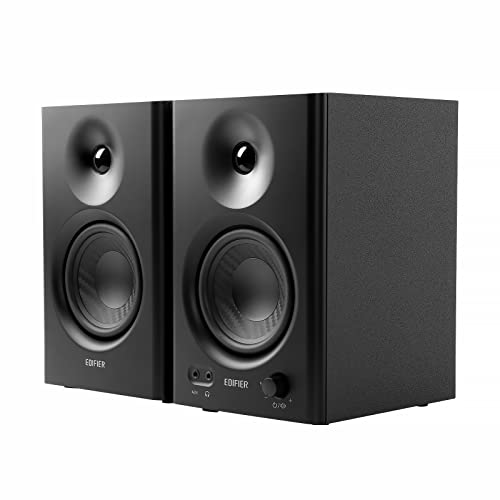
- Almost flat tuning for creator-focused monitoring
- 4-inch woofer with 1-inch silk dome tweeter
- TRS, RCA, AUX, and headphone output
Best For: Desktop creators needing a compact, flexible monitor
Desktop Value Pair

- Zero-latency wired monitoring for desktop use
- 3.5-inch Kevlar woofers with silk dome tweeters
- 1/4-inch, 1/8-inch, and RCA inputs plus headphone out
Best For: Desktop users wanting a compact, flexible starter pair
Compact Reference Pair
Yamaha HS4 Powered Studio Monitor in Black

- 4.5-inch 2-way powered pair
- Room control and high trim tuning
- XLR/TRS, RCA, and stereo mini inputs
Best For: Small desks, music production, and video editing
Balanced Nearfield Pick
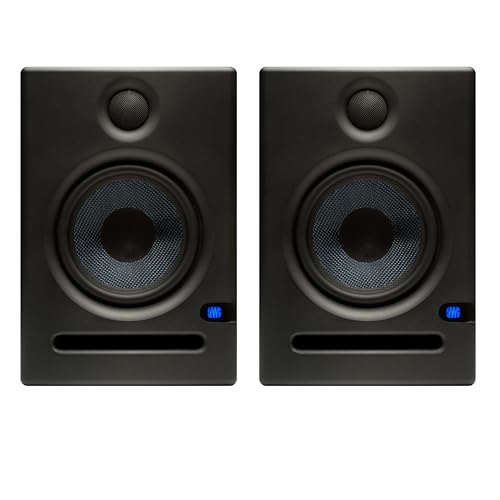
- 5.25-inch woofer with solid low-end
- 80W Class AB bi-amplification
- XLR, TRS, and RCA inputs with tuning controls
Best For: Home studios that need fuller sound and flexible connections
Desktop USB Monitor Choice
ADAM Audio D3V Active Desktop Studio Monitor Speakers
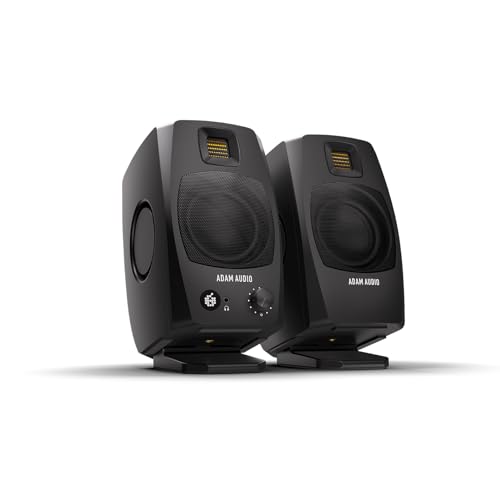
- USB-C desktop-friendly active pair
- 3.5-inch woofers with passive radiators
- D-ART tweeters and DSP placement switches
Best For: Desktop creators who want compact monitors with USB-C
Compact Desk Pick
PreSonus Eris 3.5 Powered Studio Monitors, Pair

- 50W powered stereo pair
- 3.5-inch woofers, 1-inch silk-dome tweeters
- TRS, RCA, aux, and headphone jack
Best For: Small desks, bedroom studios, and near-field listening
Step-Up Nearfield Option

- 4.5-inch woven-composite woofers
- 50W Class AB dual amplification
- Balanced TRS, RCA, and front aux input
Best For: Home studios and compact setups needing a fuller sound
White Desk Setup Choice
PreSonus Eris 3.5 Powered Desktop Studio Monitors, Pair

- White-finish 3.5-inch powered pair
- 50W output with room-tuning controls
- TRS, RCA, aux, and headphone output
Best For: Compact desks and white-themed home studio setups
Precision Stereo Pick – JBL 305P MkII 5" Pair
If you want studio monitors with a wide sweet spot and clear imaging, the JBL 305P MkII pair is built for accurate near-field listening. The 5-inch woofer, Slip Stream port, and Image Control Waveguide help deliver a detailed stereo picture for music production, podcasting, and sound design, while the Boundary EQ and HF Trim make room-matching easier.
Best For: Producers and creators who want precise imaging, flexible inputs, and easy room tuning in a compact monitor pair.
Pros:
- Patented Image Control Waveguide for wide, immersive stereo imaging
- Dual 41-watt Class-D amplifiers with 5-inch woofers and Slip Stream port
- Boundary EQ and HF Trim help tailor the sound to your room
- XLR/TRS inputs and a reliable MDF enclosure
Cons:
- 5-inch design may not reach as deep as larger studio monitors
- Best suited to near-field desktop or small-room setups
Overall, the 305P MkII is a strong choice when accuracy and imaging matter more than extra low-end weight. It offers the kind of practical tuning options and balanced connectivity that make it easy to integrate into a small studio.
Neutral Reference Choice – Yamaha HS5 Pair
The Yamaha HS5 pair is designed for studio monitors that emphasize sonic purity and avoid adding color to the source. With a 5-inch cone woofer, 1-inch dome tweeter, and bi-amped design, it targets clear near-field monitoring for music production and studio work.
Best For: Mixers and producers who want a straightforward, neutral reference monitor for critical listening.
Pros:
- Built to emphasize sonic purity without added coloration
- Bi-amplified 70-watt system with 45W LF and 25W HF
- 5-inch woofer plus 1-inch dome tweeter for near-field monitoring
- XLR and TRS inputs accept balanced or unbalanced signals
Cons:
- 5-inch cabinet size may limit low-end extension versus larger monitors
- Designed for accuracy rather than flattering playback
If your priority is a cleaner, more honest reference, the HS5 remains an easy monitor to evaluate mixes on. Its simple feature set keeps the focus on the sound rather than extra extras.
Compact Flat-Response Option – Edifier MR4
The Edifier MR4 is a compact studio monitor built around a responsive, almost flat tuning for creators who need an honest desktop sound. Its 4-inch woofer, 1-inch silk dome tweeter, and MDF cabinet aim to keep the presentation clean for music production, recording, and everyday computer use.
Best For: Desktop creators who want a smaller studio monitor with flexible inputs and simple tone controls.
Pros:
- Professionally tuned to an almost flat curve for creator use
- 4-inch woofer and 1-inch silk dome tweeter for clear, smooth sound
- Multiple inputs: TRS, RCA, AUX, plus front headphone output
- Monitor mode and music mode add useful versatility
Cons:
- 4-inch woofer is more compact than many standard studio monitors
- Lower output than larger near-field options
The MR4 makes sense if you want studio monitors that fit comfortably on a desk without giving up the basics of accurate monitoring. Its input flexibility and front-panel controls also make it easy to live with day to day.
Desktop Value Pair – M-AUDIO BX3 3.5"
The M-AUDIO BX3 pair is a small studio monitor set aimed at desktop use, streaming, gaming, and light production. With 3.5-inch Kevlar woofers, silk dome tweeters, and a bass-reflex MDF cabinet, it focuses on clear stereo monitoring in a compact footprint.
Best For: Desktop users who want an affordable wired monitor pair with lots of input options and included accessories.
Pros:
- Zero-latency wired connection for monitoring and streaming
- 3.5-inch Kevlar woofers with silk dome tweeters for clear stereo sound
- Rear 1/4-inch, 1/8-inch, and RCA inputs add hookup flexibility
- Front headphone jack and rear EQ controls improve day-to-day use
Cons:
- 3.5-inch size is smaller than most full studio monitors
- More suited to desktop listening than larger-room mixing
As a compact starter option, the BX3 gives you the core features needed for a desk-based studio setup. It is especially practical if you want wired monitoring, simple controls, and a bundle that includes the basics you need to get going.
Compact Reference Pair – Yamaha HS4 Powered Studio Monitor in Black
If you want studio monitors that fit a small desk but still give you a straightforward monitoring reference, the Yamaha HS4 pair is a practical pick. The 4.5-inch woofer, 1-inch dome tweeter, and room control/high trim settings make it easier to adapt the sound to your space for music production, video editing, or general DAW work.
Best For: Creators who need a compact, wired studio monitor pair with flexible inputs and basic room tuning.
Pros:
- Compact 4.5-inch 2-way design is well suited to tight desktop setups.
- Room control and high trim controls help tailor the response to your space.
- Multiple inputs, including XLR/TRS combo, RCA, and stereo mini, make hookup easy.
- Includes speaker cable, stereo mini-RCA cable, and anti-slip pads.
Cons:
- 26-watt maximum output is modest compared with larger studio monitors.
- Low-end extension is limited versus bigger 5-inch or larger models.
The HS4 is a sensible choice if you value compact size, simple connectivity, and Yamaha’s familiar nearfield monitoring approach. It’s a clean fit for desktop production where space matters more than high volume.
Balanced Nearfield Pick – PreSonus Eris E5 Pair
The PreSonus Eris E5 pair is built for buyers who want studio monitors with more low-end reach and output headroom than ultra-compact desktop speakers. With 5.25-inch woven composite woofers, a silk-dome tweeter, and acoustic tuning controls, they’re designed to help mixes translate more reliably in a home studio or nearfield setup.
Best For: Producers who want a fuller-sounding nearfield monitor pair with flexible analog connectivity.
Pros:
- 5.25-inch woofers deliver solid low-end response with minimal bass distortion.
- 80-watt Class AB bi-amplification provides strong volume and headroom.
- Balanced XLR and 1/4-inch plus unbalanced RCA inputs offer broad compatibility.
- Acoustic tuning controls and a front-firing port help adapt the sound to the room.
Cons:
- Larger than compact desktop monitors, so they need more space.
- Best results depend on dialing in the tuning for your room.
If you want a practical step up from entry-level monitors, the Eris E5 pair is a strong all-around option. It combines useful connectivity, decent bass extension, and enough power for serious home-studio monitoring.
Desktop USB Monitor Choice – ADAM Audio D3V Active Desktop Studio Monitor Speakers
The ADAM Audio D3V is a compact desktop take on studio monitors, aimed at creators who want direct USB-C connectivity and a small footprint without giving up detail. Its 3.5-inch woofers, dual passive radiators, and D-ART tweeters are tuned for desktop listening, while the included angled stands and DSP switches make placement easier to manage.
Best For: Desktop producers, songwriters, and gamers who want a compact active monitor system with USB-C convenience.
Pros:
- USB-C direct connection makes it easy to use with computers and mobile devices.
- D-ART tweeter and passive radiators are built for detailed highs and extended low end.
- Includes detachable 15° stands and mic-stand mounting support.
- Front headphone jack and volume knob add handy desktop control.
Cons:
- 3.5-inch woofers mean it is less suited to bigger rooms or bass-heavy monitoring needs.
- Low-end extension is good for its size, but still limited compared with larger studio monitors.
The D3V stands out if your priority is convenience, clarity, and a truly desk-friendly setup. It is especially appealing when you want studio monitor sound in a compact system that connects cleanly over USB-C.
Compact Desk Pick – PreSonus Eris 3.5 Powered Studio Monitors, Pair
If you want studio monitors that fit easily on a desk without losing the essentials, the PreSonus Eris 3.5 pair is a practical entry point. These powered monitors are built for music production, gaming, movies, streaming, and everyday listening, with tuning controls that help you adapt the sound to your room.
Best For: Small desks, bedroom studios, and everyday near-field listening where space is limited.
Pros:
- 50 watts of built-in amplification for clear, distortion-free output
- 3.5-inch woven-composite woofers and 1-inch silk-dome tweeters for balanced sound
- High- and low-frequency acoustic tuning controls help tailor the response to your room
- Flexible connections include TRS, RCA, front aux, and a headphone jack
Cons:
- 3.5-inch drivers limit low-end depth compared with larger studio monitors
- Best suited to close-range use rather than larger listening spaces
Overall, this is a compact, versatile studio monitor set that covers the basics well and keeps setup simple. It makes the most sense when you want honest sound on a small footprint.
Step-Up Nearfield Option – PreSonus Eris E4.5 Pair
The PreSonus Eris E4.5 studio monitors are aimed at buyers who want a little more size and low-end presence while staying in a compact near-field format. They’re designed for studio-quality, accurate sound, and the 4.5-inch woven-composite woofers plus 50 watts of Class AB power give them a more substantial feel than smaller desktop monitors.
Best For: Home studios, multimedia setups, and listeners who want a fuller sound without moving to large monitors.
Pros:
- 4.5-inch woven-composite woofers deliver a tighter, more noticeable low end
- 50 watts of Class AB dual amplification provides solid output without losing balance
- 1-inch silk-dome tweeters create a wide listening sweet spot and strong stereo imaging
- Rear tuning controls and multiple inputs make setup flexible for different sources
Cons:
- Larger than 3.5-inch models, so they take up more desk or shelf space
- Still a near-field speaker, so they are not meant to replace bigger room-filling systems
For buyers comparing studio monitors in the compact category, the E4.5 stands out as the more full-bodied choice. It keeps the same practical connection and tuning features while adding a bit more weight and presence.
White Desk Setup Choice – PreSonus Eris 3.5 Powered Desktop Studio Monitors, Pair
This white version of the PreSonus Eris 3.5 keeps the same core studio monitor formula in a cleaner-looking finish. It’s a powered desktop pair built for recording and music use, with the same 50-watt amplification, tuning controls, and broad connection options that make the Eris line easy to place on a desk or shelf.
Best For: Buyers who want compact studio monitors with a white finish for a desk, dorm, or home studio.
Pros:
- 50 watts of built-in power for clear, distortion-free listening
- 3.5-inch woofers and 1-inch silk-dome tweeters for balanced everyday sound
- High- and low-frequency tuning controls help adapt the speakers to the room
- TRS, RCA, and aux inputs plus a front headphone output add flexibility
Cons:
- Sound and output are the same compact-class design, so bass extension is limited by size
- Primarily a close-range desktop speaker, not a large-room solution
If you like the Eris 3.5 concept but want a white finish to match your setup, this model is an easy fit. It offers the same practical monitor features with a more style-focused look.
How We Picked These Studio Monitors
We focused on models that make sense for real-world home studios: accurate sound, consistent reviews, practical sizing, and strong value at their price point. Since Studio Monitors are often used near a desk or in a small room, we gave extra weight to speaker size, bass control, and placement flexibility.
We also considered whether each pair suits beginners, casual creators, and more experienced users who want a reliable reference sound without overbuying.
Quick Comparison
In this group, 5-inch class monitors tend to offer the best overall balance for mixing in small rooms, while 3.5-inch and 4-inch models are better for compact desks and close listening. Larger desktop-friendly options can sound fuller, but they usually need a bit more room and careful placement to perform well.
Key Buying Factors for Studio Monitors
Driver Size and Room Size
Smaller drivers are easier to fit on a desk and can work well at short distances, but they won’t move as much air in the low end. If you want a more complete mix picture, a 5-inch model is often the sweet spot for home use.
Accuracy Over Hype
The main job of Studio Monitors is to reveal problems, not to flatter every track. Look for a balanced midrange, controlled bass, and clear highs rather than boosted low-end punch or overly bright treble.
Connections and Placement
Check for the inputs your setup needs, especially if you’re using an audio interface, mixer, or desktop source. Also make sure the cabinet size works with your desk, and leave room for proper speaker positioning.
Budget and Use Case
Entry-level Studio Monitors can be perfect for podcasting, beat-making, and casual production, while higher-tier models are better if you need more detail for mixing decisions. Choose the smallest model that still gives you the clarity and bass extension your work requires.
Who Should Buy Which Studio Monitors?
If you’re building a compact home setup, choose smaller desktop models that fit close to your monitor and still sound clean at low-to-moderate volumes. If you mix regularly or want a more reliable low-end reference, go for one of the larger 5-inch options. Budget-conscious buyers should prioritize value and footprint, while creators with more space should favor accuracy and separation over sheer loudness.
For most people shopping Studio Monitors in 2026, the best choice is the pair that matches your room, listening distance, and workflow—not just the biggest speaker in the list.