The best MIDI controllers for Ableton make it faster to launch clips, play instruments, shape effects, and mix a session without relying on a mouse. The right choice depends on whether you prioritize keys, pads, hands-on mixing, portability, or a complete performance workflow.
We’ve selected 10 practical options ranging from compact 25-key keyboards to full-featured Ableton-focused controllers, so you can match your setup, experience level, and budget to the features you’ll actually use.
Best 10 Midi Controllers for Ableton Picks for 2026
Flagship Ableton Hub

- 64 MPE-enabled XY-sensing pads
- Built-in audio interface and ADAT I/O
- MIDI plus CV/gate connectivity
Best For: Ableton Live producers wanting an expressive studio centerpiece
Mix and Mapping Specialist
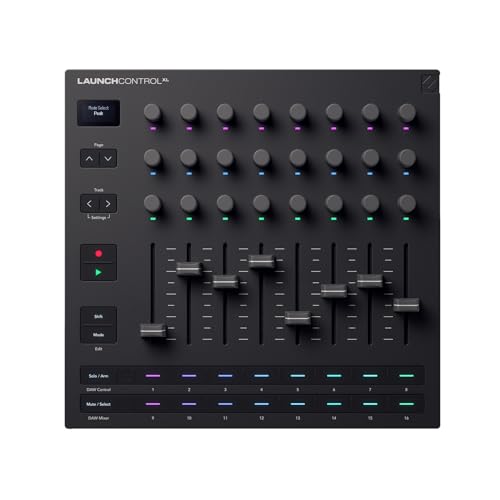
- Eight faders and 24 endless encoders
- OLED display and 16 assignable buttons
- MIDI I/O for hardware integration
Best For: Producers needing detailed mixer and parameter control
Compact Pad Performer

- 16 velocity- and pressure-sensitive RGB pads
- Eight assignable pad banks
- Includes Ableton Live Lite and Studio One Artist
Best For: Beat makers and performers focused on pad-based control
Mini Keyboard Creative Tool
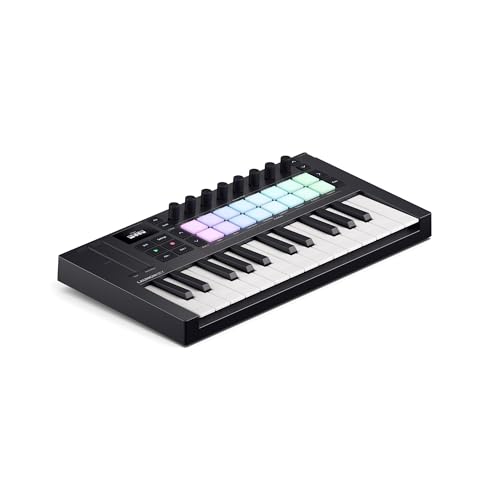
- 25 mini keys and 16 poly-aftertouch pads
- Scale, Chord, and arpeggiator modes
- Portable Ableton-focused workflow
Best For: Mobile producers wanting keys, pads, and creative controls
Best Overall

- 5x8 RGB clip-launch grid
- Nine faders and eight knobs
- Assignable crossfader for live mixing
Best For: Ableton Live performers and producers needing extensive hands-on control
Best for Expressive Pads

- 64 velocity- and pressure-sensitive pads
- Deep Ableton Live integration
- Note, Scale, and Custom Modes
Best For: Expressive clip launching, finger drumming, and portable performance
Best Compact Mixer

- 64 RGB clip-launch pads
- Eight channel faders plus master fader
- Drum and Note modes for Ableton
Best For: Compact home studios, mobile rigs, and Ableton mixing
Best Mixer-Style Control

- Eight line faders plus a master fader
- 24 assignable knobs and 16 channel buttons
- One-to-one Ableton Live mapping
Best For: Hands-on Ableton mixing and compact home-studio setups
Best Feature-Rich New Model

- 25 velocity-sensitive keys and eight MPC pads
- Color screen, eight knobs, and push/turn encoder
- Chord, Scale, and Arpeggiator modes
Best For: Portable beat making and all-in-one Ableton production
Best Proven Compact Keyboard

- 25 velocity-sensitive mini keys and eight MPC pads
- Eight assignable knobs with pitch/modulation thumbstick
- Arpeggiator, MPC Beats, instruments, and sound content included
Best For: Portable home-studio beat making and virtual-instrument control
Flagship Ableton Hub – Push 3 Desktop Controller
For producers seeking deeply integrated midi controllers for ableton, Push 3 offers hands-on control over Live without relying on a traditional keyboard layout. Its 64 MPE-enabled pads support expressive playing, finger drumming, clip-based production, and hardware integration.
Best For: Ableton Live users building expressive, hardware-connected production setups.
Pros:
- 64 MPE-enabled pads with XY sensing for expressive performance.
- Built-in audio interface with two inputs and two balanced outputs.
- ADAT, MIDI, and CV/gate connections support expanded studio setups.
- Ableton Live Intro is included.
Cons:
- Requires connection to a computer running Ableton Live.
- At 11.53 pounds, it is less portable than compact controllers.
Push 3 is a substantial investment, but its combination of MPE pads, audio I/O, and modular connectivity makes it a versatile centerpiece for an Ableton-focused studio.
Mix and Mapping Specialist – Launch Control XL 3
The Novation Launch Control XL 3 is a practical choice among midi controllers for ableton when your priority is hands-on mixing and parameter control. Its faders, endless encoders, assignable buttons, and OLED display are designed for detailed DAW and hardware workflows.
Best For: Ableton users who want extensive mixer, plugin, and hardware parameter control.
Pros:
- Eight faders, 24 endless encoders, and 16 assignable buttons.
- Deep Ableton Live integration plus support for other major DAWs.
- MIDI In, Out, and Out2/Thru ports support hardware setups.
- Stores up to 15 Custom Modes for different workflows.
Cons:
- Provides knobs, faders, and buttons rather than piano-style keys or performance pads.
- Designed primarily as a control surface, so it may not suit players seeking a keyboard controller.
With its unusually broad control layout and hardware MIDI ports, Launch Control XL 3 is well suited to producers who mix, automate, and manage multiple devices from one surface.
Compact Pad Performer – PreSonus ATOM Pad Controller
The PreSonus ATOM is a compact pad-based option among midi controllers for ableton, combining responsive RGB pads with assignable controls for beats, clips, samples, and virtual instruments. It also includes Ableton Live Lite and Studio One Artist software.
Best For: Beat makers and performers who prefer pads for triggering sounds, loops, and instruments.
Pros:
- 16 velocity- and pressure-sensitive RGB pads.
- Eight assignable pad banks expand available sounds and functions.
- Includes 20 assignable buttons and four endless rotary encoders.
- Supports selectable velocity curves and pressure thresholds.
Cons:
- Does not provide conventional piano-style keys.
- Its USB connection means it is primarily suited to computer-based setups.
ATOM is a straightforward, expressive pad controller for Ableton Live users who want a compact way to perform beats, trigger clips, and control software instruments.
Mini Keyboard Creative Tool – Launchkey Mini 25 MK4
The Novation Launchkey Mini 25 MK4 combines mini keys, pads, and creative performance features in a portable option for midi controllers for ableton. It provides dedicated tools for playing, clip launching, sequencing, chords, scales, and arpeggios.
Best For: Mobile producers and keyboard players who want an all-in-one Ableton controller in a small format.
Pros:
- 25 mini synth-action keys and 16 pads with polyphonic aftertouch.
- Ableton integration includes clip launching and step-sequencing functions.
- Scale Mode, Chord Mode, and arpeggiator support creative writing.
- Includes Ableton Live Lite and additional music software.
Cons:
- Mini keys offer less playing surface than a full-size keyboard.
- The compact layout limits the number of keys and pads available at once.
Launchkey Mini 25 MK4 is a flexible choice when desk space and portability matter, while its pads, keyboard, and built-in creative modes cover a broad range of Ableton workflows.
Best Overall – Akai APC40 MKII
The Akai APC40 MKII is a strong choice among midi controllers for ableton if you want hands-on control over clips, mixing, instruments, and effects. Its 5×8 RGB clip-launch grid, nine faders, eight knobs, and assignable crossfader are designed for Ableton Live performance and production.
Best For: Ableton Live performers, DJs, and producers who need extensive mixer and clip-launching control.
Pros:
- 1:1 Ableton Live mapping with a 5×8 RGB clip matrix
- Nine faders, eight knobs, and eight device controls for hands-on mixing
- Assignable A/B crossfader supports dynamic performance mixing
- USB-powered plug-and-play setup with Ableton Live Lite included
Cons:
- Larger and heavier than the compact APC Mini MK2 and Launchpad X
- Designed primarily around Ableton Live rather than broad DAW compatibility
The APC40 MKII offers the most comprehensive physical mixer control in this group, making it particularly suitable for live sets and detailed Ableton sessions. Choose it if faders and device controls matter as much as clip launching.
Best for Expressive Pads – Novation Launchpad X
The Novation Launchpad X is a focused option among midi controllers for ableton, combining 64 velocity- and pressure-sensitive RGB pads with deep clip, mixer, transport, and note control. It is especially useful for expressive finger drumming, melodic playing, and compact session performance.
Best For: Musicians who prioritize expressive pad playing, clip launching, and portable Ableton control.
Pros:
- 64 velocity- and pressure-sensitive RGB pads reflect session colors
- Deep Ableton Live integration for clips, scenes, mixer, devices, and transport
- Note and Scale modes support in-key melodies, chords, and basslines
- Four Custom Modes allow personalized MIDI mappings
Cons:
- Does not provide the extensive physical fader layout of the APC40 MKII
- USB-C connectivity may require an adapter for some setups
Launchpad X is the most pad-oriented choice here, with a responsive grid that can serve both session launching and musical input. It is a good fit when portability and expressive playing are more important than dedicated mixer faders.
Best Compact Mixer – Akai APC Mini MK2
The Akai APC Mini MK2 delivers essential Ableton control in a compact format, making it a practical pick among midi controllers for ableton for home studios and mobile setups. Its 64 RGB pads, eight channel faders, master fader, and Drum and Note modes cover clip launching, mixing, and basic melodic performance.
Best For: Ableton users who want a lightweight controller with clip launching and hands-on fader control.
Pros:
- Compact 8×8 RGB pad matrix with visual clip feedback
- Nine assignable faders, including a master fader, for mixer control
- Drum mode integrates with Ableton Drum Rack
- USB-powered plug-and-play operation with Ableton Live Lite included
Cons:
- Fewer knobs and performance controls than the APC40 MKII
- USB connectivity is limited to a single USB port
The APC Mini MK2 balances a small footprint with useful mixer control, making it easier to fit into a compact desk or travel rig. It is the sensible middle ground for users who want more faders than a pad-only controller without the APC40 MKII’s larger format.
Best Mixer-Style Control – Akai MIDImix
If you want hands-on mixing rather than piano keys, the Akai MIDImix is a practical choice among MIDI controllers for Ableton. Its compact layout combines faders, knobs, and channel buttons for adjusting levels, effects, EQ, sends, and track states directly from your desk.
Best For: Producers who want a compact Ableton mixer controller for home studios, mixdowns, and portable setups.
Pros:
- Eight individual line faders plus a master fader provide direct volume control.
- Twenty-four assignable knobs support EQ, sends, virtual instruments, and effects.
- Sixteen buttons handle mute, solo, and record-arm functions across two banks.
- Offers instant one-to-one Ableton Live mapping and includes Ableton Live Lite.
Cons:
- It is a mixer-focused controller, so it does not provide keyboard keys or drum pads.
- Its USB connection requires a computer-based setup.
The MIDImix makes the most sense when your priority is tactile mix control in a small metal chassis. Choose it over a keyboard controller if faders and channel buttons matter more than melodic performance.
Best Feature-Rich New Model – Akai MPK Mini IV
The Akai MPK Mini IV combines a 25-key mini keyboard, MPC pads, knobs, and performance tools in a portable USB-C controller. For MIDI controllers for Ableton, it is aimed at producers who want one compact unit for playing parts, triggering samples, shaping sounds, and navigating a mapped DAW workflow.
Best For: Beat makers, mobile producers, beginners, and creators who want keys, pads, sound controls, and Ableton Live Lite in one portable controller.
Pros:
- Includes 25 velocity-sensitive mini keys, eight RGB velocity- and pressure-sensitive MPC pads, and eight assignable knobs.
- A full-color screen and push/turn encoder provide access to settings, presets, and DAW functions.
- Chord, Scale, and Arpeggiator modes support songwriting and live jamming.
- USB-C, full-size MIDI Out, Ableton Live Lite 12, and a broad software bundle expand its usefulness.
Cons:
- The mini keys may feel less suitable for players who prefer a full-size keyboard.
- The feature-rich layout may take time to learn compared with a simpler controller.
Choose the MPK Mini IV when versatility and modern workflow features are more important than having a larger keyboard. It is particularly compelling for compact production setups that need both melodic input and pad performance.
Best Proven Compact Keyboard – Akai MPK Mini MK3
The Akai MPK Mini MK3 is a compact 25-key keyboard controller with MPC-style pads, assignable knobs, and a built-in arpeggiator. It remains a practical option among MIDI controllers for Ableton for producers who want a straightforward way to play virtual instruments, trigger drums, and adjust plug-ins.
Best For: Home-studio producers and beat makers who want an established, portable keyboard-and-pad controller with included production software.
Pros:
- Twenty-five velocity-sensitive mini keys support virtual instruments, synth parts, and beat production.
- Eight backlit MPC pads include Note Repeat and Full Level for drum programming and sample triggering.
- Eight 360-degree knobs can be assigned to plug-ins, mixing controls, and synthesizer parameters.
- The four-way thumbstick and adjustable arpeggiator add pitch, modulation, and sequencing control.
Cons:
- The USB 2.0 Type-B connection is less current than USB-C.
- Mini keys and a compact form factor offer less playing space than a full-size keyboard.
- Manual mapping may be needed for customized knob and joystick assignments.
The MPK Mini MK3 is a sensible pick when you want a familiar, compact controller for keys, drums, and plug-in tweaking without a large footprint. Its included MPC Beats, instruments, and sound content also make it approachable for a first production setup.
How We Picked the Best Midi Controllers for Ableton
We focused on controllers with useful Ableton Live integration, dependable USB connectivity, practical layouts, and controls that support real production or performance workflows. The selection includes keyboards for playing software instruments, pad controllers for clip launching and finger drumming, mixer-style surfaces for hands-on level control, and larger systems designed to centralize Ableton sessions.
We also considered portability, included software, control density, learning curve, and how well each type fits different setups. No single controller is ideal for every producer, so the goal is to show meaningful alternatives rather than rank products by feature count alone.
Quick Comparison
- Best all-in-one option: Ableton Push 3 combines clip control, sequencing, pads, and expanded production capabilities.
- Best for hands-on mixing: Novation Launch Control XL 3 and Akai MIDImix provide dedicated mixer-style controls.
- Best compact keyboard: Novation Launchkey Mini 25 MK4 and Akai MPK Mini models suit small desks and travel rigs.
- Best for clip launching: Launchpad X and the APC Mini MK2 offer grid-based control in compact formats.
- Best for larger performance layouts: Akai APC40 MKII provides more dedicated Ableton-oriented controls.
Key Buying Factors for Midi Controllers for Ableton
Choose the Control Layout First
Keyboard controllers are best if you regularly play chords, bass lines, melodies, or virtual instruments. Pad grids are better for launching Session View clips, triggering samples, and finger drumming. Mixer controllers make volume, panning, sends, and mute or solo actions easier to manage. If you want several workflows in one unit, an integrated system may be worth the added size and cost.
Check Ableton Integration
Native or well-supported mappings can save setup time and make transport, clip launching, track selection, and device control feel more immediate. Basic MIDI mapping is flexible, but controllers designed around Ableton usually provide a smoother out-of-box experience.
Consider Size, Connectivity, and Software
Measure your available desk space before choosing a controller with many faders or pads. USB-C or USB connectivity is standard, but verify cable requirements and whether a powered hub may be needed. Bundled Ableton Live Lite or other software can add value for beginners, while experienced users may care more about control depth and integration.
Who Should Buy Which Midi Controllers for Ableton?
New producers should start with a compact keyboard or pad controller that covers essential transport and performance tasks without overwhelming the workspace. Beat makers and sample performers will generally prefer a responsive grid or pad layout. Electronic performers should prioritize clip launching, scene navigation, and reliable hands-on control. Mix-focused producers will benefit most from dedicated knobs or faders. Advanced Ableton users may prefer Push 3 or a larger APC-style controller to reduce mouse use across the entire session.