Choosing the right channel strip can make spoken-word microphones, worship vocals, and instruments easier to control before they reach the main mix. The best models combine useful preamp character with practical compression, equalization, and connectivity for your church’s setup.
We’ve selected 10 channel strips for church sound systems across a range of budgets and workflows, including compact USB-equipped units, tube designs, console-style processors, and premium vocal front ends.
Best 10 Channel Strips for Church Sound Systems Picks for 2026
Tube-Driven Digital Hub
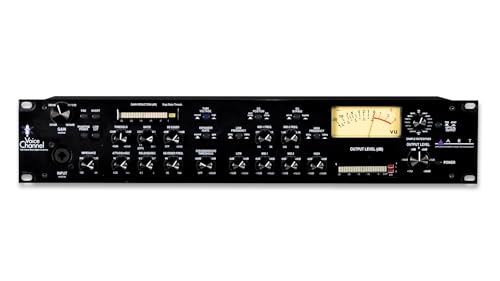
- Tube preamp with warmth and definition
- Compressor, expander, de-esser, and gate
- ADAT, AES/EBU, S/PDIF, TOSLink, and USB outputs
Best For: Flexible church input routing and vocal processing
Compact USB Voice Processor

- One-channel mic/line preamp
- USB audio interface functionality
- Compressor, gate/expander, and de-esser
Best For: Simple vocal and spoken-word computer setups
Analog Tone-Shaping Workhorse

- Class A 12AX7 tube preamp
- VCA compressor with flexible timing and knee settings
- Three-band EQ with variable-Q mid band
Best For: Hands-on analog processing for vocals and instruments
Metered Vocal Control

- Mono mic/instrument preamp
- Compressor/limiter, three-band EQ, and de-esser
- Output metering for level monitoring
Best For: Dedicated vocal or spoken-word processing
Tube Vocal Control
Universal Audio LA-610 Mk II Tube Channel Strip

- Tube mic, instrument, and line preamp
- Integrated EQ and optical compressor
- Single-channel design with two-year warranty
Best For: One priority vocal or instrument source
British-Style Flexibility
BRITSTRIP Console Channel Strip

- 73-style preamp and expanded EQ
- Discrete Class-A DI and diode bridge compressor
- 80 dB gain with pad, phase, and impedance controls
Best For: Flexible processing of vocals and instruments
Preamp and FET Compression
Universal Audio 6176 Channel Strip

- All-tube 610-derived mic preamp
- 1176LN Class A FET compressor
- Split or series operation with shelving EQ
Best For: Featured microphones or instruments needing tube and FET processing
Premium Transformer Channel Strip

- Discrete preamp with Lundahl I/O transformers
- Compressor, Transient Designer, and tube saturation
- Heavy stainless-steel mono unit
Best For: Churches wanting extensive analog processing on a key channel
Class A Church Channel Strip

- Class A mic/line preamp
- Custom transformer outputs with Silk enhancement
- Compressor and 8-segment LED meters
Best For: Indoor church setups needing a controlled mono front end
Tube EQ Channel Strip

- Mono tube channel strip
- Switchable microphone impedance
- Opto/FET compression and 4-band semi-parametric EQ
Best For: Churches wanting flexible tube-based vocal or instrument processing
Tube-Driven Digital Hub – ART VoiceChannel
For church sound systems that need a flexible channel strip for vocals, instruments, or recording feeds, the ART VoiceChannel combines a tube preamp with detailed dynamics control and extensive digital connectivity. Its single-channel design suits a dedicated input where warmth, control, and routing flexibility matter.
Best For: Churches needing a versatile vocal or instrument channel with ADAT, AES/EBU, S/PDIF, TOSLink, and USB output options.
Pros:
- Tube preamp design provides warmth and definition.
- Includes compressor, expander, de-esser, and gate controls.
- Supports multiple digital formats plus USB computer connectivity.
- Offers a maximum sample rate of 192 kHz.
Cons:
- Provides only one channel.
- At 5.5 kg, it may be less convenient for portable setups.
The VoiceChannel is a strong choice when a church needs one highly adaptable input path that can feed analog or digital equipment. Its broad feature set is especially useful for spoken-word microphones, worship vocals, and recording applications.
Compact USB Voice Processor – Behringer Ultravoice UV1
The Behringer Ultravoice UV1 is a straightforward option for church sound systems that need a single mic or line input with built-in processing and USB connectivity. Its compressor, gate/expander, and de-esser functions can help prepare a voice channel before it reaches the computer or wider system.
Best For: Churches seeking an accessible one-channel preamp and USB audio interface for spoken word, vocals, or computer-based audio.
Pros:
- Combines a mic/line preamp with USB audio functionality.
- Includes compressor, gate/expander, and de-esser processing.
- Supports a maximum sample rate of 192 kHz.
Cons:
- Limited to one channel.
- The supplied notes identify USB connectivity but do not list additional digital output formats.
For churches that want essential voice processing and direct computer connectivity without a more elaborate routing feature set, the UV1 is a practical channel-strip solution. It is best suited to a focused, single-source setup rather than multi-input expansion.
Analog Tone-Shaping Workhorse – PreSonus STUDIOCHANNEL
The PreSonus STUDIOCHANNEL is a useful choice among channel strips for church sound systems when hands-on analog tone shaping is a priority. It pairs a Class A 12AX7 tube preamplifier with a VCA compressor and three-band EQ, making it suitable for shaping microphones, instruments, keyboards, and synths.
Best For: Churches wanting a rack-mountable analog channel for vocals, instruments, or other sources that benefit from tube gain, compression, and EQ.
Pros:
- Class A tube preamp includes tube drive and high-pass filter.
- VCA compressor offers auto attack/release and soft/hard knee settings.
- Three-band EQ includes a variable-Q mid band and shelving/peak controls.
- Provides mic, line, and instrument inputs in a rugged 1U chassis.
Cons:
- It is an analog channel strip rather than a USB or digital interface.
- Only one channel is provided.
- Its 10.5-pound weight may matter in portable rigs.
The STUDIOCHANNEL offers substantial control for engineers who prefer setting gain, dynamics, and EQ directly on the rack unit. It is particularly appealing for a dedicated worship vocal, acoustic instrument, or speech channel where analog processing is more important than digital integration.
Metered Vocal Control – SPL Track One MK3
The SPL Track One MK3 provides a focused mono processing path for church sound systems that need preamp control, dynamics management, and tonal shaping on a single source. Its compressor/limiter, three-band EQ, de-esser, and output metering are well suited to a dedicated vocal or spoken-word channel.
Best For: Churches needing a mono mic or instrument channel strip with metering and dedicated compression, EQ, and de-essing.
Pros:
- Combines mic/instrument preamp functions with compression and limiting.
- Includes three-band EQ and a de-esser.
- Output metering supports level monitoring during operation.
- Stainless-steel construction is specified.
Cons:
- It is a mono channel strip, so one source can be processed at a time.
- The supplied notes do not specify USB or digital connectivity.
- Its listed dimensions and 10.26-pound weight may limit portability.
The Track One MK3 is a sensible option when a church wants a dedicated, clearly monitored analog processing path rather than computer connectivity. Its combination of de-essing, dynamics, and EQ can help keep an important microphone controlled and intelligible.
Tube Vocal Control – Universal Audio LA-610 Mk II Tube Channel Strip
The Universal Audio LA-610 Mk II is a single-channel tube option for church sound systems that need microphone, instrument, or line-level processing in one unit. Its integrated optical compressor and EQ can help shape a source before it reaches the main mix.
Best For: Churches seeking tube preamp character with built-in compression and EQ for one important input.
Pros:
- Combines a vacuum tube microphone, instrument, and line preamp with EQ.
- Includes an optical compressor for integrated dynamics control.
- Backed by a listed two-year warranty.
Cons:
- Provides only one channel.
- At 15.7 pounds, it is relatively heavy for a single-channel unit.
Choose this channel strip when a church values an all-in-one tube preamp, EQ, and optical compressor. Its one-channel design makes it better suited to a key vocal, instrument, or other priority source than to processing multiple inputs.
British-Style Flexibility – BRITSTRIP Console Channel Strip
The BRITSTRIP Console Channel Strip brings a broad set of front-end tools to channel strips for church sound systems, including a 73-style mic preamplifier, expanded equalizer, Class-A DI, and diode bridge compressor. Its gain, pad, phase, and impedance controls support varied source setups.
Best For: Churches wanting flexible processing for microphones, instruments, or direct-injected sources through one feature-rich channel.
Pros:
- Combines a 73 mic preamplifier with an expanded 73 equalizer.
- Offers a discrete Class-A DI for compatible instrument sources.
- Includes diode bridge compression, up to 80 dB of gain, a 20 dB pad, phase reversal, and selectable 1200 or 300 ohm input impedance.
Cons:
- The supplied details identify a single channel rather than a multi-channel unit.
- Its 23 x 13 x 4-inch dimensions may require careful rack or console-space planning.
This is a strong fit when flexibility matters more than a minimalist signal path. The combination of preamp, EQ, DI, compression, and input options gives a church several ways to adapt one channel to different sources.
Preamp and FET Compression – Universal Audio 6176 Channel Strip
The Universal Audio 6176 combines an all-tube 610-derived microphone preamp with a 1176LN Class A FET compressor, making it a focused choice among channel strips for church sound systems. A split-or-join switch allows the preamp and compressor to operate separately or in series.
Best For: Churches that want tube preamp voicing and recognizable FET compression for a featured microphone or instrument path.
Pros:
- Uses an all-tube mic preamp derived from the Bill Putnam-designed 610 console.
- Includes an 1176LN Class A FET compressor section.
- Supports separate or series operation, plus high- and low-frequency shelving EQ and variable impedance.
Cons:
- It is a single channel, limiting how many sources it can process at once.
- The supplied notes specify an XLR connector but do not list additional connectivity.
The 6176 suits a church that wants a dedicated, characterful processing path with routing flexibility. Its split/join operation is useful when the preamp and compressor need to serve different roles, while the shelving EQ and variable input controls add setup options.
Premium Transformer Channel Strip – SPL Channel One MK3
For church sound systems that need a premium mono front end, the SPL Channel One MK3 combines a discrete preamp with Lundahl input/output transformers. Its compressor, Transient Designer, and tube saturation features provide several ways to shape a vocal or instrument before it reaches the mixer.
Best For: Churches seeking a feature-rich mono channel strip with transformer-based I/O and onboard dynamics and tone shaping.
Pros:
- Discrete preamp with Lundahl I/O transformers
- Includes compressor and Transient Designer processing
- Tube saturation adds an additional tonal option
- Stainless-steel construction
Cons:
- Mono design limits it to one channel per unit
- At 16.78 pounds, it is relatively heavy
- Its 21.5 x 14.95 x 7.3-inch dimensions require adequate rack or installation space
The Channel One MK3 is a substantial choice when a church wants extensive analog processing on a key vocal or instrument channel. Its weight and size are worth factoring into the installation plan.
Class A Church Channel Strip – Newton Channel Strip
The Newton Channel Strip is a mono option for church sound systems built around a Class A mic/line preamp and custom transformer outputs. Silk harmonic enhancement, an onboard compressor, and 8-segment LED meters support hands-on control of level and tone.
Best For: Indoor church installations that want Class A preamplification, transformer outputs, metering, and compression in one mono unit.
Pros:
- Class A mic/line preamp
- Custom transformer outputs
- Silk harmonic enhancement for tonal shaping
- 8-segment LED meters and compressor included
Cons:
- Mono design provides one channel per unit
- The supplied dimensions indicate it needs dedicated installation space
- Its product information lists a style description for a boom microphone stand, so buyers should verify the listing details before ordering
With its Class A front end, transformer outputs, metering, and compressor, the Newton offers a focused set of tools for a primary church input. The included two-year warranty is another useful consideration for an installed indoor setup.
Tube EQ Channel Strip – ART Pro Channel III
The ART Pro Channel III gives church sound systems a mono tube channel strip with switchable microphone impedance and selectable opto or FET compression voicings. Its 4-band semi-parametric EQ adds flexible frequency shaping for vocals, instruments, or other priority inputs.
Best For: Churches looking for tube-based channel processing with impedance selection, two compression voicings, and semi-parametric EQ.
Pros:
- Mono tube channel strip design
- Switchable microphone impedance
- Selectable opto/FET compression voicings
- 4-band semi-parametric EQ
Cons:
- Mono design limits each unit to one channel
- At 10.61 pounds, it adds noticeable rack weight
- Its 21.9 x 11.4 x 5.4-inch size should be checked against available space
The Pro Channel III is a practical fit when a church values tube character and wants more control over compression and EQ choices. Its impedance selection can also make it easier to tailor the input stage to a particular microphone.
How We Picked the Best Channel Strips for Church Sound Systems
We focused on features that matter in live worship and installation environments: clean, usable microphone gain; effective compression and EQ; dependable controls; flexible outputs; and the ability to improve vocal intelligibility without making operation unnecessarily complicated. We also considered whether each unit suits a volunteer-friendly setup, a dedicated broadcast or recording chain, or a professional front-of-house system.
The selection includes both single-channel processors and more feature-rich designs. Tube models can add warmth and harmonic color, while solid-state and console-style units may provide faster, cleaner control for speech, vocals, and instruments.
Quick Comparison
- Best for flexible vocal processing: Look for a full signal path with preamp, compressor, EQ, and de-esser or limiter functions.
- Best for simple church setups: Choose a model with clear metering, straightforward controls, and outputs that match your mixer or interface.
- Best for recording and streaming: USB connectivity or dedicated digital outputs can simplify integration with a computer or broadcast system.
- Best for premium vocal tone: High-end tube and transformer-based channel strips can provide richer character and more detailed control.
Key Buying Factors for Channel Strips for Church Sound Systems
Inputs, Outputs, and Integration
Confirm whether the unit accepts microphone, line, or instrument sources and whether its output level matches your mixer, stagebox, interface, or broadcast rig. Digital outputs and USB can be helpful for recording, livestreaming, and virtual sound checks, but they are not essential for an analog front end.
Compression and Vocal Control
Compression can keep worship vocals and spoken announcements consistent, especially when singers move around the microphone. A smooth, easy-to-adjust compressor is often more valuable than an extensive feature set. De-essing is useful when microphones or rooms make sibilance distracting.
EQ and Voice Intelligibility
Useful EQ should make it easy to reduce muddiness, control harshness, and add presence without over-processing. Parametric or semi-parametric midrange controls offer more precision, while simpler EQ sections may be preferable for rotating volunteers.
Tube Character, Headroom, and Noise
Tube circuitry can add warmth and saturation, but it may also require more careful gain staging. For spoken word and livestream feeds, prioritize low noise, adequate headroom, and a clean bypass or neutral setting.
Who Should Buy Which Channel Strips for Church Sound Systems?
Choose an affordable, easy-to-integrate model if your church needs one versatile processor for announcements, vocals, or a small recording system. Choose a tube channel strip if tonal color and a fuller vocal sound are central to your production style. Choose a console-style or premium mono strip for a dedicated lead-vocal, pastor, broadcast, or studio channel where precise control and repeatable results justify the investment.
Before buying, map the signal path from microphone to speakers or stream. Decide whether processing will happen before the main console, inside the console, or on a separate broadcast feed, then select the channel strip whose connections, controls, and operating level fit that workflow.