Choosing the right mixer can make your turntables feel smoother, more precise, and far more fun to play. Whether you want simple two-channel control or a setup ready for scratching and DVS, the best options balance sound quality, layout, and durability.
This roundup highlights ten strong choices for different budgets and skill levels, so you can find a DJ mixer for turntables that fits your style without overbuying features you will not use.
Best 10 Dj Mixer for Turntables Picks for 2026
Club-Style Starter
Pioneer DJM-250MK2 2-Channel Mixer

- 2-channel club-style workflow
- Free rekordbox DVS unlock
- Magvel Fader for smooth cuts
Best For: Beginners building a turntable-based setup
All-in-One Serato Rig
Numark Mixtrack Pro FX Controller

- 6-inch touch jog wheels
- Built-in 24-bit audio interface
- Serato DJ Lite with quick FX
Best For: DJs wanting a compact Serato controller
Home Club Upgrade
Pioneer DJM-450 2-Channel Mixer

- Club-style 2-channel layout
- Beat FX plus Sound Color FX
- Built-in sound card and DVS
Best For: Home DJs wanting a pro-style mixer
Visual Performance Pick
Numark Mixtrack Platinum FX Controller

- 4 decks of control
- Color displays on 6-inch jog wheels
- Serato Lite with FX and pads
Best For: DJs wanting visual jog-wheel feedback
Classic 3-Channel Scratch Mixer
Behringer Pro Mixer DX626 3-Channel DJ Mixer

- Dual auto-BPM counter for tempo help
- Three stereo channels with dual inputs
- Ultraglide crossfader rated to 500,000 cycles
Best For: Vinyl DJs who want a simple 3-channel mixer with BPM guidance
Starter Controller With Growth Room
Pioneer DJ DDJ-FLX4 2-Channel DJ Controller
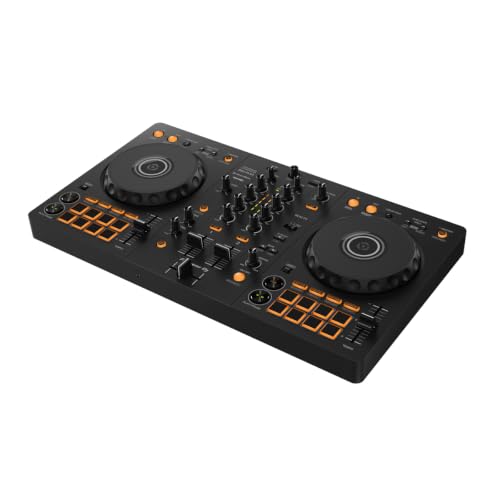
- Smart Fader helps blend volume, bass, and BPM
- 16 pads for cues, FX, beat jump, and sampler
- USB/Bluetooth connectivity for many devices
Best For: Beginners and streamers who want an easy-to-learn controller
Portable Scratch Deck Hub
Numark M2 2-Channel Scratch DJ Mixer

- Phono/line switchable inputs for turntables
- Replaceable crossfader with reverse and slope control
- 3-band EQ plus mic and record outputs
Best For: Scratch DJs and portable turntable setups
Compact Starter Pick
Gemini Portable 2-Channel DJ Mixer with Crossfader

- Ultra-compact 2-channel design for easy transport
- Dual RCA inputs with RCA master and booth outputs
- Full-size crossfader, gain, and 2-band EQ
Best For: Beginner turntable setups, small rooms, and mobile DJs
Feature-Packed Budget Pick
Pyle 3-Channel Bluetooth DJ Mixer

- 3 channels with switchable phono/line inputs
- Bluetooth streaming and USB flash drive support
- Mic talk-over plus dual mic inputs
Best For: Budget-conscious DJs who want turntable support and extra inputs
Pro Control Pick
Behringer DJX900USB 5-Channel Mixer
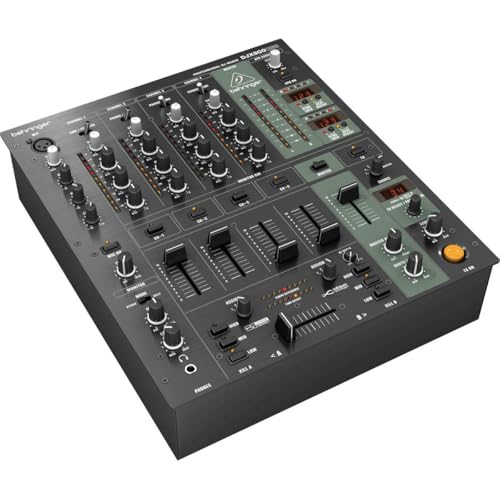
- Five channels for a more expanded setup
- Contact-free crossfader built for long-term use
- USB interface plus 24-bit digital effects
Best For: Experienced DJs who want effects, USB, and more channel capacity
Club-Style Starter – Pioneer DJM-250MK2 2-Channel Mixer
If you want a dj mixer for turntables that teaches proper club-style workflow, the Pioneer DJM-250MK2 keeps things focused and practical. Its 2-channel layout, Sound Color FX filters, and Magvel Fader make it a strong fit for learning to blend and scratch at home.
Best For: Beginners building a turntable-based setup and learning standard club mixing habits.
Pros:
- 2-channel club-style layout mirrors the workflow used in professional booths
- Free rekordbox DVS unlock supports digital mixing with turntables or media players
- Dedicated Sound Color FX Filter on each channel adds quick hands-on control
- Magvel Fader is designed for smooth, durable cuts and light scratching
Cons:
- Only offers 2 channels, so it is less flexible than larger mixers
- It is positioned as a simple, no-fuss option rather than a feature-heavy unit
This mixer is a sensible pick if your priority is learning the essentials on a reliable, turntable-friendly platform. It keeps the interface straightforward while still giving you the key tools needed for mixing and basic scratching.
All-in-One Serato Rig – Numark Mixtrack Pro FX Controller
The Numark Mixtrack Pro FX is a practical dj mixer for turntables alternative if you want a controller-style setup with built-in mixing tools. It pairs 6-inch capacitive-touch jog wheels, a 24-bit audio interface, and direct Serato DJ Lite support for a plug-and-play path on Mac or Windows.
Best For: DJs who want a compact Serato controller with turntable-like jog wheels and built-in mixing controls.
Pros:
- Large 6-inch touch jog wheels provide an authentic turntable feel for scratching and beatmatching
- Built-in 24-bit audio interface and USB connectivity keep setup simple
- Six quick-launch FX, instant loop controls, and performance pads add flexibility
- RCA output, microphone input, and headphone output support a full starter setup
Cons:
- It is a controller, so it is not a traditional standalone mixer for turntables
- Best suited to Serato DJ Lite-based workflows rather than a pure mixer-only rig
This is a solid choice if you want an affordable, all-in-one DJ control surface with familiar hands-on feel. It gives you the core tools to learn mixing without needing a separate audio interface or extra gear.
Home Club Upgrade – Pioneer DJM-450 2-Channel Mixer
If you’re shopping for a dj mixer for turntables with more polish, the Pioneer DJM-450 brings a club-style layout home with extra flexibility. It adds Beat FX, Sound Color FX, a built-in sound card, and rekordbox DVS support for a more complete mixing setup.
Best For: Home DJs who want a pro-style 2-channel mixer with effects and DVS support.
Pros:
- Club workflow layout closely matches Pioneer DJ booth gear
- Beat FX and Sound Color FX provide expressive control over transitions
- Free rekordbox DVS unlock supports mixing digital files with turntables or media players
- Built-in sound card lets you run software and record sets over USB
Cons:
- Still limited to 2 channels, which may not suit more complex setups
- More advanced than a basic starter mixer, so it may be more than some beginners need
This model makes sense if you want a home setup that feels closer to a real club booth. It balances practical features with a straightforward two-channel design, making it a strong long-term mixer choice.
Visual Performance Pick – Numark Mixtrack Platinum FX Controller
The Numark Mixtrack Platinum FX is a feature-rich dj mixer for turntables alternative for DJs who want visual feedback in a controller package. Its 6-inch capacitive-touch jog wheels, color displays, and Serato DJ Lite integration make it easier to track BPM, platter position, and pitch while mixing.
Best For: DJs who want a 4-deck Serato controller with visual jog-wheel feedback and built-in performance features.
Pros:
- 4 decks of control give you more room to expand your mixing
- Large jog wheels include high-resolution color displays for BPM, platter position, beats remaining, and pitch
- Six quick-launch FX, instant loops, and performance pads support creative mixing
- USB bus power and plug-and-play connectivity keep setup straightforward
Cons:
- As a controller, it is not the same as a traditional standalone mixer for turntables
- It is geared toward Serato DJ Lite workflows rather than a pure mixer-focused setup
This unit stands out if you value visual feedback and multi-deck flexibility in a compact format. It is especially useful for DJs who want more information at the jog wheel without adding extra gear.
Classic 3-Channel Scratch Mixer – Behringer Pro Mixer DX626 3-Channel DJ Mixer
Behringer Pro Mixer Dx626 Professional 3-Channel Dj Mixer With Bpm Counter, Black
Check Price On AmazonIf you want a straightforward dj mixer for turntables with built-in beat matching help, the Behringer DX626 is built around practical club-style basics. It gives you three dual-input stereo channels, a smooth crossfader, and a dual auto-BPM counter, so it fits DJs who want hands-on control without extra complexity.
Best For: Vinyl DJs, beginner-to-intermediate mixers, and anyone who wants a simple 3-channel setup with BPM guidance.
Pros:
- Dual auto-BPM counter helps with quicker tempo matching.
- Three dual-input stereo channels offer flexible routing.
- Ultraglide crossfader is rated for up to 500,000 life cycles.
- 3-band kill EQ and PFL/master-PFL mix options add useful control.
Cons:
- Only one channel can be switched to mic input.
- Design is basic compared with modern controller-style gear.
- Not aimed at users who need built-in digital software control.
Overall, the DX626 makes sense if your priority is a functional analog-style mixer for turntables with essential cueing, EQ, and BPM assistance. It is a solid fit for practice spaces or simple performance setups where reliability matters more than advanced features.
Starter Controller With Growth Room – Pioneer DJ DDJ-FLX4 2-Channel DJ Controller
The Pioneer DJ DDJ-FLX4 is a practical dj mixer for turntables alternative if you want an easy entry into mixing on a controller. Its simple layout, Smart Fader, and 16 performance pads make it beginner-friendly, while USB and Bluetooth connectivity keep it flexible for home practice or streaming.
Best For: New DJs, livestreamers, and mobile users who want an easy-to-learn controller with modern connectivity.
Pros:
- Simple, user-friendly layout inherited from Pioneer DJ gear.
- Smart Fader automates volume, bass, and BPM blending.
- 16 pads support Hot Cues, Pad FX, Beat Jump, and Sampler functions.
- Works with PC, Mac, iPhone, iPad, Android, and streaming sources.
Cons:
- It is a controller, not a traditional mixer for direct turntable setups.
- Two-channel design limits expansion versus larger mixers.
- Designed for learning and streaming, not a full club-style mixer workflow.
As a starter-friendly option, the FLX4 is strongest when you want guided mixing features and broad software/device support. It is less about pure analog turntable routing and more about making the first mixes feel easy and usable right away.
Portable Scratch Deck Hub – Numark M2 2-Channel Scratch DJ Mixer
The Numark M2 is a classic dj mixer for turntables if you want a compact, no-frills scratch setup with flexible inputs. It combines phono/line switching, a replaceable crossfader, and 3-band EQ on each channel, making it useful for home booths, practice rigs, and mobile events.
Best For: Scratch DJs, turntable users, and portable setups that need simple analog-style mixing.
Pros:
- Two phono/line switchable inputs support turntables and other sources.
- Replaceable crossfader includes reverse and slope controls.
- Three-band EQ on each channel gives basic tone shaping.
- Mic input, master/record outputs, and rackmount facilities improve flexibility.
Cons:
- Only two channels, so it is not built for larger mixing setups.
- No advanced digital effects or software integration features.
- Best suited to straightforward mixing rather than feature-heavy performance work.
For DJs who prioritize portability and direct control, the M2 covers the essentials without adding clutter. It is a sensible pick when you want a durable scratch mixer that connects easily to turntables and other common DJ sources.
Compact Starter Pick – Gemini Portable 2-Channel DJ Mixer with Crossfader
If you want a DJ mixer for turntables that keeps the setup simple and portable, the Gemini MM1 is built for compact spaces and mobile use. It gives you dual RCA inputs, a full-size crossfader, and 2-band EQ in a rugged all-metal body, making it a practical choice for small gigs, dorm rooms, or beginner rigs.
Best For: Beginner DJs, buskers, and anyone building a compact turntable setup on a budget.
Pros:
- Ultra-compact, 1.2-pound design is easy to pack and carry.
- Dual RCA inputs and RCA master/booth outputs support a straightforward turntable setup.
- Full-size crossfader plus gain and 2-band EQ give basic hands-on control.
- Metal construction is better suited to regular transport and long sessions.
Cons:
- Only 2 channels, so it is not ideal for larger multi-source mixes.
- Limited to 2-band EQ rather than more advanced tone shaping.
Overall, the MM1 is a no-frills option for DJs who care more about portability and core mixing controls than extra features. It is especially appealing if you want a simple, durable mixer that works cleanly with turntables and does not take up much space.
Feature-Packed Budget Pick – Pyle 3-Channel Bluetooth DJ Mixer
For a DJ mixer for turntables with extra input flexibility, the Pyle PMX7BU adds Bluetooth, USB playback, and a 3-channel layout to a compact mixer format. Its phono-capable channel lets you connect turntables, while the dual RCA line/phono inputs, mic talk-over, and headphone jack make it useful for parties, karaoke, or simple live mixing.
Best For: DJs who want turntable compatibility plus Bluetooth and mic features in one affordable mixer.
Pros:
- 3-channel layout gives more flexibility than a basic 2-channel mixer.
- Phono/line switchable inputs support turntable connection on channel 2.
- Bluetooth streaming and USB flash drive support add modern playback options.
- Mic talk-over and dual mic inputs are handy for announcements or karaoke-style use.
Cons:
- Compact feature set is geared more toward casual use than advanced performance mixing.
- Warranty is shorter than many pro-oriented alternatives.
The PMX7BU stands out if you want one mixer to handle turntables, streaming audio, and microphones without a complicated setup. It is a flexible pick for social events where convenience matters as much as traditional DJ control.
Pro Control Pick – Behringer DJX900USB 5-Channel Mixer
If you are shopping for a DJ mixer for turntables and want a more performance-focused option, the Behringer DJX900USB brings five channels, a contact-free crossfader, and built-in digital effects. It also includes a USB interface for recording and playback, so it fits well in setups that blend turntables with digital sources.
Best For: DJs who want a more advanced mixer with extra channels, effects, and USB recording/playback.
Pros:
- Five channels allow a more expanded mixer setup.
- INFINIUM contact-free crossfader is designed for long-term use.
- 24-bit digital effects add more creative control.
- Built-in USB interface supports recording and playback without drivers.
Cons:
- Heavier than compact mixers at 8.2 pounds.
- More complex than a simple two-turntable starter mixer.
This model makes sense if you want a capable mixer that can grow with a more demanding setup. For DJs who value features like effects, USB connectivity, and extra channels, it offers a stronger pro-style foundation than basic budget units.
How We Picked the Best Dj Mixer for Turntables
We focused on mixers that make sense for vinyl and turntable-based setups: clean phono support, responsive crossfaders, practical EQ control, reliable build quality, and features that match real-world DJ use. We also favored models that suit common needs like home practice, scratching, DVS, and compact mobile rigs.
Quick Comparison
For most buyers, the best Dj Mixer for Turntables depends on channel count and workflow. Two-channel mixers are ideal for straightforward vinyl setups and scratching, while 3- or 5-channel models are better if you plan to add extra decks, media players, or microphones. USB and software integration are useful if you want to mix digitally alongside records, but they are not essential for every buyer.
Key Buying Factors for a Dj Mixer for Turntables
Phono Inputs and Signal Support
Make sure the mixer accepts phono signals from your turntables and offers proper grounding support if needed. This is essential for clean playback and low noise.
Crossfader Quality
If you scratch or cut aggressively, look for a smooth, adjustable crossfader with a good reputation for durability. For casual mixing, a standard fader is usually enough.
EQ and Channel Layout
Three-band EQ gives you more control over blends and transitions. Simple two-channel layouts are often easier to learn on, while more channels help expand your setup later.
Connectivity and Workflow
Consider whether you need USB, Bluetooth, mic inputs, or DVS compatibility. A feature-rich mixer can be helpful, but only if those functions match how you actually play.
Who Should Buy Which Dj Mixer for Turntables?
Beginners usually do best with a straightforward two-channel mixer or a controller that can bridge vinyl and digital practice. Scratch DJs should prioritize crossfader feel and rugged controls. Home DJs and mobile performers may prefer extra inputs, mic handling, and USB connectivity. If you are building a serious vinyl rig, choose a mixer that delivers reliable phono performance first, then add features only where they improve your workflow.
In short, the best choice is the one that fits your turntable setup now and leaves enough room for the way you want to mix next.