If you need cleaner stage monitoring, less cable clutter, and a more consistent mix, a dual wireless in ear monitor system can make a big difference. The best setups balance range, latency, channel flexibility, and comfort.
Below, we’ve selected 10 strong options for musicians, worship teams, and live performers, with a focus on practical performance rather than marketing claims.
Best 10 Dual Wireless in Ear Monitor System Picks for 2026
Reliable Mono Monitoring
Phenyx Pro PTM-22 for Band and Studio

- 2x50 UHF frequencies for interference control
- Metal transmitter with clear LCD display
- 164 ft range for rehearsals and live shows
Best For: Singers, musicians, and worship teams needing dependable mono IEM monitoring
True Stereo Flexibility
Xvive U45D for Modern IEM Mixes

- Four modes: Stereo, L, R, and Mix
- Less than 5 ms latency for tight timing
- Dual XLR inputs for true left/right monitoring
Best For: Musicians and bands wanting quick, low-latency stereo IEM monitoring
Long-Range UHF Performance
HHLPRO F10P for Touring Stages
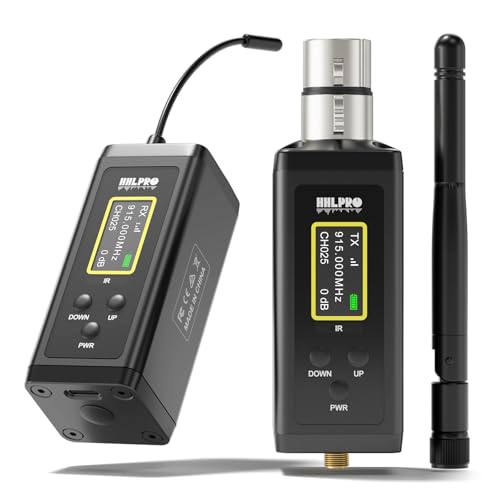
- 300 ft range for bigger venues
- 50 channels with auto-scan and one-touch sync
- Metal build with hard case for travel
Best For: Touring musicians and worship teams needing a rugged long-range mono system
Simple Mono Stage Monitoring
Phenyx Pro PTM-11 for Studio and Band

- Mono design helps reduce phase issues
- 50 UHF frequencies with up to 5 systems
- Separate inputs and line out for easy routing
Best For: Performers and presenters needing clear, dependable mono in-ear monitoring
Stereo Depth Pick
Dual-Channel Wireless IEM with Stereo and Mix Modes

- True stereo left/right monitoring with dual transmitters
- Mix mode for adjustable Channel A/B blend
- 5ms latency, 500ft range, and rechargeable power options
Best For: Players and engineers who want stereo separation and customizable monitor mixes
Group Monitoring Pick
Mono UHF IEM with 4 Bodypacks and Rack Kit

- Mono monitoring designed to avoid phase issues
- Includes 4 bodypacks plus a carry case and rackmount kit
- 50 UHF frequencies and up to 5 systems together
Best For: Bands, churches, and venues needing simple multi-user mono monitoring
Compact Scan Pick
5.8GHz Wireless IEM with Channel Scan Mode

- 5.8 GHz true diversity wireless for stable monitoring
- Channel Scan mode helps find the best channel
- USB-C charging with up to 5 hours of battery life
Best For: Rehearsal and studio users who want a compact monitor with easy setup
Stage-Ready 2-Receiver Pick
XTUGA RW2080 2 Bodypack UHF IEM

- UHF 902-928MHz operation with delay-free monitoring
- 2*40 frequencies and up to 300 ft range
- Metal transmitter with rackmount kit included
Best For: Two-performer stage, church, or studio monitoring
Stereo/Mono Flex Choice
UHF Wireless IEM System with 2 Bodypacks
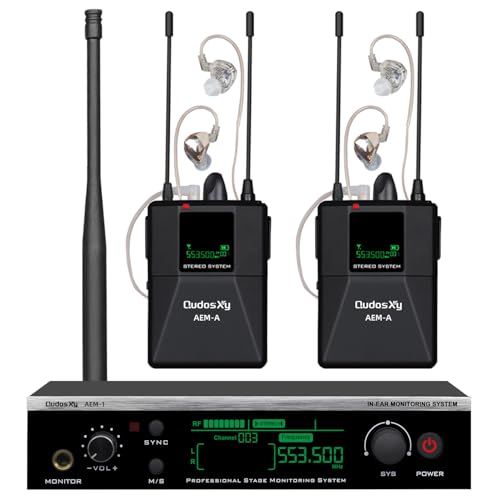
- Stereo and mono modes for flexible monitoring
- UHF band with stated 200 ft stable range
- Carrying case and hybrid XLR/6.3mm inputs included
Best For: Users who want flexible monitoring modes and portable setup
Expanded Four-Receiver Option
XTUGA RW2080 4 Bodypack UHF IEM

- Four bodypack receivers for larger groups
- UHF 902-928MHz with 2*40 adjustable frequencies
- Rackmount-ready metal transmitter for stage use
Best For: Ensembles that need monitoring for four performers
Reliable Mono Monitoring – Phenyx Pro PTM-22 for Band and Studio
If you want a dual wireless in ear monitor system that keeps stage sound clear and dependable, the Phenyx Pro PTM-22 is built for practical live use. It offers mono monitoring with 2×50 selectable UHF frequencies, making it a solid fit for rehearsals, church teams, and bands that need straightforward wireless monitoring.
Best For: Singers, musicians, and worship teams that want reliable mono IEM monitoring with simple frequency control.
Pros:
- 2×50 selectable frequencies help reduce interference in busy RF environments.
- Metal transmitter and LCD display support durable, easy handling on stage.
- 164 ft operation gives performers room to move during live use.
- Includes two bodypack receivers and a rackmount kit for flexible setup.
Cons:
- Mono monitoring may not suit users who want true stereo imaging.
- Battery-powered receivers require AA batteries instead of built-in rechargeables.
Overall, this system focuses on stability and simplicity rather than extra features, which makes it appealing for performers who want consistent in-ear monitoring without a complicated workflow.
True Stereo Flexibility – Xvive U45D for Modern IEM Mixes
The Xvive U45D is a dual wireless in ear monitor system designed for performers who want more flexible monitoring options. With four monitoring modes, true stereo support, dual XLR inputs, and less than 5 ms latency, it gives bands and worship teams a simple way to manage both stereo and mono workflows.
Best For: Musicians and bands that want true stereo monitoring with quick setup and low latency.
Pros:
- Four monitoring modes let you choose stereo, L, R, or Mix.
- Dual XLR inputs support separate left/right signals for clearer placement.
- Less than 5 ms latency helps keep timing tight for vocals and click tracks.
- Fast setup and channel scan make it easy to get started without rack gear.
Cons:
- Up to 5 hours of battery life may be limiting for long sessions.
- 5.8 GHz range is listed at up to 100 ft, which may be less than some UHF systems.
This is a strong pick if your monitoring setup benefits from stereo detail and flexible routing. It keeps the workflow simple while still offering features that matter for live performance.
Long-Range UHF Performance – HHLPRO F10P for Touring Stages
For performers who need distance, stability, and simple operation, this dual wireless in ear monitor system from HHLPRO is built around a 902-927 MHz UHF design and a 300 ft range. It adds auto-scan, one-touch sync, and dual volume control, making it a practical choice for live shows, church services, rehearsals, and touring use.
Best For: Touring musicians, worship teams, and live performers who need a rugged long-range mono IEM system.
Pros:
- 300 ft range gives performers more freedom to move on larger stages.
- 50 channels and auto-scan help find a cleaner frequency quickly.
- <5 ms latency supports tight timing for drummers and instrumentalists.
- Metal construction and included hard case improve portability and durability.
Cons:
- Mono design may not appeal to users looking for stereo monitoring.
- Battery life is listed at 5-8 hours, so longer events may require planning.
It stands out for combining long range with an easy setup process, which is useful when you need dependable monitoring in changing venues. The rugged build also makes it easier to travel with.
Simple Mono Stage Monitoring – Phenyx Pro PTM-11 for Studio and Band
The Phenyx Pro PTM-11 is a dual wireless in ear monitor system built for users who want crisp mono monitoring and a straightforward setup. With 50 UHF frequencies, separate inputs and outputs, and a 164 ft operating range, it suits stage use, studio work, lectures, and other audio-monitoring needs.
Best For: Performers, pastors, and presenters who want reliable mono monitoring with simple routing.
Pros:
- Mono monitoring helps avoid phase issues and keeps audio focused.
- Separate inputs and line out support flexible connection to mixers or speakers.
- 50 selectable frequencies and up to 5 IEM systems working together add setup flexibility.
- Metal transmitter and carry case make the system practical for transport.
Cons:
- Mono sound is less immersive than true stereo monitoring.
- 164 ft range is solid, but obstacles can reduce performance.
For users who care more about clarity and stability than stereo width, this system keeps the signal path simple and dependable. It is a practical fit for environments where consistent monitoring matters most.
Stereo Depth Pick – Dual-Channel Wireless IEM with Stereo and Mix Modes
If you need a dual wireless in ear monitor system for hearing separate parts of a mix clearly, this stereo setup is built for that job. With dual transmitters, independent left/right channels, and mix control, it suits performers and engineers who want more than a basic mono feed.
Best For: Musicians and audio users who want true stereo separation, custom cue mixes, and long-range stage monitoring.
Pros:
- True stereo mode with separate left and right channels to reduce crosstalk.
- Mix mode lets you blend Channel A and B with real-time ratio control.
- 5ms ultra-low latency and up to 500ft range for responsive stage use.
- Includes rechargeable batteries, charging dock support, and USB-C passthrough charging.
Cons:
- Runtime is listed at 5 to 8 hours, so extended sessions may still need charging rotation.
- Feature set is more complex than a basic mono monitoring setup.
This is the strongest pick if you want detailed stereo monitoring with flexible cue handling. The included scan-and-sync features and complete accessory kit make it especially practical for rehearsals, live shows, and mix verification.
Group Monitoring Pick – Mono UHF IEM with 4 Bodypacks and Rack Kit
If your priority is a dependable dual wireless in ear monitor system for shared stage monitoring, this Phenyx Pro kit focuses on stability and simplicity. It uses mono monitoring to avoid phase issues and includes four bodypack receivers, making it a practical option for bands, churches, conferences, and studios.
Best For: Groups that want clear mono monitoring for multiple listeners with straightforward setup and rack-friendly hardware.
Pros:
- Mono monitoring helps avoid phase issues and keeps audio focused.
- One transmitter supports multiple receivers, with four bodypacks included.
- 50 selectable UHF frequencies and up to 5 systems working together.
- Metal transmitter base, half-rack design, rackmount kit, and carry case included.
Cons:
- Operating range is listed at 164 ft, which is shorter than some larger-stage systems.
- Mono-only monitoring won’t suit users specifically looking for stereo separation.
This is a solid utility-first choice if you need reliable group monitoring instead of stereo complexity. The included accessories and multiple receivers make it especially convenient for organized stage and venue use.
Compact Scan Pick – 5.8GHz Wireless IEM with Channel Scan Mode
For buyers comparing a dual wireless in ear monitor system for rehearsal or small-stage use, the Xvive U45 keeps the formula compact and easy to manage. It uses 5.8 GHz wireless, channel scan mode, and true diversity connection stability, with sound specs aimed at clean personal monitoring.
Best For: Solo performers, rehearsal spaces, and home or studio users who want a compact wireless monitor with easy channel finding.
Pros:
- 5.8 GHz true diversity wireless connection with solid RF stability.
- Channel Scan mode helps find the best available wireless channel.
- 24-bit/48kHz audio with 20Hz–20kHz frequency response for detailed monitoring.
- USB-C charging with up to 5 hours of battery life and dual charging cables included.
Cons:
- Range is listed at 100 ft, which is less than larger stage systems.
- Channel matching still requires manual transmitter adjustment after scanning.
This model is best when portability and quick setup matter more than long-range stage coverage. It offers a clean feature set for monitoring practice, rehearsals, and smaller live environments.
Stage-Ready 2-Receiver Pick – XTUGA RW2080 2 Bodypack UHF IEM
If you want a dual wireless in ear monitor system for live monitoring, the XTUGA RW2080 focuses on stable UHF performance, simple operation, and enough range for most small-to-medium stages. It uses the 902-928MHz band, offers 2*40 adjustable frequencies, and is designed to reduce interference while keeping monitoring delay-free.
Best For: Musicians, singers, bands, churches, and studios that need a practical two-receiver UHF IEM setup.
Pros:
- UHF design with delay-free monitoring compared to 2.4GHz systems
- Up to 300 ft wireless range for tabletop stage monitoring
- 2*40 adjustable frequencies help support interference-free multiset operation
- Metal transmitter, ABS bodypacks, and rackmount kit for more professional setups
Cons:
- Only includes 2 bodypack receivers, so larger groups will need additional units
- Designed around mono dual-channel monitoring rather than stereo features
- Range is stated as typical rather than fixed, so real-world coverage may vary
Overall, this RW2080 package is a solid entry point if your priority is dependable UHF monitoring with straightforward hardware and room to scale into multiple IEM systems.
Stereo/Mono Flex Choice – UHF Wireless IEM System with 2 Bodypacks
This dual wireless in ear monitor system is built for users who want flexibility between stereo and mono monitoring without adding complexity. It runs on the 553.5MHz-578.25MHz UHF band, supports zero-delay audio, and includes two bodypack receivers for pairing stage or studio monitoring needs.
Best For: Performers and audio teams who want a dual-mode UHF IEM setup with stereo/mono switching and portable extras.
Pros:
- Switchable stereo and mono modes for different performance or recording scenarios
- UHF transmission with a stated 200 ft stable wireless range
- One transmitter can support multiple bodypack receivers for larger monitoring setups
- Includes carrying case plus hybrid XLR and 6.3mm inputs for wider compatibility
Cons:
- AA batteries for the bodypacks are not included
- Listed range is shorter than some larger-stage alternatives
- More feature-rich setup may be more than needed for very simple monitoring use
As a practical dual-channel option, this system stands out for its stereo/mono flexibility and expandable receiver support, making it a useful choice when your monitoring needs may grow beyond two users.
Expanded Four-Receiver Option – XTUGA RW2080 4 Bodypack UHF IEM
If you need a dual wireless in ear monitor system that can cover more than two performers, this XTUGA RW2080 version keeps the same UHF monitoring approach while expanding to four bodypack receivers. It supports the 902-928MHz band, 2*40 adjustable frequencies, and a stated 300 ft range for cable-free stage use.
Best For: Bands, churches, studios, and ensembles that need a four-receiver UHF monitoring package.
Pros:
- Includes 4 bodypack receivers for larger monitoring groups
- UHF operation with delay-free monitoring and interference reduction
- 2*40 frequencies support multi-set use with up to 6+ IEM systems
- Metal transmitter, ABS receivers, and rackmount kit add durability and convenience
Cons:
- Still centered on mono dual-channel monitoring rather than stereo emphasis
- More receivers can add setup and power-management considerations
- Range is given as typical coverage, so actual performance depends on the venue
This larger RW2080 package makes sense when you want the same core UHF monitoring features but need enough receivers for a bigger group. It is a practical step up for shared stage monitoring without changing the basic system style.
How We Picked the Best Dual Wireless in Ear Monitor System
We looked for systems that make sense for real-world use: dependable wireless performance, usable frequency options, low-latency monitoring, and receiver setups that fit different stage sizes. We also favored models with metal build quality, multiple bodypack options, and clear stereo or mono monitoring paths where available.
Quick Comparison
Not every Dual Wireless in Ear Monitor System is built for the same job. Some are better for small bands and rehearsal spaces, while others are better suited to larger stages, worship teams, or players who want stereo flexibility. The main differences usually come down to wireless band, number of monitor modes, receiver count, and how much setup control you need.
Key Buying Factors for a Dual Wireless in Ear Monitor System
Wireless Band and Range
Check whether the system uses UHF or 5.8GHz and confirm the usable range for your venue. UHF systems often appeal to users who want familiar stage monitoring performance, while 5.8GHz models can be attractive for certain interference environments. Range matters most when the performer moves around a large stage or when the mix position is far from the performers.
Latency and Monitoring Modes
Low latency is essential for timing and comfort. If the delay is too noticeable, the mix feels disconnected and performance can suffer. Also look for stereo, mono, and mix options, since different musicians prefer different monitoring styles depending on instrument, vocal role, and personal mix needs.
Receiver Count and Team Setup
Choose the number of bodypacks based on how many performers need independent monitoring. A Dual Wireless in Ear Monitor System with two receivers may be enough for a duo, small group, or rehearsal rig, while four-bodypack kits are often a better value for full bands and worship teams.
Build Quality and Ease of Use
Metal transmitters and sturdy bodypacks are worth prioritizing if the gear will travel frequently. Clear channel controls, simple pairing, and rack-ready or stage-friendly layouts can save setup time and reduce mistakes during soundcheck.
Who Should Buy Which Dual Wireless in Ear Monitor System?
Small bands and duos: Look for simpler two-bodypack systems with dependable range and straightforward controls.
Worship teams and multi-musician rigs: Four-bodypack packages and systems with more monitoring flexibility usually offer the best overall value.
Players who want stereo detail: Choose a system with stereo or multiple monitor modes so you can shape separation and placement more naturally.
Budget-focused buyers: Prioritize solid range, usable channel counts, and reliable bodypacks over extra features you may not use.