Choosing the right effects processor can make a major difference in a church guitarist’s setup. The best units provide dependable tones, quick patch changes, quiet operation, and enough flexibility for worship sets without complicating rehearsal or live sound.
This roundup compares 10 options across several budgets and workflows, including compact practice pedals, expression-equipped multi-effects units, and advanced processors with amp modeling, impulse-response loading, MIDI, and USB audio features.
Best 10 Guitar Effects Processors for Church Musicians Picks for 2026
Stage-Ready Flexibility

- 240-plus effects with amp and cab models
- Balanced XLR, MIDI, FX loop, and USB-C I/O
- Built-in expression pedal, looper, and drums
Best For: Direct-to-PA worship rigs and flexible preset libraries
Pedalboard Command Center

- 100-plus HX effects with up to nine at once
- Includes classic Line 6 legacy effects
- Touch-sensitive switches and scribble strips
Best For: Existing amp-and-pedal rigs needing centralized effects control
Simple Practice Companion

- 66 effects with 80 preset and 80 user patches
- Assignable expression pedal and 180-second looper
- Works with a 9V adapter or four AA batteries
Best For: Portable practice, rehearsal, and entry-level worship setups
Hands-On BOSS Control
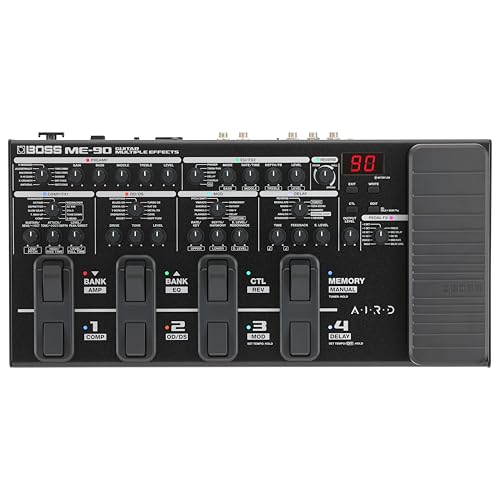
- 60 effects and 11 AIRD amp models
- Eight footswitches plus redesigned expression pedal
- IR loading, FX loop, USB-C, and battery operation
Best For: Live players who want fast, stompbox-style adjustments
Most Versatile
MOOER GE100Pro Guitar Multi-Effects Pedal

- 240 effects with amp modeling and expandable IR support
- Looper, drum machine, Bluetooth, USB-C, and expression pedal
- 3.5-inch display with AI, mobile, and desktop editing
Best For: Worship players wanting extensive tones and integrated practice tools
Best Portable NAM Setup
Valeton GP-50 Multi-Effects Processor
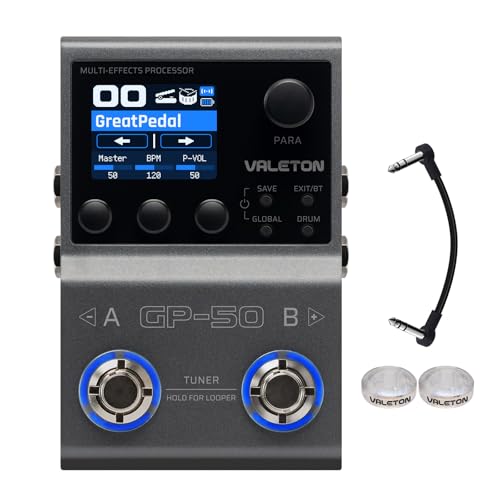
- 100+ effects with NAM and IR loading
- Nine simultaneous modules and 100 patch slots
- Rechargeable battery, Bluetooth app control, and USB audio
Best For: Mobile worship rigs, direct recording, and compact pedalboards
Best Practice-Focused Value
KMF-1 Multi-Effects Guitar Pedal
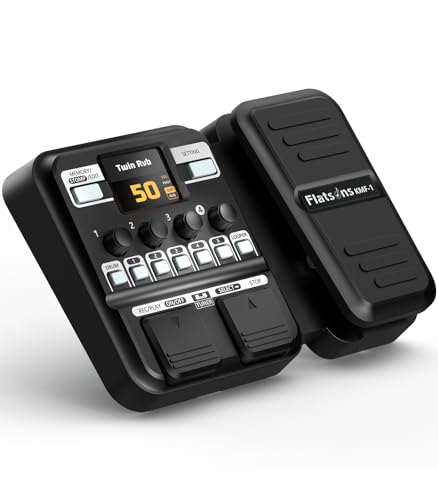
- 77 effects, 18 amp models, and 18 cabinet simulators
- Looper, tuner, drum rhythms, and AUX backing-track input
- Stomp/Edit modes with adapter or AA-battery power
Best For: Practice, worship preparation, and accessible live tone switching
Stage Command Center

- 240+ effects and 140+ amp/cab models
- 256 patch slots and 180-second looper
- 6-in/4-out USB-C interface with re-amping
Best For: Live worship players managing many tones and recording workflows
Practice-Friendly Starter

- 71 effects and 13 amp models
- 30-second looper with 68 rhythm patterns
- Expression pedal and headphone monitoring
Best For: Beginners and practice-focused worship guitarists
Flexible Tone Workshop

- 200 presets, 55 amps, and 26 cabinet simulations
- Four footswitches with expression control
- 80-second looper and USB-C OTG recording
Best For: Worship players wanting flexible control and mobile recording
Stage-Ready Flexibility – Valeton GP-200
Valeton GP-200 Multi-Effects Processor for Guitar & Bass, Expression Pedal, MIDI, USB Interface
Check Price On AmazonFor guitar effects processors for church musicians, the Valeton GP-200 is a versatile choice when you need extensive sounds, direct outputs, and flexible patch control. It combines amp and cab modeling, effects, an expression pedal, MIDI, balanced XLR outputs, and USB recording features in one unit.
Best For: Church guitarists who need numerous presets, direct-to-PA connectivity, and studio-friendly routing.
Pros:
- Includes 240-plus effects, amp and cab models, and up to 11 movable modules per patch.
- Balanced XLR outputs, ground lift, MIDI, effects loop, and USB-C audio interface support stage and studio use.
- Built-in expression pedal, looper, drum patterns, 20 IR slots, and a color screen add practical flexibility.
Cons:
- It requires a power adapter and does not operate on batteries.
- The large feature set may take time to learn and organize.
The GP-200 is a strong all-in-one option for worship setups that move between rehearsals, live services, and recording. Its direct outputs and patch capacity are especially useful when several songs require distinct tones.
Pedalboard Command Center – Line 6 HX Effects
The Line 6 HX Effects suits guitar effects processors for church musicians who already use an amplifier or pedalboard and want centralized effects control. It provides more than 100 HX effects, legacy sounds, and performance-focused footswitch features without being presented as an amp-modeling unit.
Best For: Players building a sophisticated effects-based rig around an existing amp and pedals.
Pros:
- Runs up to nine effects simultaneously from a library of 100-plus HX effects.
- Adds legacy effects from Line 6 M-series and DL4, MM4, FM4, and DM4 units.
- Capacitive-sensing switches, LED rings, and scribble strips make live control easier.
Cons:
- It is designed as an effects processor rather than an all-in-one amp-and-cab solution.
- It requires a DC power supply and does not offer the battery option listed for some competing units.
Choose the HX Effects when your church rig already has its core amplification handled and you want a powerful command center for modulation, delay, reverb, drive, pitch, and other effects.
Simple Practice Companion – MOOER GE100
The MOOER GE100 is a straightforward option among guitar effects processors for church musicians, especially for players who value easy patch saving, portable practice, and core effects. It includes 66 effect types, an assignable expression pedal, a looper, drum rhythms, and both adapter and AA-battery power options.
Best For: Budget-conscious worship guitarists who want a compact practice and rehearsal processor.
Pros:
- Offers 80 preset and 80 user patches for organizing sounds.
- Includes 66 effects, an assignable expression pedal, a 180-second looper, and drum machine.
- Can run from a DC 9V adapter or four AA batteries, with headphone output for practice.
Cons:
- Its feature set and effect count are more limited than the larger processors in this roundup.
- The supplied notes identify a 1/4-inch mono-jack connection rather than balanced XLR outputs.
The GE100 is a practical entry point for learning tones, preparing parts, and practicing quietly. Its battery operation can also be convenient for mobile rehearsals, although players needing advanced direct-to-PA connectivity may want a higher-tier model.
Hands-On BOSS Control – BOSS ME-90
BOSS ME-90 Guitar Multi-Effects Guitar Processor | All-In-One Guitar Processor
Check Price On AmazonThe BOSS ME-90 is a practical pick for guitar effects processors for church musicians who want quick, hands-on tone changes during services. Its knob-based interface, eight multi-function footswitches, expression pedal, AIRD amp models, IR loading, and effects loop support both straightforward patches and more detailed setups.
Best For: Performing guitarists who prefer stompbox-style control and fast adjustments over menu-heavy editing.
Pros:
- Provides 60 effects, 11 AIRD amp models, IR loading, and seven simultaneous effect categories.
- Eight multi-function footswitches and a redesigned expression pedal support live control.
- Offers 24-bit AD/DA and 32-bit floating-point processing, USB-C, an effects loop, and battery-powered operation.
Cons:
- It has 36 preset and 36 user patches, fewer listed patch locations than the Valeton GP-200.
- Wireless mobile editing and streaming require the optional Bluetooth Audio MIDI Dual Adaptor.
The ME-90 balances modern amp and effects processing with a familiar physical layout. It is well suited to worship players who need to adjust gain, ambience, and modulation quickly without losing sight of the controls.
Most Versatile – MOOER GE100Pro Guitar Multi-Effects Pedal
For church musicians who need flexible guitar effects processors for church musicians, the MOOER GE100 Pro combines amp modeling, 240 effects, looping, drum rhythms, and modern connectivity in one stage-ready unit. Its 3.5-inch color display, AI tone assistant, and app or desktop editing can simplify preset creation for worship sets, practice, and recording.
Best For: Players seeking broad tonal flexibility, visual controls, and integrated practice or recording features.
Pros:
- Supports amp modeling, MNRS, NAM A2, and third-party IR files.
- Includes an 80-second stereo looper, 40 drum rhythms, and 10 metronome patterns.
- Offers Bluetooth audio, USB-C, mobile-app control, and PC editing.
- Large 3.5-inch color screen and responsive expression pedal support hands-on operation.
Cons:
- Uses an AC adapter, so the standard version is less suited to battery-free mobile setups.
- The large feature set may require time to learn and organize for live use.
The GE100 Pro is a strong all-in-one option when a worship guitarist values deep sound-shaping, practice tools, and connectivity more than a minimal pedalboard footprint.
Best Portable NAM Setup – Valeton GP-50 Multi-Effects Processor
The Valeton GP-50 is a compact choice among guitar effects processors for church musicians who need flexible routing, direct connectivity, and portable operation. It combines more than 100 HD effects with NAM and IR loading, while Bluetooth app control and USB audio support make it practical for rehearsal, live rigs, and recording.
Best For: Guitarists who want a compact, battery-powered processor with NAM, IR, app, and USB recording features.
Pros:
- Runs up to nine customizable effect modules simultaneously.
- Stores up to 20 cabinet IR files and 80 NAM files, including factory presets.
- Includes Bluetooth 5.0, USB audio with re-amping support, USB MIDI, and stereo outputs.
- Rechargeable battery, DC 9V, and USB 5V power options improve portability.
Cons:
- The 1.77-inch screen is smaller than the display on some larger floor processors.
- Dual footswitches may provide less immediate control than a larger multi-switch unit.
With its small metal enclosure and broad connection options, the GP-50 suits worship musicians who want modern direct tones and flexible editing without carrying a full-size processor.
Best Practice-Focused Value – KMF-1 Multi-Effects Guitar Pedal
The KMF-1 is a practical option for church musicians comparing guitar effects processors for church musicians with built-in rehearsal tools. It provides 77 effects, 18 amp models, 18 cabinet simulators, a looper, drum rhythms, AUX input, and an expression pedal, making it useful for both worship preparation and live tone changes.
Best For: Beginners and practice-oriented players who want broad effects coverage with straightforward performance and rehearsal features.
Pros:
- Offers 77 effects across eight modules, including drive, modulation, delay, reverb, and filter.
- Includes 50 presets, a 30-second looper, 42 drum rhythms, tuner, and AUX input.
- Stomp Mode and Edit Mode allow either pedal-style switching or detailed parameter adjustments.
- Supports a DC adapter or six AA batteries for up to 2.5 hours of use.
Cons:
- The battery compartment requires six AA batteries and provides limited stated runtime.
- Cabinet simulation must be managed carefully when connecting to real cabinets or amps.
The KMF-1 emphasizes accessible practice and live versatility, making it a sensible choice when built-in rhythms, backing-track input, and a broad set of core effects matter more than advanced app ecosystems.
Stage Command Center – Valeton GP-200
For church musicians seeking guitar effects processors for church musicians, the Valeton GP-200 is a stage-oriented option with extensive amp and effects modeling, flexible footswitch layouts, and performance-focused connectivity. Its color display, expression pedal, and large preset capacity make it suited to managing multiple worship tones from one unit.
Best For: Worship players who need broad live-performance control, extensive preset storage, and direct recording or re-amping options.
Pros:
- Includes more than 240 effects and over 140 amp and cabinet models, with up to 11 simultaneous modules.
- Offers 256 patch slots, 20 user cabinet IR slots, a built-in expression pedal, and customizable footswitch layouts.
- Provides a 6-in/4-out USB-C audio interface with loopback and re-amping support, plus a 180-second looper and drum machine.
- Rugged metal construction and the included padded gig bag support transport and regular stage use.
Cons:
- Its extensive modeling and routing options may take more time to learn than a simpler practice unit.
- At roughly 12.6 by 7.7 by 2.4 inches and 2.37 kg, it is less compact than entry-level processors.
The GP-200 is a strong fit when a worship rig needs many organized sounds, substantial live control, and computer or mobile audio integration. It may be more capability than necessary for players who only need a few basic effects.
Practice-Friendly Starter – Zoom G1X Four
The Zoom G1X Four is a compact, approachable choice for church musicians comparing guitar effects processors for church musicians, especially those who want amp modeling, rhythm support, and an expression pedal without a larger floorboard. It is designed for practice, songwriting, silent monitoring, and straightforward live use.
Best For: Beginners, practice-focused worship players, and musicians who want an affordable all-in-one unit with built-in rhythms and looping.
Pros:
- Provides 71 effects and 13 amp models for building clean, ambient, and distorted tones.
- Includes a 30-second looper and 68 rhythm patterns for practice, songwriting, and experimentation.
- Supports guitar input, auxiliary audio, amp or headphone monitoring, and an integrated expression pedal.
- Zoom Guitar Lab enables patch editing and additional tone-management control on Mac and Windows.
Cons:
- The 30-second looper and smaller effect library offer less room for complex live arrangements than larger processors.
- Its listed hardware connections are more limited than units with comprehensive USB audio interfaces and routing.
The G1X Four makes sense for worship guitarists who prioritize ease of use, practice tools, and portability. Players needing extensive preset management or advanced live routing may eventually want a more feature-rich processor.
Flexible Tone Workshop – MOOER GE150 Pro
The MOOER GE150 Pro gives church musicians a flexible middle-ground option among guitar effects processors for church musicians, combining a four-footswitch layout, expression control, amp and cabinet modeling, and USB-C recording features. Its preset library and MNRS sample support make it useful for players building varied worship sounds.
Best For: Worship guitarists who want flexible footswitch control, extensive preset and modeling options, and quick phone-based recording.
Pros:
- Includes 200 factory presets, 55 amp models, 26 cabinet simulations, and 20 slots each for amp and cabinet samples.
- Four multifunction footswitches support preset changes and performance functions, while the expression pedal controls parameters or volume.
- Built-in tuner, 80-second stereo looper, 40 drum rhythms, and 10 metronome modes support practice and performance.
- USB-C supports editing, data management, firmware updates, and OTG audio recording and playback with compatible devices.
Cons:
- Its extensive controls and effect-chain options may require setup time for players seeking a simple plug-and-play pedal.
- The supplied notes describe a standard mains-powered version, so it is less convenient for battery-free mobile use than the separate Li edition.
The GE150 Pro is a practical choice for musicians who want more hands-on control than a basic practice processor without moving to a larger flagship floorboard. Its OTG recording and rhythm tools also suit worship players developing parts away from rehearsal.
How We Picked the Best Guitar Effects Processors for Church Musicians
We focused on features that matter in worship environments: reliable switching, usable clean and ambient tones, practical preset management, flexible signal routing, and compatibility with direct-to-PA rigs. We also considered expression-pedal support, amp and cabinet modeling, impulse-response loading, MIDI, USB recording, looper functions, and mobile or computer editing.
Because church musicians may serve in different spaces—from a small youth room to a full production stage—we included choices at multiple price and complexity levels. The goal is not to identify one universal winner, but to match each processor to a realistic playing and technical workflow.
Quick Comparison
| Best For | Look For |
|---|---|
| Simple live worship setup | Fast preset access, onboard controls, and dependable outputs |
| Direct-to-PA performance | Amp modeling, cabinet or IR support, and flexible output routing |
| Ambient and layered textures | Strong delay and reverb algorithms, snapshot-style changes, and expression control |
| Home practice and learning | Built-in effects, looper functions, USB audio, and headphone output |
| Advanced stage rigs | MIDI, multiple simultaneous modules, patch management, and editing software |
Key Buying Factors for Guitar Effects Processors for Church Musicians
Preset Changes and Foot Control
Worship sets often move quickly between clean verses, driven choruses, ambient transitions, and lead parts. Prioritize processors that let you change sounds without menu diving. Dedicated footswitches, assignable controls, scenes, or snapshots can be more valuable than a large effect count.
Direct Connectivity
If you run into a mixer, audio interface, or powered speaker, amp and cabinet modeling is important. IR loading can provide more realistic speaker responses, while flexible outputs help send different signals to front-of-house and stage monitoring. Check whether the unit supports stereo operation if wide delays and reverbs are central to your sound.
Editing and Patch Storage
Computer, Bluetooth, or app-based editing can speed up preparation, especially when building patches for an entire service. Confirm the number of patch locations and whether backups are easy. A processor with fewer effects but a clearer interface may be more useful than one with hundreds of sounds that are difficult to organize.
Noise, Durability, and Integration
Clean power, sensible gain staging, and noise-control tools help in quiet worship passages. MIDI, USB audio, and expression-pedal connections are worthwhile for musicians using keyboards, playback systems, recording software, or external controllers.
Who Should Buy Which Guitar Effects Processors for Church Musicians?
Choose a compact unit such as the Zoom G1X Four or KMF-1 if you mainly need affordable practice effects, a looper, and basic live sounds. The MOOER GE100 and GE100Pro suit players who want broad effect libraries and straightforward multi-effects control without moving to a highly complex rig.
The BOSS ME-90 is a strong fit for guitarists who prefer hands-on knobs and traditional pedal-style operation. The Line 6 HX Effects is better suited to players who already use an amplifier or separate amp-modeling solution and want sophisticated effects, routing, and MIDI control.
For direct-to-PA worship rigs, consider the Valeton GP-50, Valeton GP-200 models, or MOOER GE150 Pro. Their amp-modeling, IR, USB, and expanded routing features are useful when the processor needs to serve as the center of the guitar signal chain. Before buying, verify the exact included accessories and feature set of the specific model, then choose the unit whose controls you can operate confidently under stage pressure.