The best looper pedals can turn a solo performance into a layered arrangement, help you practice with more purpose, and make songwriting more interactive. The right choice depends on how much recording time, control, and rhythm support you actually need.
This roundup compares 10 looper pedals across simple practice models, compact performance pedals, and full-featured floor-based loop stations.
Best 10 Looper Pedals Picks for 2026
Advanced Looping

- 13 hours of stereo recording with 99 phrase memories
- 57 rhythms, A/B variations, and seven drum kits
- Multicolor LCD plus USB and MIDI connectivity
Best For: Performers and advanced loopers needing deep control
Simple Guitar Looping

- Five minutes of loop time with unlimited overdubs
- Undo and redo support for quick corrections
- True bypass and analog-dry-through
Best For: Guitarists seeking simple, transparent looping
Beginner-Friendly Looping

- 12 minutes of stereo recording
- 24-segment LED loop-mode indicator
- Works with guitar, bass, keyboards, and more
Best For: Beginners learning layered phrase looping
Long-Recording Value

- Nine loops and 40 minutes of total recording
- Built-in tuner with continuous switching
- USB WAV import and export
Best For: Players needing long loops, storage, and tuning
Flagship Performance
BOSS RC-600 Floor-Based Loop Station
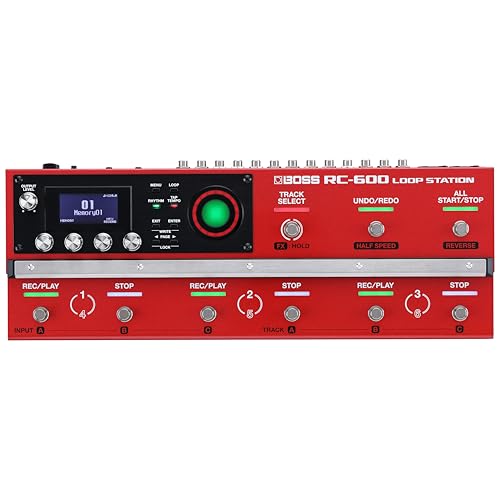
- Six simultaneous stereo tracks for layered performances
- 32-bit processing and extensive onboard effects
- Nine assignable footswitches with three pedal modes
Best For: Advanced live loopers and multi-instrumentalists
Stage-Ready Simplicity
Sheeran Looper + Dual Track Looper Pedal

- Four looping modes with a full-color display
- Stores up to 128 loops and over three hours of audio
- USB audio interface with battery-powered portability
Best For: Performers needing simple, portable dual-track looping
Practice and Jamming Value

- 300 minutes of recording across 100 loop slots
- 220 drum grooves in 11 styles
- Headphone output, time stretch, and auto record
Best For: Solo practice, jamming, and rhythm-backed songwriting
Versatile Practice Companion

- Loop, tuner, drum machine, and mixed modes
- 11 minutes of storage across four locations
- 30 patterns with app editing and sharing
Best For: Players wanting integrated rhythms and looping
Extended Loop Storage

- Three slots with 90 minutes total capacity
- Unlimited overdubs and auto-save
- Bright screen and true bypass
Best For: Extended jams and live loop arrangements
Connected Tone Control
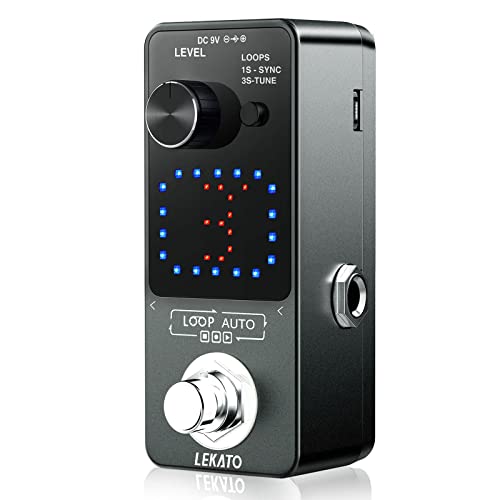
- Three loops with 18 minutes total recording
- SYNC recording, tuner, and unlimited overdubs
- USB WAV import and export with auto-save
Best For: Players managing loops with a computer
Advanced Looping – BOSS RC-5 Loop Station
The BOSS RC-5 is one of the most feature-rich looper pedals here, combining high-resolution audio processing, extensive phrase storage, onboard rhythms, and flexible connectivity. It suits players who want more than basic record-and-playback functionality in a compact pedalboard format.
Best For: Performers and experienced loopers who need detailed control, rhythm accompaniment, MIDI integration, and long recording capacity.
Pros:
- 13 hours of stereo recording and storage for 99 phrase memories.
- 57 rhythms with A/B variations and seven drum kits.
- 32-bit AD/DA conversion, 32-bit floating-point processing, and a multicolor LCD.
- USB, mini-TRS MIDI I/O, and external control support expand its flexibility.
Cons:
- Its advanced controls and connectivity may be more than beginners need.
- Optional PSA adapter is required for extended powered use.
The RC-5 is a strong choice when loop storage, rhythm options, and system integration matter as much as straightforward looping. Its compact design also helps preserve pedalboard space.
Simple Guitar Looping – TC Electronic DITTO LOOPER
The TC Electronic DITTO keeps looper pedals focused on the essentials: record, overdub, undo, and redo. With five minutes of loop time, unlimited overdubs, true bypass, and analog-dry-through, it is a straightforward option for guitarists who want an uncluttered setup.
Best For: Guitarists who want intuitive looping with transparent dry signal handling and a compact control layout.
Pros:
- Provides five minutes of loop time with unlimited overdubs.
- Includes undo and redo functions for correcting layers.
- True bypass and analog-dry-through preserve the dry signal character.
- Simple, guitarist-focused operation.
Cons:
- A 9V power supply providing 100 mA or more is required and not included.
- Offers less recording capacity and feature depth than larger loop stations.
The DITTO is best when ease of use and a transparent signal path take priority over onboard rhythms, memory banks, or extensive connectivity.
Beginner-Friendly Looping – BOSS RC-1 Loop Station
The BOSS RC-1 is a practical entry point into looper pedals, offering a clear loop indicator and straightforward record, playback, overdub, undo, and redo controls. Its stereo connections and 12 minutes of recording make it useful for guitar, bass, keyboard, and other compatible setups.
Best For: Beginners and players who want an easy-to-read loop station for building layered phrases without a complicated interface.
Pros:
- Simple operation supports recording, playback, overdubbing, undo, and redo.
- 12 minutes of stereo recording time.
- 24-segment LED indicator shows the current loop mode.
- Phrase memory is retained after the pedal is turned off.
Cons:
- AC adapter is optional and sold separately.
- It has fewer advanced features than the RC-5.
The RC-1 is a dependable choice for learning looping and creating layered parts quickly. Its visual indicator and broad instrument compatibility keep operation approachable.
Long-Recording Value – LEKATO Looper with Tuner
The LEKATO looper combines extended recording capacity with a built-in tuner and USB file transfer. It supports nine loops, unlimited overdubbing, and up to 10 minutes for a single recording, making it a versatile option for players who want practical features at an accessible scale.
Best For: Players who need multiple stored loops, long recording times, onboard tuning, and computer-based WAV import or export.
Pros:
- Offers nine loops, 40 minutes of total recording, and up to 10 minutes per loop.
- Includes a built-in high-sensitivity tuner with continuous switching.
- USB supports importing and exporting WAV loop files.
- Provides unlimited overdubbing with foot-command access to undo, redo, stop, and erase.
Cons:
- The supplied notes specify corded-electric operation rather than battery power.
- Its single-knob volume control may feel limited for players seeking extensive hands-on controls.
With its tuner, long recording time, and USB workflow, the LEKATO is a practical pick for home practice and performers who want more storage than a basic looper provides.
Flagship Performance – BOSS RC-600 Floor-Based Loop Station
The BOSS RC-600 is a feature-rich choice for looping musicians who need extensive control, layered arrangements, and professional sound. It records and edits up to six simultaneous stereo loops, making it one of the most capable looper pedals for complex live performances.
Best For: Guitarists, singer/songwriters, and multi-instrumentalists building elaborate live loop performances.
Pros:
- Six simultaneous stereo phrase tracks support complex layered arrangements.
- 32-bit AD/DA and 32-bit floating-point processing provide class-leading sound quality.
- Includes 49 Input FX and 53 Track FX types, with four usable at once in each section.
- Nine freely assignable footswitches and three pedal modes allow flexible control.
Cons:
- Its extensive feature set may require more setup and learning than simpler loopers.
- The large, 8.2-pound floor-based design is less portable than compact pedals.
The RC-600 is best suited to performers who value maximum routing, effects, and foot-control flexibility. It is a substantial investment in both space and learning time, but its six-track architecture and deep customization make it a powerful centerpiece for sophisticated looping rigs.
Stage-Ready Simplicity – Sheeran Looper + Dual Track Looper Pedal
The Sheeran Looper + is designed for performers who want a straightforward dual-track workflow with modern storage and connectivity. Its color display, RGB loop-status ring, and four looping modes make it an approachable option among looper pedals for stage or studio use.
Best For: Gigging musicians, street performers, and creators who need portable dual-track looping with USB recording.
Pros:
- Four modes—single, dual, sync, and song—support different performance workflows.
- Stores up to 128 loops and more than three hours of audio internally.
- Works as a 2-in/2-out USB audio interface for recording and streaming.
- Runs for over six hours on four AA batteries under typical use.
Cons:
- Its dual-track design offers less simultaneous track capacity than larger flagship loop stations.
- The included 1/4-inch inputs and outputs may require additional adapters for some setups.
With rugged dual pedals, visual feedback, battery operation, and drag-and-drop loop transfer, the Sheeran Looper + balances live practicality with home-studio features. It is a strong fit for musicians who prioritize an intuitive workflow and portability over highly complex multi-track control.
Practice and Jamming Value – FLAMMA FF20 Looper Pedal
The FLAMMA FF20 combines a stereo looper, drum machine, and practice-friendly features in a compact pedal. With 300 minutes of recording, 100 loop slots, and 220 drum grooves, it is a versatile option among looper pedals for guitarists and bassists developing ideas or playing without a band.
Best For: Home practice, solo jamming, busking, and musicians who want built-in rhythm accompaniment.
Pros:
- Offers 300 minutes of stereo recording across 100 memory slots.
- Built-in drum machine provides 220 grooves across 11 styles.
- Full-color screen displays loop status, recording time, BPM, and drum patterns.
- Time stretch, auto record, one-shot mode, fade out, and tap tempo add performance flexibility.
Cons:
- File transfer requires the included editor software through USB.
- The corded-electric design is less convenient for battery-powered outdoor use.
The FF20 is a practical all-in-one tool for musicians who want looping and rhythm backing without adding a separate drum machine. Its headphone output also makes it useful for quiet practice, while the screen and auto-record function help keep operation clear during sessions.
Versatile Practice Companion – M-VAVE Circle Looper
For players comparing looper pedals with built-in rhythm support, the M-VAVE combines looping, a tuner, and a drum machine in one compact unit. It offers up to 11 minutes of total loop storage, app-editable drum patterns, and separate volume controls for drums and loops.
Best For: Guitarists who want looping, rhythm patterns, and tuning in a single pedal.
Pros:
- Four modes include tuner, drum machine, loop, and mixed operation.
- Stores up to four loop songs with unlimited overdubbing.
- Includes 30 preset drum patterns with app editing and sharing.
- Supports DC 9V or USB 5V power and has a durable metal shell.
Cons:
- Total loop storage is limited to 11 minutes.
- The power requirements and USB connectivity may require extra setup.
The M-VAVE is a feature-rich choice for practice, songwriting, and solo performance, especially if integrated rhythm accompaniment matters as much as basic looping.
Extended Loop Storage – Donner Triple Looper
The Donner Triple Looper stands out among looper pedals for its generous 90-minute total recording capacity. Three independent loop slots, unlimited overdubs, auto-save, and a bright status screen make it suited to building complete song sections during practice or performance.
Best For: Solo performers, songwriters, and buskers who need long recordings and multiple loop sections.
Pros:
- Three loop slots provide up to 30 minutes per loop.
- Unlimited overdubs support layered arrangements.
- Bright screen shows loop status, progress, and timing.
- True bypass preserves the original guitar tone when bypassed.
Cons:
- A 9V center-negative power supply is required and not included.
- The single-footswitch design uses tap commands that may take practice.
With its unusually large storage capacity and automatic saving, this Donner model is a practical option for extended jams, songwriting sessions, and live looping where losing a recorded idea is especially inconvenient.
Connected Tone Control – LEKATO SYNC Looper
For musicians seeking compact looper pedals with editing and file-transfer flexibility, the LEKATO offers three loop slots, 18 minutes of total recording time, a tuner, and synchronous recording. USB import and export support also makes it useful for moving WAV loop files between the pedal and a computer.
Best For: Guitar and bass players who want a compact looper with tuner, sync recording, and computer file management.
Pros:
- Synchronous recording lets you enter recording during playback.
- Three loops provide up to 18 minutes of total recording time.
- Offers unlimited overdubs, undo/redo, auto-save, and USB WAV transfer.
- Includes a built-in tuner and 48K/24-bit sampling.
Cons:
- The 18-minute total capacity is lower than the Donner’s.
- A 9V center-negative power supply is required and not included.
- One-button foot commands may require learning the operating sequence.
The LEKATO balances compact size with useful workflow features, making it a strong fit for players who want to save, transfer, and refine loops rather than simply record and replay them.
How We Picked These Looper Pedals
We focused on the features that most affect everyday use: recording time, loop storage, overdubbing, undo and redo controls, rhythm features, footswitch layout, tuning support, connectivity, and overall operating complexity. The selection includes straightforward pedals for beginners as well as advanced units suited to solo performers and loop-based songwriters.
We also considered whether each pedal is practical for its intended role. A compact looper may be ideal for practicing guitar parts, while a multi-track station needs enough control and flexibility for live arrangements.
Quick Comparison
| Best For | What to Look For |
|---|---|
| Beginners | Simple controls, clear loop status, and reliable one-button operation |
| Practice and songwriting | Generous loop time, undo/redo, and easy overdubbing |
| Live solo performers | Multiple tracks, hands-free control, rhythm accompaniment, and presets |
| Portable rigs | Compact construction, low power demands, and straightforward connections |
| Rhythm-based playing | Built-in drum patterns, tempo control, and synchronized loops |
Key Buying Factors for Looper Pedals
Loop Time and Memory
Short loop times are sufficient for basic riffs and practice. If you build complete arrangements, choose a pedal with longer recording capacity, multiple memory slots, or both. Check whether advertised time is shared across tracks or available per saved loop.
Controls and Footswitch Layout
Look for clearly separated record, play, stop, and overdub functions. Dedicated switches can be easier to use live than compact multi-function controls, although smaller pedals save valuable board space.
Tracks, Overdubs, and Undo
Single-track loopers keep the workflow simple. Multi-track models offer more control over verse, chorus, and backing parts. Undo and redo are especially useful when correcting a bad overdub without losing the original loop.
Drums, Sync, and Tuning
Built-in drum patterns can provide a more dependable practice foundation than a metronome. Sync support helps keep rhythm parts aligned, while an integrated tuner can reduce the number of pedals in a compact setup.
Connections and Power
Check input and output configuration, USB support, stereo compatibility, power requirements, and whether a suitable adapter is included. Analog-dry-through and true bypass may also matter if preserving your unprocessed signal is a priority.
Who Should Buy Which Looper Pedals?
Choose a basic single-track model if you are new to looping or mainly want to layer short guitar phrases. A pedal with a display, tuner, and longer memory is a better fit for home practice and songwriting. Players who need drums, saved presets, or app and USB editing should consider a feature-rich compact unit.
For live solo musicians, prioritize multiple independent tracks, dedicated foot controls, reliable tempo handling, and enough memory for a complete set. If portability matters most, select the simplest pedal that still provides the loop length and connectivity your rig requires. The best Looper Pedals are the ones whose controls feel natural enough that you can focus on playing rather than managing the device.