The right portable projector screen can make outdoor movie nights, backyard gatherings, camping trips, and temporary home theaters look noticeably sharper and more polished.
We selected 10 options across popular sizes, aspect ratios, screen materials, stands, and front- or rear-projection designs to help you find a practical match for your space and projector.
Best 10 Portable Projector Screens Picks for 2026
Best Foldable Screen
120-Inch Portable Projector Screen

- Large 16:9 viewing area
- Lightweight and folds compactly
- Supports front and rear projection
Best For: Large indoor or outdoor viewing with flexible mounting
Best Outdoor Stability
120-Inch Projector Screen with Stand

- Reinforced freestanding steel base
- Includes stakes, ropes, and sandbags
- Supports front and rear projection
Best For: Backyard movies, camping, and windy outdoor setups
Lightweight Tripod Pick
80-Inch Excelimage Portable Screen
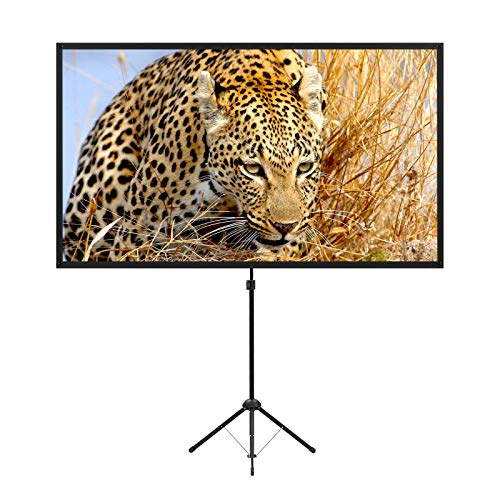
- 80-inch 16:9 display with 160° viewing angle
- Foldable tripod and aluminum tube frame
- Includes carry bag and two-year warranty
Best For: Portable indoor and outdoor movie viewing
Camping-Friendly Choice

- Lightweight 5.62-pound aluminum construction
- Tool-free folding setup with padded carry bag
- Includes rope, hook, and water bag for outdoor use
Best For: Camping and backyard movie nights
Travel-Ready Frame
Foldable 80-Inch Outdoor Screen

- Foldable aluminum frame with padded carry bag
- 160° viewing angle and double-sided projection
- Works for movies, presentations, and public displays
Best For: Travel, backyard cinema, and temporary presentations
Best Compact Tripod Screen

- 80-inch 16:9 fiberglass screen
- Under-three-minute setup with tripod
- Lightweight design with carry bag
Best For: Portable indoor and outdoor movie nights
Best Bright 100-Inch Screen

- 100-inch 16:9 PVC projection screen
- Claimed 1.5 gain for bright images
- Two-minute setup with tripod and stakes
Best For: Versatile home theater and backyard use
Best Foldable Screen – 120-Inch Portable Projector Screen
This 120-inch portable projector screen is a practical choice when you want a large viewing area without carrying a rigid frame. Its lightweight, foldable polyester design supports indoor or outdoor movie viewing and can be mounted with hooks, ropes, nails, brackets, or double-sided tape.
Best For: Home theaters, outdoor movies, presentations, and buyers who need a large screen that stores compactly.
Pros:
- Large 104-by-58-inch 16:9 viewing area.
- Lightweight 1.7-pound design folds into a backpack or suitcase.
- Supports front and rear projection with a 160-degree viewing angle.
- Washable, anti-crease polyester fabric is easy to maintain.
Cons:
- Wall mounting requires separate fastening hardware or supports.
- It does not include a freestanding frame or stand.
Choose this model if portability and screen size matter more than a quick freestanding setup. Its flexible mounting options make it adaptable, but you will need a suitable surface or support system.
Best Outdoor Stability – 120-Inch Projector Screen with Stand
This 120-inch portable projector screen combines a freestanding steel frame with outdoor stability accessories. It includes stakes, ropes, and sandbags, making it suited to backyard movie nights, camping, and other setups where wind resistance and a carry bag are important.
Best For: Outdoor movie nights, camping, tailgating, and buyers who want a large freestanding screen with included windproof accessories.
Pros:
- Large 120-inch screen with front and rear projection support.
- Includes four stakes, two ropes, and two sandbags for outdoor stability.
- Steel support frame and reinforced base are designed for repeated use.
- Washable milk silk fabric and included storage bag improve practicality.
Cons:
- At 12.5 pounds, it is heavier than fabric-only screens.
- Assembly is required before viewing.
This is a strong choice for buyers who want a big outdoor image and more support than a hanging screen provides. The included anchoring kit adds versatility, though the larger frame is less lightweight to transport.
Best Compact Option – 50-Inch Retractable Projector Screen
This compact portable projector screen is designed for quick viewing in smaller spaces. Its retractable 50-inch format, folding stand, lifting handle, and auto-lock mechanism make it easy to carry between rooms, meetings, and outdoor locations.
Best For: Small home theaters, classrooms, meetings, presentations, and buyers who prioritize quick setup and easy storage.
Pros:
- Folds into a compact package with a built-in lifting handle.
- Stand opens in seconds without installation.
- High-gain fiberglass surface is designed to provide a flat viewing area.
- 160-degree viewing angle works for group viewing.
Cons:
- 50-inch size is smaller than most home theater screens.
- The supplied notes contain conflicting aspect-ratio references, so buyers should verify compatibility before ordering.
This screen makes the most sense when portability and fast deployment are more important than a cinematic image size. Its compact dimensions are especially useful for presentations or limited-room setups.
Best Mid-Size Outdoor Pick – 100-Inch Projector Screen with Stand
This 100-inch portable projector screen offers a middle ground between a compact indoor model and a larger outdoor setup. The foldable milk silk screen, tripod stand, carry bag, sandbag, ropes, and ground stakes support flexible indoor and backyard use.
Best For: Home backyard theaters, camping, school or office events, and buyers who want a transportable 16:9 screen with a stand.
Pros:
- 100-inch 16:9 screen supports front and rear projection.
- Includes a tripod, carry bag, sandbag, ground nails, and windproof ropes.
- Foldable, washable milk silk material is designed to resist wrinkles.
- Tool-free assembly and a detachable crossbar simplify setup.
Cons:
- Outdoor stability depends on correctly using the sandbag, ropes, and stakes.
- At 7.5 pounds, it is less lightweight than a screen-only design.
- The product notes list no warranty.
This is a versatile choice for buyers who want a substantial outdoor image without stepping up to a 120-inch frame. Its included stabilizing accessories add value, but setup needs careful placement and anchoring outdoors.
Lightweight Tripod Pick – 80-Inch Excelimage Portable Screen
If you want portable projector screens for flexible indoor and outdoor viewing, this Excelimage model combines an 80-inch 16:9 display with a manual tripod stand. Its aluminum tubes, spring tension, and 1.2-gain glass-fiber fabric are designed to help create a flat viewing surface, while the included carrying bag supports transport and storage.
Best For: Home movie nights, backyard viewing, classrooms, and buyers who prioritize a relatively light 8.5-pound setup.
Pros:
- 80-inch 16:9 screen with a 160-degree viewing angle
- Tripod and aluminum tube frame are adjustable and foldable
- Designed for setup or disassembly in about two minutes
- Includes a carrying bag and a two-year manufacturer warranty
Cons:
- Manual assembly is still required before use
- The 80-inch size may be limiting for larger audiences
This is a practical choice when portability and quick setup matter more than a permanently mounted screen. The tensioned frame and broad viewing angle make it suitable for shared viewing in several locations.
Camping-Friendly Choice – AODIOU 80-Inch Outdoor Screen
Among portable projector screens, this AODIOU model stands out for outdoor flexibility and a lightweight 5.62-pound design. The 80-inch 16:9 polyester screen folds into the included padded bag, and the package includes a rope, hanging hook, and water bag to help secure it during a breeze.
Best For: Camping trips, backyard movie nights, picnics, and buyers seeking a particularly light screen with outdoor anchoring accessories.
Pros:
- Lightweight aluminum construction is easy to carry
- Tool-free assembly and disassembly for simpler transport
- Washable, wrinkle-free polyester screen material
- 160-degree viewing angle supports group viewing
Cons:
- The supplied screen dimensions are listed as 70 by 40 inches despite the 80-inch product designation
- Its glossy finish may not suit every viewing environment
With a light frame and included securing accessories, this model is well suited to casual outdoor use. Confirm the listed screen measurements if the exact image area is important to your setup.
Travel-Ready Frame – Foldable 80-Inch Outdoor Screen
This foldable 80-inch 16:9 option is one of the portable projector screens designed for travel, with a lightweight aluminum frame and padded carry bag that can fit in car trunks, including sedans. Its polyester fabric supports double-sided projection, while the 160-degree viewing angle helps accommodate viewers positioned away from center.
Best For: Family trips, camping, backyard cinema, presentations, classrooms, offices, and other temporary displays.
Pros:
- Foldable frame is designed for quick setup in a few minutes
- Carry bag supports transport and storage in a car
- Polyester material is described as wrinkle-resistant and moisture treated
- Suitable for movies, PowerPoint presentations, and public displays
Cons:
- Ground anchoring may be needed in windy conditions
- The frame requires linking tubes during assembly
This screen offers broad versatility for buyers who alternate between entertainment and presentation use. Its travel-oriented frame and double-sided projection capability make it a useful temporary display, provided outdoor wind is managed.
Best Compact Tripod Screen – 80-Inch VISULAPEX
For shoppers comparing portable projector screens, the VISULAPEX offers an 80-inch 16:9 display in a relatively compact tripod setup. Its fiberglass screen, 1.2 gain, 160-degree viewing angle, carry bag, and claimed under-three-minute assembly make it suited to flexible indoor and outdoor movie setups.
Best For: Campers, backyard movie nights, and buyers who need an 80-inch screen that is easy to transport and store.
Pros:
- 80-inch 16:9 screen with a 70-by-39-inch viewing area.
- Fiberglass material with black-coated backing and 1.2 gain.
- Adjustable tripod, carry bag, and setup in under three minutes.
- 160-degree viewing angle and support for indoor or outdoor use.
Cons:
- The 70-inch screen width and 89-inch maximum floor-to-bottom setup require advance space checking indoors.
- At 80 inches, it provides less viewing area than the larger options in this roundup.
Choose this model when portability and a straightforward tripod design matter more than maximum screen size. The included two-year warranty and lightweight, rollable screen add practical convenience for regular travel.
Best Extra-Large Backyard Screen – TOWOND 150-Inch
The TOWOND is one of the largest portable projector screens in this selection, with a 150-inch diagonal and a foldable stand. It supports front and rear projection, includes outdoor anchoring hardware, and packs into a carry bag for backyard cinema, camping, or larger indoor spaces.
Best For: Large backyard gatherings and viewers who prioritize a cinema-size image over compact room requirements.
Pros:
- Large 150-inch diagonal with a 130-by-73-inch 16:9 screen area.
- Supports both front and rear projection with a 160-degree viewing angle.
- Tool-free stand assembly is designed to take about five minutes.
- Includes ground nails, ropes, brackets, cross bars, and a storage bag.
Cons:
- Indoor use requires a room wider than 140 inches, limiting placement in smaller spaces.
- The 11.5-pound package is portable but less compact than smaller screens.
- The supplied details list no warranty.
This is the practical pick when a very large image is the main goal. Before buying, measure the installation area carefully; its substantial width makes it better suited to spacious rooms and outdoor setups than typical living rooms.
Best Bright 100-Inch Screen – PARIS RHÔNE PVC
Among portable projector screens, the PARIS RHÔNE stands out for its 100-inch 16:9 PVC surface and claimed 1.5 gain. The adjustable tripod, ground nails, carry bag, and two-minute setup make it a flexible choice for home theater use, backyard viewing, and other temporary installations.
Best For: Buyers seeking a mid-size screen with a bright PVC surface and adaptable indoor-outdoor setup.
Pros:
- 100-inch 16:9 PVC screen with a claimed 1.5 gain.
- 160-degree viewing angle and support for 1080p HD projection.
- Adjustable aluminum tripod with a 64- to 85-inch height range.
- Two-minute, three-step setup with carry bag and ground nails included.
Cons:
- The glossy finish may not suit buyers specifically looking for a matte screen.
- The listed weight is 5.85 kg, making it heavier than the smallest portable options.
- The supplied warranty is 12 months.
This model offers a useful middle ground between compact 80-inch screens and the much larger TOWOND. Its 100-inch size, higher claimed gain, and included outdoor supports make it a strong all-purpose option when setup speed and brightness are priorities.
How We Picked These Portable Projector Screens
We focused on the features that matter most when a projection screen must be moved and set up repeatedly: screen size, aspect ratio, portability, stand design, included carry equipment, viewing-surface construction, and compatibility with indoor or outdoor use. The selection includes compact 50-inch models, versatile 80- and 100-inch screens, and larger 120- and 150-inch options.
We also considered useful distinctions such as front and rear projection support, wrinkle resistance, gain ratings, frame stability, and whether the package includes a carry bag, sandbags, or other setup accessories. Because product specifications and bundles can change, confirm the current listing details before ordering.
Quick Comparison
| Screen size | Best suited for | What to consider |
|---|---|---|
| 50 inches | Small rooms, travel, and compact setups | Limited viewing area but easiest to transport |
| 80 inches | Most patios, bedrooms, and backyard movie nights | Good balance of immersion and portability |
| 100–120 inches | Larger groups and home theater use | Needs more space and a stronger, well-secured stand |
| 150 inches | Large outdoor audiences | Requires ample room, careful anchoring, and a bright projector |
Key Buying Factors for Portable Projector Screens
Size and Viewing Distance
A larger screen is not automatically better. Measure the available wall, yard, or room before buying, and check that your projector can produce a bright, sharp image at the intended size. Larger screens generally need more setup space and stronger anchoring.
Aspect Ratio
Most movie and streaming content is designed for 16:9, making widescreen models the safest general-purpose choice. A 4:3 screen can work well with older presentations or legacy video sources but may leave unused space with modern movies.
Screen Material and Gain
Wrinkle-resistant materials are especially useful for portable screens because folding and storage can create creases. A moderate gain rating may improve perceived brightness, while very high gain can narrow viewing angles or create uneven brightness. Look for a surface that suits your projector and audience layout.
Stand Stability and Setup
Outdoor screens should include reliable supports and, ideally, sandbags, ropes, stakes, or other anchoring hardware. Check the packed dimensions and setup method as carefully as the expanded screen size. A screen that is difficult to secure can be frustrating and unsafe in wind.
Front Versus Rear Projection
Front projection is the standard choice and usually offers the simplest placement. Rear projection can keep the projector and its cables behind the screen, which is helpful in crowded areas, but it requires enough clearance and a projector designed to work from that position.
Who Should Buy Which Portable Projector Screens?
- For travel or small spaces: Choose a compact 50-inch model or another lightweight screen with a simple setup.
- For most home and backyard use: An 80-inch 16:9 screen offers a practical mix of image size, portability, and setup flexibility.
- For family gatherings: Consider a 100- or 120-inch screen with a stable stand, carry bag, and anchoring accessories.
- For large outdoor audiences: A 150-inch model can provide a more immersive view, but pair it with a bright projector and secure it carefully.
- For flexible placement: Select a front-and-rear projection model when you need more freedom to position viewers and equipment.
Before purchasing, compare the screen’s packed size, included accessories, material, and warranty with your projector’s brightness and throw distance. Those details usually determine whether a portable screen remains convenient after the first few uses.