Removable soundproofing mats offer a flexible way to manage vibration, echo, and everyday noise without committing to permanent construction. This roundup compares floor mats, acoustic panels, mass-loaded vinyl, and automotive deadening materials for different spaces and noise problems.
Because no single material solves every acoustic issue, the best choice depends on whether you need impact absorption, airborne-noise control, echo reduction, or vehicle insulation. Use the guide below to narrow the options by installation method, coverage, thickness, and intended use.
Best 10 Removable Soundproofing Mats Picks for 2026
Best Modular Floor Option
Interlocking Felt Soundproof Mats

- 20 puzzle pieces cover up to 17 square feet
- Cushions floors and dampens vibration
- Easy to remove, rearrange, or expand
Best For: Temporary floor coverage in gyms, playrooms, and music spaces
Best Lightweight Wall Treatment

- 54 one-inch foam panels for broad coverage
- Wedge surface helps reduce echo and reverb
- Adhesive pads enable tool-free mounting
Best For: Studios, offices, gaming rooms, and home theaters
Best High-Performance Panel Set
Polyester Acoustic Absorption Panels

- Six panels cover approximately 7.7 square feet
- High listed NRC of 0.95
- Cuttable, tackable, and suitable for wall or ceiling use
Best For: Studios, podcasts, gaming rooms, offices, and home theaters
Heavy-Duty Automotive Damping

- Thick 80 mil butyl-and-foil sheets
- Self-adhesive, cuttable DIY format
- Embossed foil indicates proper rolling
Best For: DIY vehicle sound-deadening projects
Portable Room and Floor Control

- 16 dense felt interlocking panels
- Absorbs echo and dampens vibration
- Cuttable with included tape
Best For: Flexible indoor acoustic and floor coverage
Lightweight Heat-and-Noise Barrier
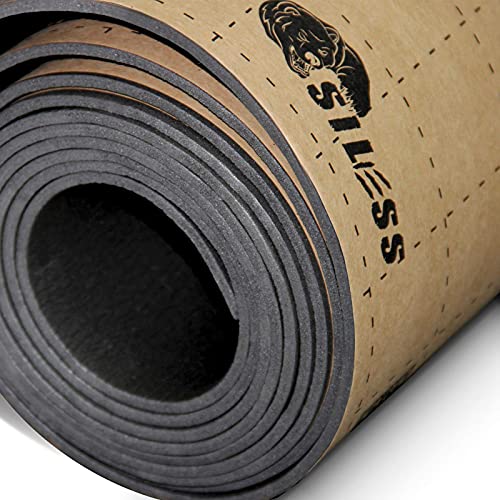
- Waterproof closed-cell PE foam
- Blocks up to 98% of radiant heat
- Lightweight 36-square-foot roll
Best For: Vehicle insulation with heat and moisture resistance
Flexible Wall Treatment
Saiqiang 1-Inch Acoustic Foam Panels
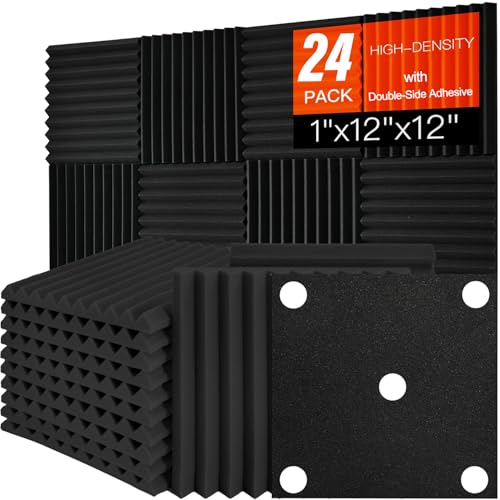
- 24 polyurethane wedge panels for wall treatment
- Includes double-sided mounting adhesive
- Requires 24–48 hours to expand
Best For: Home studios, offices, and home theaters
Automotive Noise Control
80mil Butyl Sound Deadening Mat

- 36 square feet of automotive coverage
- Three-layer foil and butyl construction
- Waterproof and rated from -50°F to 300°F
Best For: DIY vehicle sound and vibration damping
Large-Coverage Acoustic Treatment

- 52 one-inch grooved acoustic foam panels
- Includes 300 pieces of double-sided adhesive
- Designed to reduce echoes and reverb
Best For: Larger studios, offices, and vocal booths
Best Modular Floor Option – Interlocking Felt Soundproof Mats
These removable soundproofing mats use lightweight, high-density felt puzzle pieces to cushion hard floors, absorb some footfall impact, and reduce echo or reverb. The 20-piece set can be arranged or taken apart easily, making it a practical choice for temporary or customized coverage.
Best For: Home gyms, playrooms, music areas, classrooms, and other spaces needing removable floor coverage.
Pros:
- 20 interlocking pieces cover up to 17 square feet.
- High-density felt provides cushioning, sound absorption, and vibration dampening.
- Easy to assemble, disassemble, expand, and customize.
- Includes removable double-sided tape for added stability.
Cons:
- Designed for floor use rather than wall or ceiling treatment.
- The set provides limited coverage for larger rooms.
- Tape may be needed for extra slip resistance.
This is a flexible removable option for protecting floors while softening everyday impact noise. Its interlocking format is more convenient than a permanently installed soundproofing system, though larger areas may require multiple sets.
Best Lightweight Wall Treatment – Acoustic Foam Wall Panels
For removable soundproofing mats used vertically, these lightweight acoustic foam panels offer a simple way to reduce echoes and reverberation. Their wedge-cut surface can be arranged in different layouts, while the included adhesive pads support quick, tool-free installation.
Best For: Rooms needing basic echo control, including studios, offices, gaming rooms, and home theaters.
Pros:
- 54 panels provide broad wall or ceiling coverage.
- Wedge-cut foam helps dampen echoes and reverberation.
- Included adhesive pads allow quick installation without drilling.
- Lightweight, high-density polyurethane construction is designed for durability.
Cons:
- Adhesive pads work best only on clean, dry, smooth surfaces.
- Uneven, damp, dusty, or peeling walls may require another mounting method.
- Foam panels are intended for acoustic treatment rather than full structural sound blocking.
This set suits renters or users who want a straightforward, removable-style wall treatment. Check the wall condition before installation, since long-term stability may require more secure mounting on unsuitable surfaces.
Best Sound-Blocking Barrier – Mass Loaded Vinyl Soundproofing Sheet
This mass loaded vinyl sheet is a flexible soundproofing barrier for projects where adding density matters more than cushioning. At 1 pound per square foot, it can help block sound and reduce vibration across walls, ceilings, floors, doors, vehicles, and equipment enclosures.
Best For: Structural soundproofing projects involving walls, doors, HVAC systems, home theaters, recording spaces, and vehicles.
Pros:
- Dense 1-pound-per-square-foot material is designed for sound blocking.
- Flexible, thin, cuttable construction helps conserve space.
- Waterproof and flame-retardant B1 material supports varied applications.
- Can be installed with construction adhesive, screws, or roofing nails.
Cons:
- Only one 1-by-8-foot sheet is included, covering 8 square feet.
- Installation generally requires adhesive, fasteners, and sealed seams.
- It is less convenient to remove than interlocking or adhesive-mounted panels.
This is the most appropriate choice here for serious barrier-style sound control rather than casual room treatment. Its installation is more involved, but the flexible sheet format works across many surfaces and can be trimmed to fit.
Best High-Performance Panel Set – Polyester Acoustic Absorption Panels
These removable soundproofing mats are tackable polyester-fiber panels designed to absorb sound energy and improve room clarity. The six matte-black panels can be mounted on walls or ceilings and cut to fit recording, gaming, office, podcast, or home-theater layouts.
Best For: Echo and reverb reduction in recording studios, podcast rooms, gaming spaces, offices, and home theaters.
Pros:
- Six panels cover approximately 7.7 square feet.
- Reported NRC of 0.95 and average absorption coefficient of 0.86.
- Polyester fiber is odorless, non-toxic, formaldehyde-free, and Class B1 flame retardant.
- Panels are cuttable and compatible with construction adhesive or double-sided tape.
Cons:
- Mounting adhesive or tape is sold separately.
- The six-piece pack offers limited coverage for larger rooms.
- These panels focus on absorption and do not replace a dense sound-blocking barrier.
This set is a strong fit when the main goal is reducing echo and improving perceived sound quality. Its cuttable design and tackable construction offer installation flexibility, although you will need to supply the mounting materials.
Heavy-Duty Automotive Damping – KILMAT 80 mil
For vehicle projects that need removable soundproofing mats in cut-to-fit sections, KILMAT offers thick, self-adhesive butyl and foil sheets. Its 80 mil construction, manageable sheet size, and embossed installation indicator make it practical for DIY sound-deadening work.
Best For: DIY automotive sound deadening on doors, floors, trunks, and other vehicle panels.
Pros:
- 80 mil butyl-and-foil construction for substantial damping.
- Self-adhesive backing supports straightforward installation.
- Embossing helps confirm that the material has been properly rolled smooth.
- 36 square feet of coverage in cuttable sheets.
Cons:
- Self-adhesive installation is less convenient if you need to reposition the material.
- At 17 pounds per package, it adds more weight than lightweight foam options.
KILMAT is a strong choice when vehicle noise reduction and installation feedback matter more than easy removal. Plan the layout carefully before committing the adhesive sheets to a surface.
Portable Room and Floor Control – TroyStudio Interlocking Mats
These removable soundproofing mats are a flexible option for rooms where you want acoustic and vibration control without permanently covering the floor. The 16 interlocking felt panels create a flat surface and can be cut for a closer fit.
Best For: Music rooms, instrument areas, home gyms, offices, playrooms, and floor protection beneath equipment.
Pros:
- Dense 0.4-inch polyester felt helps absorb sound and reduce echo.
- Interlocking design provides a seamless, wrinkle-free layout.
- Suitable for vibration isolation beneath drums, pianos, speakers, and treadmills.
- Includes double-sided tape and panels can be cut with a knife.
Cons:
- Each panel is only 11 by 11 inches, so larger areas require multiple pieces.
- Tape-assisted installation may be less convenient when frequent repositioning is needed.
TroyStudio is the most adaptable pick of the three for indoor spaces. Its interlocking format is easier to rearrange than adhesive automotive sheets, while the felt surface also adds floor comfort and protection.
Lightweight Heat-and-Noise Barrier – Siless Liner 157
For vehicle builds that need removable soundproofing mats with added thermal protection, Siless Liner combines waterproof closed-cell foam with a self-adhesive backing. Its long roll is lightweight, flexible, and designed for broad coverage across vehicle interiors.
Best For: Vehicle doors, floors, roofs, trunks, and firewalls where heat insulation and moisture resistance are priorities.
Pros:
- Closed-cell polyethylene foam is oil-resistant and waterproof.
- Designed to block up to 98% of radiant heat transfer.
- Lightweight, flexible, odorless, and non-absorbent.
- 36 square feet of coverage in a continuous roll.
Cons:
- The self-adhesive backing is not ideal for repeated repositioning.
- Its 4 mm foam construction is aimed at insulation and thermal blocking rather than the heavier damping of thick butyl mat.
Siless Liner suits projects where reducing heat and moisture exposure is nearly as important as managing noise. Choose it for broad, lightweight vehicle coverage, but prepare surfaces carefully before applying the adhesive roll.
Flexible Wall Treatment – Saiqiang 1-Inch Acoustic Foam Panels
These removable soundproofing mats are a lightweight option for reducing reflected sound and improving room acoustics. The 24 polyurethane wedge panels are suited to wall treatment in studios, offices, and home theaters, with included double-sided adhesive for installation.
Best For: Home studios, offices, and home theaters needing wall-mounted sound absorption.
Pros:
- Porous polyurethane construction helps absorb reflected sound.
- Wedge design supports sound absorption and damping.
- Lightweight panels include double-sided mounting tape.
- Fire-resistant, non-toxic material is designed for everyday indoor use.
Cons:
- Panels require 24–48 hours to expand after vacuum packaging.
- Adhesive installation may not suit every wall surface.
- At 1 inch thick, these panels are intended for acoustic treatment rather than complete sound isolation.
Choose this set when you want removable soundproofing mats for targeted wall treatment and echo reduction. Its 24-panel format is practical for smaller areas, though you should allow time for the foam to recover before installation.
Automotive Noise Control – 80mil Butyl Sound Deadening Mat
This removable soundproofing mats option is designed for automotive applications, where butyl rubber helps damp vibrations and the foil layer supports heat insulation. The 36-square-foot kit can be cut for doors, trunks, and other vehicle areas, but its high-tack adhesive is intended for a lasting bond rather than frequent removal.
Best For: DIY vehicle projects targeting road, engine, wind, and vibration noise.
Pros:
- 80-mil, three-layer construction combines reinforced aluminum foil and butyl rubber.
- 36 square feet of coverage suits doors, trunks, and many vehicle installations.
- Waterproof material is rated for temperatures from -50°F to 300°F.
- Cut-and-peel installation is straightforward for DIY users.
Cons:
- Strong adhesive is intended for permanent installation, so removal may be difficult.
- Vehicle surfaces must be cleaned and firmly pressed during installation.
- The product is automotive-focused rather than a general wall-treatment mat.
This mat is a strong fit for reducing vehicle vibration and unwanted road noise. Consider it when coverage and durability matter more than easy repositioning, since the high-tack backing is designed to stay in place.
Large-Coverage Acoustic Treatment – 52-Pack Wedge Foam Panels
For broader wall coverage, these removable soundproofing mats provide 52 one-inch acoustic foam panels plus 300 pieces of double-sided adhesive. Their grooved structure is intended to reduce echoes, reverb, and flutter echoes in recording spaces, offices, and vocal booths.
Best For: Larger home-office, recording-studio, vocal-booth, and control-room treatment projects.
Pros:
- 52 panels offer more pieces for distributing acoustic treatment across a room.
- Triangular grooves help absorb unwanted echoes and reverb.
- Includes 300 adhesive pieces for installation and easier removal.
- Fire-resistant, breathable, and non-toxic material is designed for regular use.
Cons:
- Foam may need 24–48 hours to recover its shape after packaging.
- Adhesive removal can still vary by wall finish.
- One-inch foam is primarily for echo control and sound absorption, not full sound blocking.
This is the most practical choice here for users who need a larger quantity of removable soundproofing mats for acoustic treatment. The generous adhesive supply and 52-panel count make it easier to plan a more extensive installation, while the foam remains focused on managing room reflections.
How We Picked These Removable Soundproofing Mats
We selected products across the main removable sound-control categories: interlocking felt mats, acoustic foam panels, mass-loaded vinyl barriers, closed-cell foam liners, and butyl vehicle deadening mats. We considered material type, stated dimensions, coverage, thickness, portability, surface grip, and the kinds of noise each product is best suited to address.
These materials are not interchangeable. Absorption products help reduce reflections and reverberation, while dense barriers and vehicle mats are more appropriate for vibration and limited airborne-noise control. Product claims should be treated as performance guidance rather than a guarantee of complete soundproofing.
Quick Comparison
- Best for temporary floor coverage: Interlocking high-density felt mats.
- Best for wall echo reduction: Acoustic foam panels.
- Best for adding mass to a barrier: Mass-loaded vinyl.
- Best for vehicle panels: Butyl sound-deadening mats.
- Best for heat and secondary insulation: Closed-cell foam liner.
Key Buying Factors for Removable Soundproofing Mats
Match the Material to the Noise
For footsteps, drum practice, equipment vibration, or contact noise, dense floor mats and automotive butyl mats can help decouple surfaces and damp resonance. For voices, computer fans, and room reflections, wall-mounted acoustic foam is generally more useful. Mass-loaded vinyl adds weight to walls, doors, panels, or enclosures, but it normally works best as part of a layered assembly.
Check Coverage and Thickness
Calculate the area you need before comparing pack counts. A larger number of small tiles may be easier to arrange but can create more seams. Thicker products may provide greater absorption or cushioning, while thinner materials are easier to trim and fit around existing panels. Always verify the actual dimensions and total square footage.
Consider Installation and Removal
Interlocking mats are typically the simplest temporary option. Foam panels may require removable mounting strips or another attachment method, and adhesive-backed automotive materials can be difficult to reposition once applied. For rentals or frequently changing layouts, prioritize products that can be laid in place or mounted without permanent adhesive.
Review Safety and Environment
Use automotive products only where their temperature, odor, and backing materials are appropriate. Keep foam away from heat sources and follow ventilation recommendations during installation. For floors, look for a stable, non-slip surface and avoid creating trip edges at transitions.
Who Should Buy Which Removable Soundproofing Mats?
Renters and home-office users should start with removable felt mats or lightweight acoustic panels that can be installed with temporary mounting solutions. Musicians and recording enthusiasts may prefer foam panels for echo control, combined with floor coverage around instruments or stands.
Car owners should choose butyl deadening mats for metal body panels and use closed-cell foam as a complementary liner where appropriate. DIY builders needing a denser barrier can consider mass-loaded vinyl, provided they plan a secure, layered installation. For the most flexible setup, choose modular pieces that can be rearranged, stored, or replaced individually rather than relying on a permanently bonded sheet.