Studios and office workspaces need more than a closed door to control noise, airflow, and distracting light. The right seal can close gaps around the frame or beneath the door without making everyday access difficult.
This roundup compares 10 studio door seals for offices, including adhesive foam, silicone, rubber, PVC, and door-sweep designs for different gap sizes and installation needs.
Best 10 Studio Door Seals for Offices Picks for 2026
Large-Gap Sound Control

- Fits 5/16- to 15/32-inch gaps
- Multi-hole design helps reduce sound
- Cut-to-size, self-adhesive 18-foot roll
Best For: Large-gap office and studio door frames
Complete Door Coverage

- Includes seals and a door sweep
- Designed to help block sound gaps
- Treats up to four standard doors
Best For: Multi-door office or studio sound control
Small-Gap Flexibility

- Fits 1/8- to 1/4-inch gaps
- Flexible silicone D-shaped profile
- Cut-to-fit, peel-and-stick installation
Best For: Narrow office door and window gaps
Bottom-Gap Blocking
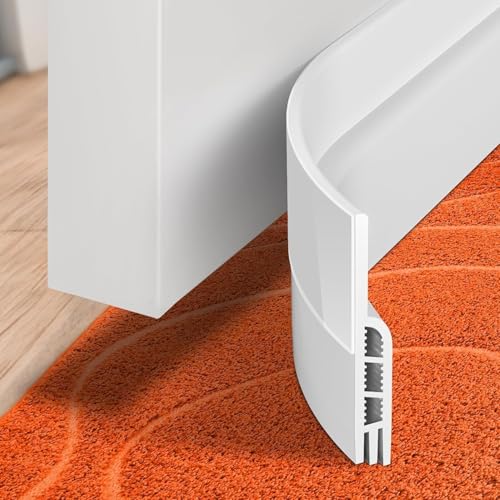
- Fills bottom gaps up to 1 inch
- 41-inch silicone sweep with strong adhesive
- Helps reduce noise, drafts, and light
Best For: Doors with a substantial bottom gap
Best for Wide Gaps
Holikme 1.8-Inch Door Seal Strip

- Covers gaps up to 1.2 inches
- Two rolls with 33 feet total length
- Flexible, peel-and-stick TPE design
Best For: Office doors with broad or uneven gaps
Best for Door Bottoms

- Designed for door-bottom installation
- Flexible PVC construction
- Targets noise, drafts, and insulation
Best For: Single office doors with under-door gaps
Large-Gap Choice
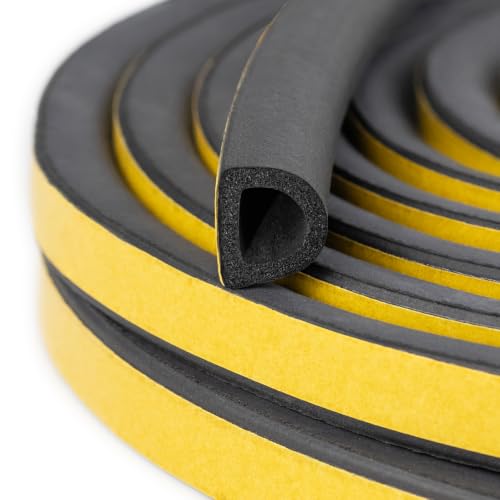
- Fits 5/16–15/32-inch gaps
- Flexible EPDM construction
- 20-foot self-adhesive strip
Best For: Uneven, larger gaps around office doors and frames
Flexible Multi-Use Pick
EVA Foam Weather Stripping Tape

- 33 feet of cut-to-fit material
- Mesh-backed self-adhesive design
- Supports sealing and sound insulation
Best For: Multi-purpose office door, window, and opening seals
Bottom-Door Specialist
Adjustable Silicone Draft Stopper

- Seals bottom gaps up to 1.5 inches
- Flexible silicone construction
- Helps reduce drafts and outside noise
Best For: Office doors with large under-door gaps
Large-Gap Sound Control – VITAM AMO 18-Foot EPDM Seal
For offices looking for studio door seals for offices, this 18-foot self-adhesive EPDM strip is designed for larger gaps between 5/16 and 15/32 inch. Its flexible, multi-hole construction helps limit drafts, light, water, and everyday sound without requiring tools.
Best For: Office or studio doors with relatively large frame gaps and projects that need a cut-to-size perimeter seal.
Pros:
- Seals larger gaps from 5/16 to 15/32 inch.
- Multi-hole design helps reduce sound transmission and closing pressure.
- 18-foot roll can be cut to fit, with strong peel-and-stick backing.
- EPDM rubber is intended for indoor or outdoor use and changing temperatures.
Cons:
- Designed for larger gaps, so it may be unsuitable for narrow clearances.
- Adhesive installation requires a clean, properly prepared surface.
This is a versatile choice when an office or studio door has noticeable perimeter gaps. Measure first, then use the included roll length to create a continuous seal around the frame.
Complete Door Coverage – Large Soundproofing Seal Kit
Audimute Soundproofing Acoustic Door Seal Kit - Door Sweep and Seal - (Large Size)
Check Price On AmazonThis soundproofing kit is a practical option for studio door seals for offices when sound may enter or escape through both the door frame and bottom gap. It includes two 50-foot door seals and a 25-foot door sweep, enough to treat up to four standard-size doors.
Best For: Offices, apartments, and studios that need coordinated perimeter and bottom-door sealing across multiple standard doors.
Pros:
- Includes two door seals and one door sweep.
- Designed to help block sound through gaps around doors.
- Large-size kit can treat up to four standard doors.
- Easy to install according to the supplied product notes.
Cons:
- May provide more material than needed for a single door.
- The listed large size may not suit every door clearance.
Choose this kit when you want a broader sound-sealing package rather than a single strip. Its combination of frame seals and a sweep addresses two common leakage points around office and studio doors.
Small-Gap Flexibility – 20-Foot Silicone D-Seal
For offices needing studio door seals for offices with smaller clearances, this self-adhesive silicone D-shaped strip is recommended for gaps from 1/8 to 1/4 inch. The 20-foot roll can be cut with scissors and helps limit dust, moisture, light, drafts, and everyday noise.
Best For: Smooth door frames and windows with small, consistent gaps that need a flexible, cut-to-fit seal.
Pros:
- Recommended for narrow 1/8- to 1/4-inch gaps.
- 20-foot roll supports multiple sealing projects.
- Flexible silicone compresses smoothly and is designed for year-round use.
- Peel-and-stick installation includes an adhesive promoter for smooth surfaces.
Cons:
- White color may be more visible on darker office or studio doors.
- Not intended for gaps larger than the recommended range.
- Requires a clean, dry surface for installation.
This seal is a good fit when precise gap sizing matters. Confirm the opening is within the stated range and prepare the surface carefully to support the adhesive bond.
Bottom-Gap Blocking – Holikme 41-Inch Door Sweep
This 41-inch silicone door sweep is a targeted option among studio door seals for offices when the main problem is an open gap beneath the door. Its 2-inch width is designed to fill gaps up to 1 inch and help reduce noise, drafts, light, and temperature loss.
Best For: Interior or exterior doors with a bottom gap of up to 1 inch and a level floor beneath the door.
Pros:
- Designed to fill bottom gaps up to 1 inch.
- 41-inch length suits many standard doors.
- Strong adhesive and a quick installation process.
- Silicone construction is described as safe for kids and pets.
Cons:
- Primarily addresses the bottom gap, not the entire door frame.
- May not adhere well to rough or textured doors or walls.
- Installation guidance recommends avoiding door use for 24 hours after fitting.
Use this sweep when sound, light, or conditioned air is escaping under an office door. Measure the door and floor clearance first, and ensure the surface is clean, dry, smooth, and level for the best fit.
Best Value Frame Seal – 50-Foot D-Shape Rubber Weather Stripping
For offices comparing studio door seals for offices, this D-shaped rubber strip is a practical choice for sealing measured gaps around door frames. Its 50-foot roll can be cut to size, and the included scissors simplify installation.
Best For: Office doors and frames with 2.5–5.5 mm gaps that need draft, dust, and light sound reduction.
Pros:
- Includes 50 feet of seal and tailor scissors.
- Self-adhesive backing supports straightforward installation after surface preparation.
- Flexible rubber is designed to resist freezing and cracking under extreme temperatures.
- Can also be used on windows, furniture, electrical cabinets, and other applications.
Cons:
- Designed for relatively narrow gaps, so it may not suit larger door clearances.
- Requires accurate gap measurement before purchase.
This is a strong fit when you want a long roll for multiple office door or frame projects. Measure first, clean the surface, and allow the adhesive to set for 24 hours for the stated firm hold.
Best for Wide Gaps – Holikme 1.8-Inch Door Seal Strip
Among studio door seals for offices, the Holikme strip stands out for wider gaps and flexible placement. It comes as two rolls with 33 feet of total seal material and can be trimmed and applied to cleaned surfaces.
Best For: Interior office doors, windows, and other openings with gaps up to 1.2 inches, including applications where a broad strip is useful.
Pros:
- 1.8-inch-wide flexible TPE strip is designed for gaps up to 1.2 inches.
- Two rolls provide 33 feet of total material.
- Peel-and-stick installation can be completed after measuring and cutting.
- Can help block drafts, dust, insects, smoke, and light gaps.
Cons:
- The wide profile may be more material than needed for narrow door-frame gaps.
- Adhesion depends on thorough surface cleaning and following the supplied preparation tip.
Choose this option when gap coverage matters more than a compact profile. Its stated multipurpose design also makes it suitable for window gaps and shower-door applications, though office buyers should confirm the strip’s fit and appearance first.
Best for Door Bottoms – PVC Soundproof Draft Stopper
For offices where sound and drafts pass beneath the door, this PVC bottom seal is a focused option among studio door seals for offices. Its flexible black strip is intended for residential, office, and hotel doors and installs at the door bottom.
Best For: Office or studio doors needing a bottom-mounted barrier for noise reduction, drafts, and insulation.
Pros:
- Designed specifically for the bottom of a door.
- Flexible PVC construction supports a close-fitting seal.
- Marketed for noise reduction, draft blocking, and insulation.
- Suitable for office, bedroom, home, and hotel settings.
Cons:
- Only one piece is included, so it is intended for a single door.
- The supplied details do not specify dimensions or the exact installation method.
- The listing information contains inconsistent color references, so verify the finish before ordering.
This is the most targeted choice for a door-bottom problem rather than a perimeter-frame gap. Confirm the door’s clearance and the product dimensions before purchase, particularly if the seal must clear flooring or a threshold.
Large-Gap Choice – D-Shaped EPDM Door Seal
For offices with uneven door or window gaps, this D-shaped EPDM strip is a practical option among studio door seals for offices. Its hollow profile is designed for gaps from 5/16 to 15/32 inch and compresses as the door closes.
Best For: Office doors or frames with relatively large, uneven gaps that need draft, dust, light-leak, and some noise reduction.
Pros:
- Fits closed gaps measuring 5/16 to 15/32 inch.
- Flexible EPDM rubber stays pliable in hot and cold weather.
- Mesh-reinforced adhesive backing and a 20-foot length support custom installation.
- Helps reduce drafts and energy loss while limiting dust and light entry.
Cons:
- Requires careful gap measurement and a clean, dry mounting surface.
- The adhesive should be warmed in cold weather and allowed 24 hours to bond.
- Its 0.5-inch profile may be more material than needed for narrow gaps.
This is a strong fit when an office door has a noticeable perimeter gap rather than a small, uniform crack. Measure the closed gap first, then trim the strip for a tailored installation.
Flexible Multi-Use Pick – EVA Foam Weather Stripping Tape
This 33-foot self-adhesive strip offers flexible coverage for office doors, windows, and other openings. For studio door seals for offices, its soft, cut-to-length design can help fill variable gaps while also providing insulation, light blocking, and some sound reduction.
Best For: Users who want a long, adaptable strip for doors, windows, ventilation openings, or other office sealing and cushioning tasks.
Pros:
- Provides 33 feet of material for multiple installations.
- Soft, flexible construction can be cut to fit different gap sizes.
- Mesh adhesive backing is designed for secure attachment.
- Suitable for sealing, insulation, light blocking, sound insulation, and anti-collision uses.
Cons:
- The notes do not specify a precise supported gap range.
- Its broad multi-purpose design may require trimming and fitting for a specific office door.
- Adhesion depends on proper surface preparation and application.
This is the most versatile option of the three when you need extra length and a soft strip that can serve more than one purpose. Confirm the strip’s dimensions and test its fit before covering a full door frame.
Bottom-Door Specialist – Adjustable Silicone Draft Stopper
For drafts entering beneath an office door, this adjustable silicone sweep is a focused solution among studio door seals for offices. The 39-inch strip covers bottom gaps from 0 to 1.5 inches and is designed to glide over carpet and uneven floors.
Best For: Interior or exterior office doors with a noticeable bottom gap, especially where cold air, noise, or movement beneath the door is a concern.
Pros:
- Adjustable design seals bottom gaps up to 1.5 inches.
- Thick silicone is flexible, water resistant, and resistant to hot and cold conditions.
- Triple-cavity design helps muffle outside noise and block airflow.
- Widened adhesive backing is designed to stay attached during door movement.
Cons:
- It addresses the bottom of the door, not perimeter gaps along the sides or top.
- Rough or textured wall surfaces may reduce adhesive performance.
- Requires careful measuring, pressing, and a 24-hour wait before frequent door use.
This is the clearest choice when the main problem is a large under-door opening. Measure the gap, cut once, and warm the adhesive in cold weather to improve installation results.
How We Picked the Best Studio Door Seals for Offices
We focused on the factors that matter in working studios: gap coverage, material durability, installation effort, flexibility, and likely performance against drafts and airborne noise. The selection includes frame-mounted seals for perimeter gaps, bottom sweeps for under-door openings, and larger profiles for uneven or oversized gaps.
Adhesive-backed products are convenient for renters and quick upgrades, while silicone and rubber profiles are generally better suited to frequent-use doors. Because seals cannot eliminate sound passing through a hollow door, wall, ceiling, or ventilation system, we treated them as gap-control products rather than complete soundproofing systems.
Quick Comparison
| Seal type | Best for | Main advantage | Watch for |
|---|---|---|---|
| Foam tape | Small, consistent gaps | Low cost and easy installation | Can compress or wear faster |
| D-shaped silicone or rubber | Medium to large frame gaps | Flexible, resilient coverage | Requires accurate sizing |
| Door sweep | Gaps beneath doors | Blocks drafts, light, and some noise | May drag on thick flooring |
| PVC or specialty seals | Targeted noise and insulation upgrades | Useful for specific door designs | Check compatibility before fitting |
Key Buying Factors for Studio Door Seals for Offices
Measure the Gap First
Measure the widest visible gap with the door closed, checking the top, latch side, hinge side, and threshold separately. Choose a seal that compresses against the door without preventing the latch from closing.
Match the Seal to the Location
Use perimeter weatherstripping around the frame and a sweep or under-door blocker at the bottom. A frame seal will not reliably close a floor gap, and an oversized sweep can scrape carpet or make the door harder to open.
Consider Adhesive and Surface Condition
Clean, dry, smooth surfaces provide the best bond. Remove dust and old adhesive, allow painted surfaces to cure, and press the strip firmly during installation. For heavy-use office doors, a mechanically secured sweep may last longer than adhesive alone.
Balance Sealing with Ventilation
A tight seal can improve privacy and reduce drafts, but do not block required ventilation, fire-door clearances, or accessibility features. Confirm building requirements before modifying a commercial doorway.
Who Should Buy Which Studio Door Seals for Offices?
Choose foam weatherstripping when you need an inexpensive fix for narrow, even gaps. Pick a D-shaped silicone or rubber strip for larger frame gaps or a door that opens and closes frequently. Choose a door sweep when the main problem is sound, light, dust, or cold air entering beneath the door. A wide specialty seal is better for unusually large or irregular openings, provided its dimensions match the doorway.
For a recording, podcast, or video office, combine perimeter sealing with a properly fitted bottom sweep and address other sound paths separately. For a general office or meeting room, prioritize durable materials, clean installation, and a seal that preserves smooth door operation.