Finding the right wireless guitar system for acoustic guitar can make rehearsals, small gigs, and home practice much easier. The best options keep your tone clear, stay reliable on stage, and pair cleanly with your instrument’s pickup or preamp.
In this roundup, we focus on systems that balance sound quality, usable range, latency, and battery life so you can choose with confidence.
Best 10 Wireless Guitar System for Acoustic Guitar Picks for 2026
Acoustic Mic System
Xvive U8 Acoustic Guitar Wireless System

- Supercardioid microphone aimed at acoustic guitar
- Less than 5 ms latency with 24-bit/48 kHz audio
- Up to 90 ft range and 5 hours of battery life
Best For: Acoustic and classical players wanting a dedicated wireless mic-style setup
Fastest Response Pick
Positive Grid Spark Link Wireless Guitar System

- Under 3 ms latency for very responsive playing
- 24-bit/48kHz audio with 20Hz to 20kHz range
- Up to 70 ft range and 6 hours of battery
Best For: Players wanting a versatile, ultra-low-latency wireless setup
Long-Range Stage Pick
Xvive A58 Wireless Guitar System

- 5.8GHz system with over 100 ft working range
- Less than 5 ms latency for live playing
- Up to 4 pairs can run at the same time
Best For: Performers who need a long-range wireless system for stage and rehearsal use
Budget-Friendly Practice Choice
JOYO JW-03 Wireless Guitar System
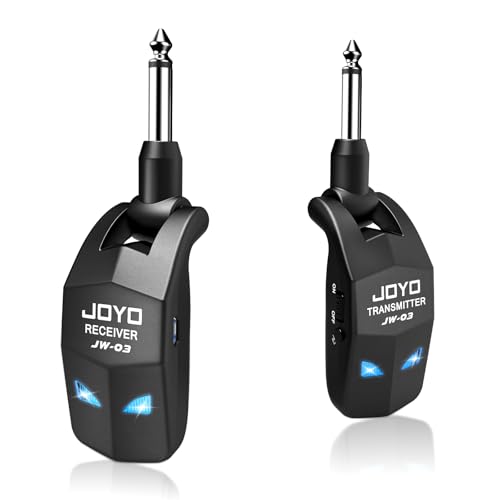
- Less than 5 ms latency with 4 selectable channels
- Up to 8 hours of battery life
- 220° rotatable plug fits more guitar jacks
Best For: Practice, rehearsals, worship, and small venues
Premium 5.8GHz Charging-Case Pick
Xvive AC58 Wireless Guitar System

- 5.8GHz true diversity wireless connection
- 24-bit/48kHz audio with wide frequency range
- Charging case includes up to 2 full charges
Best For: Players who want a rechargeable 5.8GHz system with active/passive support
Budget 2.4GHz Plug-and-Play Pick
2.4GHz Wireless Guitar System A9 Black

- Automatic plug-and-play pairing
- 2.4GHz signal with low latency under 4ms
- Rotatable 6.35mm plug and rechargeable battery
Best For: Players who want an easy plug-and-play wireless system
Travel-Ready Auto-Match Case System
NUX C-5RC Wireless Guitar System

- 5.8GHz wireless with low interference
- Auto-matching for quick setup
- Includes portable charging case
Best For: Musicians who want a compact system with automatic setup
Flatsons pick
Clean 5.8GHz signal for compact setups

- 5.8GHz band helps reduce interference in crowded spaces.
- 5.58ms latency and 100ft+ line-of-sight range.
- 6+ hour battery with USB-C charging and auto-sleep.
Best For: Acoustic-electric players wanting a simple, low-latency wireless setup.
JOYO choice
Charging case with long total runtime

- Up to 18 hours total playtime with included charging case.
- 5.8GHz signal with 48kHz/24-bit audio and under-6ms latency.
- 4 channels support multiple sets or one transmitter to multiple receivers.
Best For: Players who want longer battery life and a portable charging case.
LEKATO pick
Portable case and easy 4-channel setup
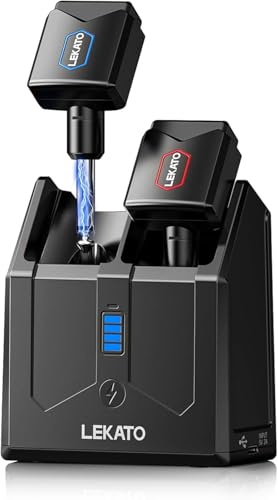
- 5000mAh charging box can recharge the units twice.
- 5.8GHz, under-6ms latency, and 24-bit/48kHz audio.
- Compact design with auto-matching and 4 channels.
Best For: Players who want a compact wireless set with a charging box.
Acoustic Mic System – Xvive U8 Acoustic Guitar Wireless System
If you want a wireless guitar system for acoustic guitar that prioritizes mic capture over generic instrument transmission, the Xvive U8 is built around an ultra-high-quality supercardioid microphone. It keeps latency under 5 ms and offers 24-bit/48 kHz audio, so it aims for a clean, responsive signal with minimal delay.
Best For: Acoustic and classical players who want a dedicated wireless mic-style system with low latency and a simple stage setup.
Pros:
- Supercardioid microphone design is tailored for acoustic guitar use.
- Less than 5 ms latency supports real-time playing feel.
- 24-bit/48 kHz audio, 108 dB dynamic range, and 142 dB SPL for detailed sound.
- Up to 90 ft wireless range and up to 5 hours of battery life.
Cons:
- Battery life is shorter than some competing systems at 5 hours.
- The included accessory list is broader than the guitar-specific setup details suggest.
Overall, the U8 stands out if your main concern is acoustic guitar capture rather than a one-size-fits-all wireless pack. It combines low latency, strong headroom, and a purpose-built microphone approach in a compact 2.4GHz system.
Fastest Response Pick – Positive Grid Spark Link Wireless Guitar System
The Positive Grid Spark Link is a wireless guitar system for acoustic guitar users who also want a flexible all-purpose transmitter and receiver. It uses 2.4G transmission, runs at 24-bit/48kHz, and keeps latency under 3 ms, which is useful if you want a fast, clean connection with minimal feel lag.
Best For: Players who want a versatile wireless system for guitar, acoustic, bass, and other instruments with very low latency.
Pros:
- Under 3 ms latency is the fastest spec in this group.
- 24-bit/48kHz audio with 20Hz to 20kHz frequency response.
- Up to 70 ft transmission range and up to 6 hours of battery life.
- 110° hinged plug helps fit different guitar body shapes.
Cons:
- Range is shorter than the longest-range option here.
- Battery life is solid, but not class-leading.
For players who want a practical, modern wireless setup that can move between acoustic and other instruments, the Spark Link is easy to recommend. Its combination of very low latency, broad compatibility, and included USB-C cables makes it a strong everyday option.
Long-Range Stage Pick – Xvive A58 Wireless Guitar System
If you want a wireless guitar system for acoustic guitar use in a live setting, the Xvive A58 focuses on stable 5.8GHz transmission and a long working range. It is rated for over 100 feet of range and under 5 ms latency, making it a good fit when you need freedom to move without obvious delay.
Best For: Players who need a long-range wireless setup for stage use, rehearsals, or other performance environments.
Pros:
- 5.8GHz operation is designed for clear signal transmission.
- Over 100 ft working range gives plenty of movement room.
- Less than 5 ms latency keeps playing feel tight.
- Up to 5 hours of rechargeable battery life for transmitter and receiver.
Cons:
- Battery life is limited to about 5 hours per charge.
- The notes focus more on live use than on acoustic-specific pickup features.
The A58 is a strong choice when range matters as much as speed. With 5.8GHz transmission, low latency, and support for up to four pairs at once, it is built for dependable performance rather than specialized acoustic processing.
Budget-Friendly Practice Choice – JOYO JW-03 Wireless Guitar System
The JOYO JW-03 is a straightforward wireless guitar system for acoustic guitar, electric guitar, bass, and acoustic-electric setups. It uses 2.4GHz transmission, keeps latency under 5 ms, and includes 4 selectable channels, so it works well when you need a simple, flexible setup for home practice or smaller gigs.
Best For: Players who want an affordable, easy-to-use wireless system for practice, rehearsals, worship, and small venues.
Pros:
- Less than 5 ms latency and very low stated distortion.
- Up to 8 hours of battery life on a full charge.
- 220° rotatable plug helps fit recessed jacks and tight spaces.
- 4 channels and support for multiple receivers add flexibility.
Cons:
- 65 ft range is shorter than some other systems here.
- Not recommended for large stages or Wi-Fi/Bluetooth-heavy environments.
For everyday players, the JW-03 hits a practical balance of battery life, easy pairing, and flexible plug positioning. It is especially appealing if you want a budget-friendly wireless guitar system for acoustic guitar without overcomplicating the setup.
Premium 5.8GHz Charging-Case Pick – Xvive AC58 Wireless Guitar System
If you want a wireless guitar system for acoustic guitar use with a cleaner, more modern setup, the Xvive AC58 is built around a 5.8GHz connection, 24-bit/48kHz audio, and a charging case for easy top-ups between sessions. It supports both active and passive modes, so it can work with a wide range of pickups while keeping the signal focused and practical for stage or home use.
Best For: Players who want a rechargeable 5.8GHz system with a charging case and support for active or passive pickups.
Pros:
- 5.8GHz true diversity wireless connection helps avoid interference from other wireless devices.
- High-resolution 24-bit/48kHz audio covers a wide 20Hz to 20kHz range.
- Supports both active and passive modes for broader instrument compatibility.
- Charging case provides up to 2 full charges or multiple top-ups.
Cons:
- Channel setup requires matching the transmitter manually after receiver scanning.
- Designed as a compact system, so it may be less feature-heavy than larger stage rigs.
Overall, the AC58 stands out if you value interference-resistant wireless performance and rechargeable convenience in a compact package. Its active/passive support makes it flexible enough for different guitar and bass setups, including acoustic-electric instruments.
Budget 2.4GHz Plug-and-Play Pick – 2.4GHz Wireless Guitar System A9 Black
For a straightforward wireless guitar system for acoustic guitar setups, the A9 keeps things simple: plug it in, power it on, and it pairs automatically. It uses 2.4GHz wireless transmission with low latency, a claimed range of over 30m/100 feet, and a rotatable 6.35mm plug that can fit different instrument angles more comfortably.
Best For: Players who want an easy plug-and-play wireless system with built-in rechargeable batteries and simple setup.
Pros:
- Plug-and-play operation with automatic transmitter/receiver connection.
- 2.4GHz transmission offers uncompressed signal with low noise and low latency under 4ms.
- 270° rotatable 6.35mm plug improves fit on different instruments.
- Built-in rechargeable batteries and included USB cable make charging convenient.
Cons:
- Battery charging requires a 5V charger to avoid damage.
- The product notes emphasize broad compatibility more than acoustic-specific tuning.
This is a practical pick if you want a simple wireless setup without extra configuration. It focuses on convenience and basic performance rather than advanced system features, which makes it appealing for everyday practice and casual playing.
Travel-Ready Auto-Match Case System – NUX C-5RC Wireless Guitar System
If you need a wireless guitar system for acoustic guitar or acoustic-electric use, the NUX C-5RC is aimed at players who want a compact, interference-resistant setup with a charging case. It uses 5.8GHz wireless technology, supports active or passive pickups, and is designed to auto-match for fast setup before practice or performance.
Best For: Musicians who want a compact 5.8GHz system with automatic setup and a portable charging case.
Pros:
- 5.8GHz connection is designed for clear, interference-free operation.
- 24-bit digital audio and ultra-low latency preserve instrument dynamics.
- Auto-matching makes setup quick and simple.
- Charging case helps keep the system powered while traveling.
Cons:
- Listed range is up to 100 feet with clear line of sight.
- Compact format may not suit players who want larger on-unit controls.
The C-5RC is a strong fit if your priority is portability and easy operation. Its combination of auto-matching, 5.8GHz operation, and charging-case convenience makes it a sensible choice for players who move between home, rehearsal, and live use.
Flatsons pick – Clean 5.8GHz signal for compact setups
If you want a wireless guitar system for acoustic guitar use in a busy room or on a crowded wireless network, this Flatsons 5.8GHz set is built to keep the signal clean. It runs on the less congested 5.725–5.850GHz band and adds 44.1kHz/24-bit audio, so it is a practical pick for players who want low-latency freedom without giving up a clear direct sound.
Best For: Acoustic-electric players who want a compact, easy-to-use wireless setup with strong anti-interference performance.
Pros:
- 5.8GHz transmission helps avoid the congestion common with 2.4GHz systems.
- Low 5.58ms latency and over 100 feet of line-of-sight range support rehearsals and live use.
- 6+ hours of playtime with USB-C charging and auto-sleep after 10 minutes of inactivity.
- 270° rotatable 1/4″ plug fits recessed jacks and other instrument layouts.
Cons:
- Battery life is shorter than charging-case models that offer all-day total runtime.
- Range and stability still depend on line-of-sight conditions and venue congestion.
- Listed compatibility is broad, but the product is positioned mainly for electric guitar and bass use.
This is a strong straightforward option if your priority is clean wireless operation, quick setup, and a lightweight design. It makes sense for players who need dependable freedom of movement and do not want to manage a bulky receiver system.
JOYO choice – Charging case with long total runtime
For players shopping for a wireless guitar system for acoustic guitar setups that need more runtime between charges, the JOYO JW-06 stands out for its included charging case. It uses 5.8GHz digital transmission, 48kHz/24-bit audio, and under-6ms latency, making it a practical choice for practice, rehearsal, worship, and small gigs where you want the guitar signal to stay responsive and clear.
Best For: Acoustic-electric players who want a portable charging case and longer total battery life.
Pros:
- Charging case provides up to 18 hours of total playtime with two extra recharges.
- 5.8GHz transmission and 48kHz/24-bit audio aim for stable, high-resolution sound.
- Under-6ms latency supports responsive playing for rehearsals and live use.
- 4 channels let up to 4 sets run at once, or one transmitter feed multiple receivers.
Cons:
- Best open-area range is 65–100 feet, but obstructions can reduce it to about 30–50 feet.
- Not compatible with 18V active pickups or extremely high-output instruments.
- Active pickup users may need to lower instrument volume to avoid distortion.
This is a strong pick if battery convenience matters as much as sound quality. The charging case makes it easier to keep ready for longer sessions, while the channel flexibility adds some versatility for small multi-player setups.
LEKATO pick – Portable case and easy 4-channel setup
The LEKATO JW-06 is a practical wireless guitar system for acoustic guitar players who want a compact setup with a charging box included. Its 5.8GHz digital transmission, less-than-6ms latency, and 24-bit/48kHz audio make it a sensible fit for home practice or performance when you want the freedom of wireless movement without a complicated rig.
Best For: Acoustic-electric players who want a lightweight system with a portable charging box and simple pairing.
Pros:
- Built-in 5000mAh charging case can recharge the units twice and also charge other devices.
- 5.8GHz operation offers stronger anti-interference than 2.4GHz systems.
- Less-than-6ms latency and 24-bit/48kHz audio support clear, responsive sound.
- 4 channels and auto-matching make it easy to pair and run multiple sets.
Cons:
- Effective range is about 20m, so it is not the longest-range option here.
- Listed compatibility is for electric instruments only, despite wide pickup support.
- The product is more focused on simplicity than advanced control features.
Overall, this LEKATO system is appealing if you value portability and low-fuss operation. The charging box is the biggest convenience feature, and the compact design makes it easy to keep in a gig bag or practice kit.
How We Picked the Best Wireless Guitar System for Acoustic Guitar
We prioritized systems that are practical for acoustic players first: stable signal performance, low latency, simple setup, and compatibility with common acoustic-electric pickup systems. We also looked at charging convenience, battery endurance, operating band, and whether the system is suitable for stage use, rehearsal, or casual unplugged-to-amp playing.
Quick Comparison
For most players, the main tradeoffs come down to frequency band, range, and portability. A 2.4GHz Wireless Guitar System for Acoustic Guitar is often the easiest place to start for short-to-medium range use, while 5.8GHz models may appeal to players who want a different wireless environment and often a more compact, modern feature set. Systems with charging cases are especially convenient if you gig often or don’t want to manage loose cables and batteries.
Key Buying Factors for a Wireless Guitar System for Acoustic Guitar
Pickup Compatibility
Check whether your acoustic is passive or active, and confirm the system supports your output type. Some systems are better suited to acoustic-electric guitars with onboard preamps, while others are broader and work with multiple instrument types.
Latency and Signal Stability
Low latency matters most when you need natural timing and feel. For acoustic performances, the system should sound responsive and avoid dropouts, especially if you move around the stage.
Battery Life and Charging
Long battery life reduces stress during rehearsals and set breaks. Charging cases are a strong advantage for frequent users because they make transport and recharging simpler.
Range and Real-World Use
Manufacturer range claims are helpful, but real-world performance depends on venue layout, interference, and line of sight. If you plan to play in crowded wireless environments, prioritize dependable connectivity over headline distance numbers.
Audio Quality and Plug Fit
Look for clear signal transmission, secure plug fit, and a transmitter that sits comfortably on your guitar without interfering with your playing position.
Who Should Buy Which Wireless Guitar System for Acoustic Guitar?
If you want a straightforward setup for practice or coffeehouse gigs, a compact Wireless Guitar System for Acoustic Guitar with low latency and decent battery life is usually enough. Players who gig regularly should lean toward models with charging cases and strong range reliability. If you use multiple instruments or want one system that can handle acoustic, electric, and bass, choose a broader-compatibility option instead of an acoustic-only design.
For most buyers, the best choice is the one that matches your pickup type, your typical playing distance, and how often you need to recharge.